Archive | Apple RSS feed for this section

Apple Cinnamon Crumb Bread

26 Jan

It has been raining.  The sun has disappeared, the clouds are looming in a rather ominous fashion, everything is absolutely soaked, and there is water where there is not supposed to be water.  Meaning, inside our house.  Clearly, it is time for some cake.

What’s that?  The name of this recipe does not indicate that one would be making cake, but rather bread?  Yes.  Yes, this is true.  But, in the interest of maintaining complete honesty, I could not in good conscience continue to call this baked treat a bread when, butter and sugar and cake flour, oh my, it is clearly nothing so innocent.

What it is is utterly delicious.  I’ve been eyeing this bread (cake) for years, stopping at its lovely and drool-inducing photo every time I flipped through Rose Levy Beranbaum’s Bread Bible, but it was only during a recent bout of rather soggy weather that I was finally persuaded (by myself, and my woe over not being able to see the sun) to make it.  Predictably, I have been cursing myself ever since for the long wait I endured before tasting this bread (cake), as it turns out that this bread (cake) just so happens to be perfect in every way.

Buttery crumb topping?  Perfectly spiced slices of apple waiting beneath the crumb topping?  An unbelievably moist and perfectly textured bread (cake) propping everything up?  Do you like any of these things?  If so, let me know, because I might be compelled to bring you some of this the next time I make it.  When I first made this bread (cake), I was immediately struck with the realization that, alone at home, I could not be trusted to be in the same house with it.  After wrapping it up and practically forcing my son’s kindergarten teacher to take it from me (and subsequently spoiling the children’s heretofore unfettered streak of receiving purely healthy afternoon snacks while at school), I decided that, if I were to make this bread (cake) again, it would have to be while surrounded by a ravenous horde who would be certain to devour the treat before I was able to stuff it down my own gullet.

This is a rather inelegant way of saying my friends, this is a baked good of legend.  I highly recommend you make it, but I also advise you to do so at your own risk of overindulging to the point of shame.  If you are not prone to such behavior, I can only say good for you, and how in the world did we ever come to be friends?

Apple Cinnamon Crumb Bread

From The Bread Bible, by Rose Levy Beranbaum

Crumb Topping and Filling

¼ cup firmly packed light brown sugar

1 ½ tablespoons (or, 1 tablespoon plus 1 ½ teaspoons) granulated sugar

¾ cup walnuts (I used walnuts and pecans, and it was fantastic)

1 teaspoon cinnamon

¼ cup plus 2 tablespoons unsifted cake flour

3 tablespoons unsalted butter, melted

¼ teaspoon pure vanilla extract

Apple Filling and Batter

1 small tart apple (I used a Granny Smith), sliced into 1 heaping cup of slices

2 teaspoons lemon juice

1 large egg

2 large egg yolks

½ cup sour cream

1 teaspoon pure vanilla extract

1 ½ cups sifted cake flour

¾ cup granulated sugar

¼ teaspoon baking powder

3/8 teaspoon (or a scant ½ teaspoon) baking soda

scant ¼ teaspoon salt

9 tablespoons unsalted butter, at room temperature

Preheat the oven to 350 degrees Fahrenheit.  Adjust an oven rack to the middle level.  Grease and flour a 9”x5” loaf pan.

In a food processor fitted with the metal blade, pulse the sugars, nuts, and cinnamon until the nuts are coarsely chopped.  Reserve ½ cup for the filling.  Add the flour, butter, and vanilla to the remainder and pulse briefly just until the butter is absorbed. Alternately, if you do not have a food processor, you can chop the nuts by hand and then mix everything together using a fork.  Empty the mixture into a bowl and refrigerate for about 20 minutes to firm up, then break up the mixture with your fingers to form a coarse, crumbly mixture for the topping.

Just before mixing the batter, peel and core the apple, then cut it into ¼-inch thick slices.  Toss slices with lemon juice.

In a medium bowl, combine the egg, egg yolks, about ¼ of the sour cream, and the vanilla.

In a mixer bowl, or other large bowl, combine the cake flour, sugar, baking powder, baking soda, and salt.  Mix for 30 seconds on low speed using a hand-held mixer or the paddle attachment of a stand mixer.  Add the butter and remaining sour cream and mix until the dry ingredients are moistened.  Increase speed to medium if using a stand mixer or high speed if using a hand-held mixture, and beat for 1 minute to aerate and develop the structure.  Scrape down the sides of the bowl.  Gradually add the egg mixture in two batches, beating for 20 seconds after each addition to incorporate the ingredients and strengthen the structure.  Scrape down the sides of the bowl.

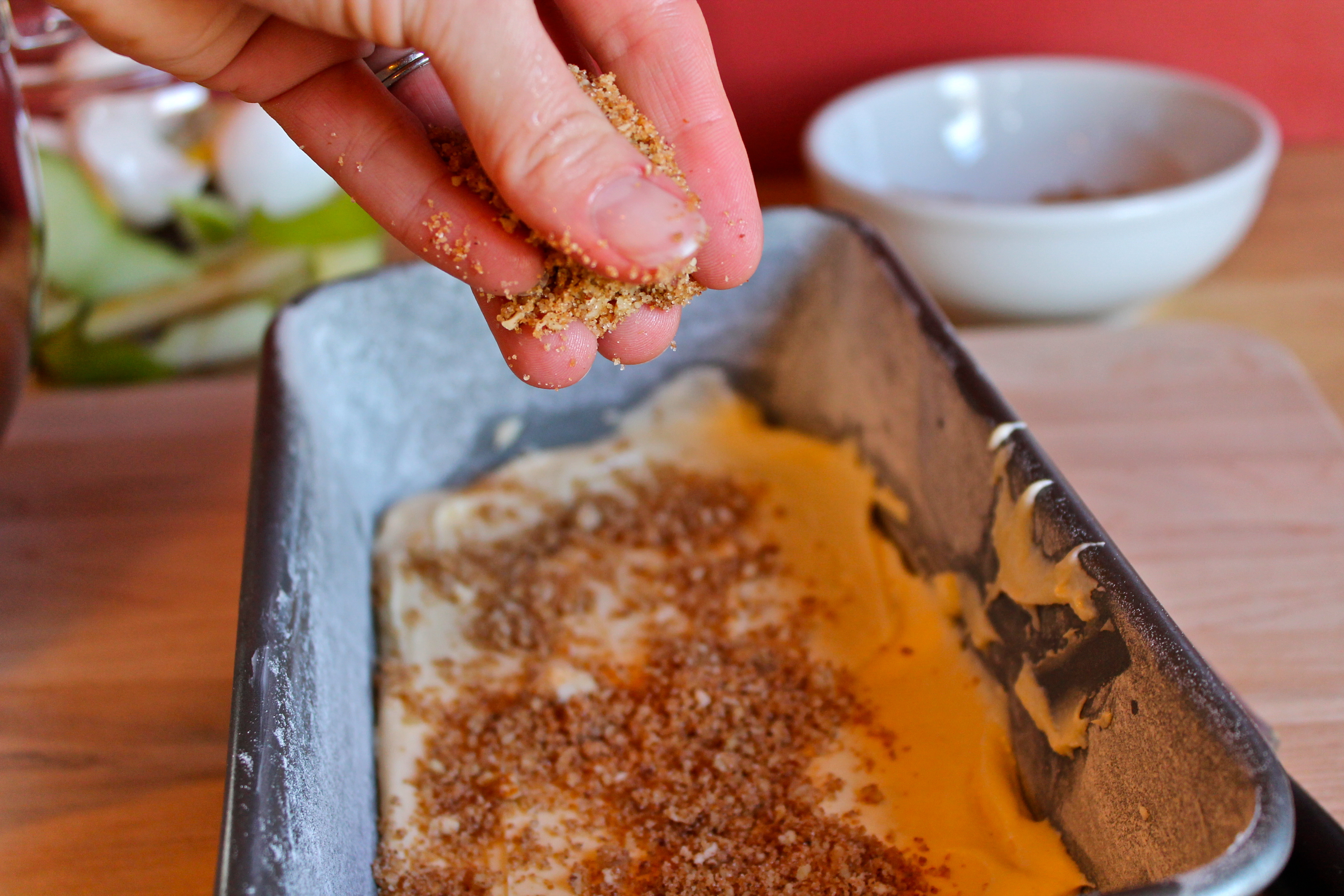
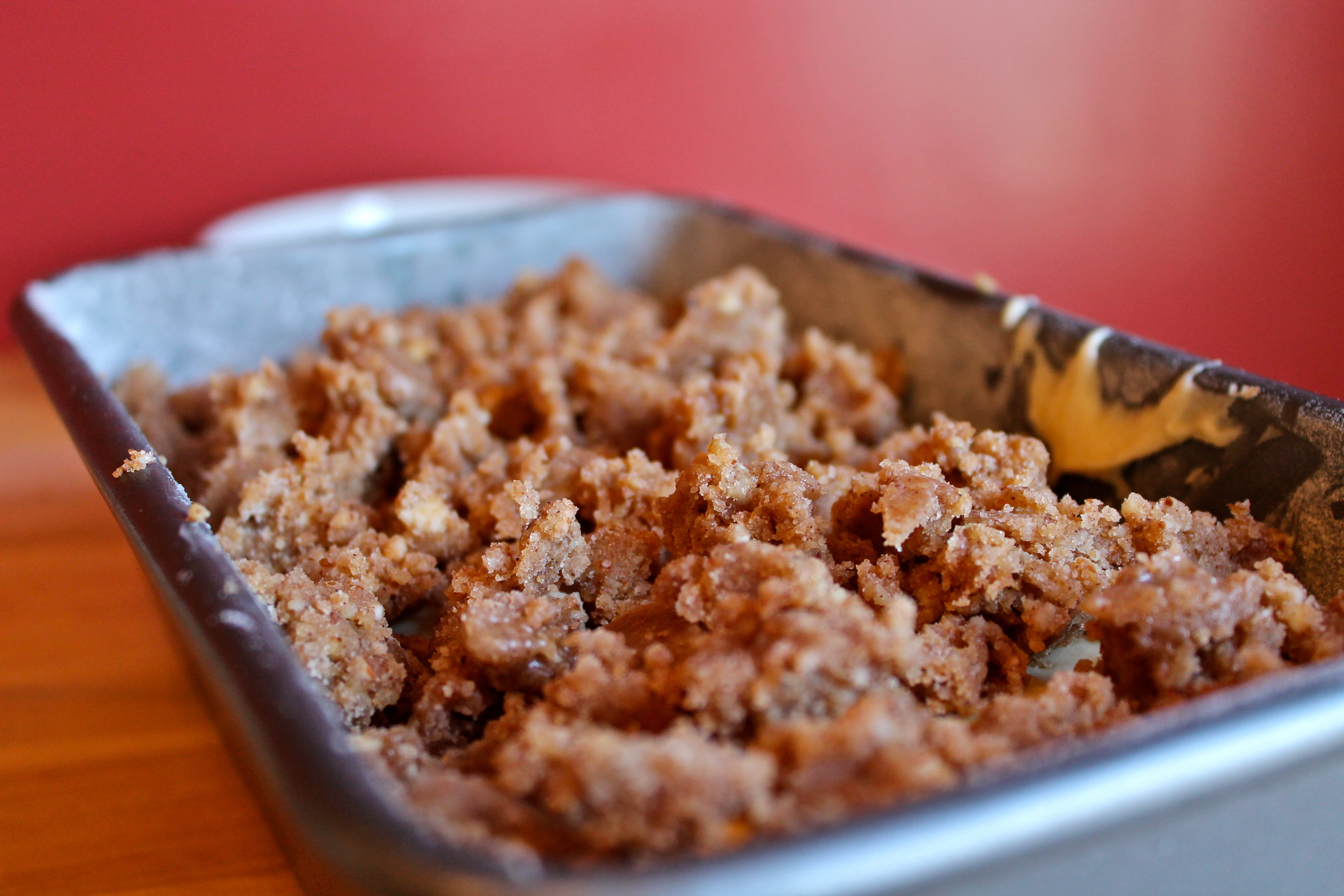
Scrape about 2/3 of the batter into the prepared pan.  Smooth the surface, then sprinkle with the reserved ½ cup crumb mixture.  Top with the apple slices, arranging them in rows of overlapping slices.  Drop the reserved batter in large blobs over the fruit and spread it evenly using a small offset spatula or the back of a spoon.  The batter should be ¾-inch from the top of the pan.  Sprinkle with the crumb topping.

Bake the bread for 50-60 minutes or until a wooden toothpick inserted in the center comes back clean and the bread springs back when pressed lightly in the center.  If tested with an instant-read thermometer, the center of the bread should read 200 degrees Fahrenheit.  Tent the bread loosely with buttered foil after 45 minutes to prevent overbrowning.

Remove the bread from the oven and set it on a wire rack to cool for 10 minutes.  Place a folded kitchen towel on top of a flat plate and cover it with plastic wrap.  Oil the plastic wrap.  Loosen the sides of the bread with a small metal or plastic spatula, and invert it onto the plate.  Grease a wire rack and reinvert the bread onto it, so that it is right side up.  Cool completely, about 1 ½ hours, before wrapping airtight

No-Knead Apple Bread

23 Dec

It’s possible that there has never been a recipe as wholeheartedly embraced, and universally loved, as Jim Lahey’s recipe for no-knead bread that appeared in the New York Times half a decade ago.  There’s good reason, too.  Being able to make a delicious, totally foolproof artisan bread in the comfort of your own kitchen is a seemingly miraculous achievement.  And just when you thought that Lahey’s recipe, perfect as it is, could never, ever be improved upon, here comes this great tutorial from Savory Sweet Life  (our sites have very similar names, but that occurrence is nothing more than a weird coincidence) about how to make Lahey’s bread an even more foolproof affair.  By removing the least pleasant aspects of Lahey’s recipe (the very messy resting period atop a floured cloth, the even messier transfer of the rested dough into a wicked hot Dutch oven), Alice from SSL somehow managed to improve upon what I’ve always considered to be a nearly flawless recipe.

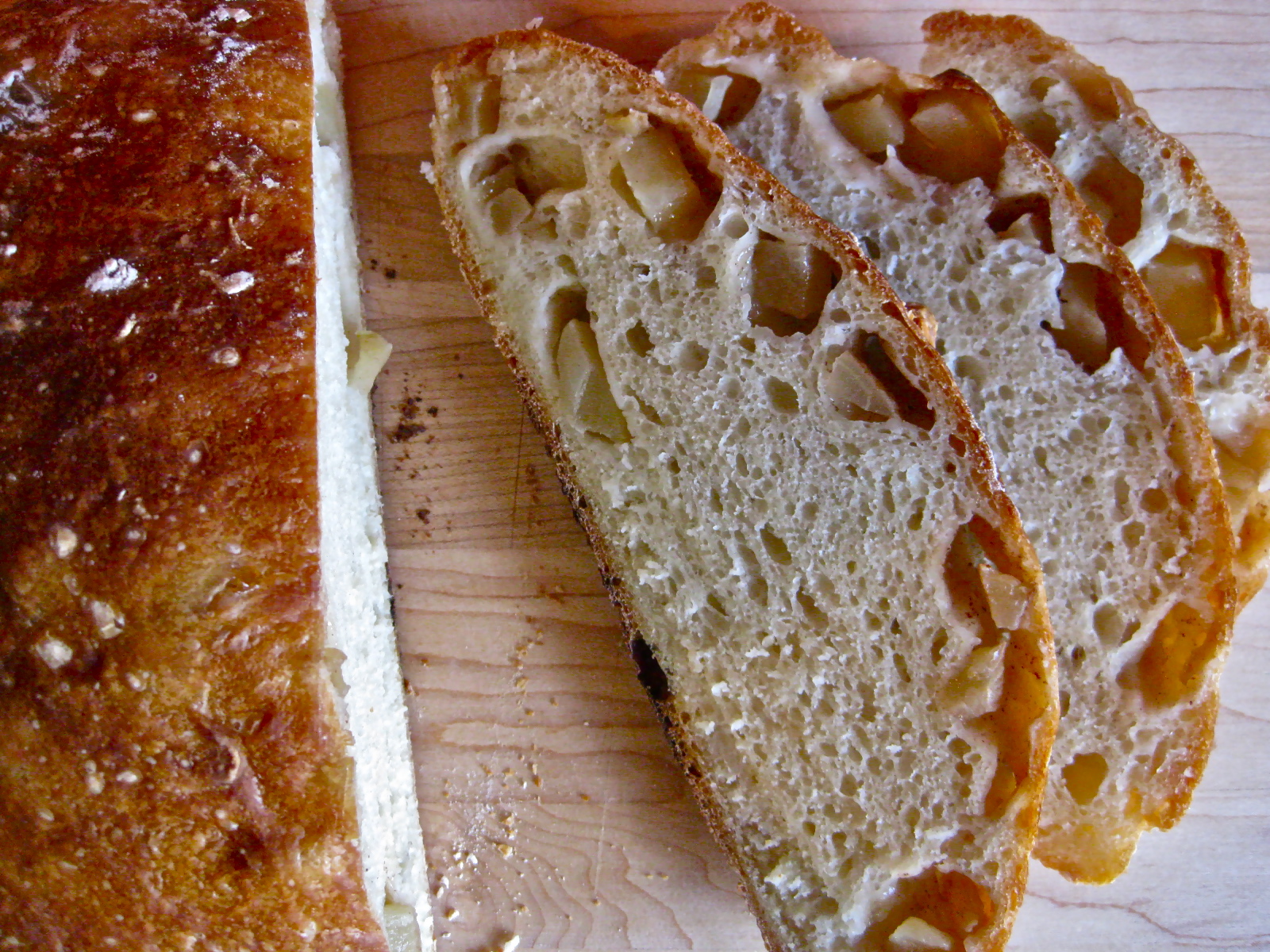
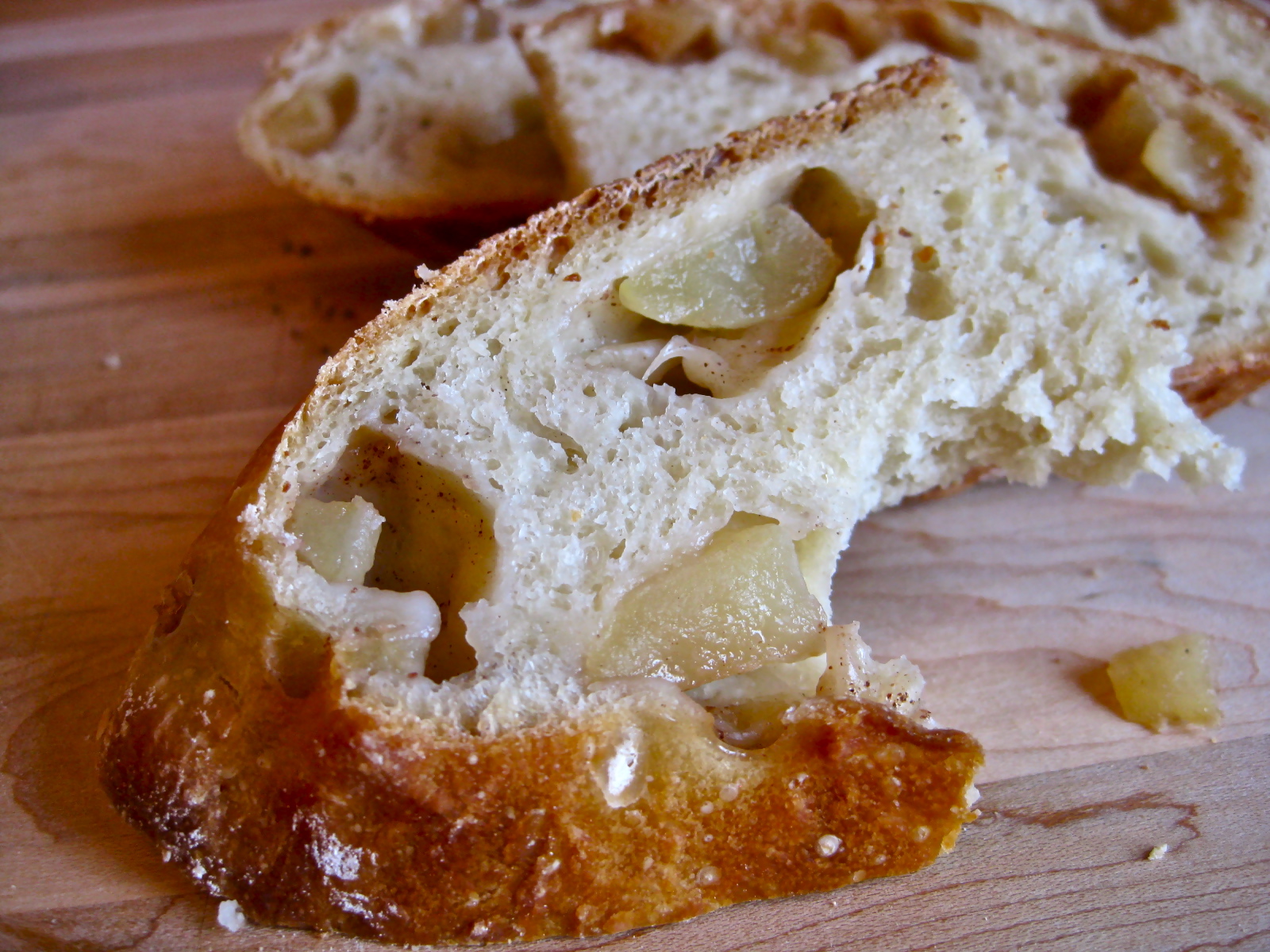
That said, a perfect recipe is still open to fiddling, and in my own kitchen I’ve recently taken to making Lahey’s bread, via Savory Sweet Life, with a bit of my own twist.  On a whim, I one day decided to fold some very lightly spiced apples into the bread dough, thinking that if I was lucky, the apples would settle nicely throughout the bread and bake up perfectly tart and sweet; if I was unlucky, the apples would sink to the bottom of the dough and form a terrible, congealed mass of wet, doughy disaster.

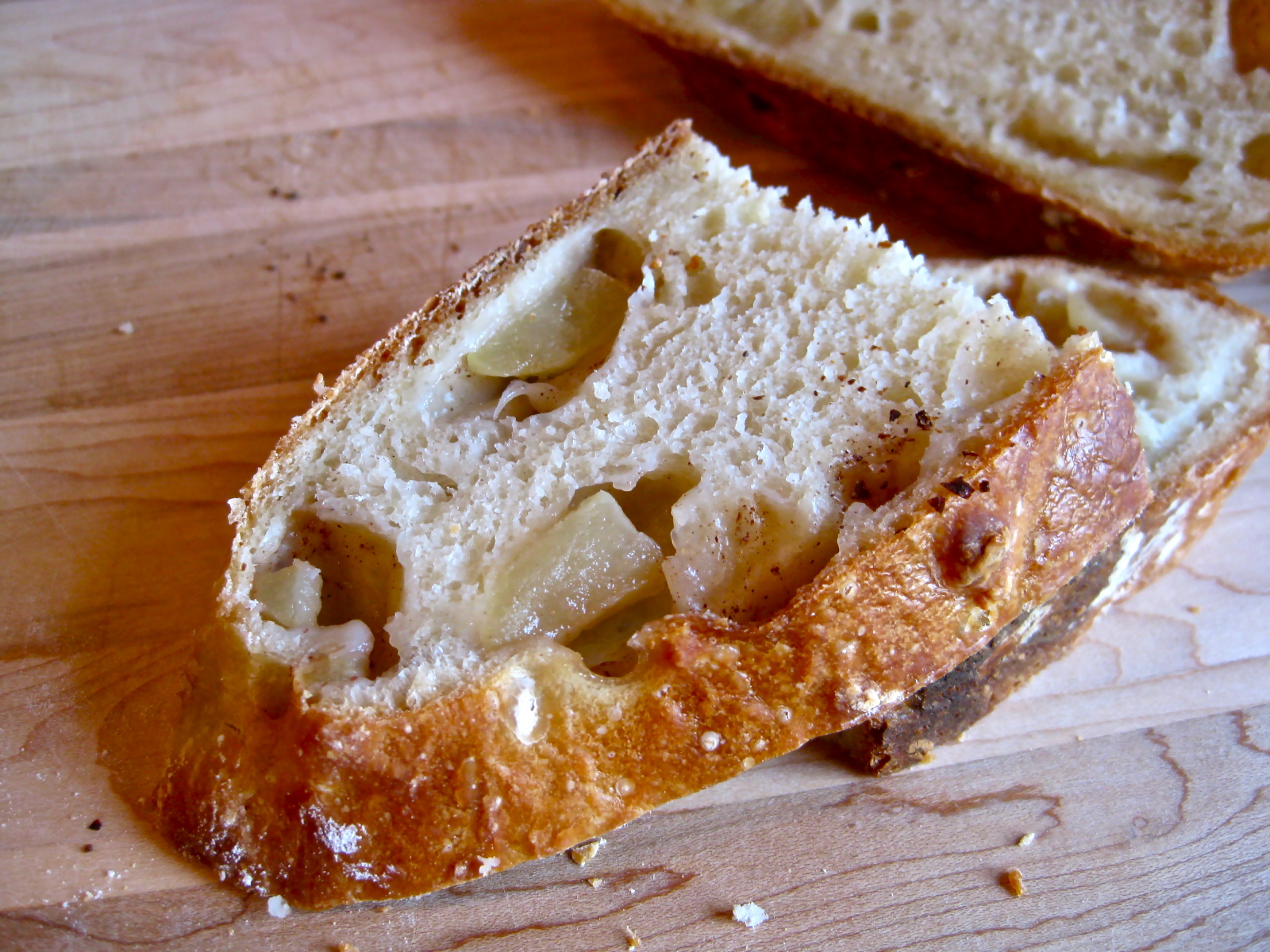
Success prevailed!  And I’ve now baked this bread enough times to declare it my favorite morning bread.  It’s perfect as toast, with a slice of sharp cheese, or smeared with almond butter.  Because Alice’s method of making the bread eliminates both the second rise and the step of heating up a cooking vessel in a preheated oven, you can wake up early, chop up an apple, fold it into the bread, then plop the bread straight into the oven.  An hour later, after you’ve showered, had a cup of coffee, read roughly two dozen books to your child, and managed to prepare yourself for making some breakfast, your bread is done.

Having a small child, our Christmas morning is guaranteed to begin well before the sun rises.  My plan this year is to mix up a batch of no-knead bread dough (which takes all of three minutes, if that) on Christmas Eve, leave it to rest overnight, and then fold in some apples on Christmas morning while I am preparing some coffee.  The bread will go in the oven, my son will pace around the Christmas tree, eventually tackling the presents underneath like a ferocious lion attacking a gazelle, and then, when the mayhem subsides, the bread will be ready.  Just in time for a family breakfast, we’ll have fresh bread.  Crisp on the outside, piping hot in the middle, the apples strewn artfully about the loaf, it’s a great complement to any meal, on any day.

No-Knead Apple Bread

Adapted from the New York Times and Savory Sweet Life

3 cups unbleached all-purpose flour

¼ teaspoon instant, rapid-rise yeast

1 ¼ teaspoons salt

1 5/8 cup of warm water (this essentially equals 1 ½ cups plus 2 tablespoons of water)

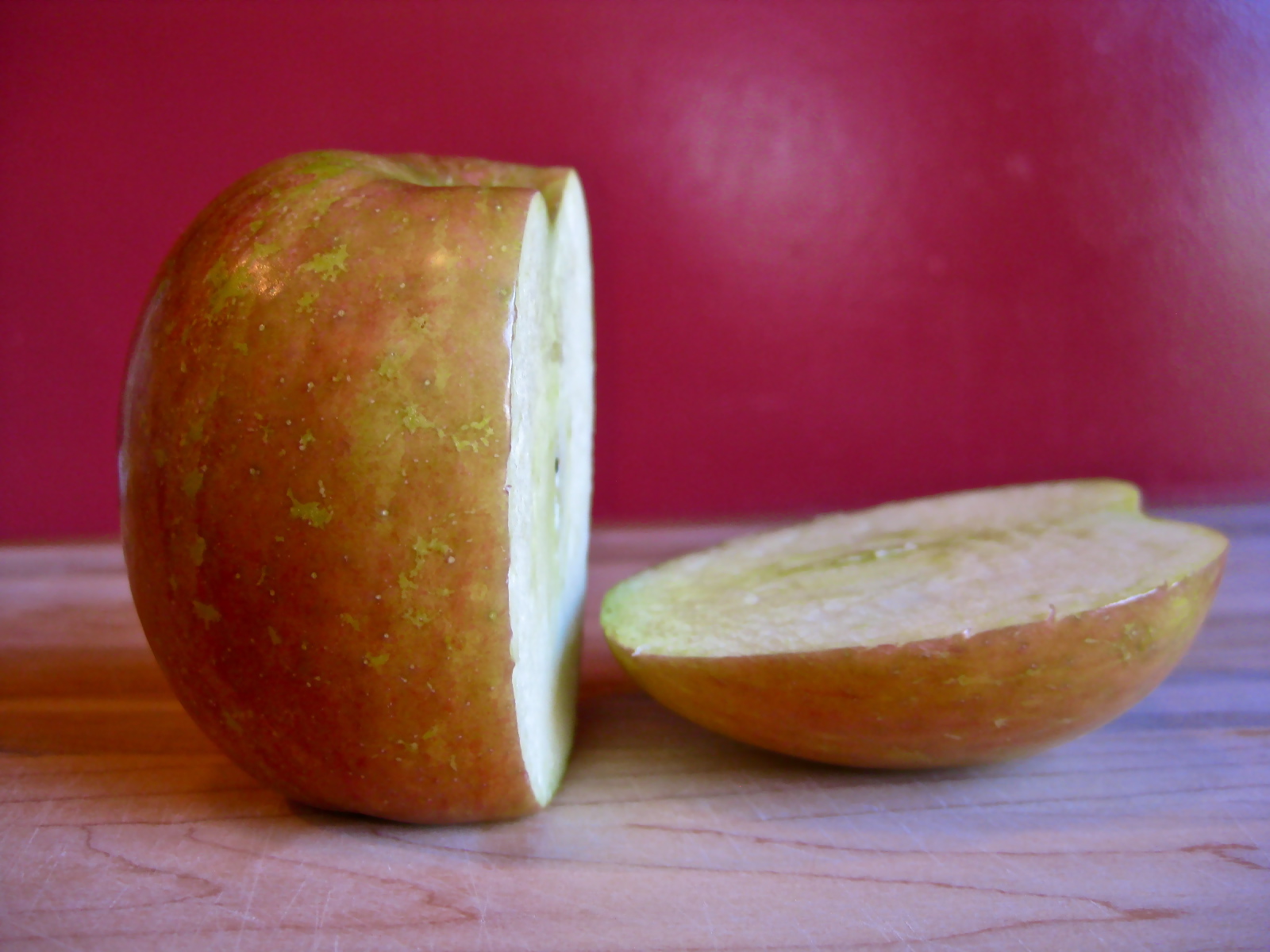
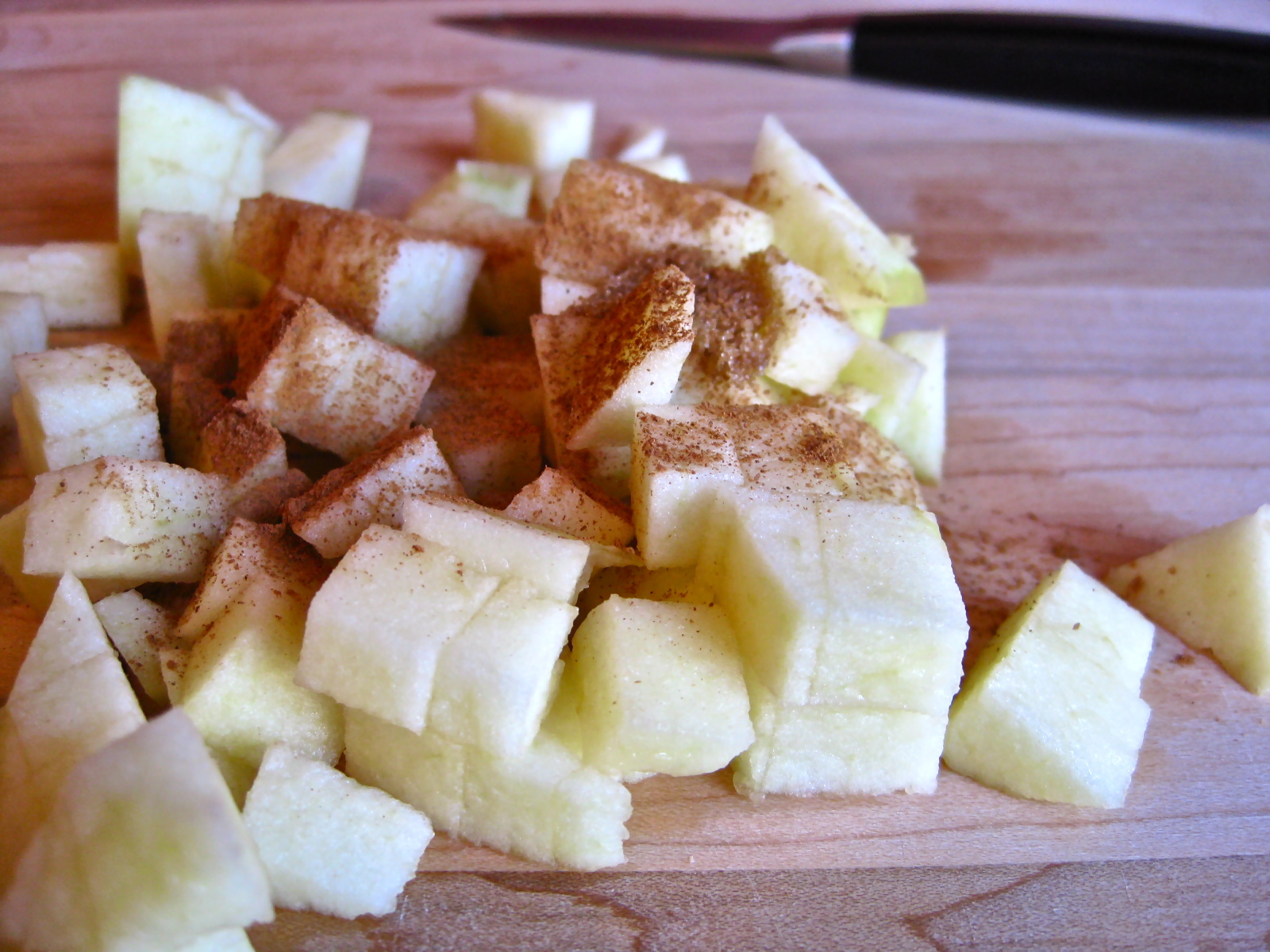
1 apple, cored, peeled and diced into ¼-inch chunks

¼ teaspoon dark brown sugar

1/8 teaspoon ground cinnamon

extra flour, for dusting

Note: You will NOT be preheating the oven while you prepare the bread dough.

In a large bowl, combine the flour, yeast, and salt.  Don’t let the salt come into direct contact with the yeast, as it might kill it.  Add the warm water, and stir everything together.  The dough will appear quite wet and shaggy.  Cover the bowl with plastic wrap, and let rise at room temperature overnight for at least 12 hours, preferably closer to 18 hours.

The next morning, cut a small round of parchment paper and fit it inside the bottom of a large heavy pot or Dutch oven with a tight-fitting lid (I use an enameled cast iron pot, which works perfectly).

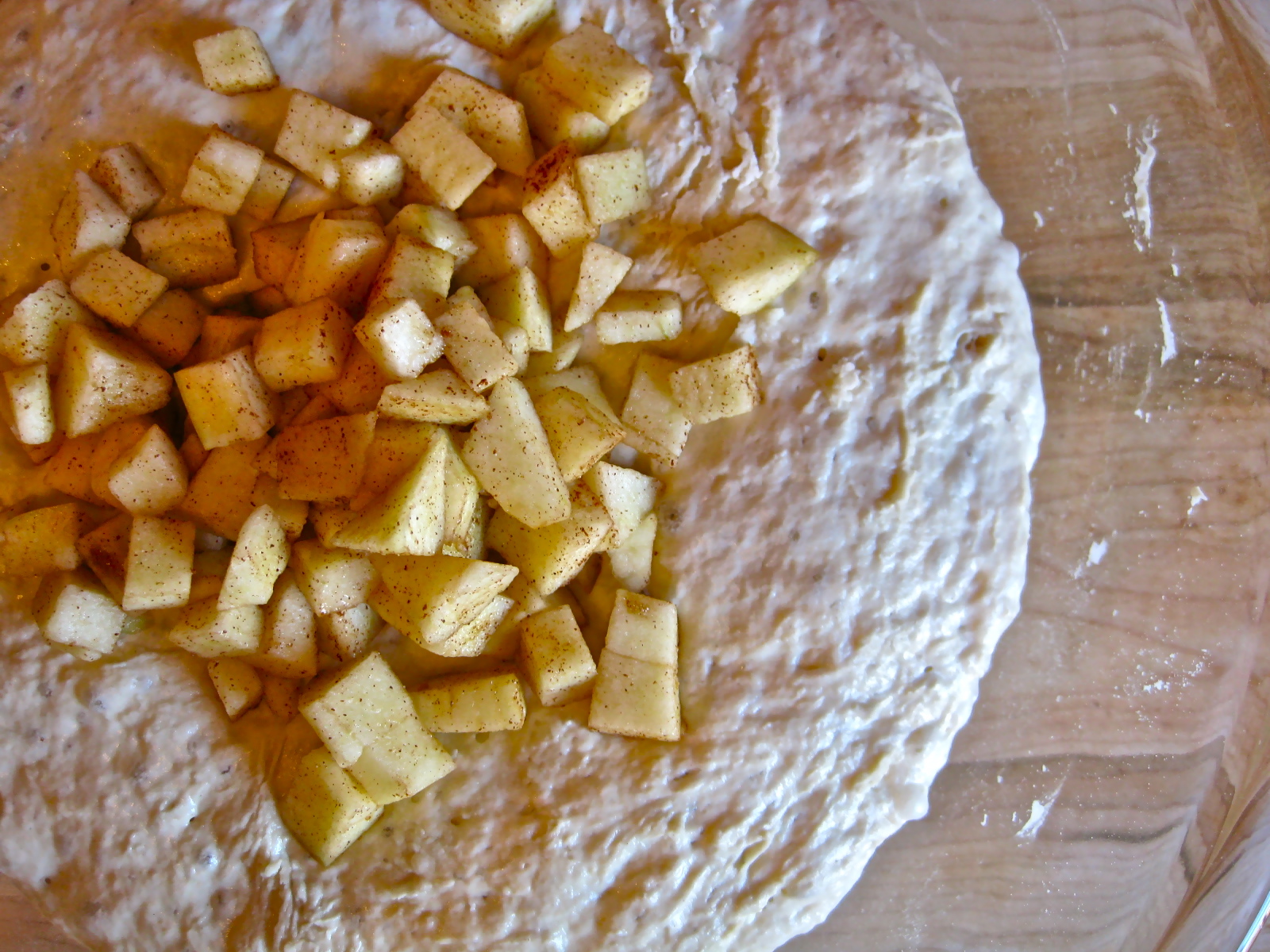
When you have diced up the apple, sprinkle the dark brown sugar and cinnamon on top of it.  Don’t even bother putting them in a bowl to do this—just sprinkle everything on top of the pile of apple chunks and mix it together with your hands.

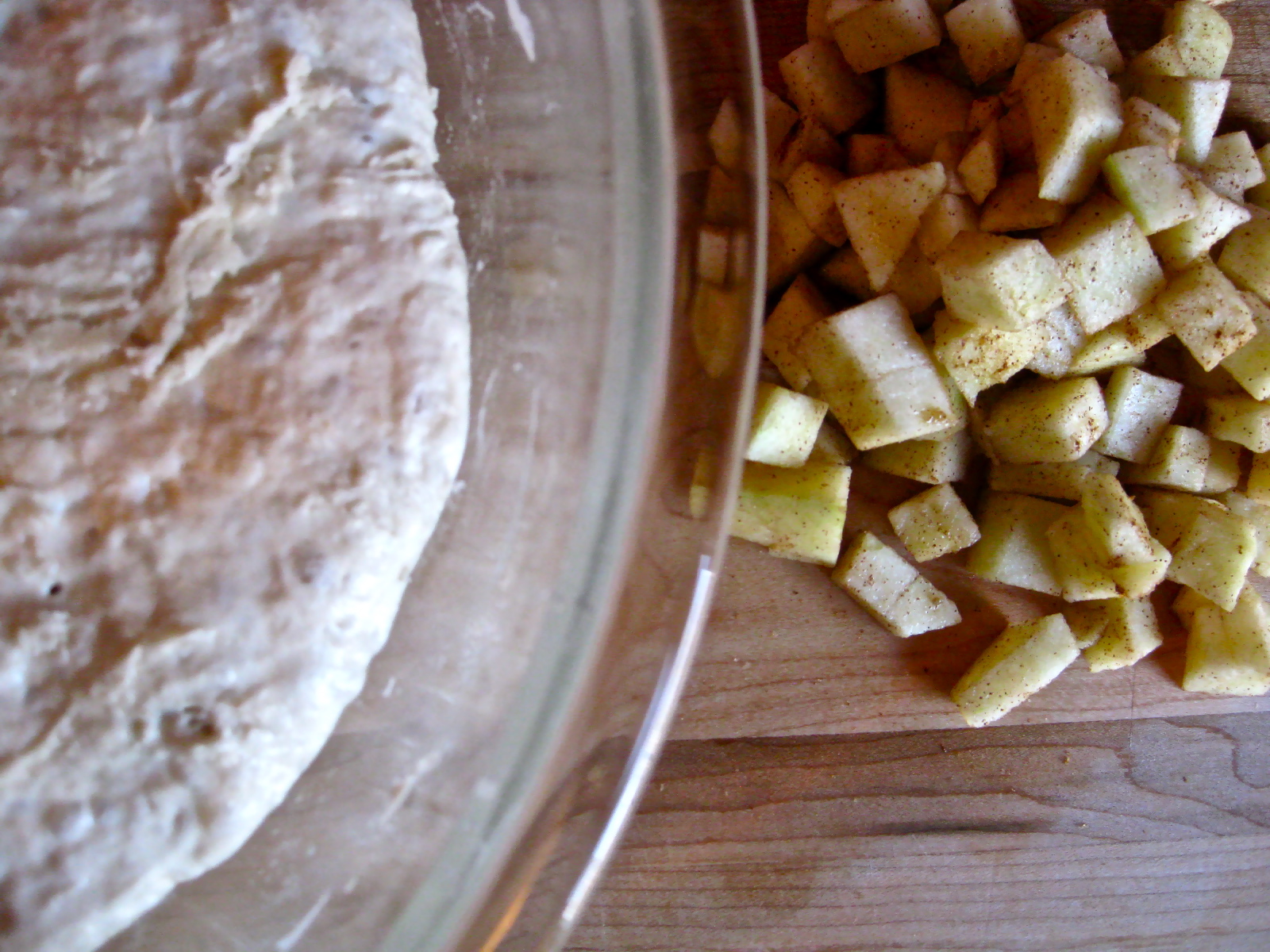
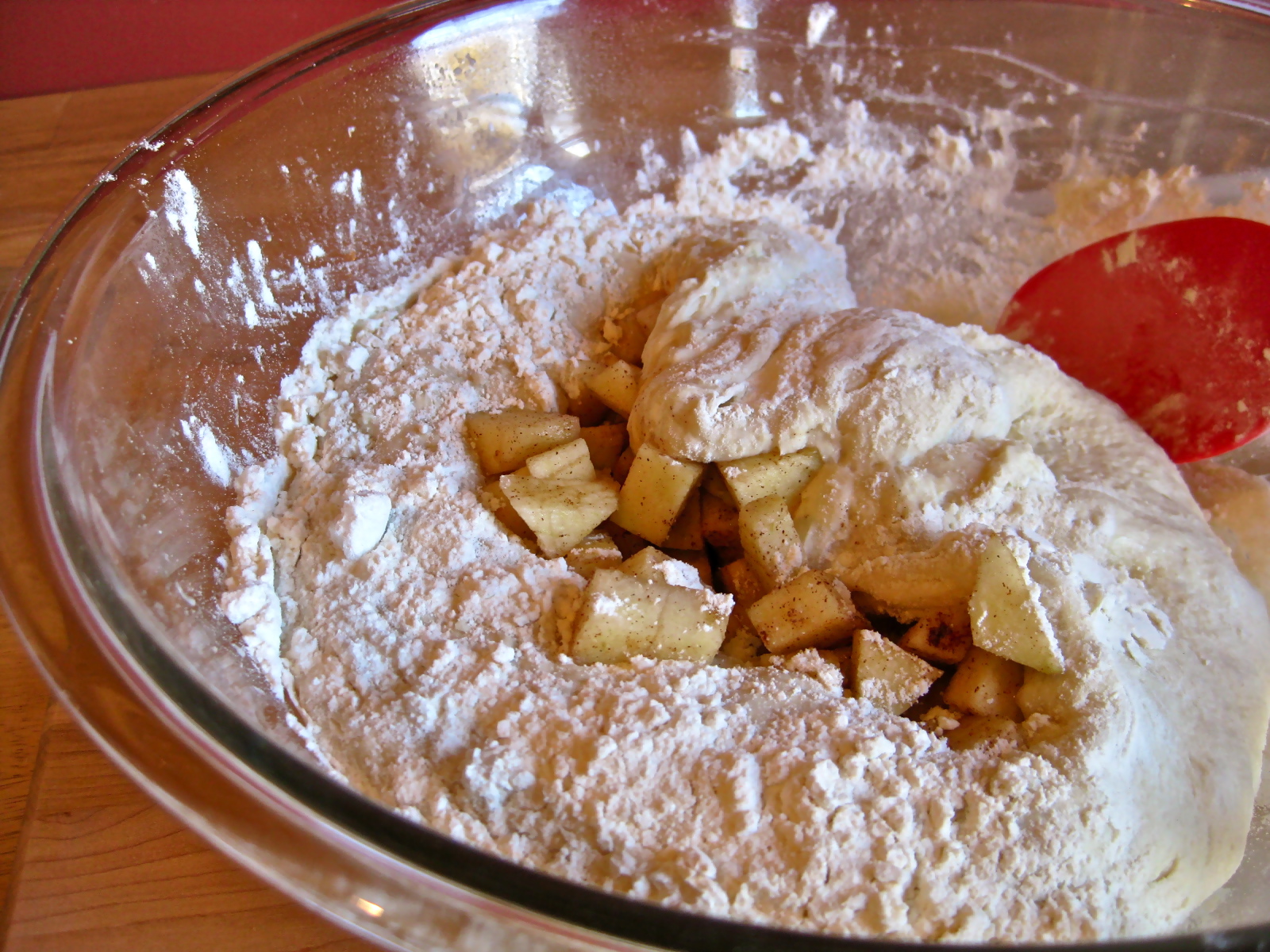
With the dough still in the bowl, place the spiced apple chunks in the middle of the dough.  Sprinkle a good amount of flour around the perimeter of the dough, then, using a flexible spatula or silicone spoon, fold the edges of the dough over the apples in the middle of the dough, turning the bowl to follow your fold.  If the dough absolutely won’t let go of the side of the bowl, sprinkle a bit or flour over the stubborn spots.

Carefully turn the dough out into the heavy pot.  It will not look terribly attractive at this point, and it might have gotten a bit ripped in the process, but that’s fine.

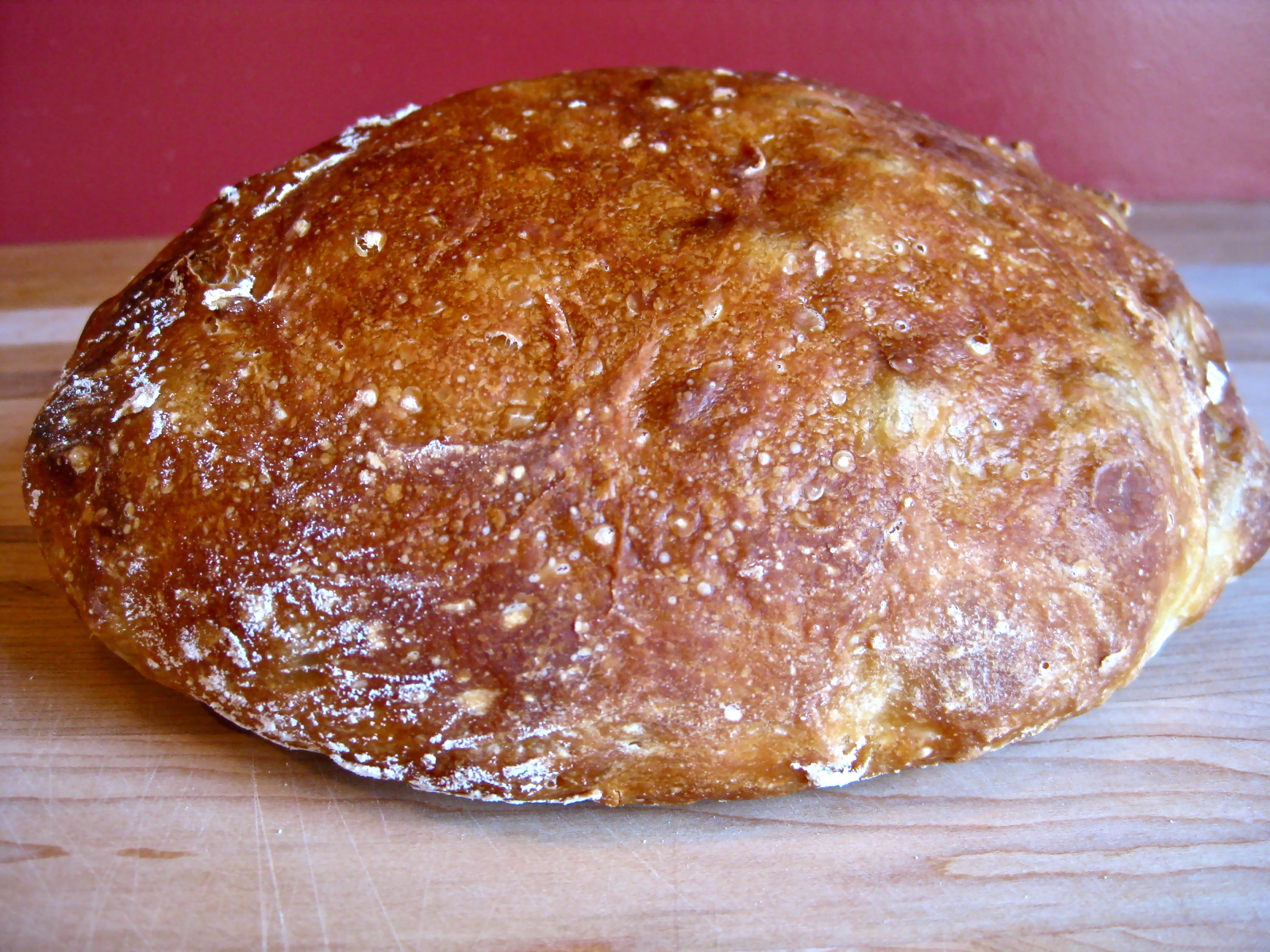
Place the lid on the pot, and place the pot in the cold oven.  Turn the oven on to 450 degrees Fahrenheit, and set a timer for 30 minutes.  After 30 minutes have passed, carefully remove the lid from the scorching hot pot, and continue to bake the bread, uncovered, for an additional 30 minutes.  When the bread is done, it will be deeply browned on the outside, with a visibly crackly crust.

Allow bread to cool for at least 15 minutes before cutting into it. The apples are super hot when the bread first emerges from the oven, and they need time to calm down so you don’t burn yourself when you bite into them.

Makes 1 loaf.

Dutch Apple Pie

5 Dec

For a very long time, I thought I had come up with the greatest pie dough recipe I’d ever had the pleasure of working with, and subsequently eating.  It was flaky, it behaved well, and the end product was always a delight.  My pie dough recipe had a squeeze of lemon juice in it, which aided the goal of keeping the gluten in the flour undeveloped and, as an end result, the dough never turned out tough.  My only complaint, small as it was, was that the dough never really developed the dozens of flaky layers that I always wanted to see in my pie dough.  Sure, there were layers of crisp flakiness, but not innumerable layers (like I said, small complaint).

Last Thanksgiving, I decided to try out a different pie dough.  Turning to my bible of all things pastry, I settled on using Tartine’s flaky tart dough, an unsweetened, highly buttery dough that I already knew I absolutely loved in savory applications.  Now, here comes the part where I instruct you all to recite with me the discovery I made about this dough when used in a pie, because, by now, you all know what I am going to say when it comes to Tartine and the food it produces: This, my friends, is the greatest pie dough in all the land.

So buttery, so simple to work with, and so unbelievably flaky, this is the very pie dough I have been looking for my entire life.  The best part is, there is no secret to the dough.  There are four ingredients, there is a standard mixing method, and then there is a nice long resting period in both the refrigerator and the freezer.  If I were to really take a stab at what I think makes this dough so fantastic, I’d have to go with three possible suspects.

First of all, the proportion of butter to flour is marginally larger than my former favorite recipe, and it is absolutely perfect.  Second, giving the dough a long resting period in the refrigerator before rolling it out and forming it seems to add a particularly fine texture to the dough, as you are allowing the butter, water, and flour to adhere to one another better without coaxing them along with your hands or a food processor and working the flour’s gluten too long, thus making the dough tough.  A well-chilled dough also allows the small, pea-sized chunks of butter to firm up slightly, which makes the flour and water form tiny little pockets around the butter pieces, which results in a super tender and flaky crust when baked.  I rested this pie dough in the refrigerator overnight and it was simply dreamy.

Third: no sugar.  No sugar.  So simple, right?  For some reason I always thought that I had to add a tiny shot of sugar to my sweet pie and tart dough, but, now that I think of it, that makes absolutely no sense.  If you pie’s filling is going to be sweetened, why gild the lily and sweeten up your dough as well? The lack of sugar in this dough allows the flavor of the butter to really shine in a glorious and uncomplicated way, which bodes well for the dough’s richly sweet filling.

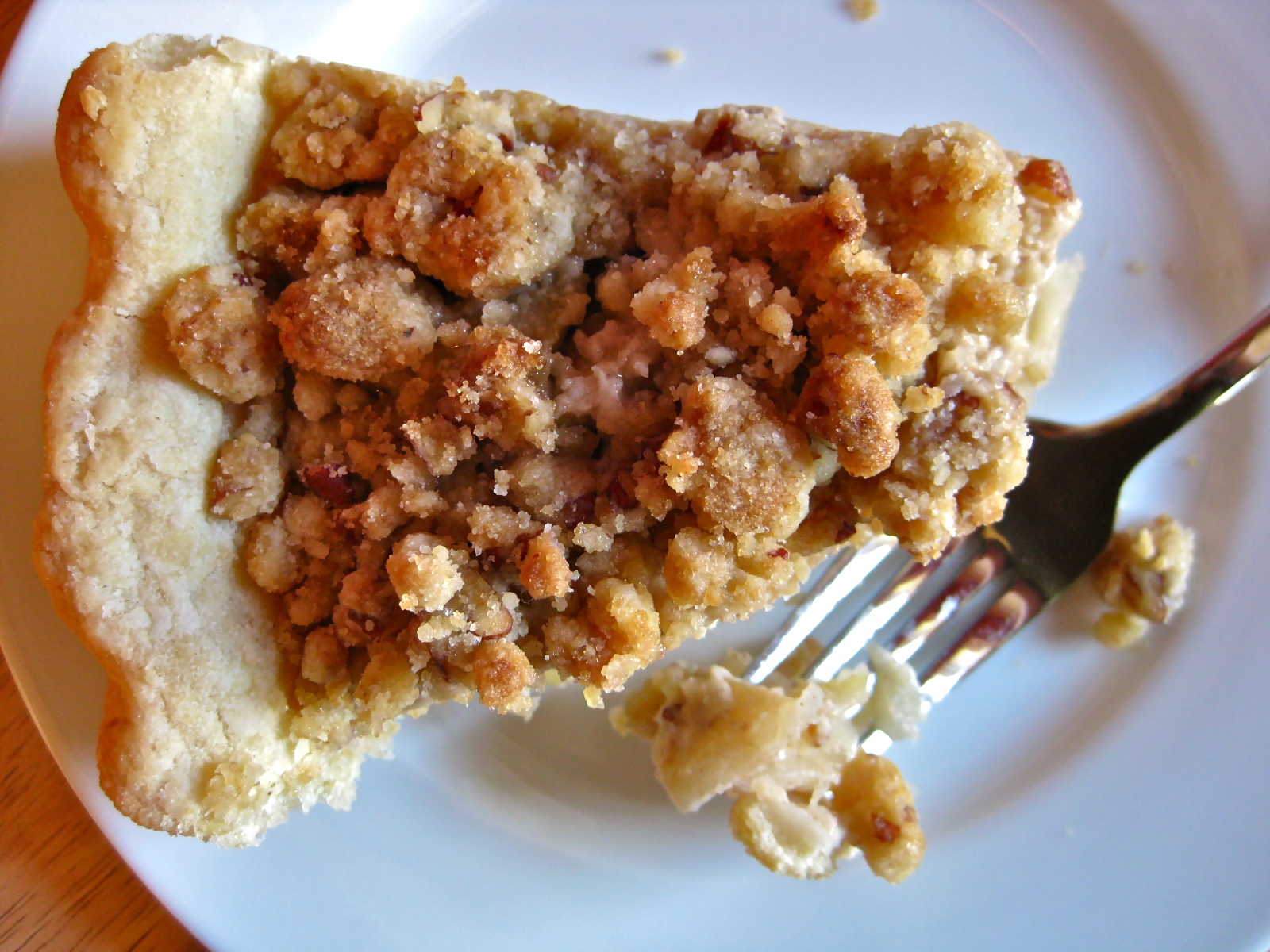
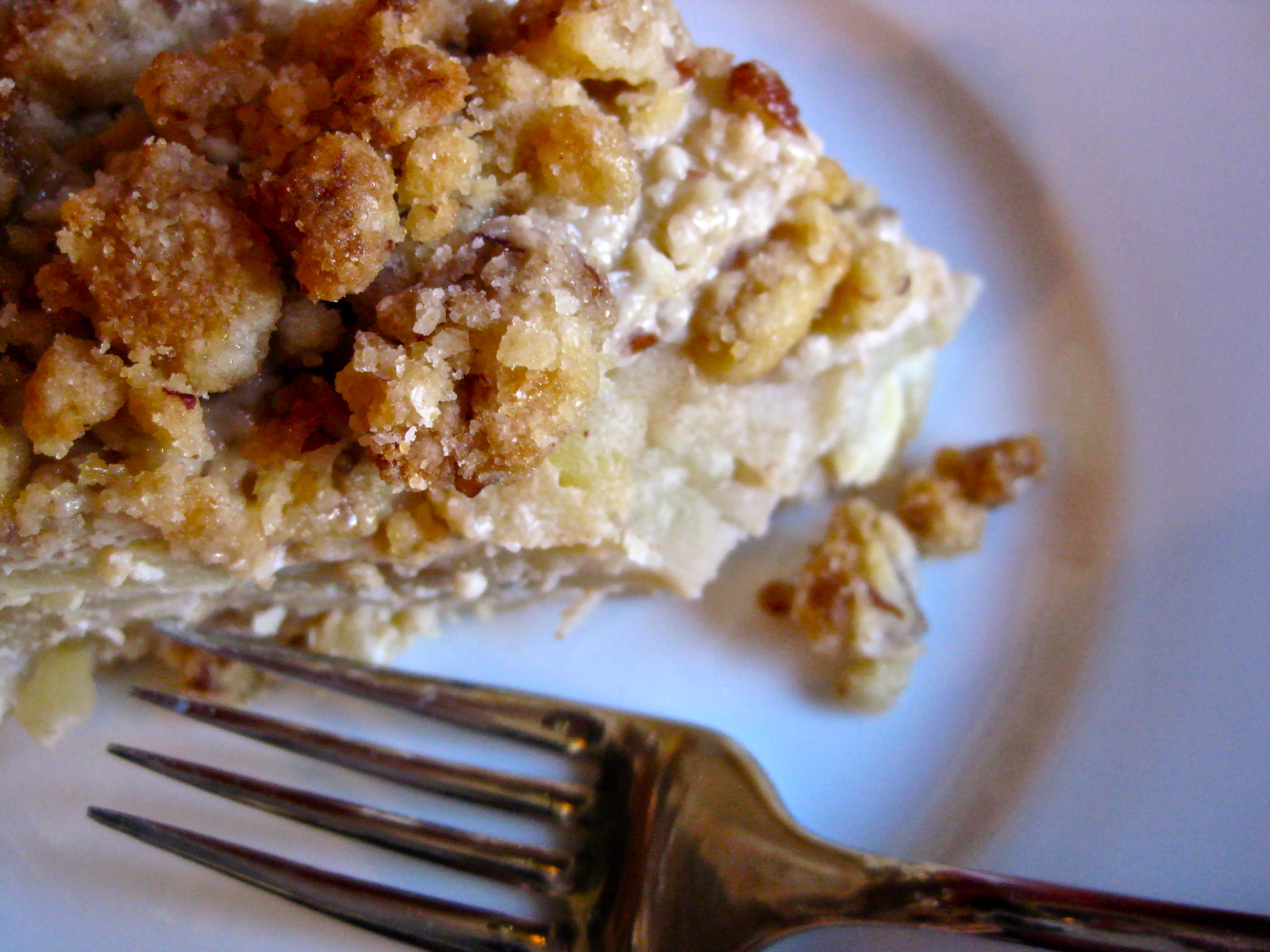
Which brings me, finally, to the rest of the recipe.  A hybrid of a Cook’s Illustrated recipe and what I remember about the Dutch apple pie at the restaurant where I worked as a teenager (which called the pie a French apple pie, as there seems to be quite a bit of overlap concerning what people consider a French apple pie and a Dutch apple pie), the pie I ended up making is stuffed with sautéed tart apples and topped with a hearty, crumbly, pecan-crunchy lid.  When baked, the crisp topping settles into the nooks and crannies left open by the baking apples, leaving no space unoccupied by tasty, cinnamon-laden glory.  At the risk of making two loud proclamations in one post, dare I say that this apple pie is the best apple pie I’ve ever had?  For now, yes.  But only time will tell if its throne will one day be conquered.  Tartine, it’s your move.

Flaky Tart and Pie Dough

From Tartine

1 teaspoon salt

2/3 cup (5 ½ ounces) very cold ice water

3 cups plus 2 tablespoons (1 pound) unbleached all-purpose flour

1 cup plus 5 tablespoons (10 ½ ounces) very cold unsalted butter

In a small bowl, add the salt to the water and stir to dissolve.  Place in the freezer to keep super cold until ready to use.

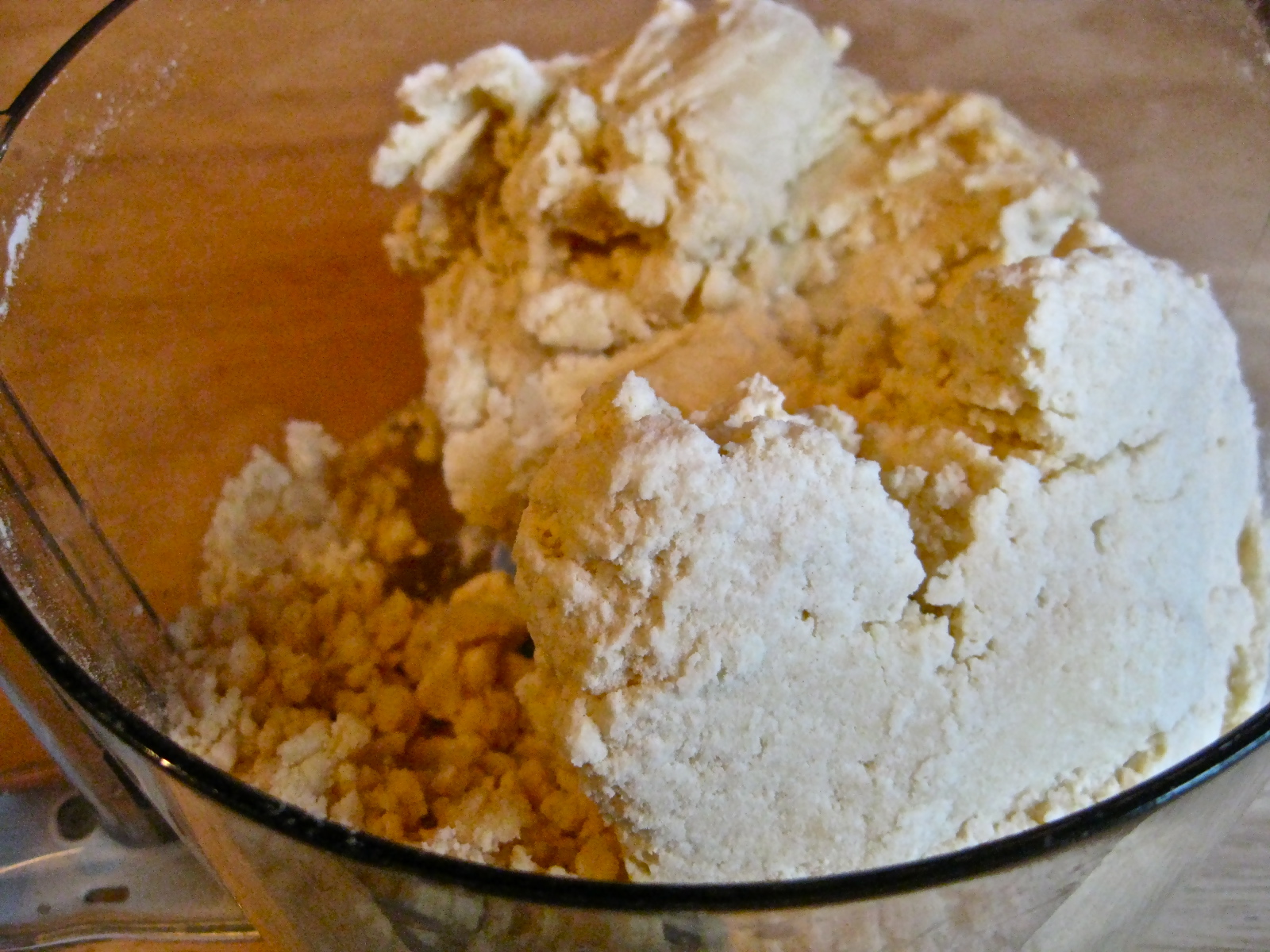
Place the flour in the bowl of a food processor, or in a large bowl.  Cut the butter into 1-inch pieces, then scatter over the flour.  If using a food processor, pulse the mixture briefly until it forms into large crumbs and some of the pieces of butter remain pea-sized.  If making the dough by hand, cut the butter into the dough using a pastry cutter.  You will want the dough to have the same crumb-like look with some large pea-sized chunks of butter throughout.

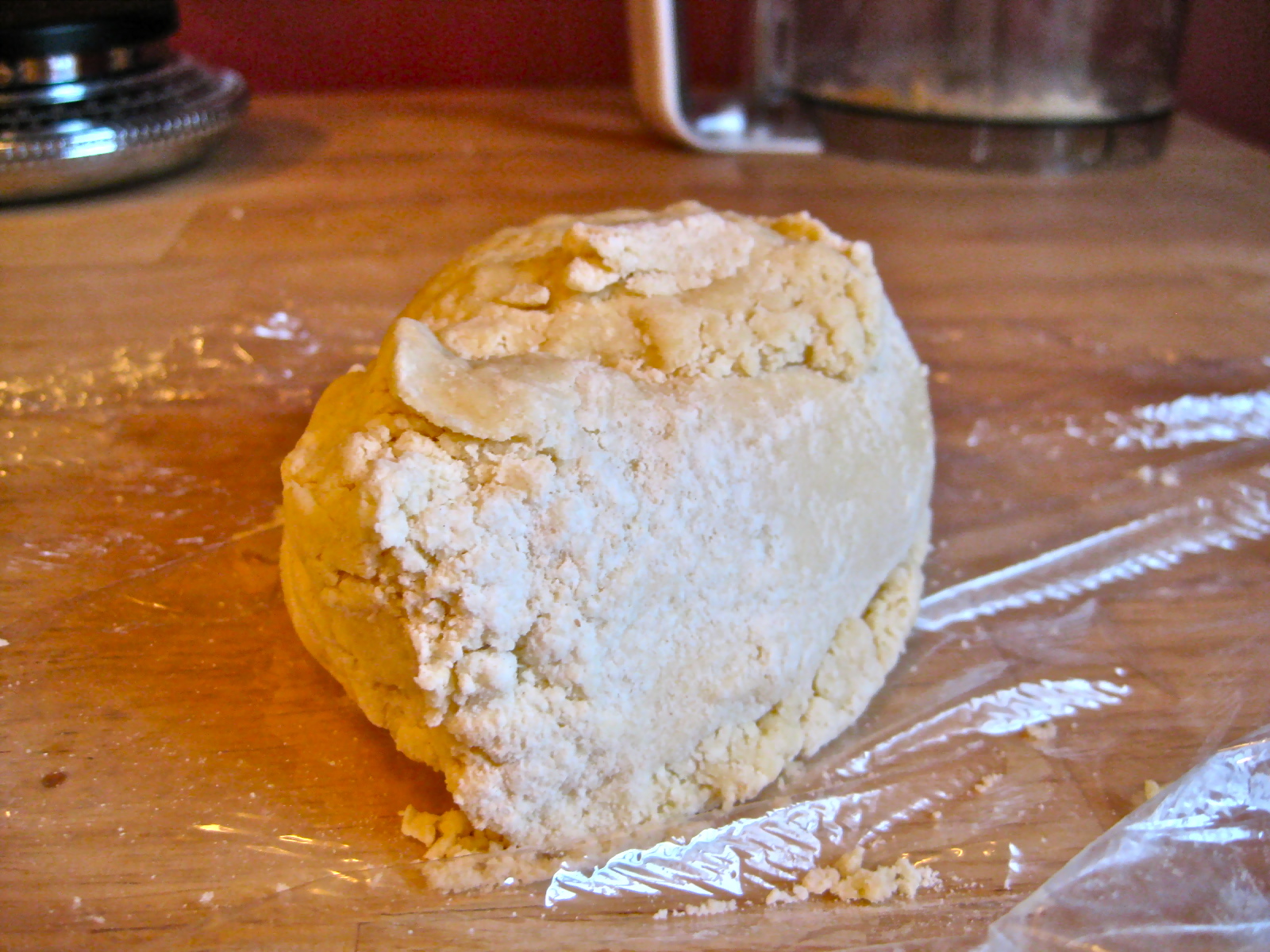
Drizzle the salt and water mixture over the dough and, if using a food processor, pulse until the dough comes together into a ball but is not completely smooth.  You should still see visible butter chunks.  If mixing the dough by hand, drizzle the salt and water mixture over the dough while tossing with a fork.  The dough should come together in a shaggy mass.  Gently mix the dough together until it comes together in a ball but is not completely smooth.  As with the food processor dough, you should still see visible butter chunks.

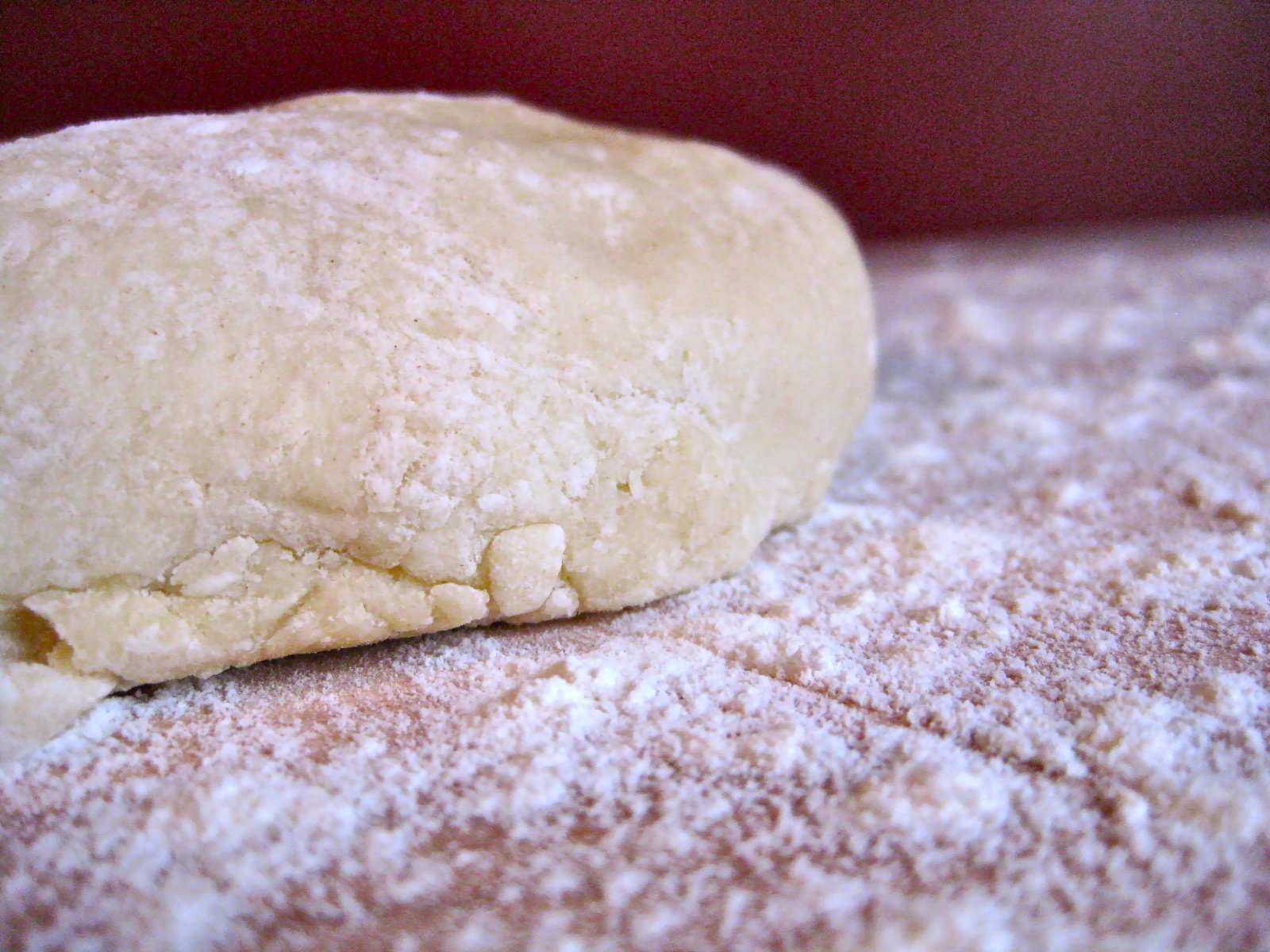
Divide the dough into 2 equal balls on a lightly floured surface.  Shape each ball into a disk about 1 inch thick.  Wrap each disk in plastic wrap and refrigerate at least 2 hours, preferably overnight.

Makes 2 9-inch or 10-inch tart or pie shells, enough for 2 single-crust pies or tarts, or 1 double-crust pie.

Dutch Apple Pie

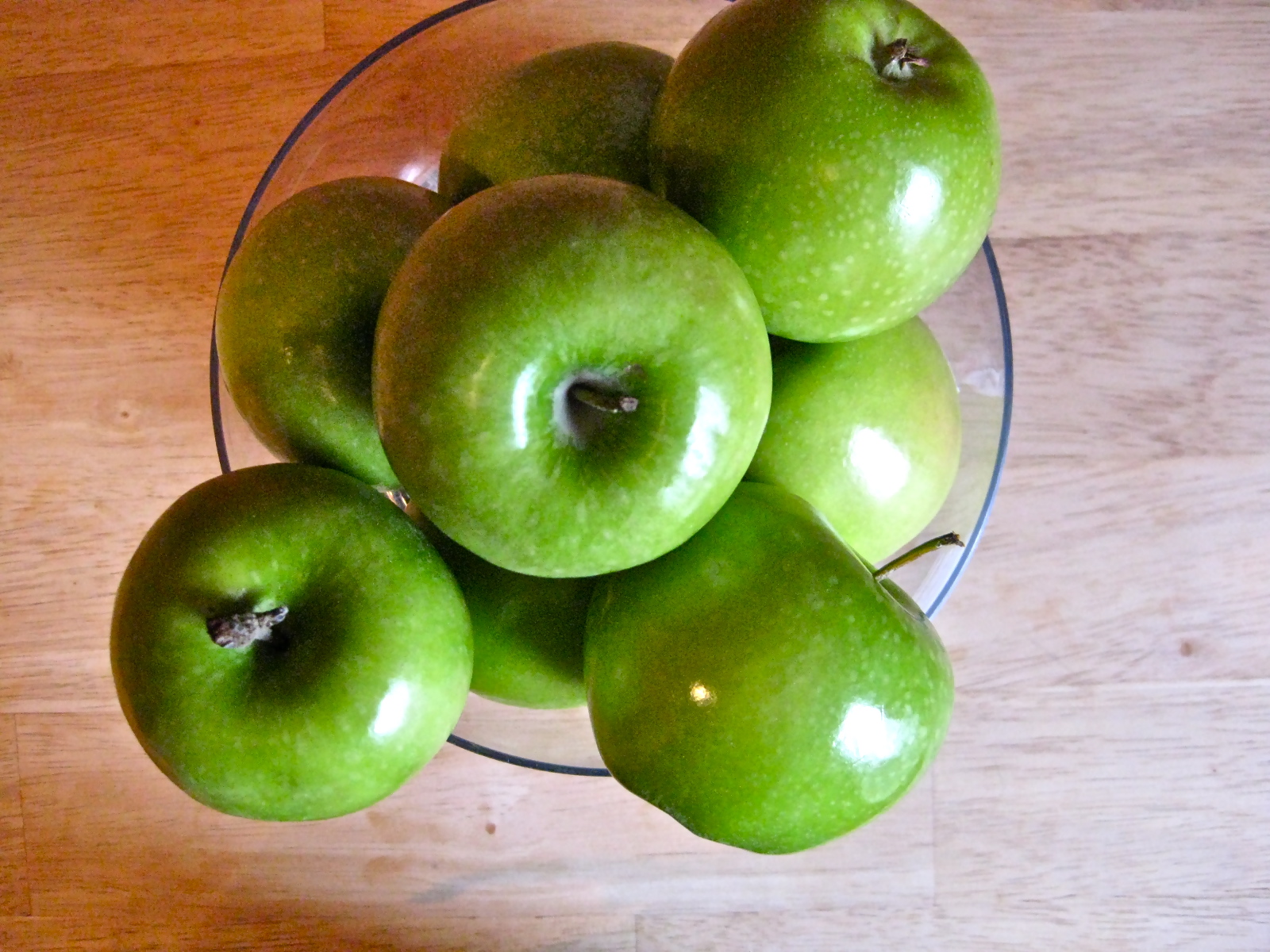
I have seen many apple pie recipes that call for a mix of tart and sweet apples, and I never understand why.  Tart apples, in addition to holding their shape so much better than sweet apples, provide the best flavor balance for the sweetness of a pie’s sugar and spice.  I know I tend to err on the side of less sweetened desserts these days, but, trust me, tart apples are the way to go with this recipe, or any other apple pie recipe, for that matter.

You will need:

Dough for 1 single-crust pie shell

Streusel

1 cup (5 ounces) unbleached all-purpose flour

1/3 cup (2 1/3 ounces) granulated sugar

1/3 cup packed (2 1/3 ounces) light brown sugar

¼ cup pecans, chopped medium-fine

pinch of salt

6 tablespoons (¾ stick) unsalted butter, melted and cooled

Filling

2 tablespoons unsalted butter

4 pounds firm tart apples (I used Granny Smith, the tartest, firmest apples I know), peeled, cored, and slice ¼ inch thick

¼ cup (1 ¾ ounces) granulated sugar

½ teaspoon ground cinnamon

1/8 teaspoon salt

½ cup heavy cream

Parbake the crust:

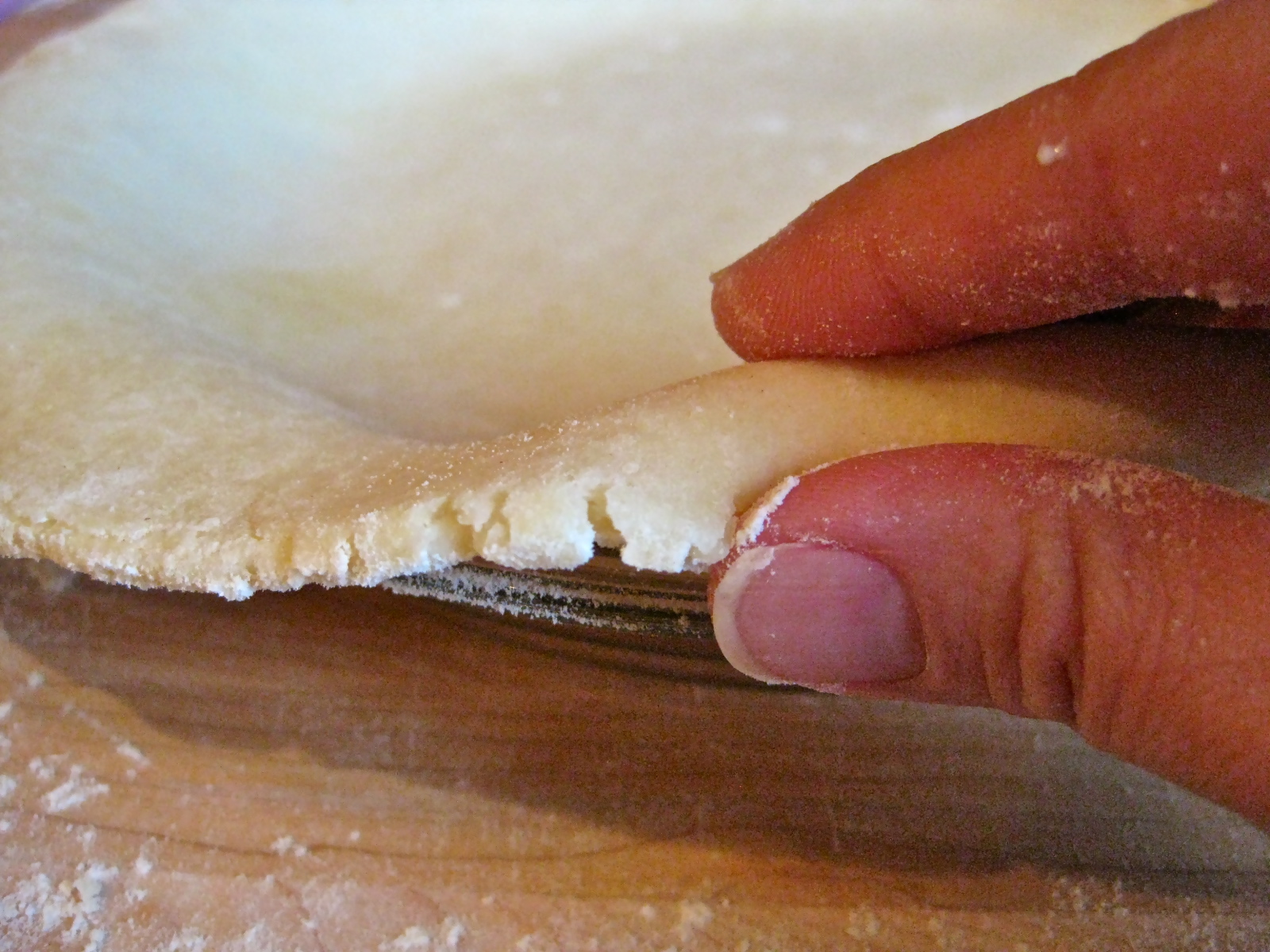
On a lightly floured surface, roll out your disk of chilled pie dough into a circle about 1 ½ inches larger than your 9-inch pie dish.  Gently transfer the dough to the pie dish, easing it into the bottom and sides, and pressing gently into place.  Using a sharp knife, trim the dough so it hangs over the pie dish by ½ inch, or, using your fingers, tuck the scraggly edges of the dough under itself and lightly press to adhere.  Using your fingers, crimp the edges of the dough to make a fluted edges, or using the tines of a fork, press the edges of the dough to flatted it against the rim of the dish.  Place the formed dough in the freezer for 30 minutes to 1 hour (this ensures the flakiest dough possible).

While the dough is chilling, preheat the oven to 375 degrees Fahrenheit and adjust an oven rack to the middle position.

When the dough is chilled and the oven preheated, line the chilled crust with a double layer of foil and fill with pie weights.  Bake until the pie dough looks dry and is light in color, 25 to 30 minutes.  Transfer the pie plate to a wire rack and remove the weights and foil.  With the oven still heated to 375 degrees, adjust an oven rack to the lowest position, and place a foil-lined baking sheet on the rack.

Make the Streusel:

In a medium bowl, mix together the flour, sugars, pecans and salt.  Drizzle with the melted butter, and stir the streusel with a fork until roughly combined.  Set aside.

Make the Filling:

Melt the butter in a large Dutch oven over medium-high heat.  Stir in the apples, cinnamon, sugar, and salt.  Cover and cook, stirring occasionally, for about 10 to 12 minutes, until the apples have just started to soften, and some of the apples have just begun to break down.

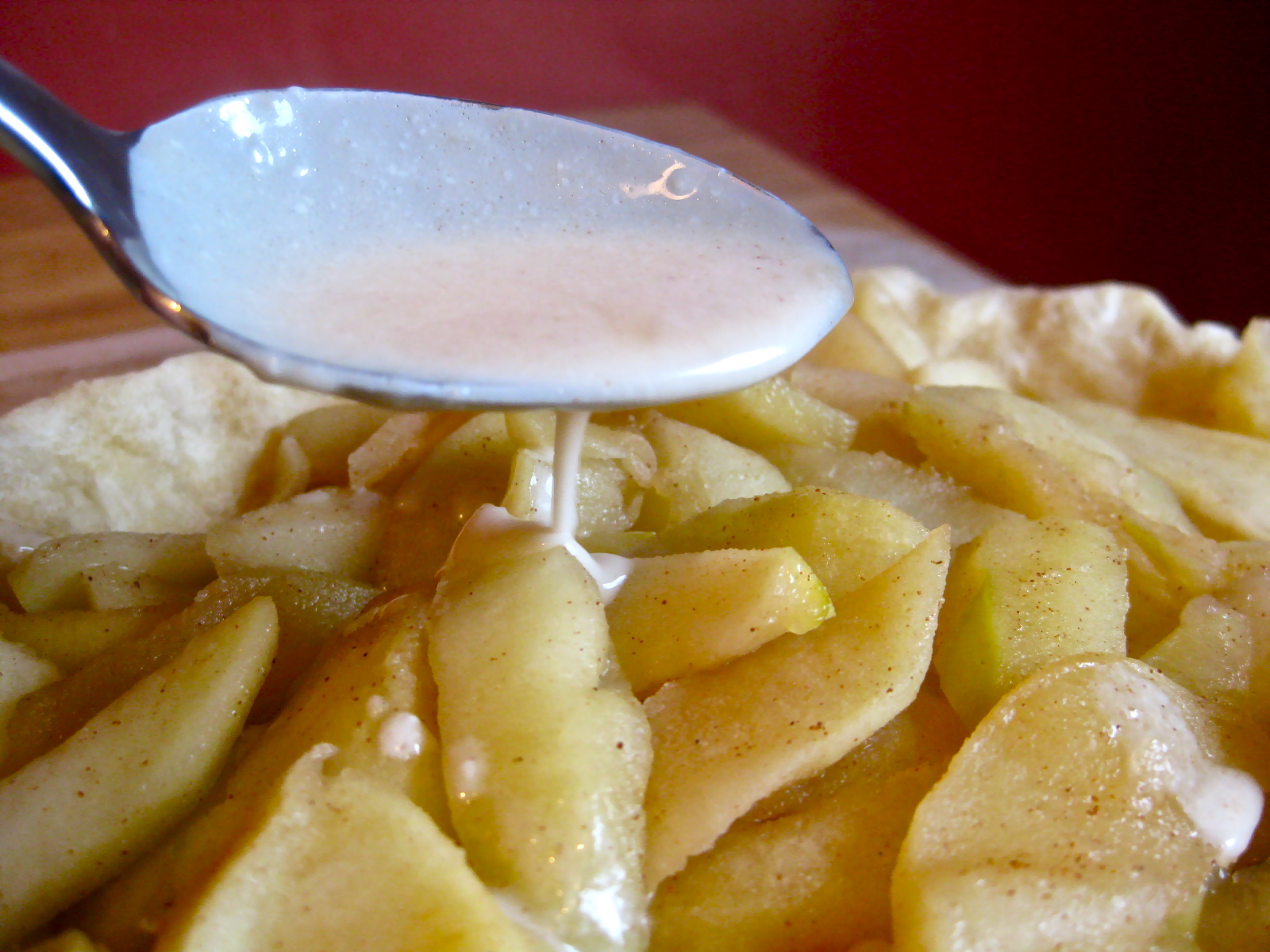
Set a large bowl under a colander.  Pour the cooked apples into the colander, allowing the juice to thoroughly drain into the large bowl set underneath.  In a small saucepan, combine the drained juice from the bowl with the heavy cream.  Cook over medium-high heat until thick and reduced by roughly half, about 3 minutes.

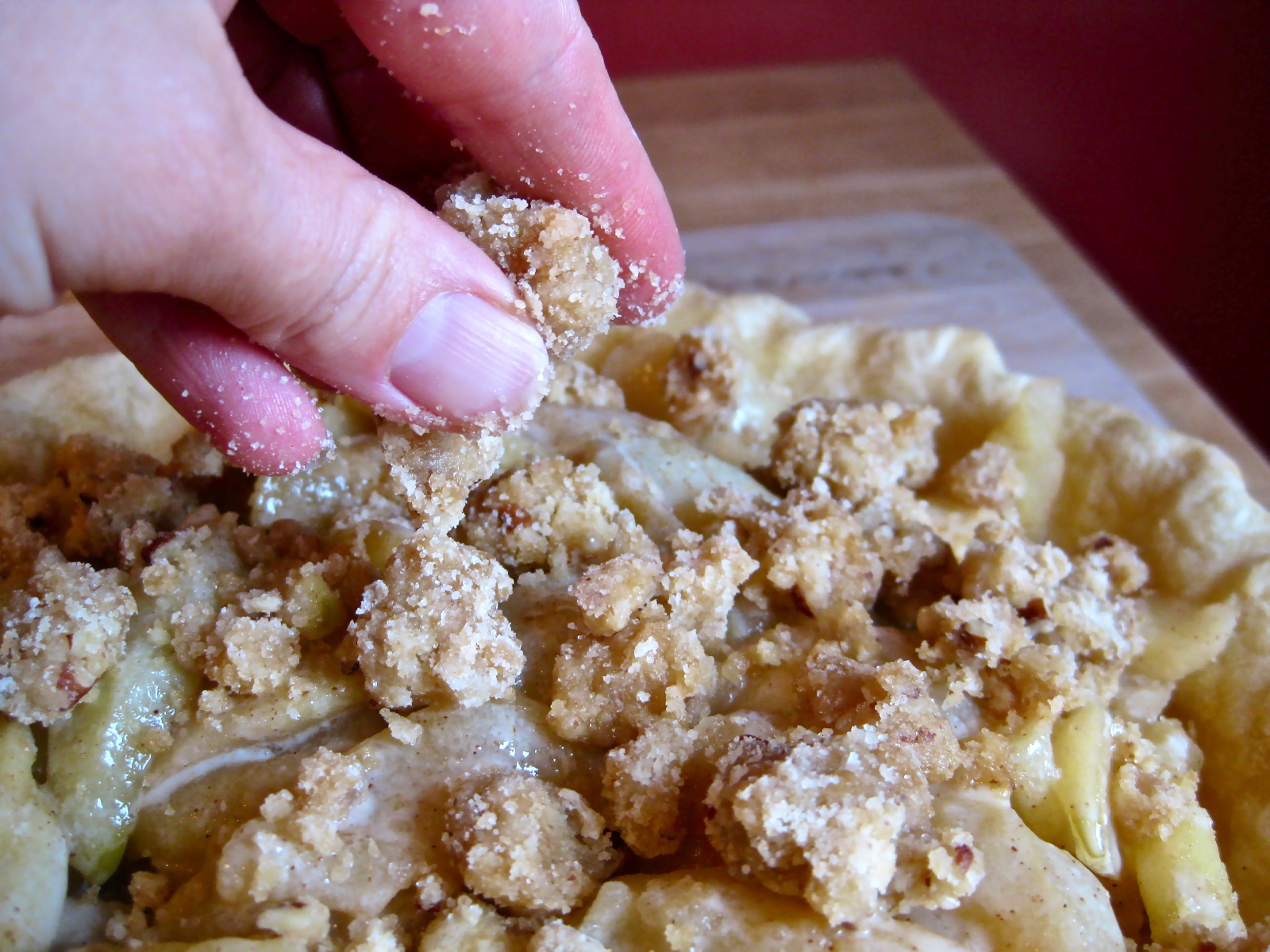
Spread the apples into the parbaked pie crust.  Drizzle with the reduced cream mixture.  Sprinkle the streusel evenly over the top (there will be some large pieces of streusel and some small pieces—this is exactly what you want, as the variation in texture makes for a great bite).  Place the pie on the heated baking sheet and bake until the crust and streusel have browned, about 25 minutes.  Allow the pie to cool on a wire rack until the filling has set, about 2 hours.

Serve slightly warm or at room temperature.