Archive | Breakfast RSS feed for this section

Deep Dish German Pancake

4 Aug

Before becoming deeply entrenched in my 30s, it seemed as though I was able to eat many a breakfast comprised of an innumerable amount things, in mildly shocking quantities, that now make me feel like I am on the verge of suffering some type of major medical emergency.  A rare treat of pancakes is now paired up with something protein heavy, so as to avoid making my pancreas revolt and team up with my kidneys to enact some sort of diabolical punishment.  French toast is served with fruit, sans syrup, and probably arrives in a singular number with a nice egg or soy sausage (don’t judge) on the side.  In short, I no longer have the ability to eat like a teenage girl at a sleepover party, which makes sense, considering the fact that I am well out of my teen years and I haven’t been able to stay up past midnight since I was about 28.  So.

Rather than mourn the loss of sugary breakfasts of my past, I have found life to take a much more pleasant turn by simply amending former decadence into something a bit more appropriate for a person in her mid-30s.  While still certainly remaining a breakfast treat, a tall and delightfully puffed up German pancake, piled with fresh fruit, spritzed with lemon, and, if you wish, dotted with just a light sprinkling of powdered sugar, never seems to have the same after effects as downing a pool of maple syrup.
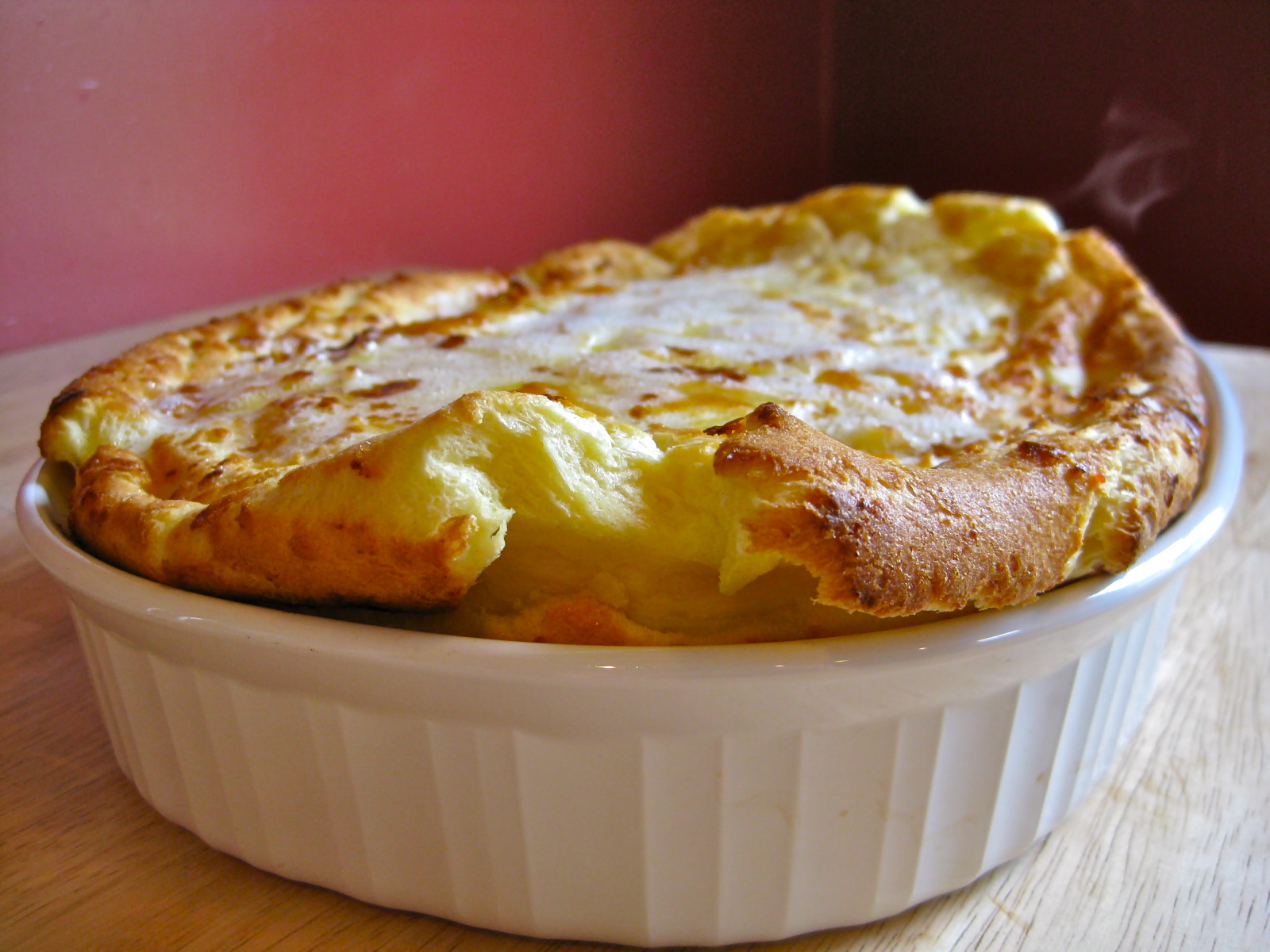
Sure, you’re still eating white flour and butter when you eat this pancake, but this delivery system arrives a bit more gently, and has the added benefit of providing a nice sense of fullness without an accompanying side of impending doom.

In what I am sure is some sort of German pancake heresy, I have also, over many years of making German pancakes, discovered that I much prefer a thick and custardy German pancake to a thin and delicate one.  Making a thicker German pancake involves nothing more than baking the pancake in a dish that is smaller than one might think appropriate for a pancake of this sort.  The tighter the quarters in the baking dish, the thicker the pancake, and the thicker the pancake, the more delightfully gratified you feel when you eat it.  It’s enough to convince the former you that the current you still knows how to indulge.
Deep Dish German Pancake

German pancake, Dutch baby, or pannekoek, this breakfast treat goes by as many names as it has specific recipes.  This particular recipe, designed to be doubled, tripled, and multiplied into infinity, is low on butter and completely devoid of refined sugar.  Not that you’d ever miss it.  This is still a delicious breakfast treat that is as lovely to look at as it is enjoyable to eat.

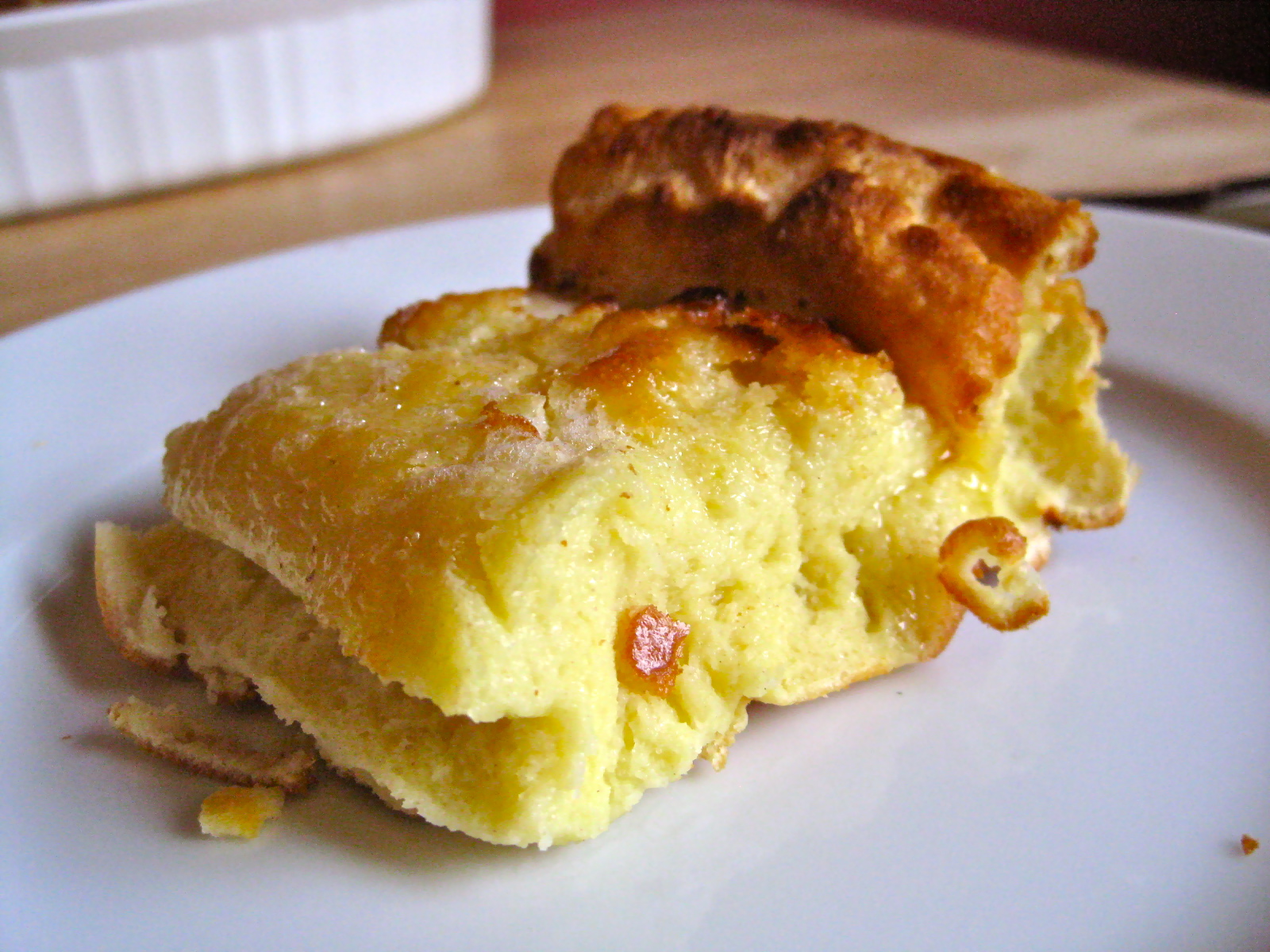
This is a base recipe for 1 serving.  The recipe is meant to be multiplied by the number of people you will be feeding.  If making a small serving, you will obviously need to bake this in a smaller dish.  For the large German pancake pictured above, I multiplied the recipe by 5 and used a 2.5-inch deep, 10-inch by 7-inch dish.

¼ cup flour

¼ cup milk

1 egg

1 teaspoon butter

pinch salt

Preheat oven to 475 degrees Fahrenheit.

When the oven has preheated, place butter in baking dish and place dish in the oven.

Combine all ingredients in a food processor or blender. Blend until just smooth.

When butter has melted, remove the baking dish from the oven, pour in the pancake batter, and return dish to the oven.  Bake for 12 to 18 minutes, depending on the size of your pancake, until pancake has puffed up, turned golden, and the center appears just firm.  Pancake will begin to deflate almost immediately after being removed from the oven, so serve as soon as possible.

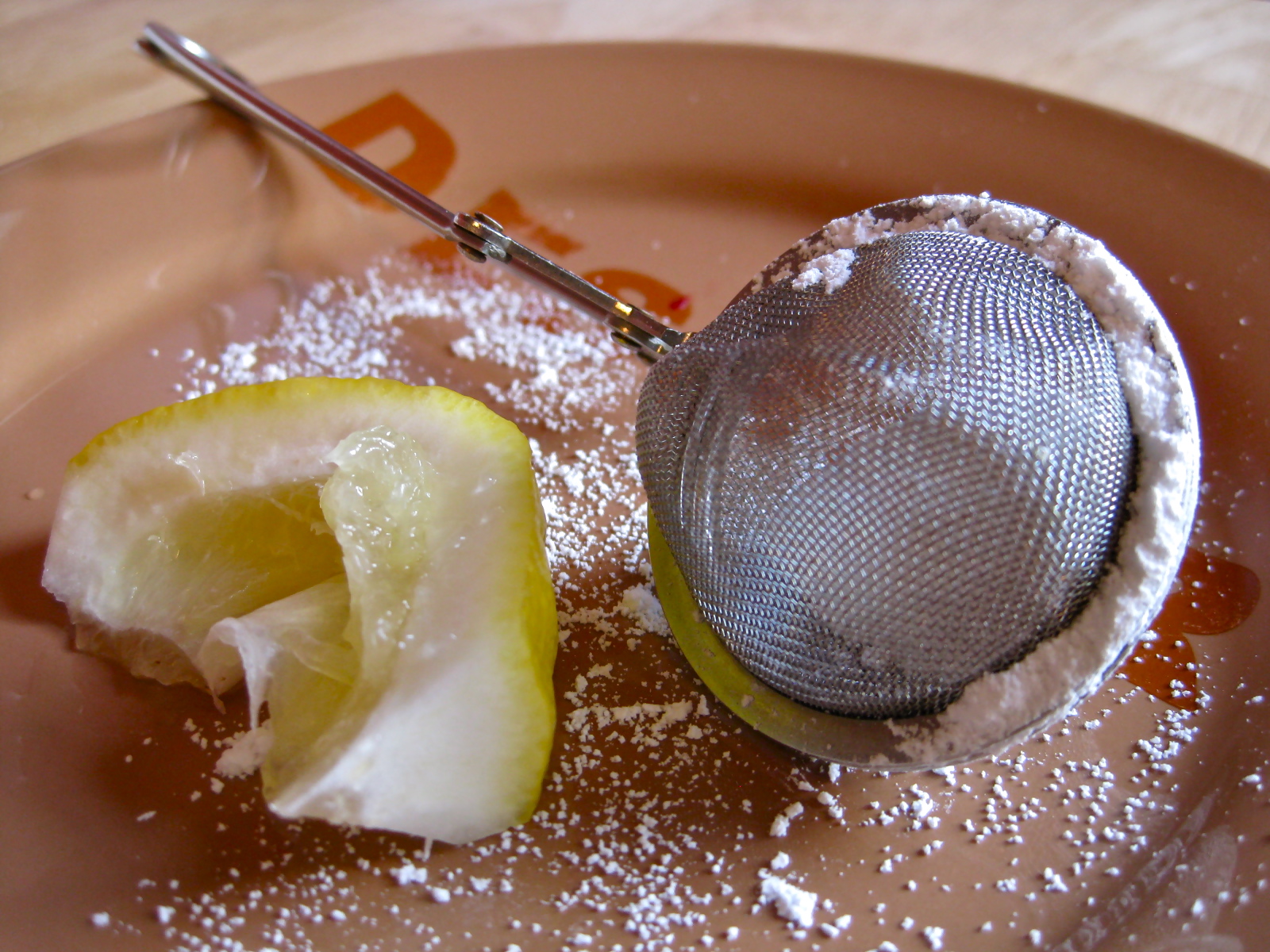
Top with freshly squeezed lemon juice, a light sprinkling of powdered sugar, and fresh fruit.

Breakfast from Portland Farmers Market

4 Jul

I would generally consider it quite inelegant to toot one’s horn so very mightily about one’s own recipe, but, and you must trust me on this one, this exception I am about to make is completely, totally worth it because, as I toot my horn, you will be introduced to what I now consider my greatest achievement in on-the-fly recipe creation, thus making you privy to all the details that would render it possible for you to make and eat this dish yourself, which, though you may not yet know it, I can assure you that you really, really want to.

Last week, as part of my twice-monthly writing assignment for Portland Farmers Market, I took my personally allotted $10 of spending money and I bought this:

Then I did this:

 And this:

Followed by this:

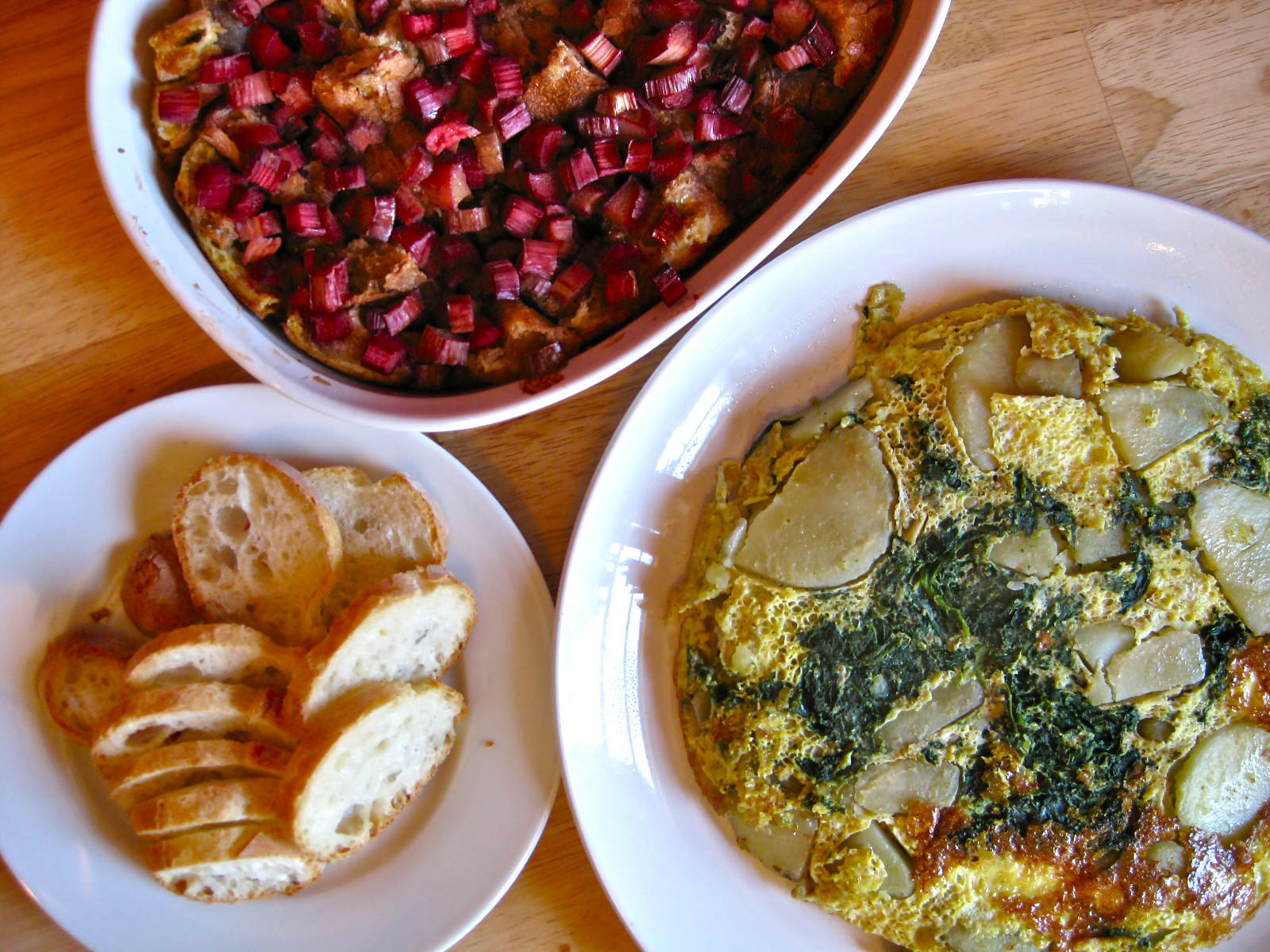
And then, after more chopping and mixing, I proceeded to cook everything and ended up with this:

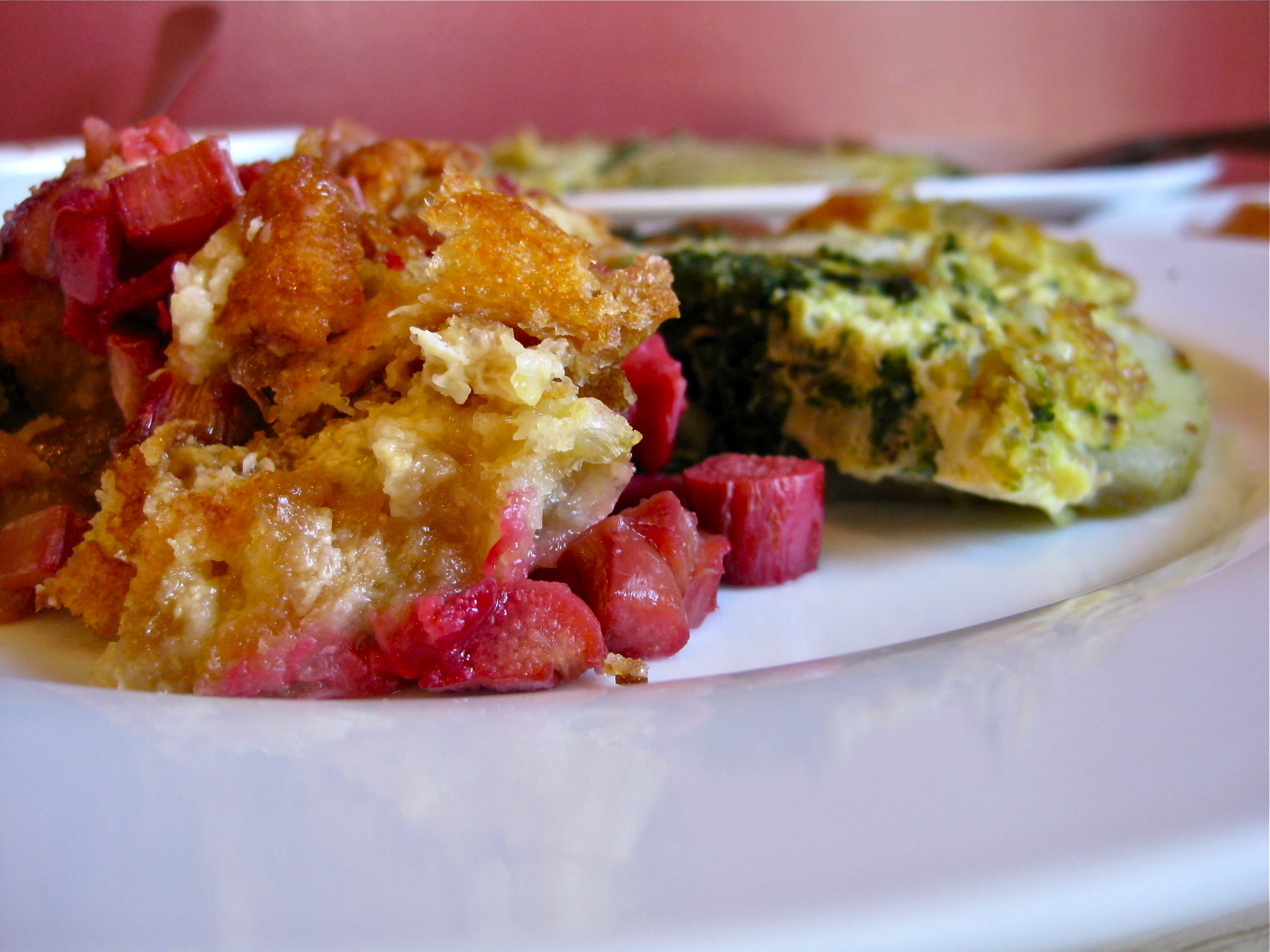
Now, here is where the loud tooting of the horn comes in, but do you see that vegetable frittata?  It was quite good.  Okay, now do you see that thing next to the frittata?  The bread pudding made with fresh rhubarb?  It was unbelievable.  No, really.  Not one to ever turn down rhubarb, I knew I would enjoy a concoction that came about by topping a simple bread pudding with chopped up, sweetened rhubarb, but I did not realize just how fantastically the rhubarb would flavor the body of the pudding.

I am aware of the fact that, as the person who made up the recipe, I really should have a better idea of what makes it tick, but, I have to admit, I can only venture a guess as to what made this bread pudding so incredibly, intensely flavorful.  The secret may lie in what I did to the rhubarb before I spread it on top of the bread.  By allowing the rhubarb to macerate in a mixture of dark brown sugar and regular sugar for just a few minutes, the liquid that is released from the rhubarb intermingles with the sugars and starts to form a thick and luscious syrup.  Then, when the rhubarb and sugar mixture gets baked on top of the bread mixture, everything begins to caramelize together and melt into an absolutely ambrosial mixture of rich, custardy bread nestled against fragrant and velvety rhubarb.

With each bite, you get a hit of tartly sweet rhubarb, comforting bread custard, and an almost dainty and aromatic swipe of bourbon-flavored caramel.  The recipe contains no bourbon, but I suspect that when the mixture of vanilla, dark brown sugar, and the rhubarb liquid  came together, they somehow magically transformed themselves into bourbon-flavored caramel.  Or, at least, I am guessing that is what happened.  Perhaps when I make this bread pudding again (and, oh, how I cannot wait to make it again), I will further test the results of the mixture and then get back to you about it.  Or, better yet, you should just make this bread pudding yourself and discover first hand its charms and delights.  No, really.  Both my horn and I are insisting upon it.

This recipe, as I mentioned previously, was something I developed for Portland Farmers Market.  If you wish, you can read a bit more about it and its accompaniments (and get recipes for both) over here, on the Portland Farmers Market website.  However, as a service to deliciousness, I am also going to publish the rhubarb bread pudding recipe below, because heaven forbid I keep anyone from it any longer than I have to.

Rhubarb Bread Pudding

1 baguette

1 pound rhubarb, washed and trimmed of any hard, fibrous ends

¾ cup white sugar

¼ cup dark brown sugar

1 ½ cups milk

2 large eggs

1 teaspoon pure vanilla extract

pinch salt

Preheat oven to 350 degrees F.  Lightly butter a medium-sized baking dish and set aside.

Slice rhubarb into ½ inch chunks.  In a medium bowl, combine rhubarb, white sugar, and brown sugar.  Stir to combine, then set aside for 15 minutes to allow the rhubarb to macerate and release some of its juices.

Meantime, slice baguette into thick slices, then tear each slice into large bite-sized chunks.  You will need 5 cups total of bread chunks.  If you have any baguette remaining (as I did), set aside for another purpose.  Place bread chunks in pre-buttered baking dish.

In a medium-sized bowl, combine milk, eggs, vanilla, and pinch of salt.  Whisk vigorously until the eggs are entirely incorporated.  Pour milk mixture over bread chunks and allow to soak for 10 minutes, tipping the dish every few minutes and spooning excess liquid over the bread to make sure bread is completely soaked.

Evenly pour the rhubarb mixture over the top of the soaked bread.  Be sure to include all the liquid released from the rhubarb.  Do not mix.  Cover tightly with foil and bake for 35 minutes, until bread is puffed, the custard has been mostly absorbed, and the rhubarb has softened.  Remove foil and bake for an additional 15 minutes, until a few edges of the exposed bread begin to turn golden and crisp.

Cool slightly before eating.  Serves 6-8 people.

Pear and Mascarpone Pizza

13 Jun

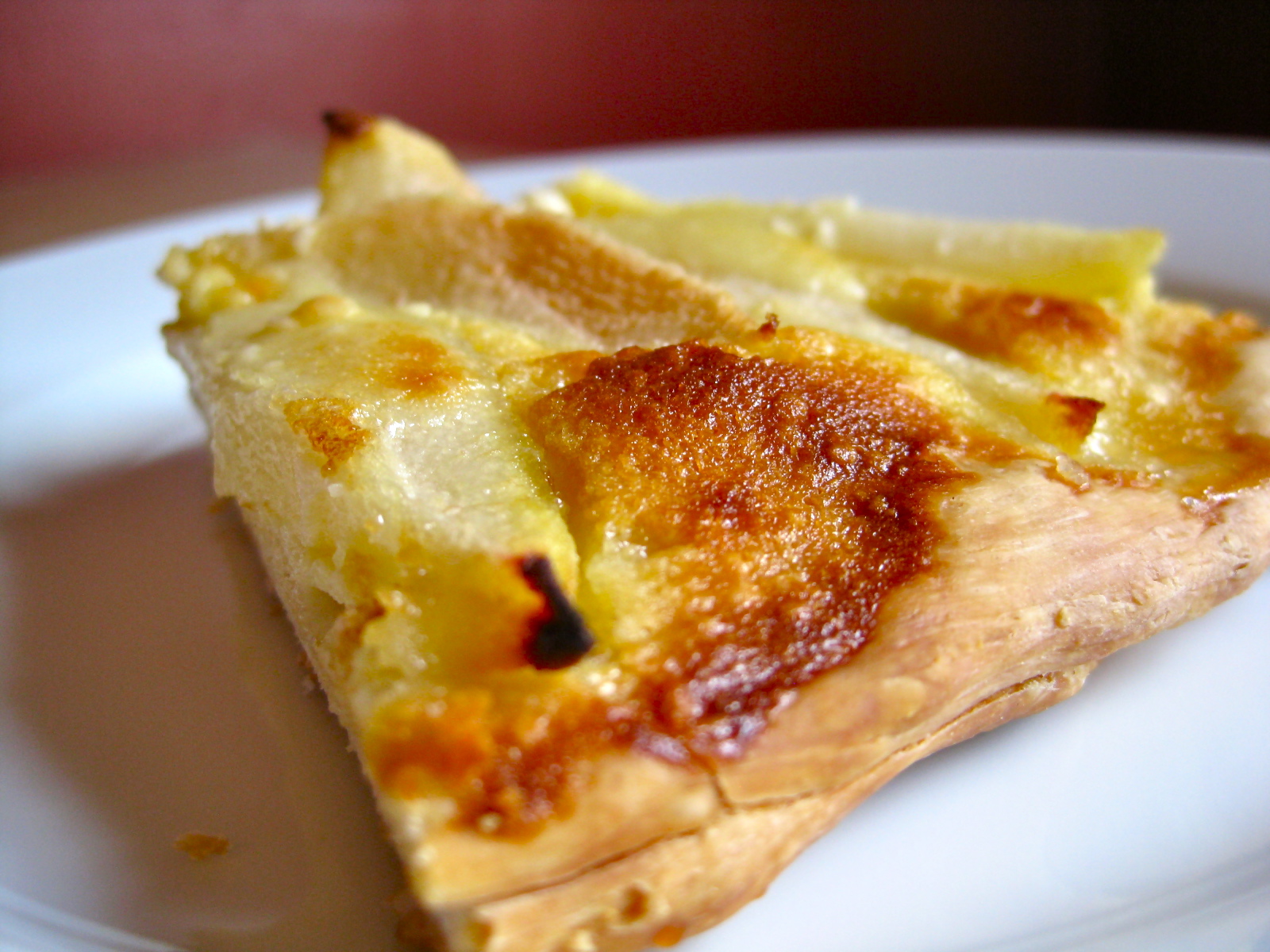
There is pretty much no end to the dedication I will show in order to cobble together a dessert.  If I can make this dessert by mining the depths of my refrigerator, even better.  There is satisfaction to be found in saving food from eminent disposal, sure, but one can definitely intensify the delight of that satisfaction by churning out a dessert so unexpectedly fantastic, so effortlessly decadent, you might just have trouble believing that this delicious thing you just Frankenstein-ed into existence is a hodgepodge of leftover bits and pieces from other meals.

While it’s true that this recipe is based on using up a bit of leftover pizza dough (and by based, I mean that both literally and figuratively, since the pizza dough provides a crispy base for the pears and mascarpone, but also serves as a nice method for utilizing the last third of a batch of this dough), it by no means tastes like a second rate dessert.  That a very simple combination of ingredients can be joined together to make something this incredible seems almost unfathomable.

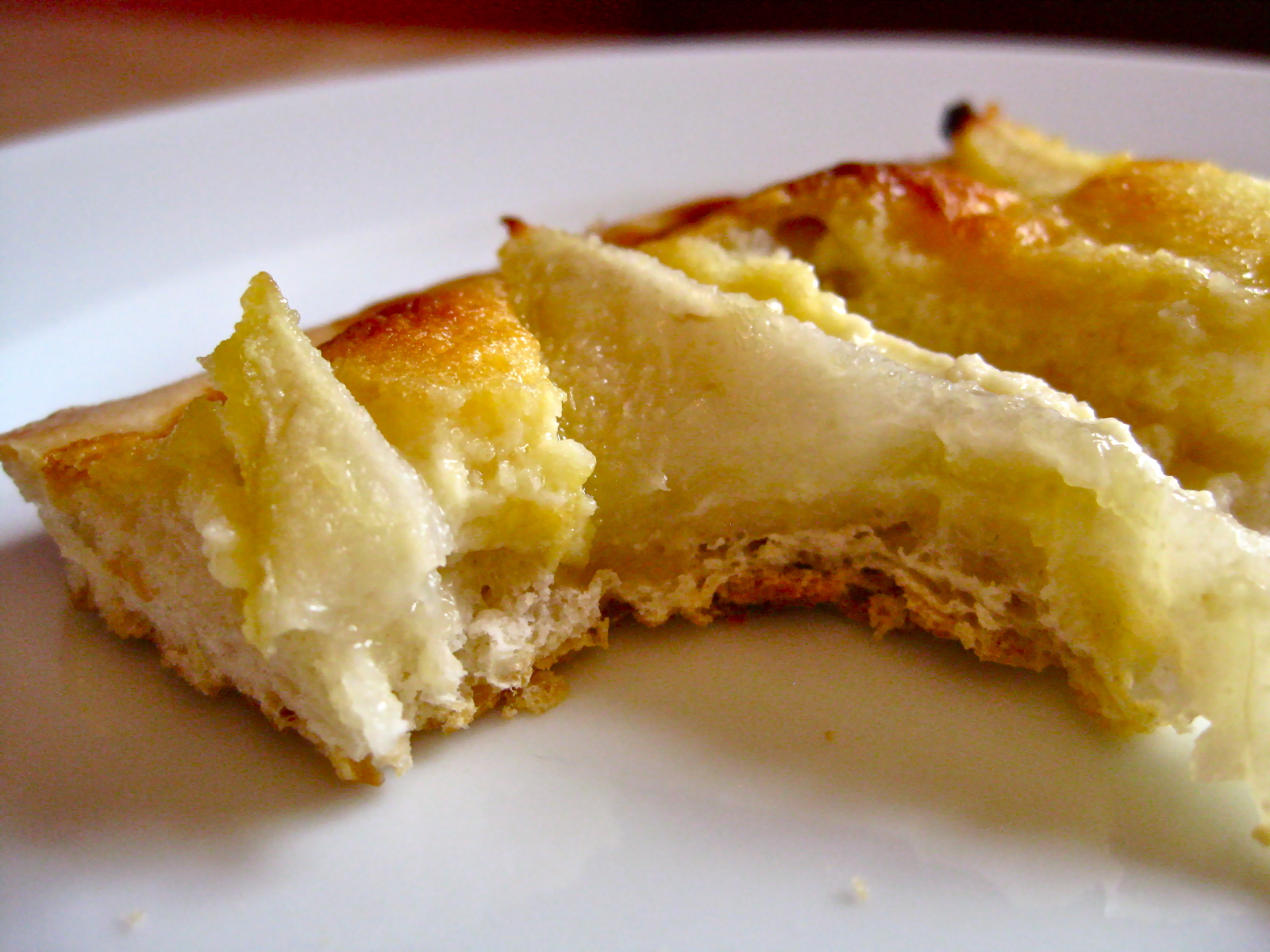
Softly sweet mascarpone cheese is baked into a deep, caramelized custard while it sits atop a bed of simple, fresh pears.  The humble pizza dough base, previously left to rest in the refrigerator for several days, transforms into a flaky, crispy pastry that achieves all the flavor of a Danish pastry dough, only with none of the work involved.  To top off the list of this dessert’s nearly unbelievable attributes, the entire thing, luscious and toothsome as it is, is made with a total of only three tablespoons of sugar.

Truthfully, I am finding it exceptionally difficult to do anything other than gush about this luxurious pastry concoction, because, to be quite honest, I had no idea it would turn out this good.  When I took a bite of it, I actually froze a little and thought, “What IS this?”  Even though I knew exactly what it was, since I had just taken the time to make it.  Now, one week later, having worked my way through several bites, I feel a bit more prepared to answer my own question.  What is this?  It is simple, it is delightful, and it is not to be missed.

Interested in more ways to use up refrigerator leftovers?  Here is another scavenger recipe of mine that was posted on Indie Fixx, where I write a regular food and cooking column called Melting Pot.

Pear and Mascarpone Pizza

If I were to make one very important suggestion about this dessert, it would be that you use a very well-rested pizza dough that has had time to ripen in the refrigerator.  What do I mean by ripen?  Well, the longer you let your dough rest in the refrigerator, the more time you are giving the enzymes in the flour to convert to sugar.  This extra bit of natural sweetness in the dough not only gives it a great flavor, but it also allows the dough to caramelize a bit while baking in the oven, giving the dessert base a much more intense flavor and pronounced crispness without the need for added butter or sugar.

Pizza dough (preferably aged in the refrigerator for 2-3 days) for 1 pizza

2 pears, peeled, cored, and cut into thin slices

1 tablespoon turbinado or raw sugar

4 ounces mascarpone cheese

1 large egg

2 tablespoons white sugar

1 tablespoon freshly squeezed lemon juice

1 teaspoon pure vanilla extract

Preheat oven to 400 degrees F.

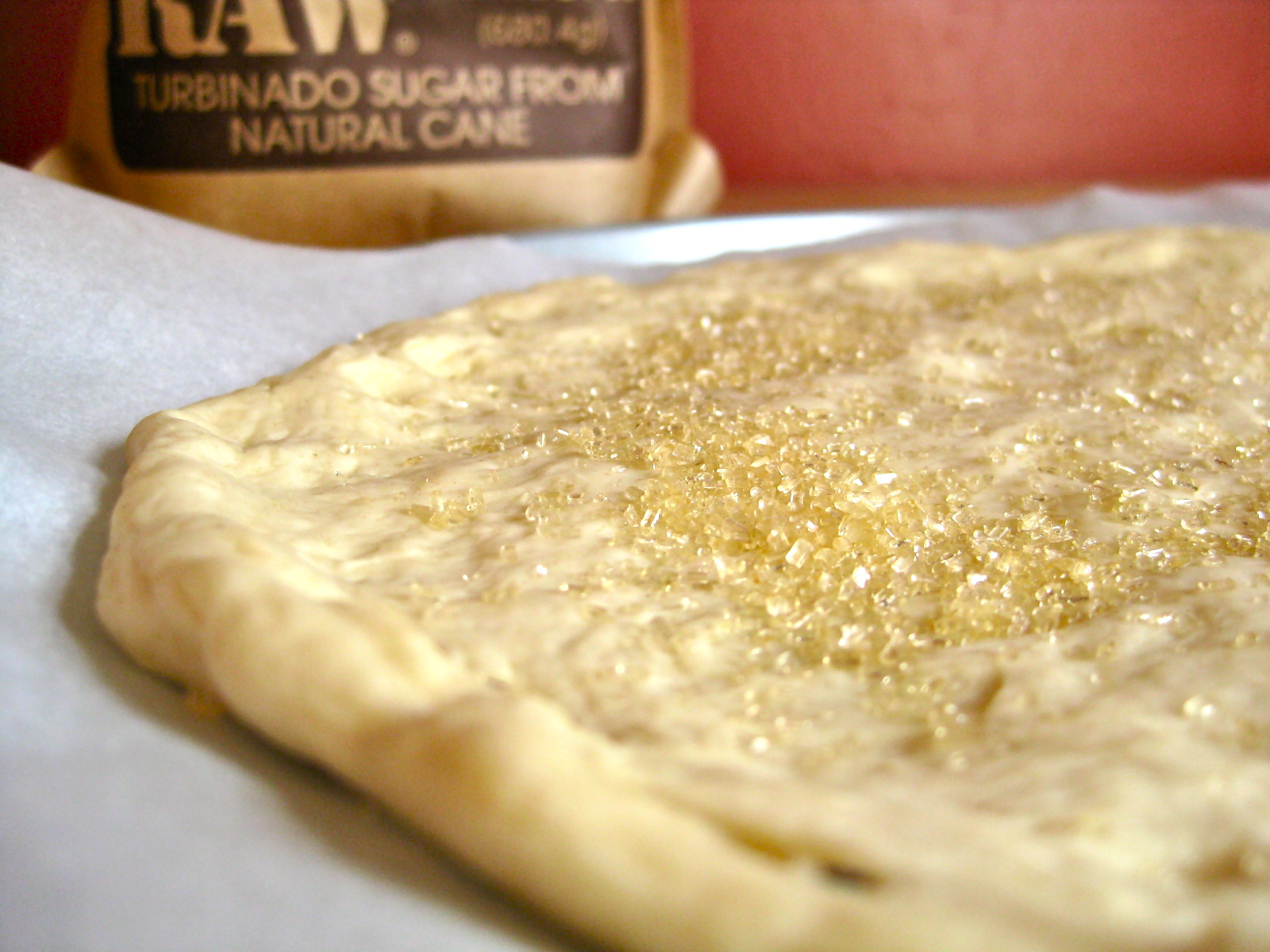
Hand stretch dough into a 12-14 inch round.  Place dough on a parchment-lined baking sheet.  Sprinkle half a tablespoon of turbinado sugar over the surface of the dough.  Reserve the remaining half tablespoon of turbinado sugar and set aside.

Arrange the sliced pears over the top of the sugar-sprinkled dough.  I found it very easy to fit all the slices neatly on the round by arranging them in concentric circles, but you may arrange the pears however you want.

Combine the mascarpone cheese, egg, white sugar, lemon juice, and vanilla.  Whisk thoroughly to combine.

Drizzle the mascarpone mixture evenly over the pears, covering as much of the surface as possible, but leaving a 1/2 inch of dough uncovered at the edges.  Sprinkle the pears and cheese with the remaining half tablespoon of turbinado sugar.

Bake pizza for 25-30 minutes, until the cheese has caramelized in places and the edges of the dough have turned golden.  Cool slightly before eating.