Archive | Dessert RSS feed for this section

Lemon Bergamot Bars

7 Mar

I will never claim to be a fan of big surprises or intense fanfare.  Preferring to live a life that is relatively free of drama or explosive displays of showiness (all I have to do is hear of people getting engaged via a line of skywriting or announcing their pregnancy by hiding a positive pregnancy test in someone’s birthday present and I start to feel all sweaty and embarrassed) might explain why I am so fond of foods that contain a bit of the unexpected.  A rich brownie with a subtle undercurrent of cardamom and chipotle.  A complicated Thai curry with a kick of lime that comes in at the end and smoothes out its blend of coconut and spice.  And now, what currently stands as my favorite example of a sneaky flavor, a hint of bergamot concealed within a batch of brightly tart lemon bars.

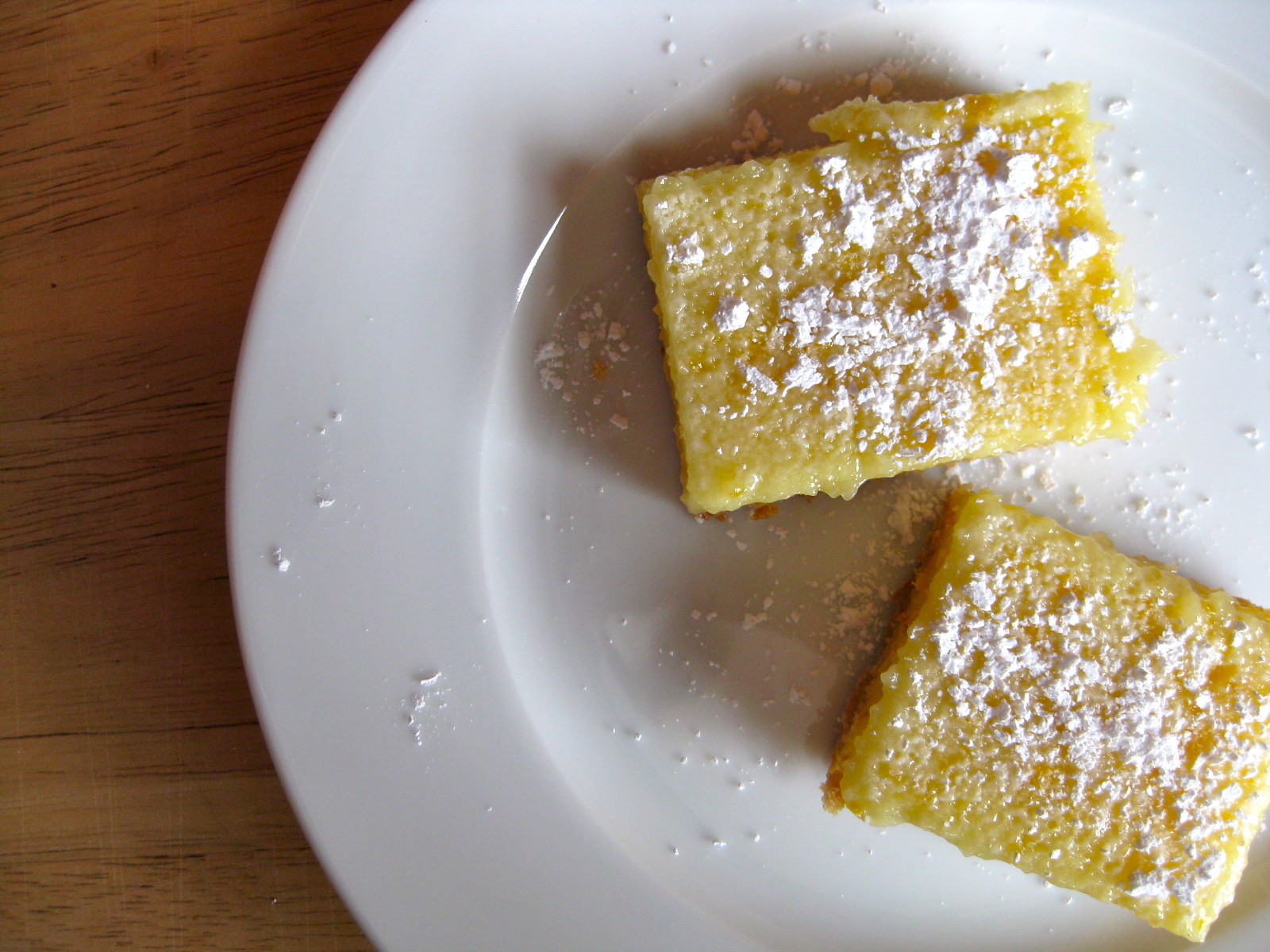
Hailing from Tartine, the inaugural cookbook from the incredible San Francisco bakery of the same name, this is a lemon bar that pulls no punches when it comes to flavors.  The meltingly delicious shortbread base is baked to a deep golden brown, giving it the taste of mellow, nutty brown butter.

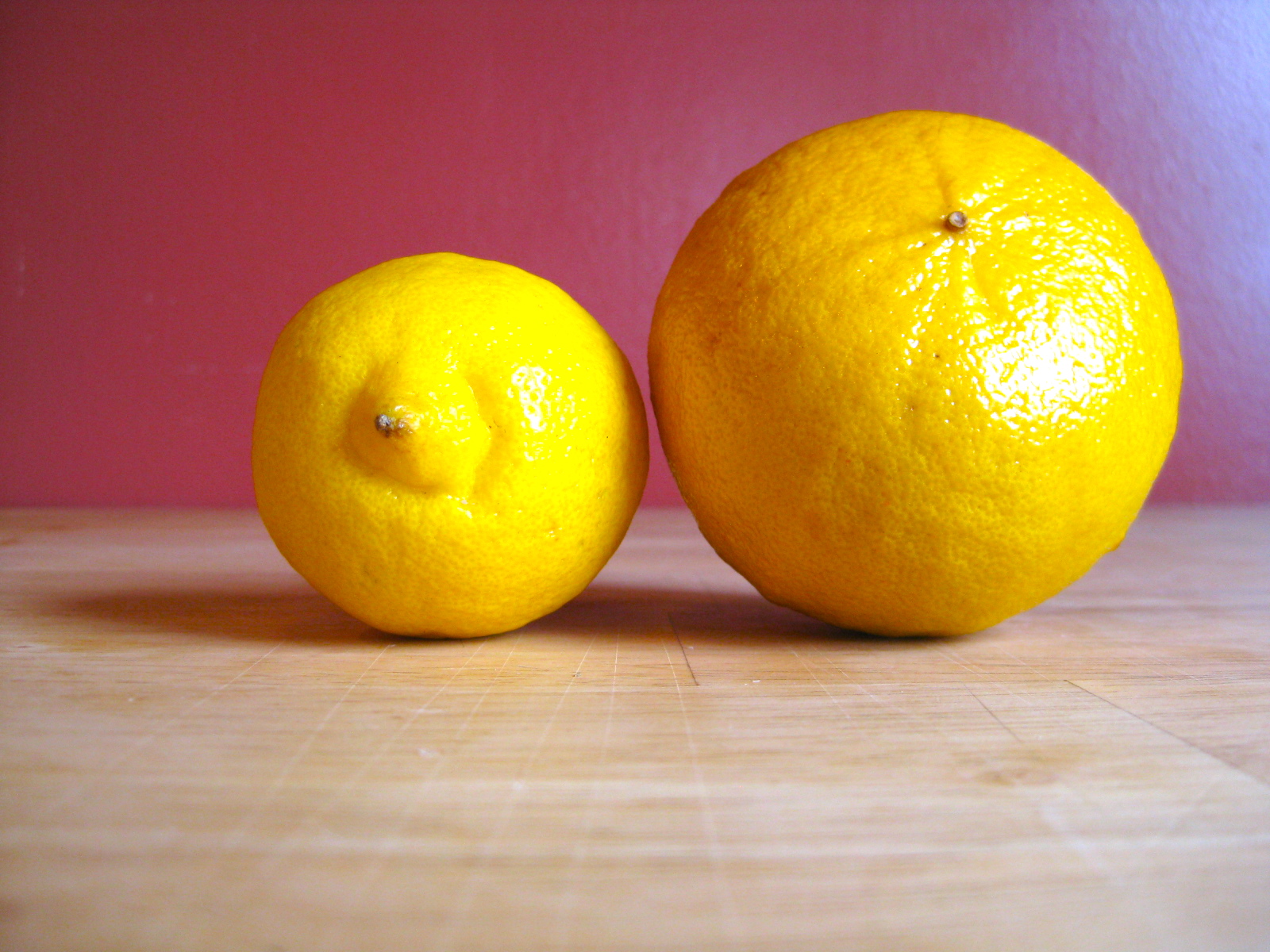
The thick lemon custard that rests on top is fresh and tart, and does not make the mistake of masking its lemony sourness under a cloying sweetness.  The bergamot (an addition made optional in the cookbook, but now considered by me to be an utter necessity) cuts through the clean taste of the lemon, dotting each bite with the pleasant sensation of subtly bitter orange.  (Bergamot oranges, a hybrid citrus fruit that contain elements of both Mediterranean lemons and Seville oranges, provide the distinctive citrus undertone found in Earl Grey tea, and it creates a similarly aromatic and companionable effect here.)
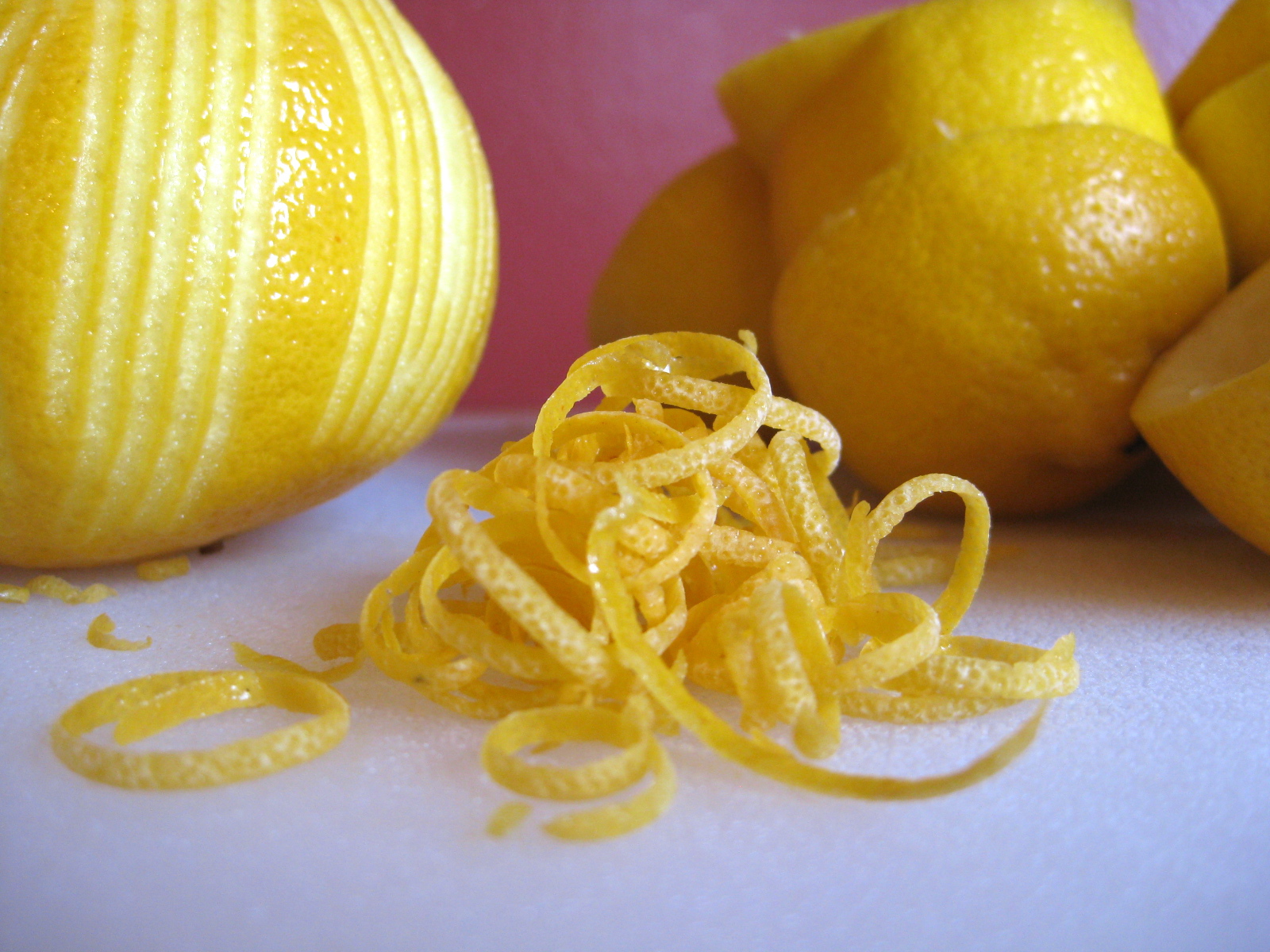
I may not be one for surprises, but I can’t say I have ever shied away from the pleasures of variety.  Eating one square of this lovely pastry is like taking a taste tour of a pastry case (brown butter shortbread cookies!  Lemon custard!  Candied orange!), providing your taste buds with thrills aplenty, minus even the slightest possibility of social discomfort.
Lemon Bergamot Bars

From Tartine

Crust

1/2 cup confectioners’ sugar

1 1/2 cups all-purpose flour

3/4 cup unsalted butter, at room temperature

Filling

1/2 cup all-purpose flour

2 1/4 cups sugar

1 cup plus 2 tablespoons lemon juice

zest from 1 small bergamot orange, grated or finely chopped

6 large whole eggs

1 large egg yolk

pinch of salt

confectioners’ sugar (optional)

Preheat oven to 350 degrees F.  Butter a 9×13 inch baking pan.

To make the crust, sift the confectioners’ sugar into the bowl of a standing mixer fitted with the paddle attachment.  Add the flour and stir to mix.  Add the butter and beat on low speed just until a smooth dough forms.  Transfer dough to the prepared pan and press evenly into the bottom and 1/2 inch up the sides of the pan.  It should be about 1/4 inch thick.  To help even out the crust, use the flat bottom of any type of cup, pressing down firmly.  Line the crust with parchment paper and fill with pie weights (dry beans or about a cup’s worth of pennies will provide the same effect as pie weights).  Bake the crust until it colors evenly to a deep golden brown, 25-35 minutes.  Rotate the pan 180 degrees is the crust appears to be baking unevenly.

While the crust is baking, make the filling: Sift the flour into a mixing bowl.  Add the sugar and whisk until blended.  Add the lemon juice and bergamot orange zest and stir to dissolve the sugar.  In a separate mixing bowl, whisk the whole eggs and egg yolk with the salt.  Add the eggs to the lemon juice mixture and whisk until well mixed.

When the crust is ready, pull out the oven rack holding the crust, remove the parchment paper and pie weights, and pour the filling directly into the hot pan.  (It is easiest to pour the custard into the pan if the pan is in the oven.)  If the crust has come out of the oven and cooled before you have finished making the filling, put it back in for a few minutes so that it is hot when the custard is poured into it.  Reduce the oven temperature to 300 degrees F and bake just until the center of the custard is no longer wobbly, 30-40 minutes.

Let cool completely on a wire rack, then cover and chill well before cutting.  If you like, dust the tops of the squares with confectioners’ sugar.  They will keep well in an airtight container or well covered in the baking dish in the refrigerator for up to 4 days.


Fresh Ginger Ice Cream

2 Mar

When working in the kitchen, it is not unwise to have a certain number of expectations in mind.  You know what you want to accomplish, you have at least a vague prediction of how your accomplishment should turn out, and you hope that, should your kitchen excursion produce something slightly outside the realm of what you anticipated, you’ll be able to fix whatever went awry.  What is sometimes most difficult to overcome, however, is not a dish that can’t be fixed, but rather a dish that should not be fixed, no matter how much you want to.

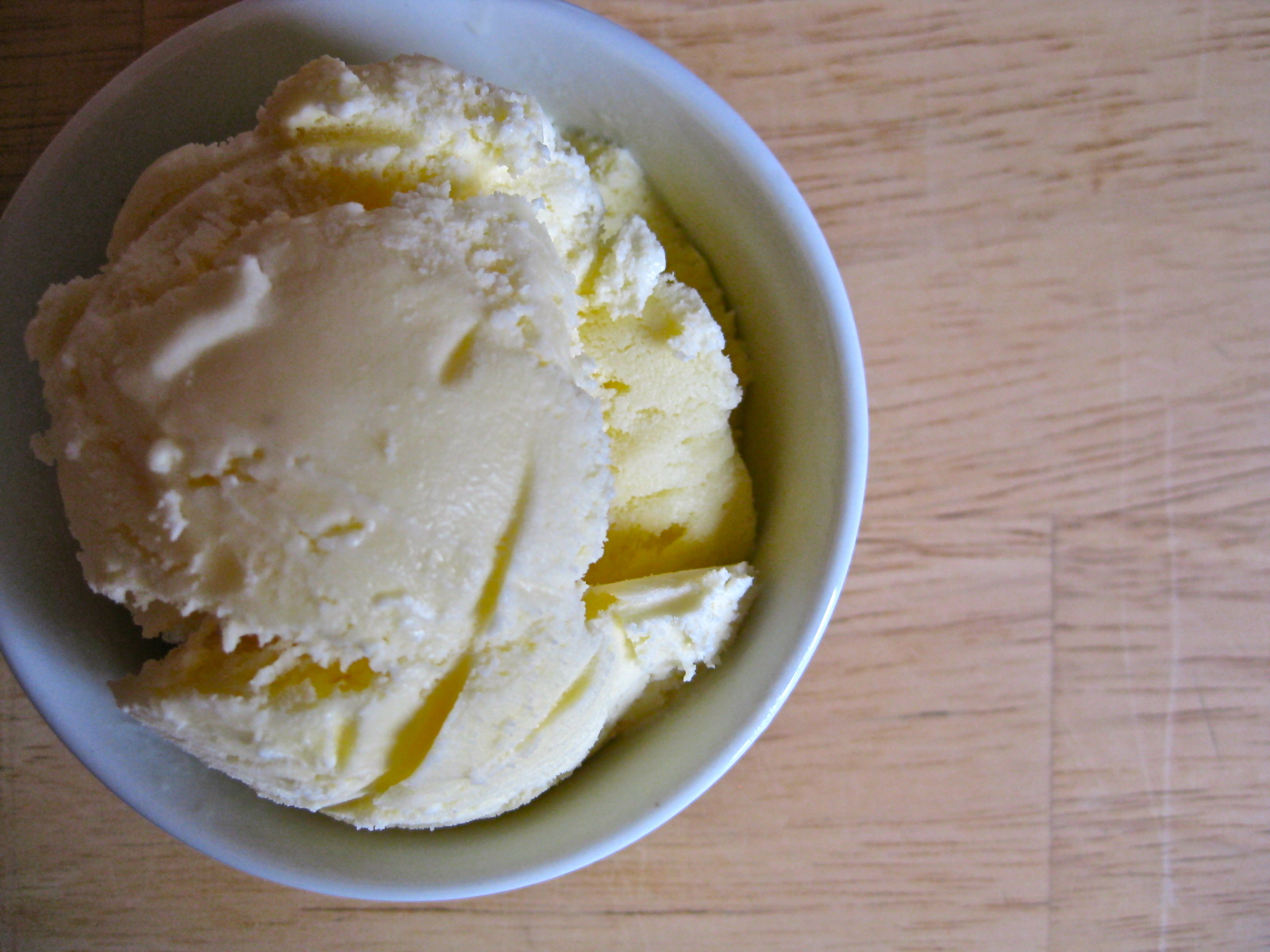
This point was well illustrated two weekends ago in my own kitchen, when I set out to make a batch of ginger ice cream.  Using as my guide the best ice cream manual in all the land, David Lebovitz’s The Prefect Scoop, a cookbook that has yet to produce a disappointing result (I truly believe that the deliciousness of his lemon speculoos ice cream is quite capable of sending a person to the moon and back in a state of unmatched rapture), I got to work slicing and steeping the fresh ginger, then preparing a rich and velvety custard.

It was then, right before I poured the gingered custard into the ice cream maker, that I began to let my instincts go a bit haywire.  Not one to shy away from brisk and bracing flavors and sensations in food, I expected—and wanted—this ice cream to provide a spicy flare of gingery heat in each bite.  When I stole a quick taste of the pre-frozen custard, however, what I found was a subtle ginger profile enveloped by the rich taste of cream.  Seeking a more pronounced flavor, I whisked in a bit of ginger extract and poured the amended mixture into the ice cream machine.

Twenty minutes later, the ice cream churning into a thick and luscious concoction, I snuck another taste.  Still not gingery enough.  I grated some fresh ginger and added it to the whirring machine.  Two minutes later, I tasted it again.  I added more ginger.  I tasted it again.  I added more ginger.  By this point, realizing that I was nearly out of ginger, I opened up a cupboard and prepared to let loose once more with the bottle of ginger extract.

As I was unscrewing the cap to the bottle of extract, I watched the ice cream folding and turning over itself, its lovely yellow hue exaggerating the ribbon-like waves that followed the dasher with each rotation.  That ice cream sure is a lovely color, I thought to myself.  Then I paused, placing the bottle of ginger extract on the counter.  I stopped the machine, removed the lid, and plunged a spoon into the fresh ice cream.  The taste was magical.  It was fantastically smooth, unbelievably rich, and the ginger came across as a bright flash that cut through the soft cloud of creaminess.

Somehow, forgetting that I was making a custard-based ice cream, I had become focused on making the ice cream bracing, spicy, and aggressive, when what I was working against, and shouldn’t have been, was an ice cream that was velvety, subtle, and refreshing.  This was an ice cream that was not meant to stampede one’s taste buds with ginger, but rather provide a gentle kick.  I may be aware of what I like, but I am also very aware of when I am wrong, and my misguided attempts at creating the Most Gingery Ice Cream in the World most definitely fell into that category.  Thankfully, it was an easy problem to fix.  All I had to do was set down my arsenal of ginger and pick up a spoon.


Though I now see the error of my ways when it came to making this ice cream, I do still believe that the ice cream benefits greatly from the addition of some grated fresh ginger, as it adds an undeniable freshness to the creaminess.  If you desire, you can also add in a bit of ginger extract, though I want to stress that it is entirely optional, and not at all a necessity.

Fresh Ginger Ice Cream

Very slightly adapted from The Perfect Scoop

3 ounces unpeeled fresh ginger

1 cup whole milk

2 cups heavy cream

3/4 cup sugar

pinch of salt

5 large egg yolks

1/2 teaspoon ginger extract (optional)

1 heaping tablespoon grated fresh ginger

Cut the ginger in half lengthwise (making it more stable for slicing), and then cut it into thin slices.  Place the ginger in a medium, nonreactive saucepan.  Add enough water to cover the ginger by about 1/2 inch, and bring to a boil.  Boil for 2 minutes, then drain, discarding the liquid.

Return the blanched ginger slices to the saucepan, then add the milk, 1 cup of the cream, sugar, and salt.  Warm the mixture, cover, and remove from the heat.  Let steep at room temperature for 1 hour.

Rewarm the mixture.  Remove the ginger slices with a slotted spoon and discard.  Pour the remaining 1 cup heavy cream into a large bowl and set a mesh strainer on top.

In a separate medium bowl, whisk together the egg yolks.  Slowly pour the warm mixture into the egg yolks, whisking constantly, then scrape the warmed egg yolks back into the saucepan.

Stir the mixture constantly over medium heat with a heatproof spatula, scraping the bottom as you stir, until the mixture thickens and coats the spatula.  Pour the custard through the strainer and stir it into the cream.  Stir until cool over an ice bath.  If using, whisk in ginger extract.

Chill the mixture thoroughly in the refrigerator, then freeze in your ice cream maker according to the manufacturer’s instructions.  During the last few minutes of churning, add the grated fresh ginger.

Flourless Chocolate Mousse Cloud Cake, the Cake of Plenty

16 Feb

Some people prefer birthday cake, some birthday pie.  I once knew a fellow who, in lieu of a birthday cake, asked for nothing more than a bowl of birthday cake frosting.  My favorite birthday dessert, were I forced to choose, would be the birthday combo-pack, wherein one gets to have a dessert that is very conveniently comprised of several different desserts, like a cornucopia, only filled with baked goods instead of the fruits of one’s harvest.  When I recently offered to make someone a birthday cake of his choice and was informed of his decision (carrot cake with cream cheese frosting), my first response was, “Really?  Just carrot cake?  What about a chocolate marble cake, because it has two kinds of cake in one?  Or a black bottom cake, because it’s a cake with a cheesecake filling?  Or how about two cakes?  Wouldn’t you like to have two cakes for your birthday?”

To most people, this unstoppable desire to make more work for oneself would be viewed as nothing less than ludicrous.  While I can’t argue with that assessment, I can at least justify my actions a little bit by explaining that when I am done making whatever cake or pie that someone has requested for a birthday celebration, I am, most of the time, also invited to eat whatever I have made, and therefore benefiting from our dessert negotiations more than one might initially realize.

So when it came time to prepare a birthday dessert for a beloved auntie who made the very simple request of having something that contained both chocolate and whipped cream, how could I resist the urge to fulfill her birthday cake wish many times over?

It started with the chocolate cloud cake from Nigella Lawson’s Nigella Bites.  The chocolate cloud is a flourless cake, made sturdy with stiffly whipped egg whites gently folded into a rich and chocolaty batter.

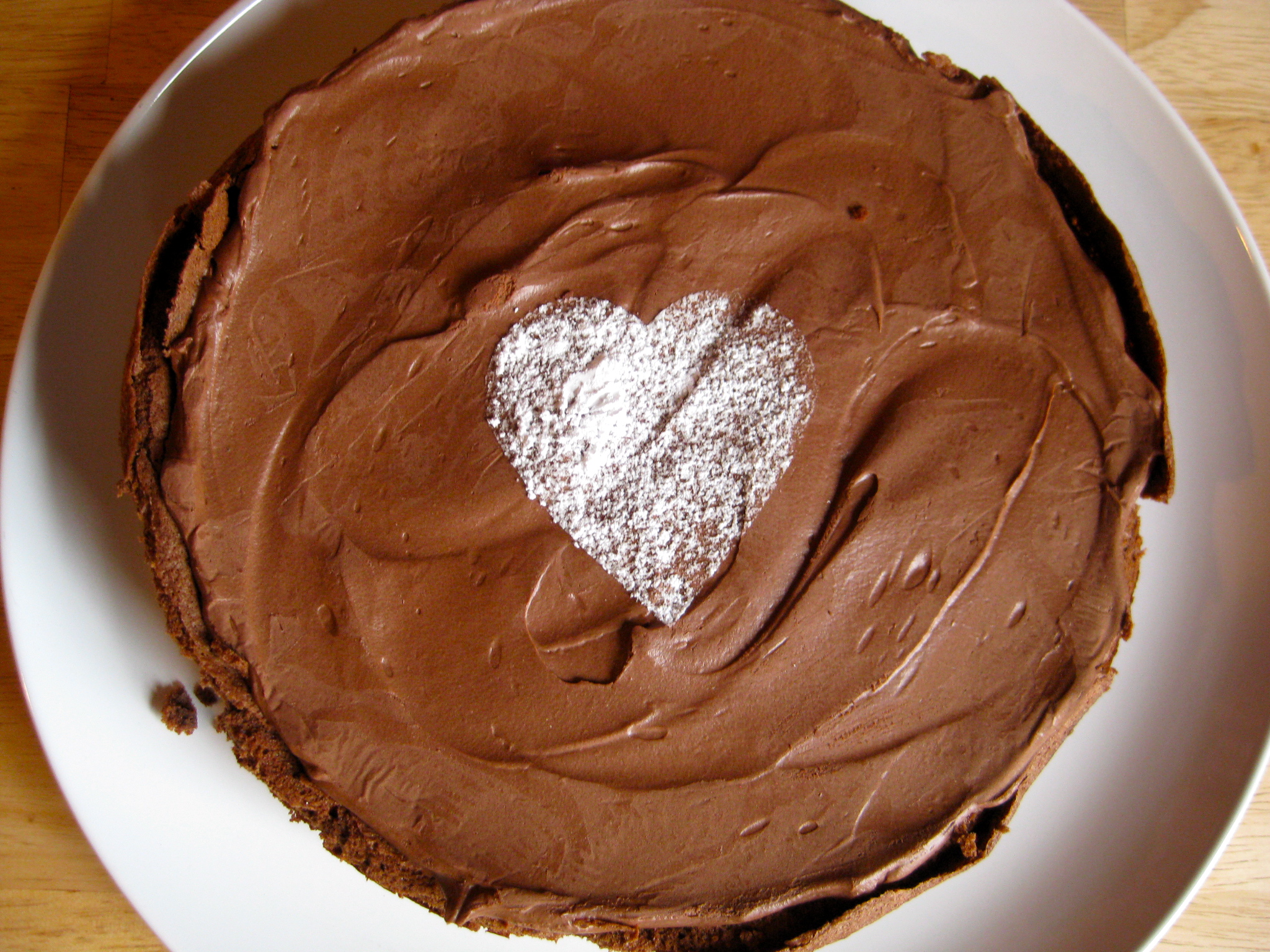
The cake rises wonderfully in the oven, then delicately deflates as it cools, leaving a perfect indentation on top in which to place whatever one chooses.  In this case, a creamy, bittersweet chocolate mousse is smoothed into the crater.


A simple dollop of whipped cream would, of course, accompany this cake very nicely, but, at this point, why limit the cake to one type of whipped cream?  With just a few more ingredients and in almost no time at all, three flavors of whipped cream can be coaxed into soft peaks and then piled high into individual bowls, inviting the cake to be interpreted three different ways.

The whipped cream variations that made company with this particular cake were flavored with espresso, peppermint, and classic vanilla, and, while they were perfectly acceptable accompaniments, I see no reason to stop at those flavors.  I almost tried out a ginger whipped cream, but the peppermint won out at the last minute.  If you have any Frangelico on hand, a little glug into the chilled cream, pre-whipping, would produce a fantastic hazelnut whipped cream (the same goes for adding a bit of Framboise to make a raspberry whipped cream, or just adding a bit of bourbon if you’re looking for a great kick of flavor with a bit less sweetness).

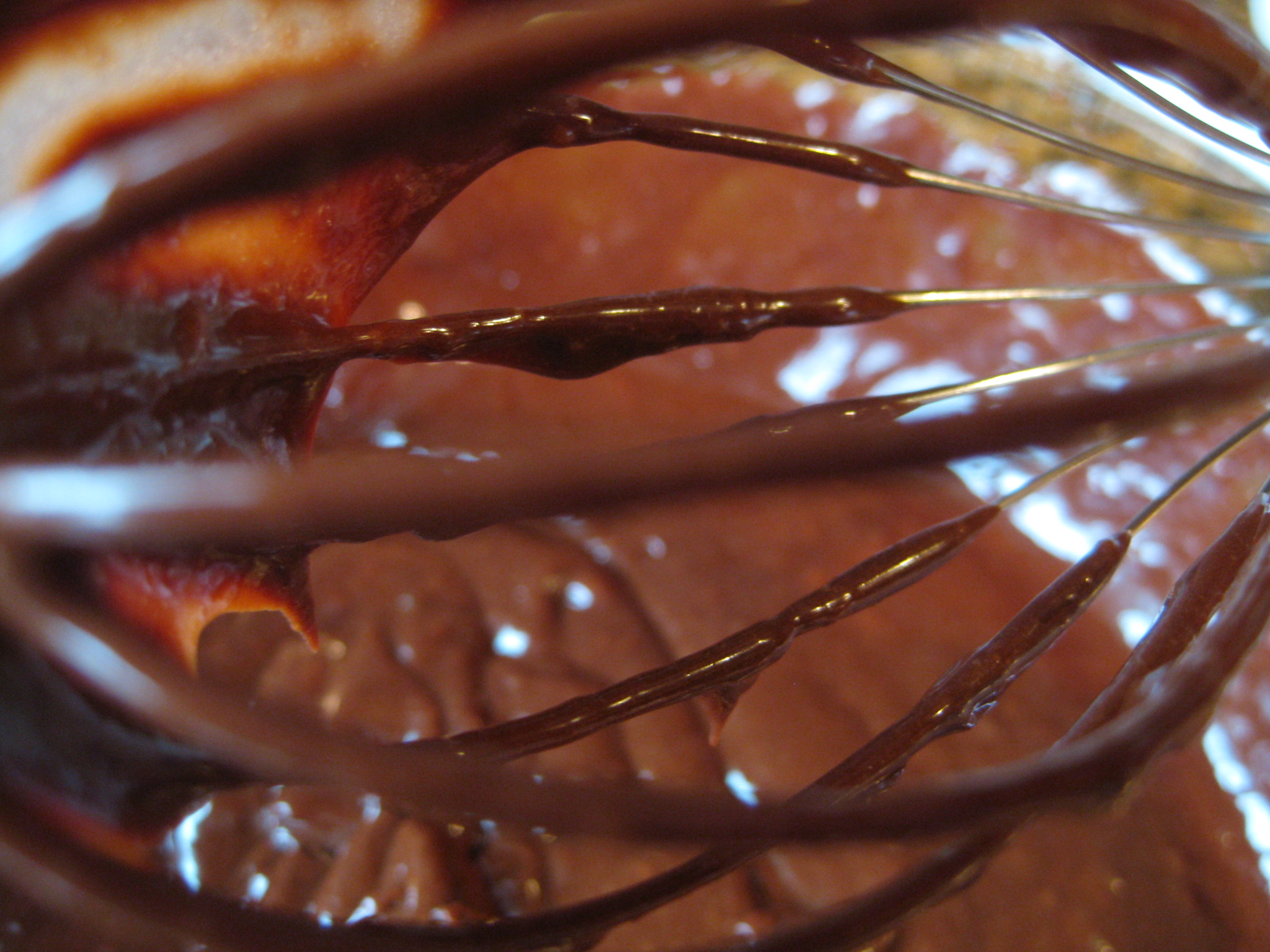
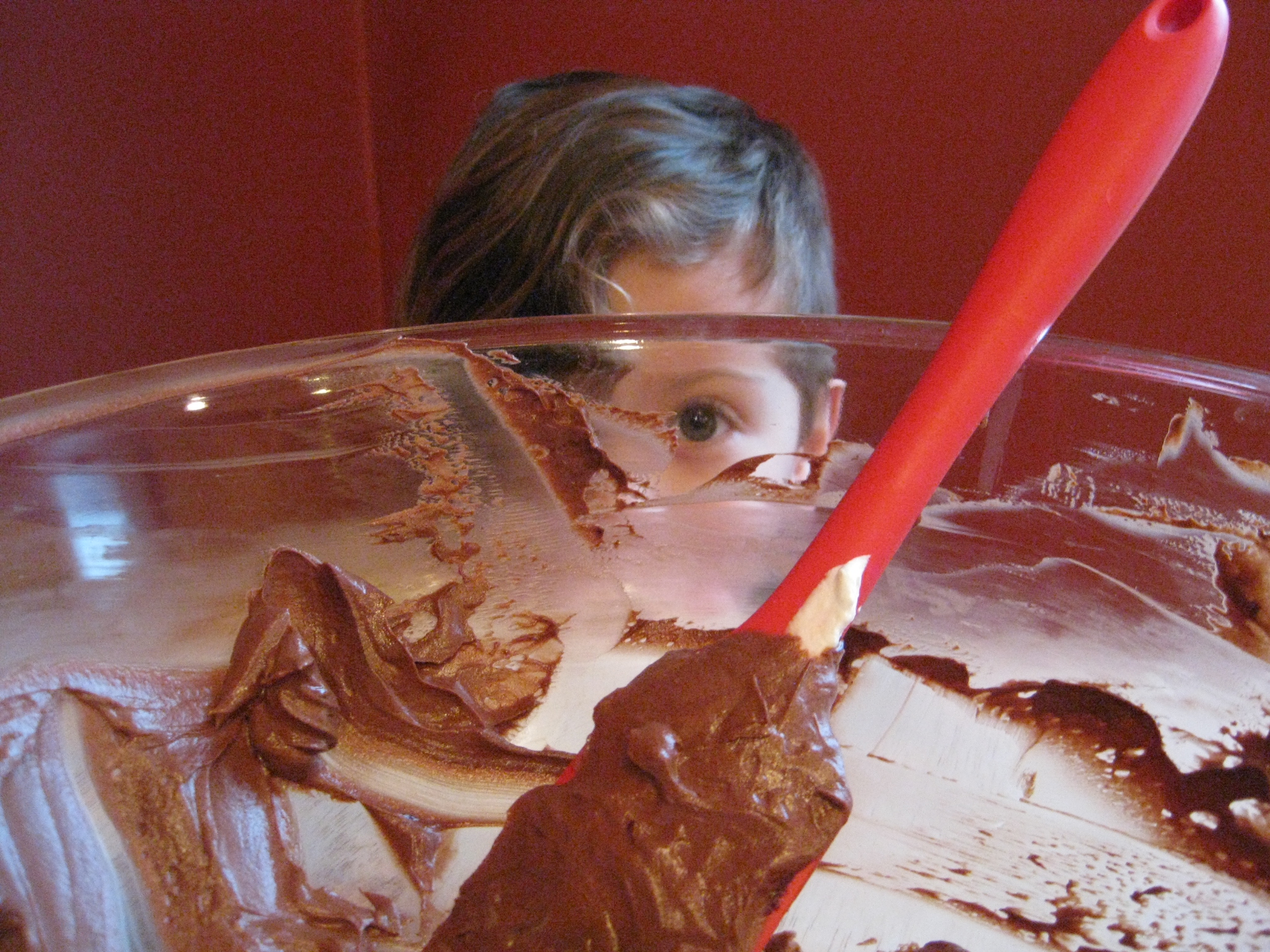
Perhaps the most enjoyable aspect of this dessert, however, comes not in its final form.  When you’re cooking with such vast quantities of chocolate, including a simple mousse that skips the standard addition of raw eggs, you are left with several cooking tools that are amenable to being cleaned off with the help of others, and not necessarily by way of the sink.  In particular, when it comes to cleaning chocolate anything off of mostly anything, in my house at least, you don’t have to go far to find yourself an assistant who is willing to help out in any way he can.

Chocolate Cloud Cake

From Nigella Bites

9 0z bittersweet chocolate

1/2 cup unsalted butter, softened

6 eggs: 2 whole, 4 separated

1/2 cup plus 1 tablespoon of sugar

9-inch springform cake pan

Preheat oven to 350 degrees F.  Line the bottom of the cake pan with baking parchment.

Melt the chocolate in either a double boiler or in the microwave, and then let the butter melt in the warm chocolate.

Beat the 2 whole eggs and 4 egg yolks with 1/3 cup of the sugar, then gently add in the chocolate/butter mixture.

In another bowl, whisk the 4 egg whites until foamy, then gradually add the remaining sugar and whisk until the whites hold their shape but are not too stiff.  Lighten the chocolate mixture with a dollop of egg whites, and then fold in the rest of the whites.  Pour into the prepared pan and bake for 35-40 minutes, or until the cake is risen and cracked and the center is no longer wobbly.  Cool the cake in its pan on a wire rack.  The middle will sink as it cools.

Chocolate Mousse

Adapted from The America’s Test Kitchen Family Baking Book

1 teaspoon cornstarch

1 & 1/4 cups heavy cream, chilled

2 tablespoons sugar

2 tablespoons Dutch-processed cocoa powder

2 teaspoons vanilla extract

1 teaspoon instant espresso powder

pinch salt

8 ounces bittersweet chocolate, melted and cooled

In a small saucepan, slowly whisk together the cornstarch and 1/4 cup of heavy cream over very low heat.  When the cornstarch has mostly dissolved (this should take under 1 minute), slowly whisk in another 1/4 cup of cream, the sugar, cocoa, vanilla extract, espresso, and salt.  Stir constantly until the sugar dissolves (about 1 minute).

Transfer the mixture to a medium bowl and stir in the melted chocolate.  Place the bowl in the refrigerator or freezer, stirring every minute or so, until the filling cools to room temperature and is slightly thickened, about 5 minutes.

Whip the remaining 3/4 cup of cream with an electric mixer on medium low speed until frothy, about 1 minute.  Increase the mixer speed to high and continue to whip until the cream forms soft peaks, 1 to 3 minutes.  Gently fold the whipped cream into the cooled chocolate filling until just combined.

Assembling the Cake

When the cake has cooled, gently pour the chocolate mousse into the crater that has formed in the center of the cake.  Smooth the mousse as much as possible, then set chocolate mousse cake in the refrigerator until the entire thing has set, anywhere from 2-3 hours (the cake can, of course, be left in the refrigerator overnight, though after the top of the mousse has set it would be a good idea to cover the top of the cake with a sheet of plastic wrap).

Before serving, run a thin knife around the edge of the cake, gently separating it from the sides of the springform pan.  If, when unlocking and removing the springform’s sides, the cake loses a few crumbs and appears a bit crackly, do not despair.  One of the many charms of this cake is its rustic appearance, as it belies the incredible smoothness held within.

Top cake with whipped cream of your choice, by the slice or in the cake’s entirety.

You can make all three of the following whipped creams by buying one pint of heavy whipping cream and dividing it into thirds.

Vanilla Whipped Cream

2/3 cup heavy cream

scant 1 teaspoon vanilla extraxt

2 tablespoons confectioners’ cugar

Mocha Whipped Cream

2/3 cup heavy cream

2 teaspoons espresso powder

2 tablespoons confectioner’s sugar

2 teaspoons unsweetened cocoa powder

Peppermint Whipped Cream

2/3 cup heavy cream

2 tablespoons confectioners sugar

1/4 teaspoon peppermint extract

Whip cream in a mixing bowl with an electric mixer or whisk until cream begins to thicken.  Add the sugar and flavorings and continue to whip until stiff peaks just begin to form.