Archive | Dessert RSS feed for this section

Apricot Brown Butter Cookies

10 Dec

brap10

I just reverse engineered a cookie that I ate four months ago and had to recreate based entirely on memory.
brap2

brap3

brap4

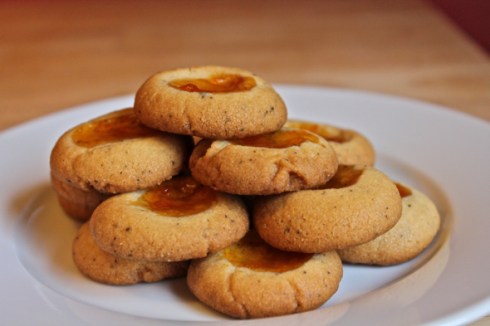
One of my favorite cookies is the apricot brown butter cookie from Bi-Rite Market, in San Francisco. The cookies are thick and chewy, rich with brown butter, and topped with a spoonful of sticky apricot preserves. I do not live in San Francisco, however, so I only get to meet up with the cookies whenever I travel to them.
brap5

brap6

brap7

brap8

brap9

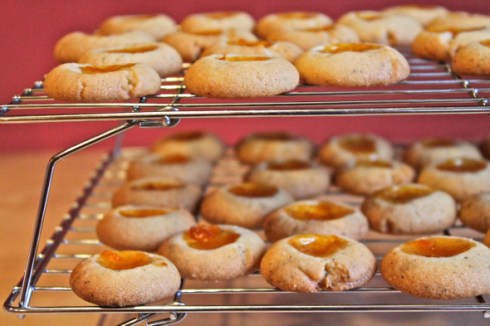
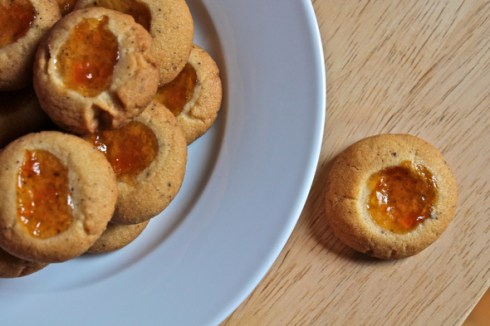
After while, I got tired of pining for the cookies, and decided that I had to figure out how to make them myself. I started with brown butter, deeply cooked so its toffee notes stood front and center, then, looking to create a cookie with a nice, chewy finish, paired it with brown sugar. Since the cookie I was looking to make was essentially a souped-up butter cookie, I followed the pattern of butter cookie know-how, creaming the lightly firmed brown butter with sugar and flour, then chilling the dough to allow it to hydrate and set up. When baked up with a spoonful of apricot preserves, the cookies were a dream. With a pronounced brown butter flavor, a sticky lid of apricot preserves, and a delectably crisp-yet-chewy bite, they are just like my long lost cookie friend.
brap1

brap11

Last Year: Ginger Almond Toffee

Apricot Brown Butter Cookies

I first made these cookies much larger than the ones pictured here (in the interest of recreating Bi-Rite Market’s cookie as closely as possible). The tiny cookies seen here were made for a holiday cookie swap, so a small size seemed like a reasonable idea. If you want to make the cookies more like Bi-Rite Creamery’s, triple the scoop size, multiply the apricot topping by the same factor, then bake the cookies for 2 to 4 minutes longer, checking the cookies every couple of minutes to reach the proper level of doneness. When made larger, the cookies will end up much chewier than a tiny cookie.

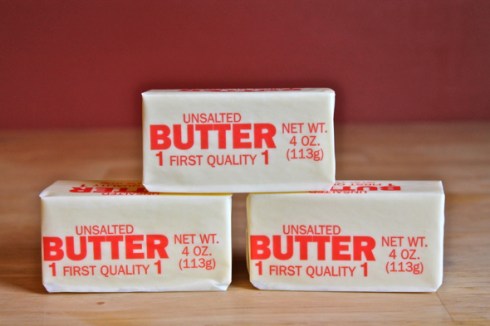
1 ½ cups (3 sticks) unsalted butter, at room temperature

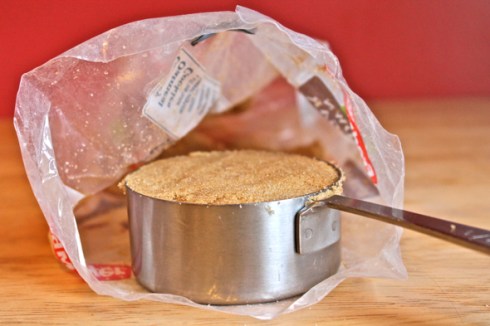
½ cup dark brown sugar

½ cup granulated sugar

2 large egg yolks

2 teaspoons vanilla extract

3 cups unbleached all-purpose flour

½ teaspoon salt

1/2 cup to 1 cup apricot preserves

In a medium skillet or pan, melt 2 sticks (1 cup) of the butter over medium heat. When browning butter, it is always best to do so in a light-colored pan so you can closely gauge the changing of the butter’s color. Slowly cook the butter, swirling the pan around every few seconds so the butter cooks evenly. The butter will begin to foam, then spatter a bit, and then you’ll see the little dots of milk solids begin to turn brown at the bottom of the pan. This can take anywhere from 5 to 8 minutes, so be sure to watch the butter very carefully to keep it from burning, and stir the butter every now and then to keep the milk solids from sticking to the bottom of the pan.

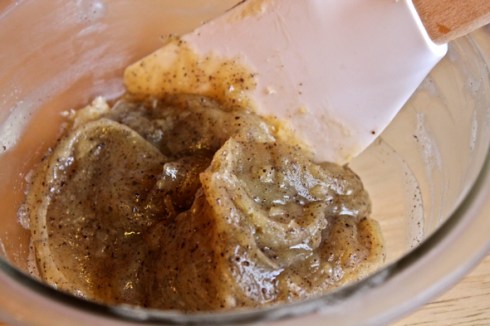
When the dots of butter solids have turned dark brown and the butter begins to emit a lovely nutty aroma, pour the butter into a medium bowl. Immediately place the bowl in the refrigerator or freezer. Allow the butter to cool, stirring every few minutes, until it is the spreadable consistency of softened butter (you basically want it to be the same texture as the remaining stick of butter that has been left to soften at room temperature). Getting the browned butter to this texture can take anywhere from 10 to 30 minutes, depending on whether you place it in the refrigerator or freezer, how often you stir it, etc.

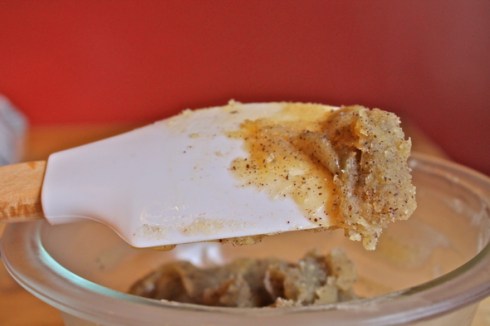
When the browned butter has reached the proper consistency, place it in a large bowl, or in the bowl of a standing mixer fitted with the paddle attachment, along with the remaining stick of softened butter. Cream the butters together until they are light and fluffy. Slowly add in both the brown sugar and granulated sugar, beating all the while, until everything is blended together. Beat in the egg yolks and vanilla. With the mixer on medium low speed, slowly add in the flour and salt and mix until everything is well combined and the dough is relatively smooth. Cover the bowl of dough and refrigerate for at least 1 hour.

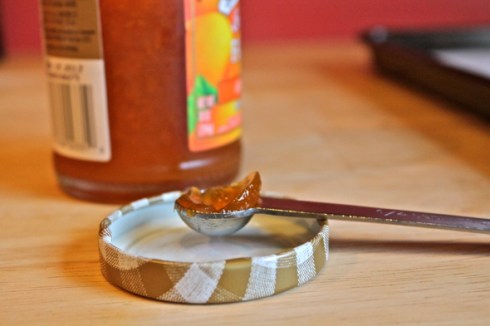
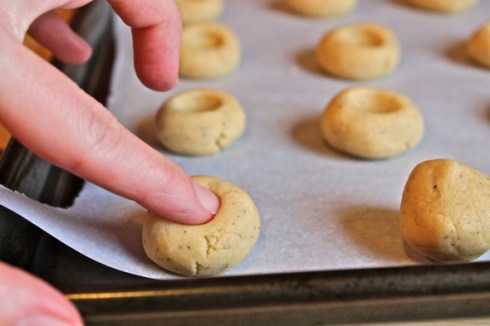
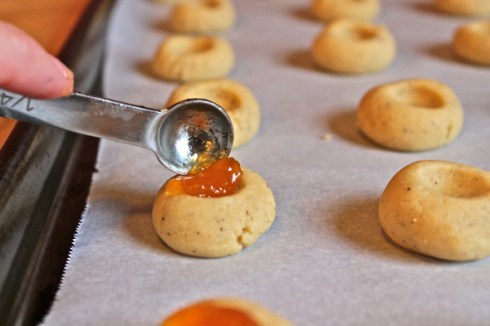
When the dough has chilled, preheat oven to 350 degrees Fahrenheit. Using about 1 rounded teaspoon of dough at a time (or, for a much larger cookie, a couple of rounded tablespoons of dough), roll dough into a roughly 1-inch ball (or, obviously, larger). Place balls of dough about a inch or so apart on parchment-lined baking sheets. Using the tip of your finger, make a small indentation in the center of each dough ball. Drop a small scoop of apricot preserves into the indentation (a small ball will handle about ¼ of a teaspoon of preserves, but a larger ball can take about three times that much).

Bake the cookies in the center of the oven for 12 to 14 minutes, until the edges are lightly golden. Remove cookies to a wire rack to cool.

If you make these cookies using rounded 1 teaspoon scoops, you will get around 6 dozen or more cookies.

Raspberry Squares, Plus Baking with Kids

6 Dec

Bake Sale is the story of two friends, an eggplant and a cupcake, who work together to fund a dream trip to Turkey (which I just now realized is also the name of a food, which is a detail, intended or not, I now find totally hilarious). Cupcake owns and runs a small bakery, and while he is renowned amongst a small local following for his fantastic cakes and pastries, he is not exactly swimming in enough cash to fund his Turkish vacation. Through months of hard work and clever baking ideas, Cupcake eventually saves up enough money to accompany Eggplant on his trip. Cupcake’s fundraising bake sales are presented in lively detail, with one afternoon taking him to the Westminster Dog Show to sell homemade dog biscuits, and another to a farmers market to peddle his sweet offerings of vegetable-based baked goods.

At the end of the book lies a delightful treat: A ten-page spread of recipes based on the treats showcased in the story.

For months my son had been clamoring to make the raspberry squares featured in the book, so when we found ourselves with an open afternoon a few weeks ago, we open the book and dove right into the recipe. We had a great time. My son really wanted this project to be his, so I spent a fair amount of time out of the kitchen, purposefully keeping my prying mitts off of his work.

And then something completely unforeseen happened. The raspberry squares were terrible. I mean, they were just awful. The base was loose, greasy, and tasted of raw flour. The crunchy topping was so sweet, it almost made my teeth dance. You couldn’t cut a square without it melting into a pile of slick, separated ingredients. What a disappointment. We tried to pretend that the squares were at least somewhat salvageable, but, in the end, we had to toss them out. It was a total disappointment.

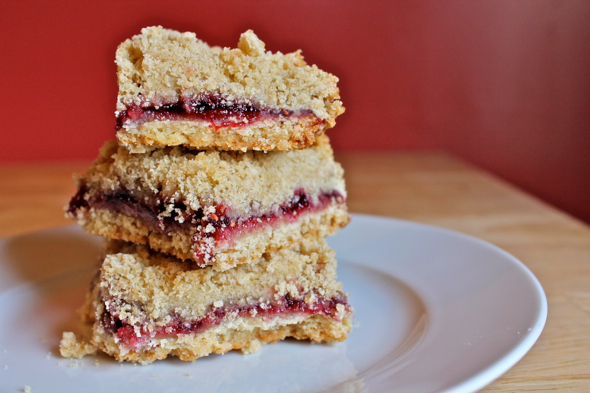
I couldn’t let things end that way. This was a recipe from Bake Sale, one of my son’s favorite books! We couldn’t let the recipe fail us like that. Determined to start anew, I took a look at the original recipe, located a number of red flags, made a number of intuitive changes, and rewrote a plan of baking action. Ever the trooper, my son agreed to give things another go. The second time, we knocked those raspberry squares out of the park. With a crisp, flaky crust, a crumbly, lightly sweetened topping, and a good balance of toothsome crunch and fruit filling, the raspberry bars were given a new, completely delicious life. Bake Sale will forever remain one of our most treasured books, and now, revised and edited, these raspberry squares just might make the cut as one of our favorite treats.

Last Year: Dutch Apple Pie and Chocolate-Dipped Lime Shortbread

Raspberry Squares Recipe

Very heavily adapted from Bake Sale, by Sara Varon

Crust:

1 ½ sticks (12 tablespoons) unsalted butter, softened to room temperature

½ cup unpacked light brown sugar

2 cups unbleached all-purpose flour

1/8 teaspoon salt

Filling:

1 cup low or reduced sugar raspberry preserves

Topping:

2 cups unbleached all-purpose flour

1 cup unpacked light brown sugar

1/8 teaspoon salt

1 ½ sticks (12 tablespoons) unsalted butter, softened to room temperature and cut into 1-inch pieces

Preheat oven to 350 degrees Fahrenheit.

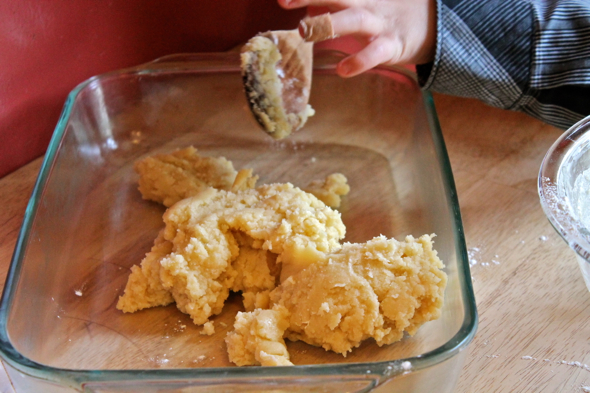
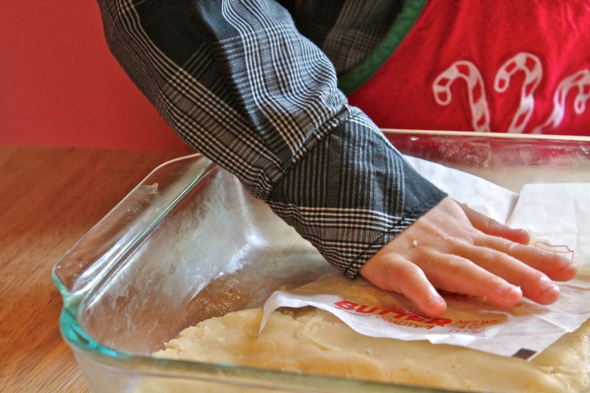
To make the crust, combine butter, brown sugar, flour, and salt in a large bowl. Stir together with a sturdy spoon until the ingredients are incorporated with one another and no streaks of butter show through. Spread dough evenly into a 9’ by 13’ baking dish. Press down on the dough so it forms a flat and even layer of crust (you can use a piece of wax paper or the wrapper from a stick of butter to do this). Bake crust in center of oven for 17-20 minutes, until the edges are just starting to turn golden brown. Remove from oven and allow to cool completely.

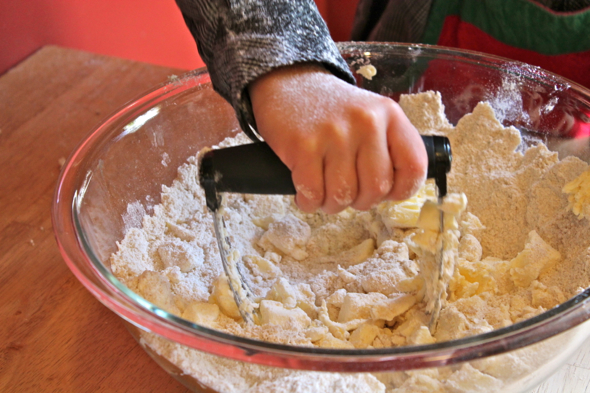
While the crust cools, prepare the topping. In a large bowl (you can even use the same bowl you used to mix the crust—I promise I won’t tell anyone), mix together the flour, brown sugar, and salt. Scatter the butter pieces over the top of the flour mixture. Using a pastry cutter or two knives, cut the butter pieces into the flour mixture until the mixture takes on the appearance of coarse crumbs.

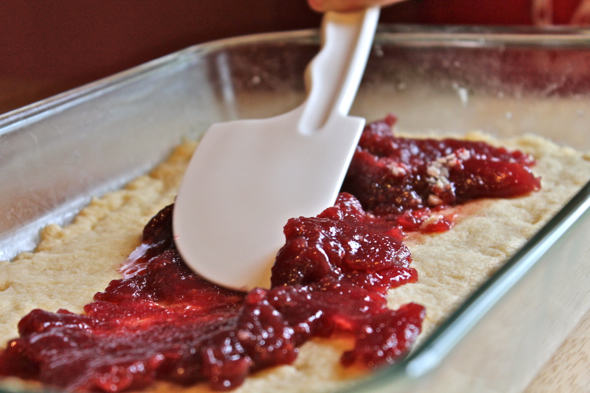
When the crust has cooled, spread the raspberry preserves over the crust, leaving a ¼-inch border around the edges of the crust (if the preserves touch the side of the pan, they will burn during baking). Scatter the crumbly topping evenly over the preserves.

Bake in center of oven for 20 to 25 minutes, until topping is light golden brown. Remove from oven and allow to cool significantly (at least 30 minutes, but preferably 1 hour) before cutting into squares.

Depending on how large you make your squares, you can get anywhere from 20 to 32 (or more) squares.

Easiest Skillet Fruit Pie

12 Nov

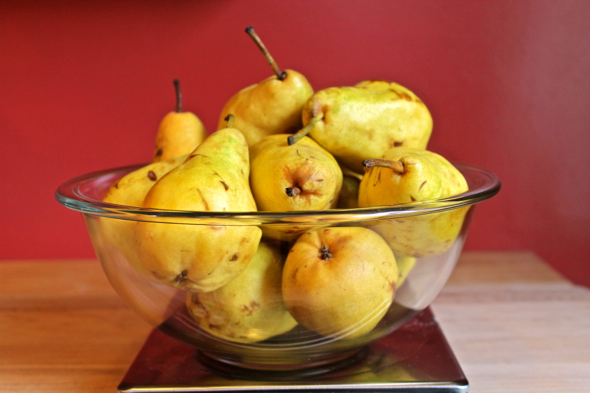
Are you familiar with the concept of a skillet pie? Up until a couple of weeks ago, I was not. In fact, until the moment when I found myself with a huge box of fast-ripening pears and one single layer pie crust, it had never really occurred to me to bake a pie with only one crust. Oh, sure, I like single crust pies and tarts, but a baked fruit pie with only one crust? Why would I do that? One of the most enjoyable things about a fruit pie is the fact that it bakes into one big juicy mass of fruit that melts into its cozy pocket of crust. What’s the point of taking away one of those crusts?

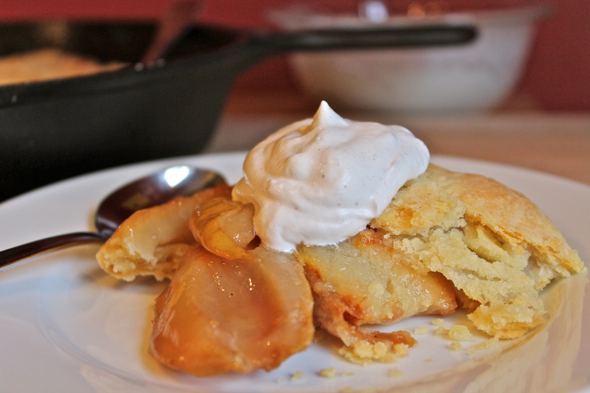
To be honest, I don’t really think you need to take away one of those crusts, but, if you want to know how to make a dead simple pie out of nothing more than some fresh fruit, a tiny amount of sugar, and only a single layer of pie crust, well, you’ve come to the right place.

Think of this as a last minute pie, the type of thing you throw together when you find yourself with unexpected company or a zero-hour request that you provide a dinner party dessert. The entire thing comes together in no time at all, and you use the same pan to both sauté the fruit and bake the pie. All of the great caramelized juices from the pears stay in the pan, allowing everything to mingle and get cozy while the top crust bakes. It’s a great pie for new bakers, for people short on time, one just for people who love pie. Really, it’s just a great pie, period.

Last Year: Butternut Squash Cake with Ginger Cream Cheese Frosting

Easiest Skillet Fruit Pie Recipe

I use a 12-inch skillet to make this pie, as it provides a good amount of surface area in which to cook the fruit. If you only have a smaller skillet, say, a 10-inch one, you may have to divide your fruit into more batches when you cook it initially.

4 pounds ripe pears or apples

2 tablespoons unsalted butter

2 tablespoons dark brown sugar

1 single layer pie crust (my favorite pie crust recipe is below)

Flaky Tart and Pie Dough Recipe

From Tartine

1 teaspoon salt

2/3 cup (5 ½ ounces) very cold ice water

3 cups plus 2 tablespoons (1 pound) unbleached all-purpose flour

1 cup plus 5 tablespoons (10 ½ ounces) very cold unsalted butter

pinch of sea salt

In a small bowl, add the salt to the water and stir to dissolve.  Place in the freezer to keep super cold until ready to use.

Place the flour in the bowl of a food processor, or in a large bowl.  Cut the butter into 1-inch pieces, then scatter over the flour.  If using a food processor, pulse the mixture briefly until it forms into large crumbs and some of the pieces of butter remain pea-sized.  If making the dough by hand, cut the butter into the dough using a pastry cutter.  You will want the dough to have the same crumb-like look with some large pea-sized chunks of butter throughout.

Drizzle the salt and water mixture over the dough and, if using a food processor, pulse until the dough comes together into a ball but is not completely smooth.  You should still see visible butter chunks.  If mixing the dough by hand, drizzle the salt and water mixture over the dough while tossing with a fork.  The dough should come together in a shaggy mass.  Gently mix the dough together until it comes together in a ball but is not completely smooth.  As with the food processor dough, you should still see visible butter chunks.

Divide the dough into 2 equal balls on a lightly floured surface.  Shape each ball into a disk about 1 inch thick.  Wrap each disk in plastic wrap and refrigerate at least 2 hours, preferably overnight.

Makes 2 9-inch or 10-inch tart or pie shells, enough for 2 single-crust pies or tarts, or 1 double-crust pie.

To make the pie:

Preheat oven to 400 degrees Fahrenheit.

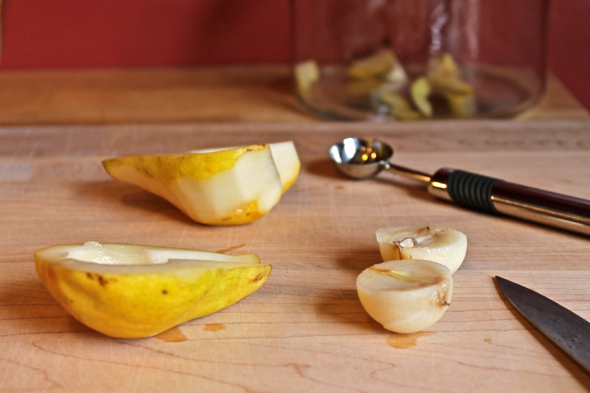
Peel and core the pears or apples. If your fruit is super fresh (meaning, if it is in season and has spent only a handful of weeks in between being on a tree and being in  your kitchen) you don’t even need to peel the fruit, as the skin should be very thin and flavorful. Cut the pears or apples in half, then in quarters.

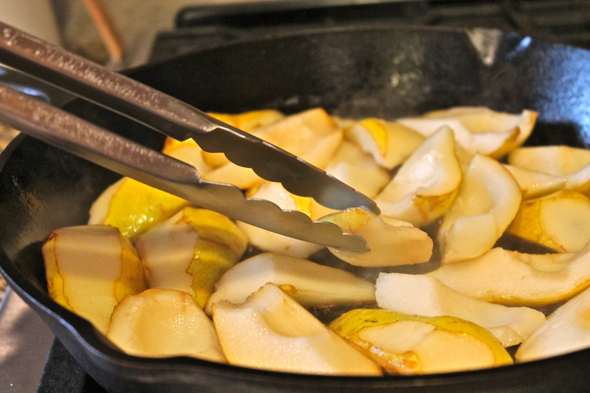
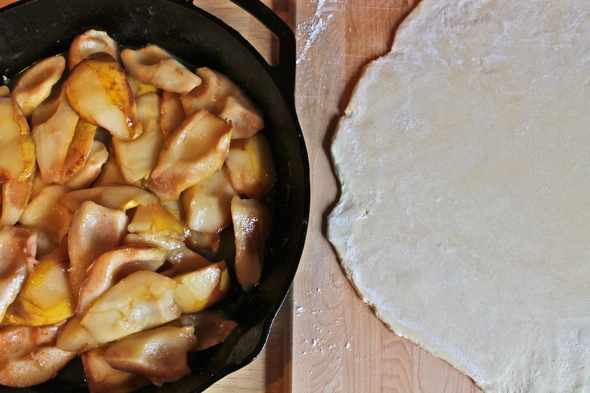
In a large cast iron skillet set over medium-low heat, melt 1 tablespoon of the butter. Sprinkle over 1 tablespoon of the dark brown sugar, and allow it to melt into the butter just slightly (about 30 seconds to 1 minute). Add a small pinch of sea salt. Add half of the quartered fruit, making sure that the fruit is laying in a single layer. Sauté fruit until it is just starting to caramelize on one side. For the pears I used, which were super ripe, this only took about 3 minutes since the juices were just flowing out of them once they hit the hot pan. For less ripe pears, or for firm apples, it could take up to 7 or 8 minutes. Carefully turn the fruit over and caramelize on the other side (again, this could take anywhere from 3 to 8 minutes). Pour cooked fruit into a large bowl, scraping out the caramelized sugar along with it. Add the second tablespoon of butter, the second tablespoon of sugar, a small pinch of sea salt, then the rest of the fruit, and cook in the same manner as you did the first batch. If the sugar and butter start to brown too quickly, turn the heat down to low. When the fruit has cooked, remove the pan from the heat, add in the first batch of fruit, stir gently to combine, and set aside.

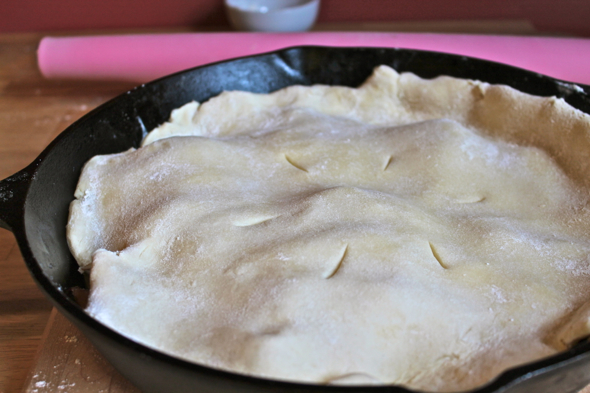
On a floured surface, roll out the single-layer pie crust into a circle roughly 1 inch larger than the size of your pan. Gently place the round of dough over the fruit in the skillet, then tuck under any overhanging edges. Slice air vents in the crust. If you want, you can sprinkle a little turbinado sugar over the top of the crust, or brush the crust with a beaten egg, but you certainly don’t have to do either.

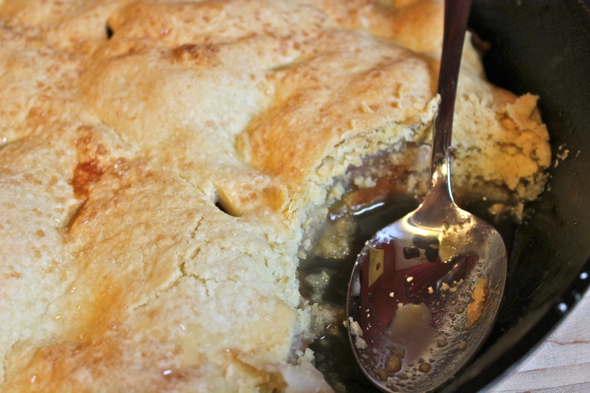
Bake the pie in the center of the oven for 35-40 minutes, until the top crust is dark golden brown and the fruit is bubbling. Remove from oven and allow to cool for at least 15 minutes before eating. The filling will be molten hot.

Serve with freshly whipped cream, whipped with just a pinch of cinnamon.