Archive | Picnic RSS feed for this section

Savory Olive Oil and Walnut Sables

27 Feb

My friend Corinna once confessed to me that when her child was a mere toddler, she developed the habit of calling all crackers “ccokies.”  It’s not like her toddler knew the difference between a cookie and a cracker at that point, having never been served a cookie at that point in his life, so I, of course, thought her plan was pure, platinum genius.

When you really think about what makes a cookie a cookie, I suppose there is not a lot, besides sugar, that really separates a cookie from a cracker.  There is a similar correlation, I feel, between what makes a muffin a muffin and not a tiny little cake (because, really, in most cases there is very little that separates a muffin from a cake, save for serving size and variations in toppings and/or frosting).  Both crackers and cookies begin with some sort of flour, followed by some sort of fat to provide texture and flavor.  After those two building blocks come flavorings and leavening agents, both of which will then veer you off in the direction of either cookie or cracker.

But what happens when you start thinking of how to join the two elements?  Is it possible to make a cookie that is more like a cracker, or a cracker that is suspiciously like a cookie?  Perhaps more importantly, why would someone want to accomplish such a thing?
The answer to all those questions, I give you this:

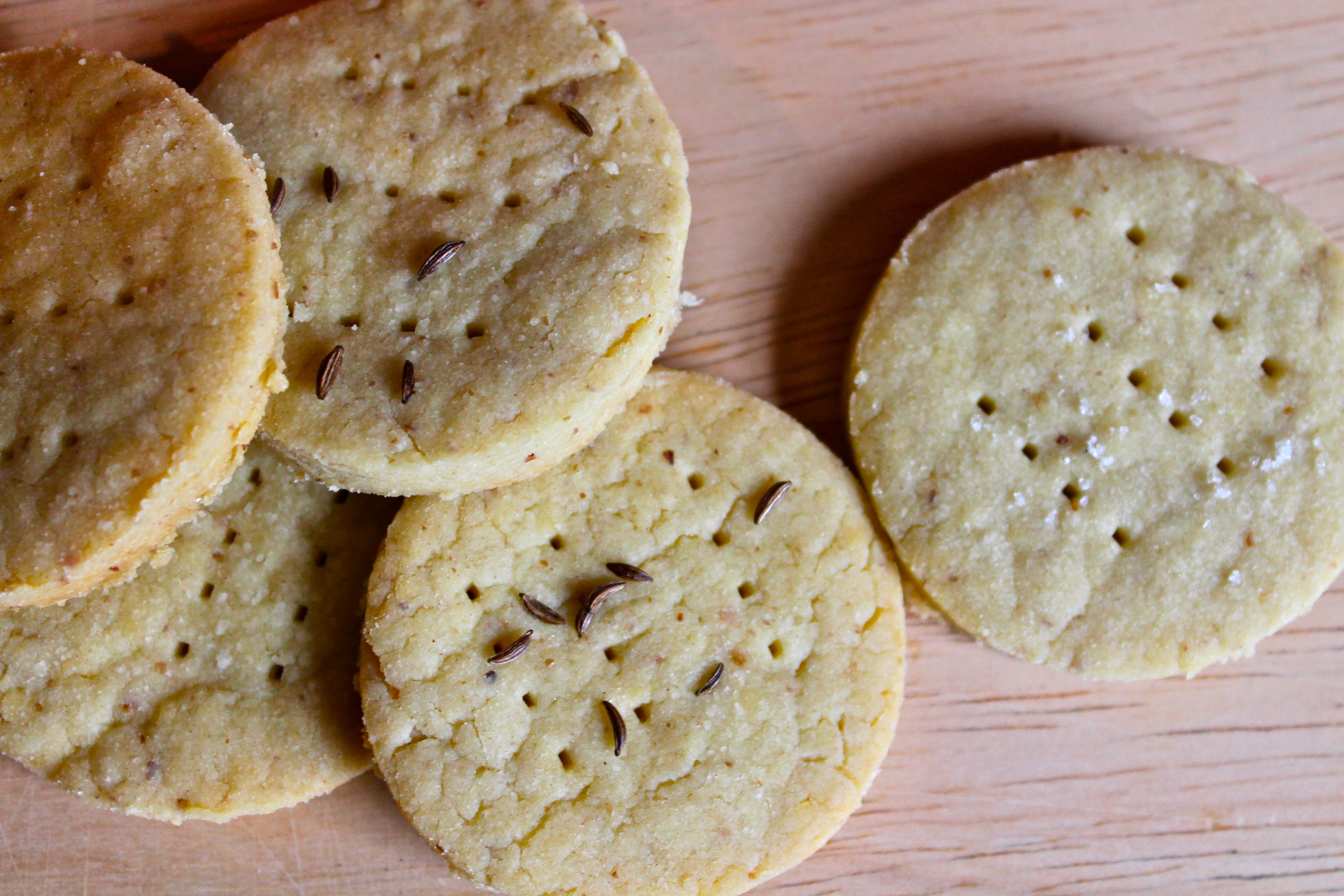
Melt-in-your-mouth sables that have the delicate, shattering texture of a cookie, but are speckled with fine bits of walnuts and a sprinkling of savory spices.  This is why you merge a cookie and a cracker.  Because there is nothing finer to nibble while having a glass of wine at the end of the day.  Because sometimes when you want a bit of a snack, you don’t really want any sugar to go along with it.  Because these, my friends, may be the most delicious experiment I have ever dreamed up on a whim, and I think you’d be missing out terribly if you didn’t try them out for yourself.
Savory Olive Oil and Walnut Sables

¼ cup walnut pieces

1 ¼ cups unbleached all-purpose flour

¼ teaspoon sea salt

1 egg yolk

6 tablespoons extra-virgin olive oil

2 tablespoons water

Optional toppings: caraway seeds, truffle salt, poppy seeds

In the bowl of a food processor, pulse walnut pieces 5 or 6 times until they are ground medium-fine, with a few small chunks of walnut remaining.  Add flour and salt to walnuts and pulse to combine.  Add the egg yolk and pulse 2 or 3 more times to combine.

With the food processor running, pour in the olive oil in a slow stream, allowing the mixture to become uniformly combined.  With the food processor still running, drizzle in the water, then allow the dough to just start to clump together.

Shape the dough into a disc, then wrap in plastic and allow to rest in the refrigerator for 30 minutes.

Preheat oven to 375 degrees Fahrenheit.  Line a baking sheet with parchment paper and set aside.

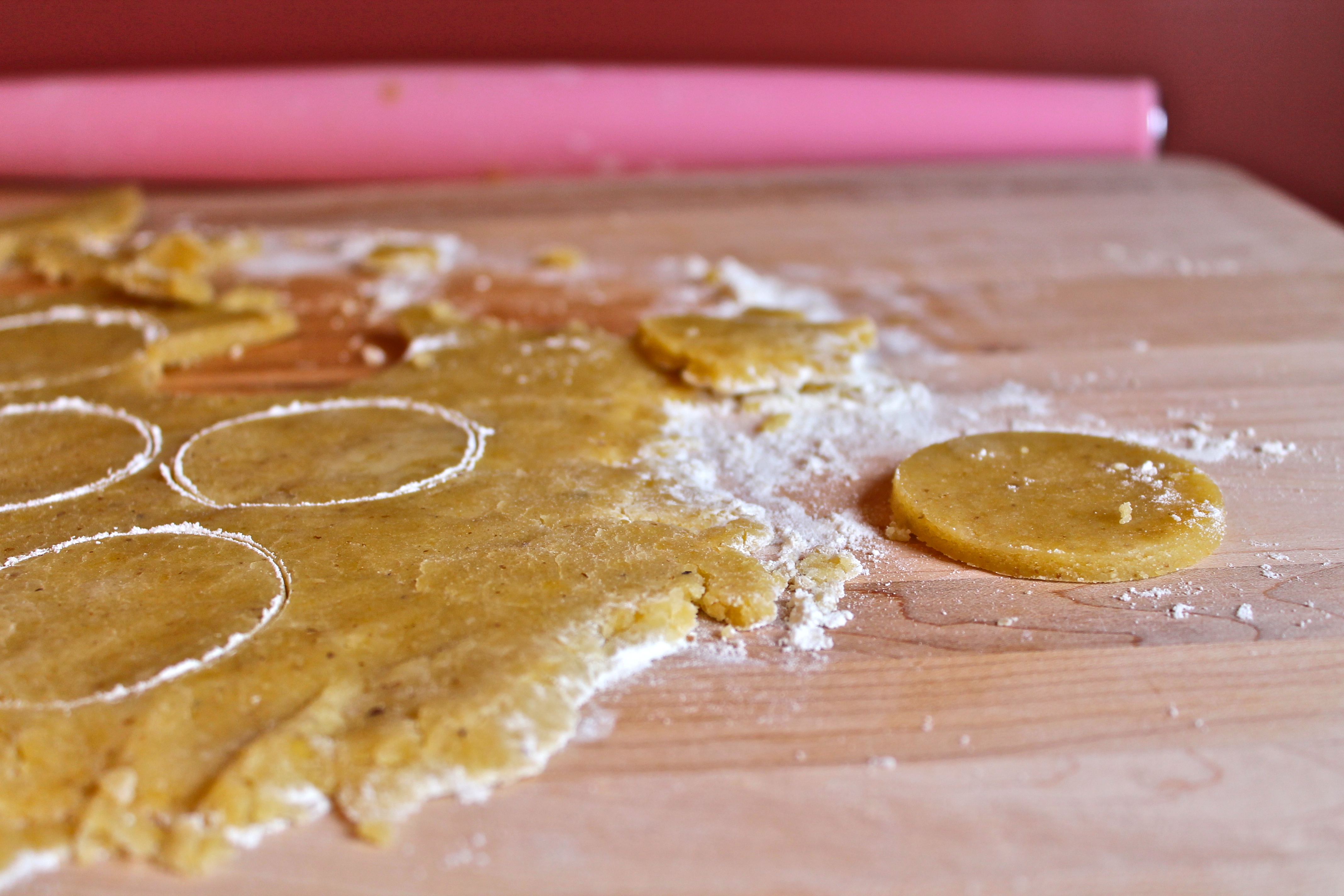
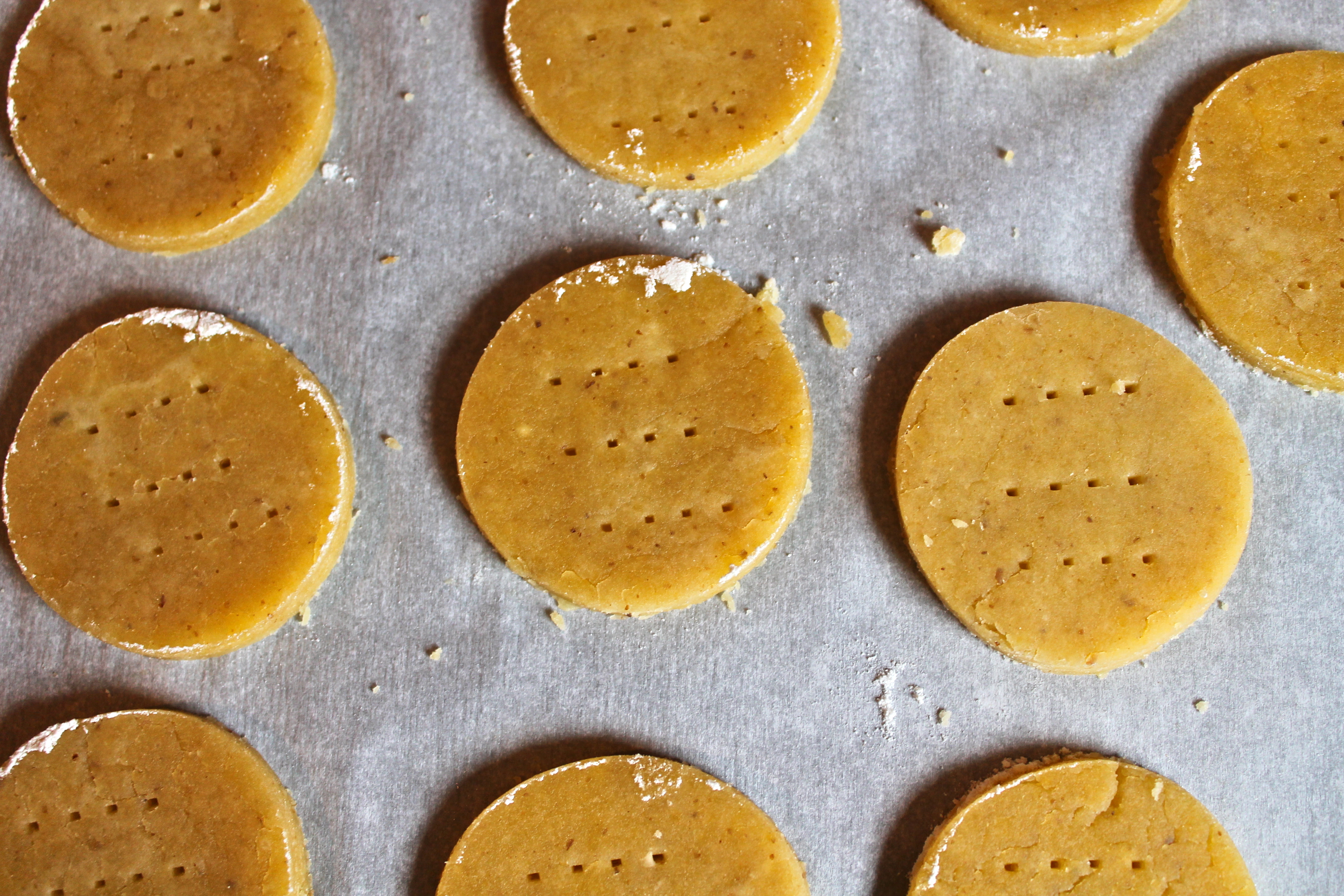
Turn the rested dough out onto a well-floured work surface.  Roll out the dough until it is very thin, somewhere between ¼” and 1/8”.  The dough will be a bit crumbly, so roll with care.  Using a floured 2-inch biscuit cutter or cookie cutter, cut out rounds of dough and place on parchment lined baking sheet.  Reshape and reroll the dough as needed.  Using a fork or the tip of a small, sharp knife, poke several holes on top of each cracker.  If adding toppings, sprinkle each cracker with just a pinch of whatever toppings you choose.

Bake the crackers on the center rack of the oven for 10 to 12 minutes, until the edges are golden and the tops just beginning to develop color.  Cool on the sheet pan for 1 minute, then remove to a wire rack to cool completely.  Crackers will be extremely delicate when hot, so transfer them with care.

Makes roughly 2 dozen sables.

Marinated Goat Cheese

23 Feb

Is there anything better than a plate of fresh bread and an assortment of cheeses?  Maybe a plate of fresh bread, an assortment of cheeses, and some spiced nuts, but, still, it tough to go wrong with the basic building blocks of cheese and bread.  It may not be the healthiest, most complete meal I could ever choose, but it is definitely a meal I find myself leaning towards whenever I am offered an opportunity to pick whatever I want to eat for a special occasion (or just, you know, for dinner on a Tuesday).

The good news about my love of bread and cheese is that spring and summer, however slowly, are surely working their way towards us.  Summer around here means a lot of time spent outdoors, whether it be riding bikes, playing baseball, or heading downtown for a waterfront picnic (a trip most likely taken on a bike…after playing a game of baseball).  Picnics, I believe I’ve mentioned before, are one of my most favorite things in the entire world.  In fact, second only to my love of picnics would be the act of choosing what to take on a picnic, a task I find endlessly pleasing and—dare I admit it—exciting.

At this point I feel as though I’ve got picnic packing down to a science.  Picnics are best eaten sans silverware, though we have been known to pack a vinegary potato salad or herby pasta dish from time to time.  For the most part, however, our picnics are strictly finger food affairs, and are comprised of nuts, fruits, sometimes small slivers of meats, and, of course, bread and cheese.  The bread is nearly always a baguette, but the cheese varies according to whatever we have on hand, or whatever I’ve spotted in the cheese case at the market and fallen in love with (because, yeah, I really really like cheese).  While last summer’s picnic cheeses seemed to lean more towards the category of being firm and sliceable, I have a feeling that the upcoming summer’s picnic cheese will be a strictly spreadable affair.  That is, the cheese in question will be this marinated goat cheese, because it is my most favorite cheese at the moment and I don’t see any signs of it budging from its position in the top spot.

Making this marinated cheese could not be simpler.  It also could not be more adaptable, and, as the seasons change, I imagine I will be changing up the formula quite a bit, just to see what happens.  My most recent version, the one seen here, involves toasted spices, a bit of heat, and a generous bunch of rosemary.  It is utterly fantastic, and I have spent the better part of a week spreading it on bread, folding it into eggs, and scooping it onto crackers.  I imagine it would also be great crumbled onto a tomato salad, and as the weather warms I plan on doing just that, as well as changing up the composition of the marinade to include some tarragon instead of rosemary, shallots in addition to the garlic, maybe a slip of lemon zest, and perhaps even some balsamic vinegar to accompany the olive oil.  Until the warm weather arrives, I’ll be experimenting with this recipe and preparing for as many picnics as I can.

Marinated Goat Cheese

This cheese marinates in olive oil while in the refrigerator, which causes the olive oil to harden as it cools.  It may look odd, but it poses no threat to the olive oil or the cheese.  To bring the oil back to room temperature, simply run the jar under hot water for 15 to 20 seconds.  The olive oil will almost immediately turn back into a liquid.

1 teaspoon fennel seeds

1 teaspoon whole peppercorns, preferably a mix of colors and flavors (I used green, black, and pink)

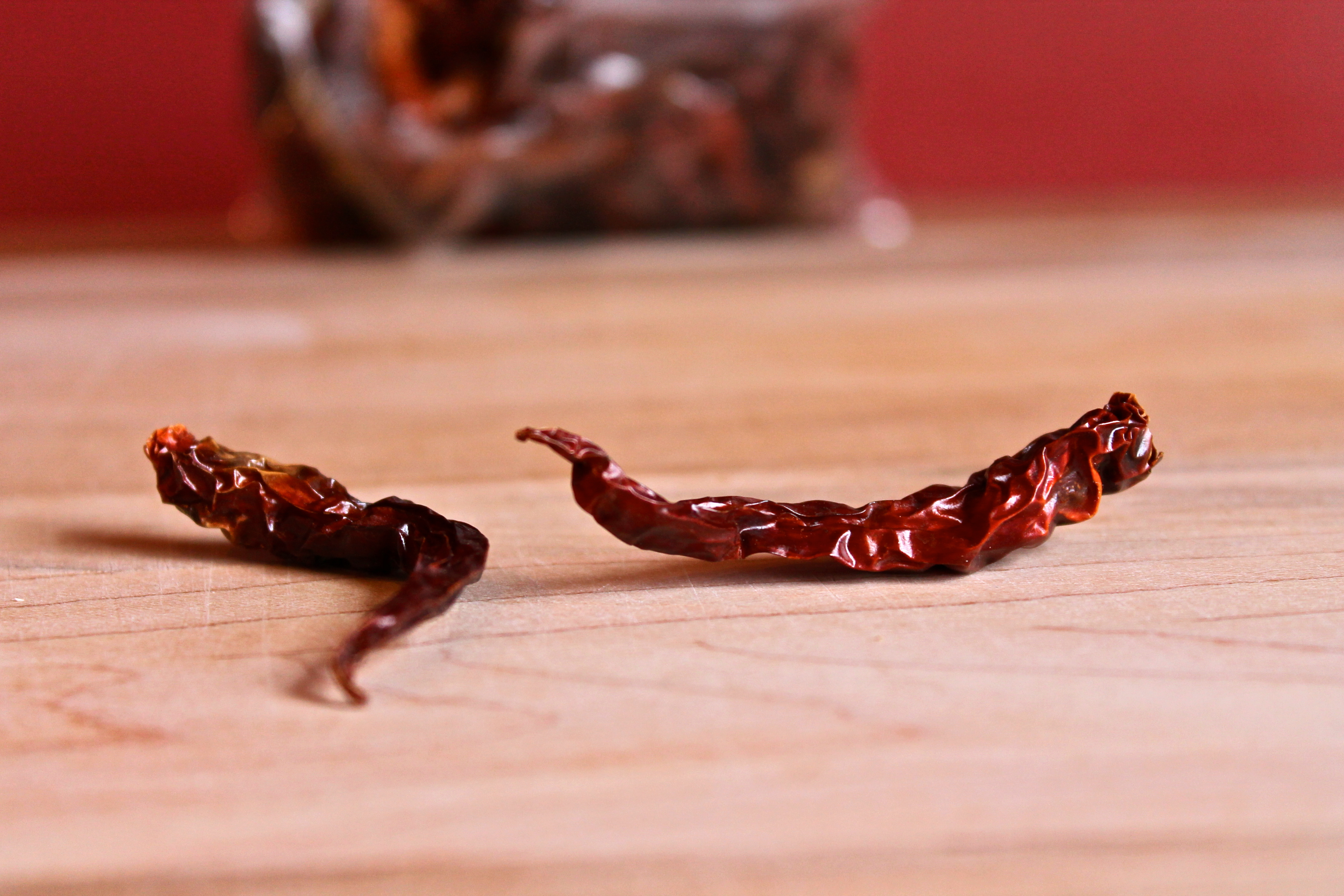
2 dried red chiles

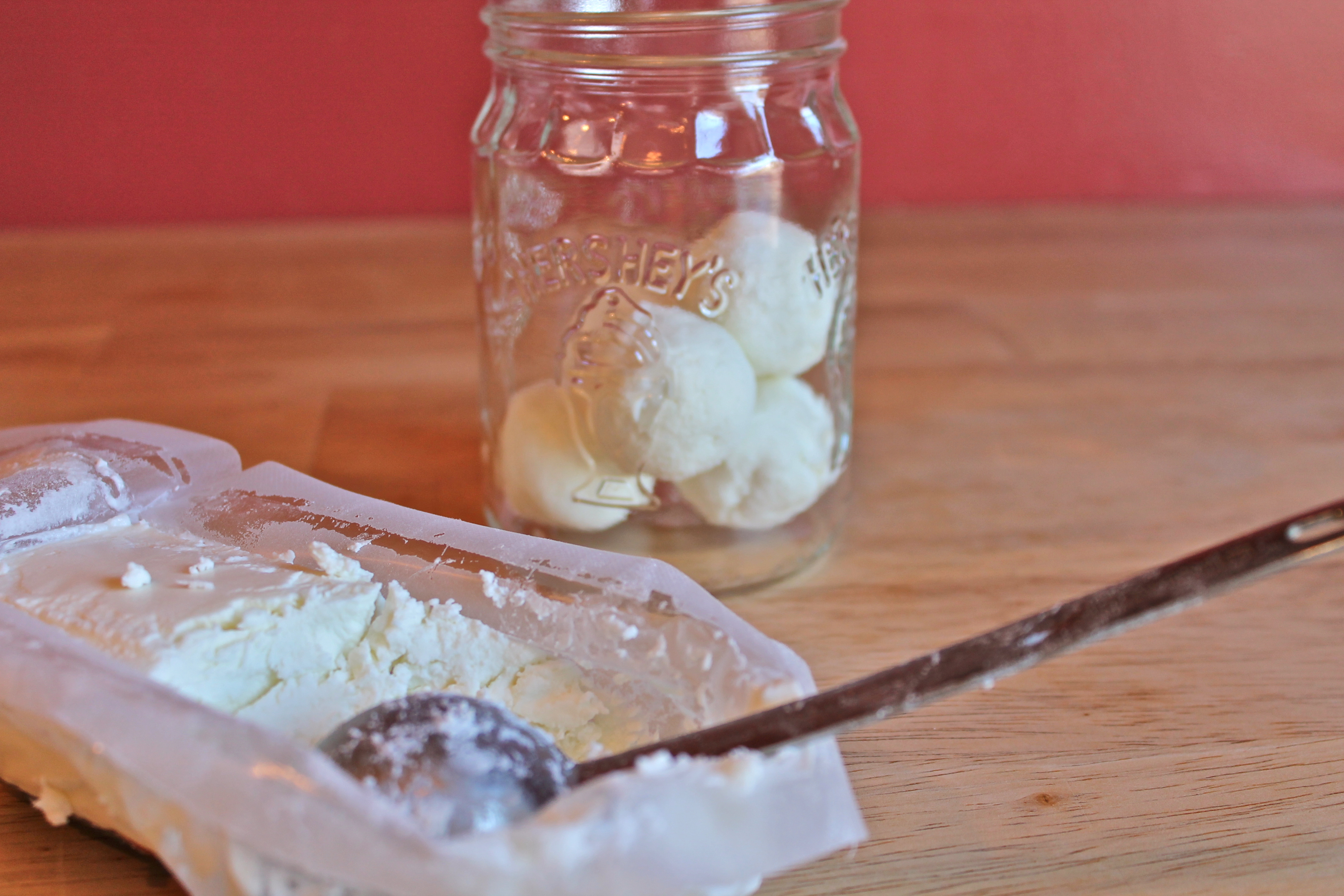
8 ounces goat cheese

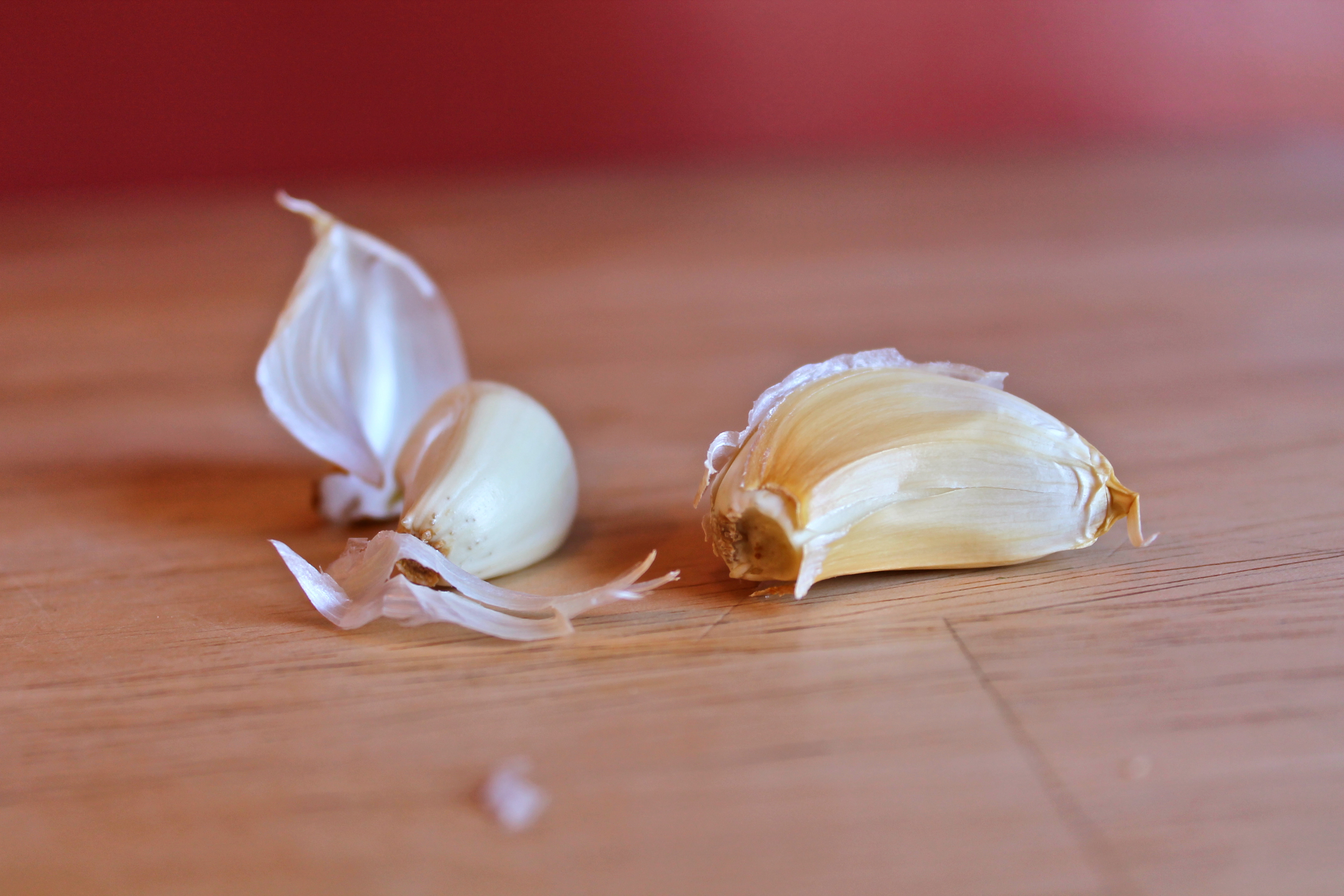
2 large cloves of garlic, peeled but left whole

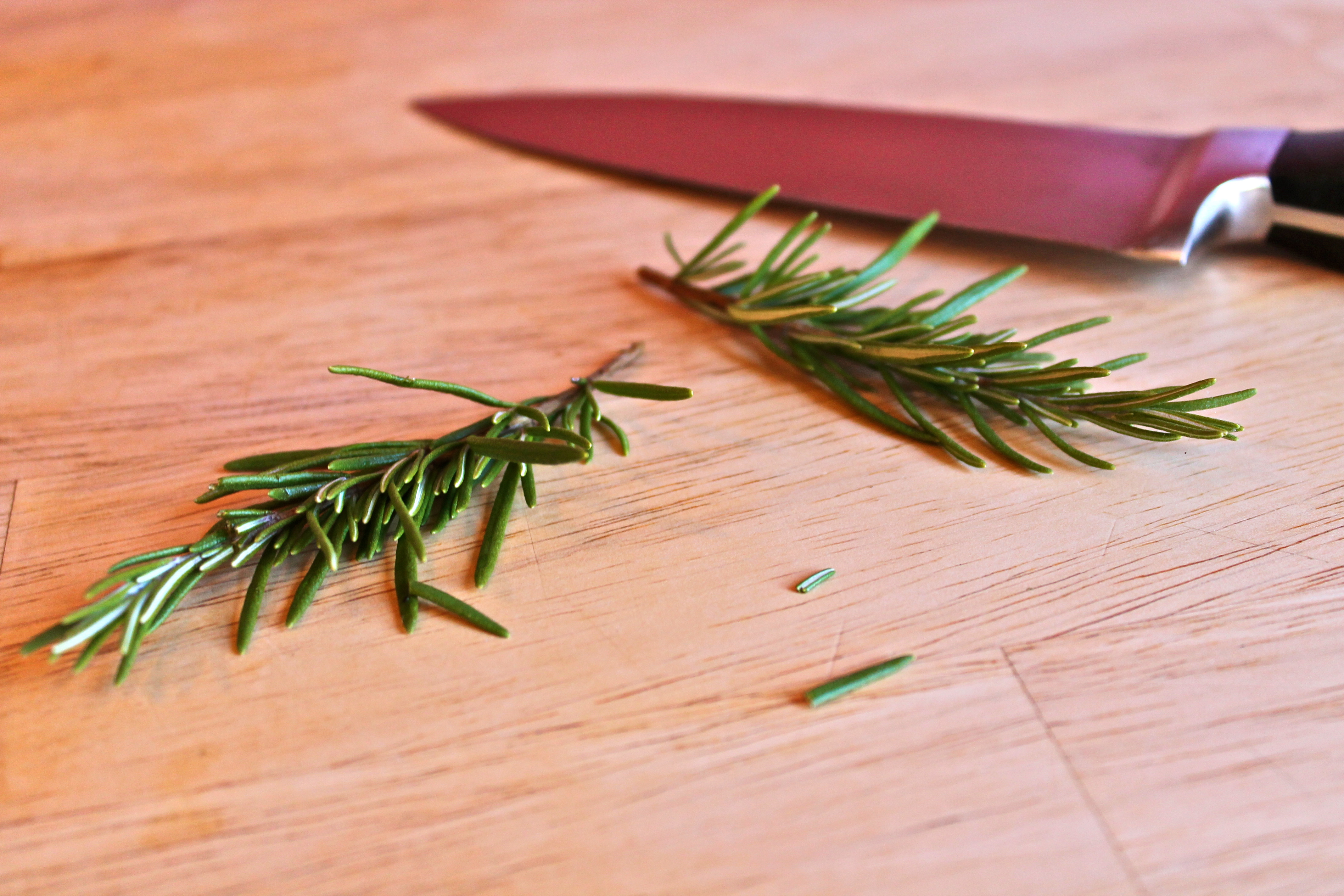
2 large sprigs fresh rosemary

2 bay leaves

extra-virgin olive oil

In a small saucepan set over medium-high heat, heat the fennel seeds, peppercorns, and dried chiles until they just begin to pop and their aroma begins to release.  Remove spices to a plate or bowl and set aside to cool.

Roll the goat cheese, 1 tablespoon at a time, into small balls.  Place balls of cheese in a jar that will allow room for all the cheese, plus flavorings (I used a 14-ounce jar and it was a nearly perfect, albeit slightly tight, fit).  To the jar, add the cooled peppercorns, fennel, and chiles.  Add the garlic cloves.  Very slightly twist the rosemary sprigs in your hands to bruise them and release some of their oils, then add them to the jar, along with the bay leaves.  Fill the jar with olive oil to cover everything.

Cover the jar tightly, then allow to marinate in the refrigerator for 2 to 3 days before eating.  Cheese will keep for 1 week, in the refrigerator, tightly covered.

Crisp and Hearty Homemade Granola Bars

13 Feb

There are some things people just do not expect you to make at home.  No one gives you funny looks when you bake a cake from scratch or make pizza at home, or even when you admit one day that you’ve taken to smoking your own salmon.  Tell people that you’ve developed a keen interest in making your own granola bars, however, and all of a sudden you’re regarded as some sort of competitive cooking snob, someone who has crossed the line of cooking for pleasure and entered into the territory of cooking in order to prove something.

It’s tough to explain to people who do not regard cooking as a pastime, a hobby, or even a treat, that when I want to make something new—no matter how silly it might seem to make it at home—it is because I like the time it allows me to spend in the kitchen.

My husband and I are both really, really into skateboarding (one of the many reasons we are married—because there were no other rational, responsible adults around to tolerate our interests), and we often talk about the time, sweat, and agony it sometimes used to take to learn a new skate trick (I speak in the past tense here because, though we are still into skating, neither of us is in any sort of position in life to be spending hours a day on a skateboard trying to will our bodies to complete a new trick that some kid less than half our age just thought up).  The focus you develop when you’ve just spent two solid days trying to land a fakie 360 flip (a trick that babies can now somehow learn straight from the womb, but back in the early ‘90s THAT TRICK WAS HARD) becomes almost maniacal, and two days start to seem like nothing if it begins to appear as though it might take another two days to finally land the trick without injuring yourself.

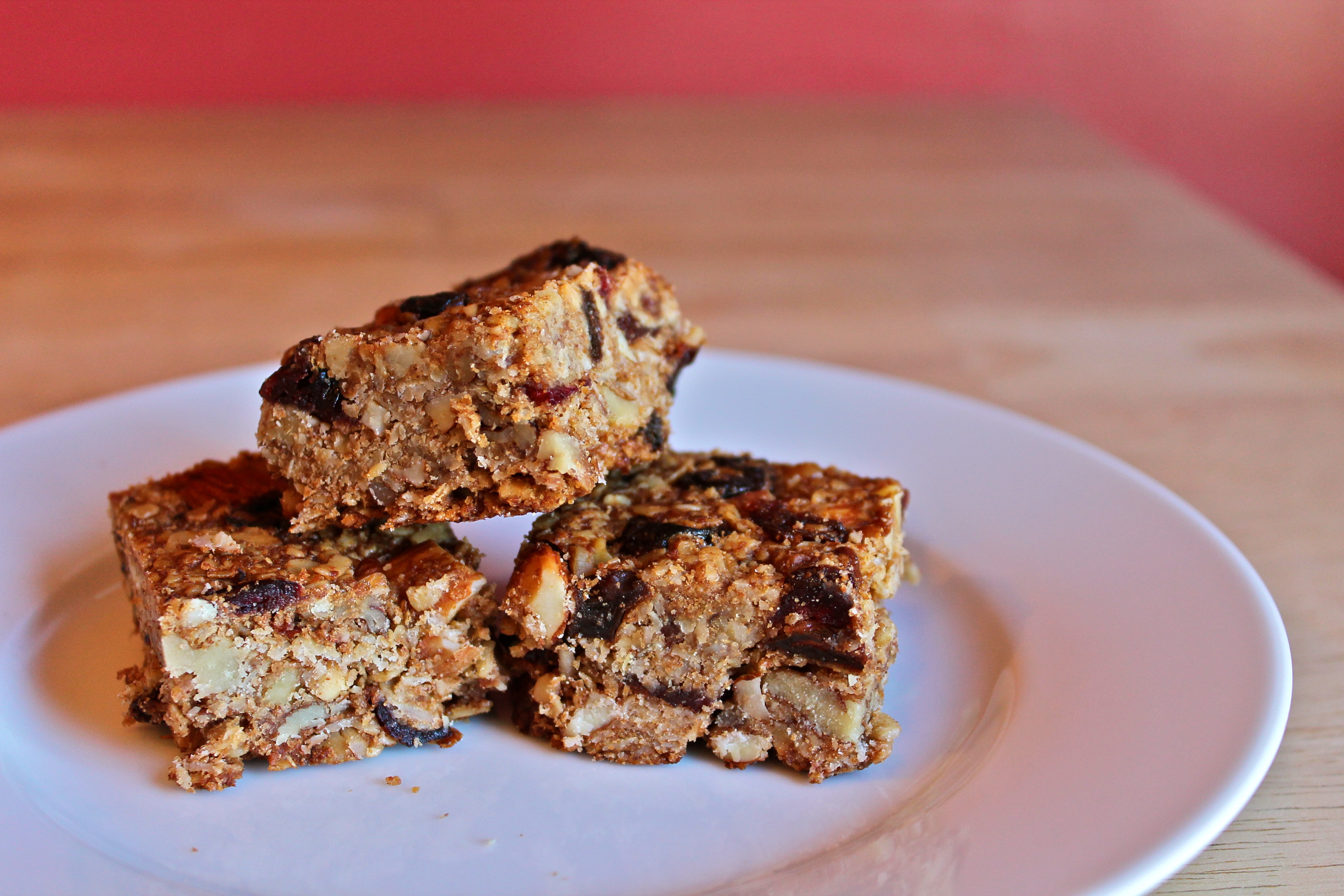
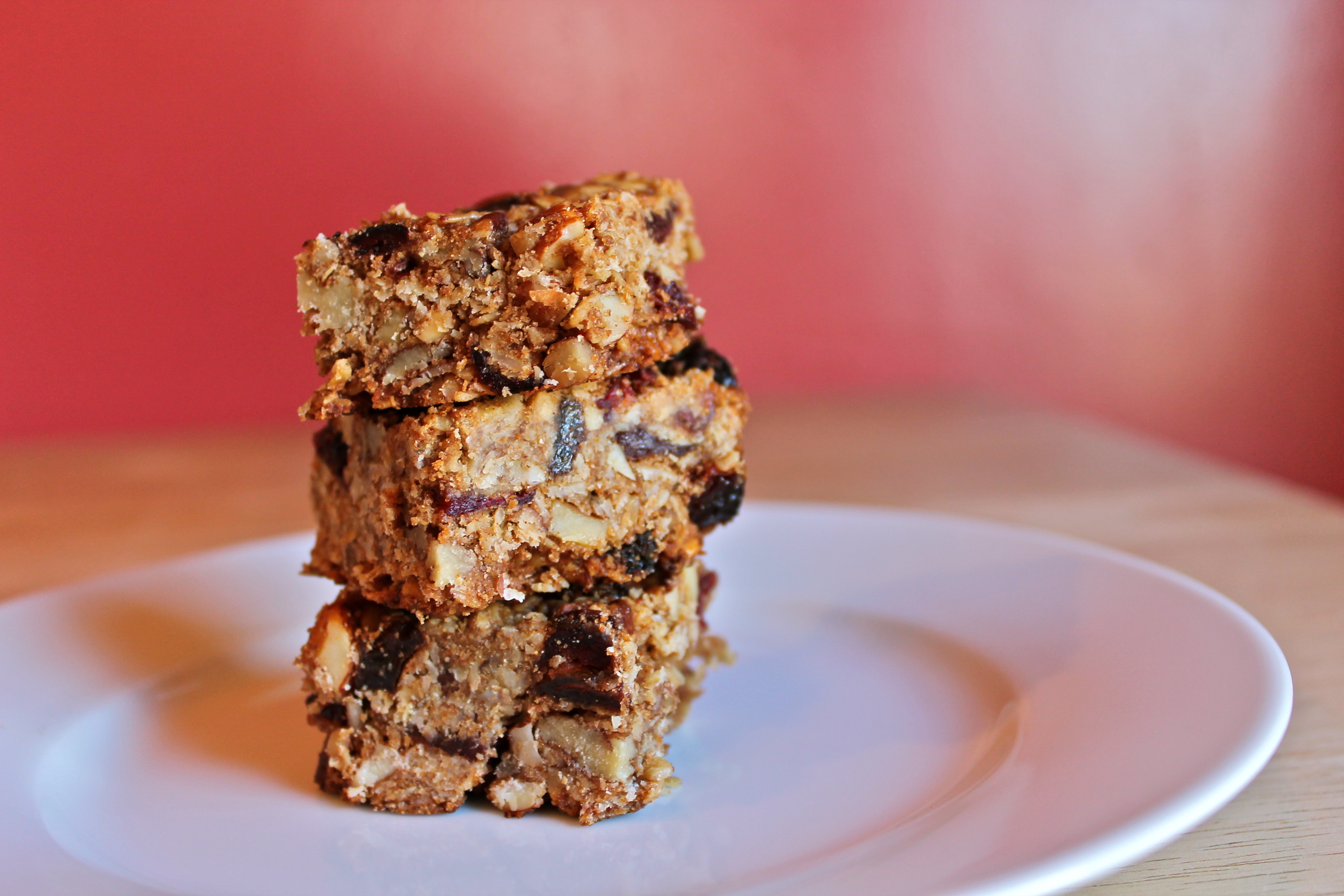
And this relates to making homemade granola bars how?  Because it’s the same dedication, the same enjoyment, that makes me want to get something right in the kitchen.  It may seem delusional to spend three days perfecting a granola bar recipe, but I swear to you, take one taste of these granola bars and you’ll immediately reverse that opinion.  Big bursts of dried fruit play against the hearty crunch of crisp nuts and lightly sweetened oats, while the subtle spices tie everything together with a pleasant mellowness.

These are no store bought granola bars, overly sweetened and packed with mystery additives.  These are a healthy, nutritious treat that belie the virtuousness of their ingredients by being utterly, fantastically delicious.  Because of their belly-filling goodness, these granola bars would make a great fortifying snack to take along on a hike, or perhaps a long ride on your bike (because apparently I am now channeling Dr. Seuss—you can eat them as a snack, just pop one into your backpack).  Right now, as I type this, I am eating one of these granola bars for lunch.  When I am done with lunch and typing, I will probably take a tiny little break to watch this, because now that the granola bars have been conquered, I have a bit of time left to devote to my other interests.

Crisp and Hearty Homemade Granola Bars

1 3/4 cups rolled oats

¼ cup dark brown sugar

¼ cup graham flour (graham flour has a great nutty taste, but you could also use whole wheat pastry flour or another mild whole grain flour, e.g. not rye flour)

½ cup wheat germ

½ teaspoon sea salt

½ teaspoon ground cinnamon

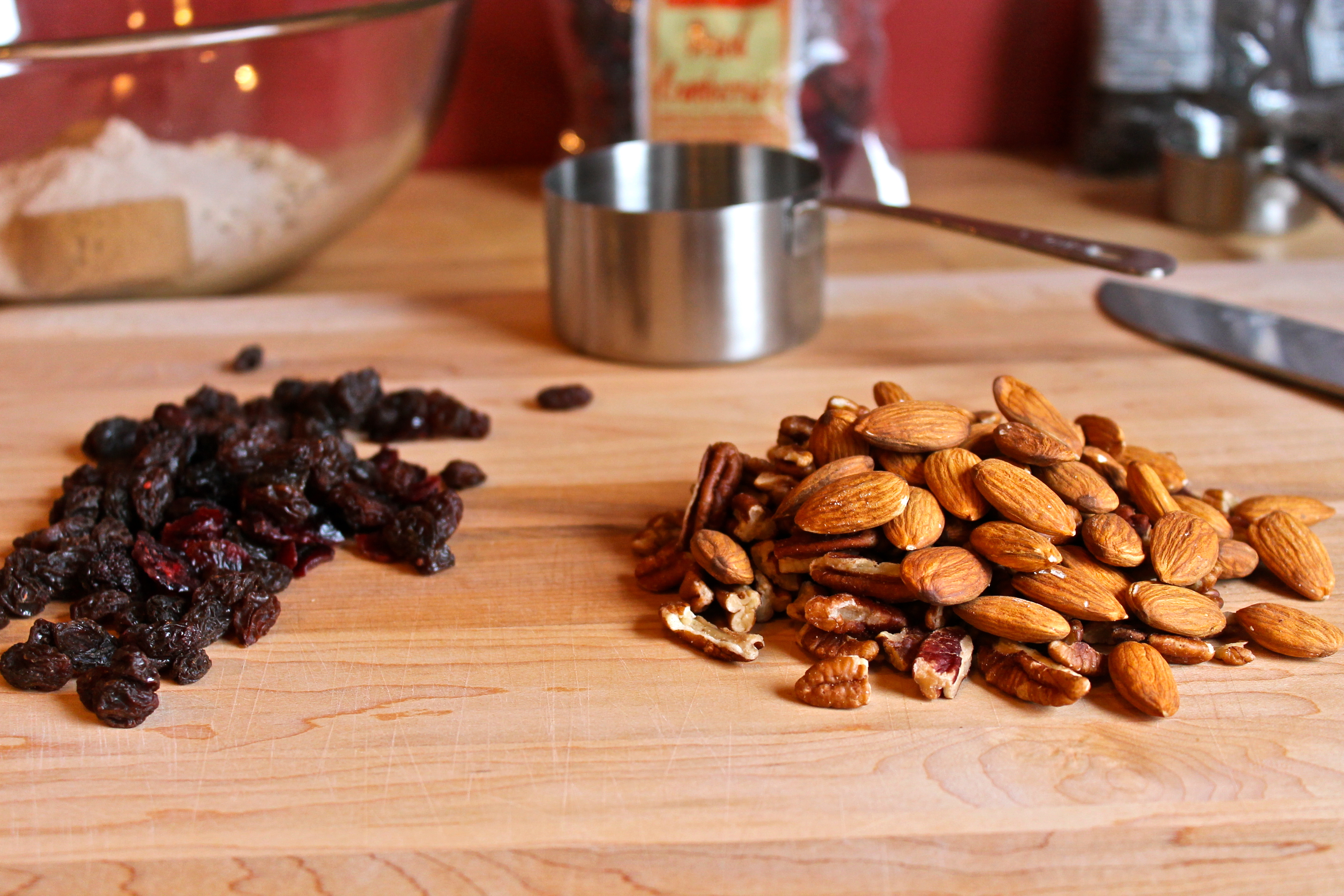
1 cup dried fruit, chopped into a uniform size if pieces are large (apricots, apples, etc.)—I used dried cherries, dried cranberries, and raisins, so no chopping was required

1 cup coarsely chopped nuts (I used almonds, walnuts, and pecans)

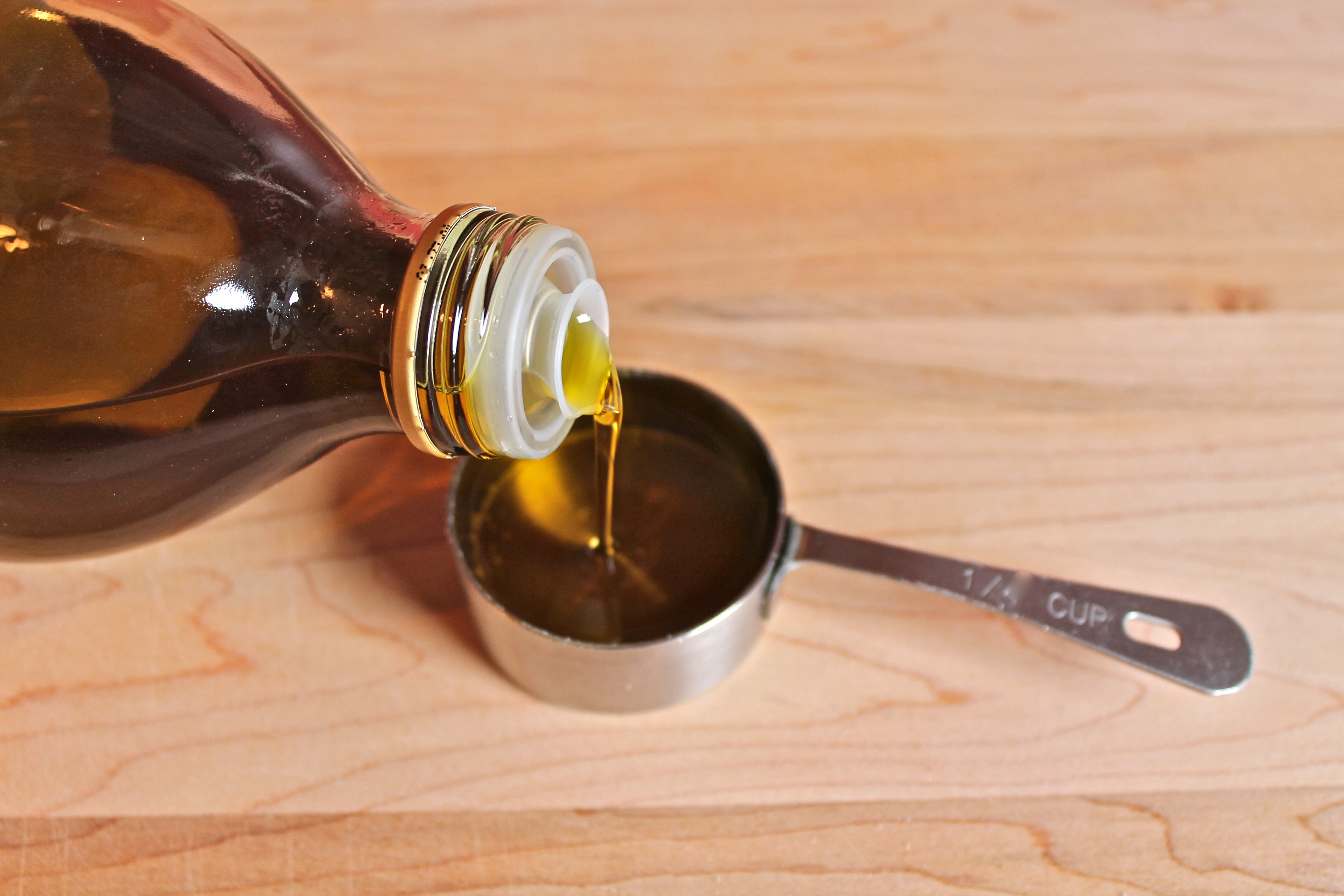
¼ cup vegetable oil

3 tablespoons unfiltered apple cider

2 tablespoons honey, agave, or maple syrup

1 teaspoon pure vanilla extract

1/3 cup unsweetened almond butter

Preheat oven to 350 degrees Fahrenheit.  Line an 8”x8” baking pan with a parchment paper sling (this can be accomplished by trimming your parchment paper into a long rectangle that will line neatly against the bottom of the pan and drape over the sides.  In the pictures above, my parchment paper sling is not nearly wide enough, on account of the fact that I inconveniently ran out of parchment paper and was using the last 4 inches of the roll), then lightly grease both the pan and the parchment paper with vegetable oil or nonstick cooking spray.

In a large bowl, combine the oats, brown sugar, flour, wheat germ, sea salt, cinnamon, dried fruit, and nuts.  Toss to combine.  In a small bowl, combine the oil, apple cider, honey, vanilla, and almond butter.  Whisk to combine.  Pour the wet ingredients over the dry ingredients.  Using your hands or a fork (but hands work best), thoroughly stir the ingredients together until it is uniformly wet and it wants to clump together.

Pour the granola mixture into the prepared pan.  Using your hands, firmly press the mixture into the pan, flattening the top, the edges, and the corners (it helps to have slightly wet hands when doing this, as the mixture is quite sticky).

Bake on the center rack of the oven for 30 to 40 minutes, until the edges are brown and the middle is golden.

Cool for at least 1 hour before attempting to cut.  Remove granola bars from the pan by lifting them up using the parchment paper sling.  A serrated knife works best to cut these, and I have found that popping the granola into the freezer for 15 minutes to slightly harden them before cutting makes the process even easier.

Makes 16 2-inch granola bars.