Archive | Picnic RSS feed for this section

How to Make Smoked Salmon at Home

16 Jun

Meat and I, we have a complicated relationship.  The enjoyment I derive from testing out new meat-centric recipes and learning about various techniques and processes in regard to cooking meat tends to oftentimes far outweigh any desire I might have to actually eat what I am making.  Last winter I had a great time braising short ribs for four hours in a red wine and balsamic reduction, but when it came to actually eating the short ribs, I have to admit that I was decidedly lacking in enthusiasm.  Slow roasting a salt-crusted pork tenderloin on the grill is a fascinating operation, so long as I will not be made to actually eat the pork when I am done fussing with it.  Meats get stuffed, marinated, and rolled, and then I foist them on my husband.  Not that he minds.  More realistically, I do not foist them upon him so much as I generously heap them upon his willing plate.
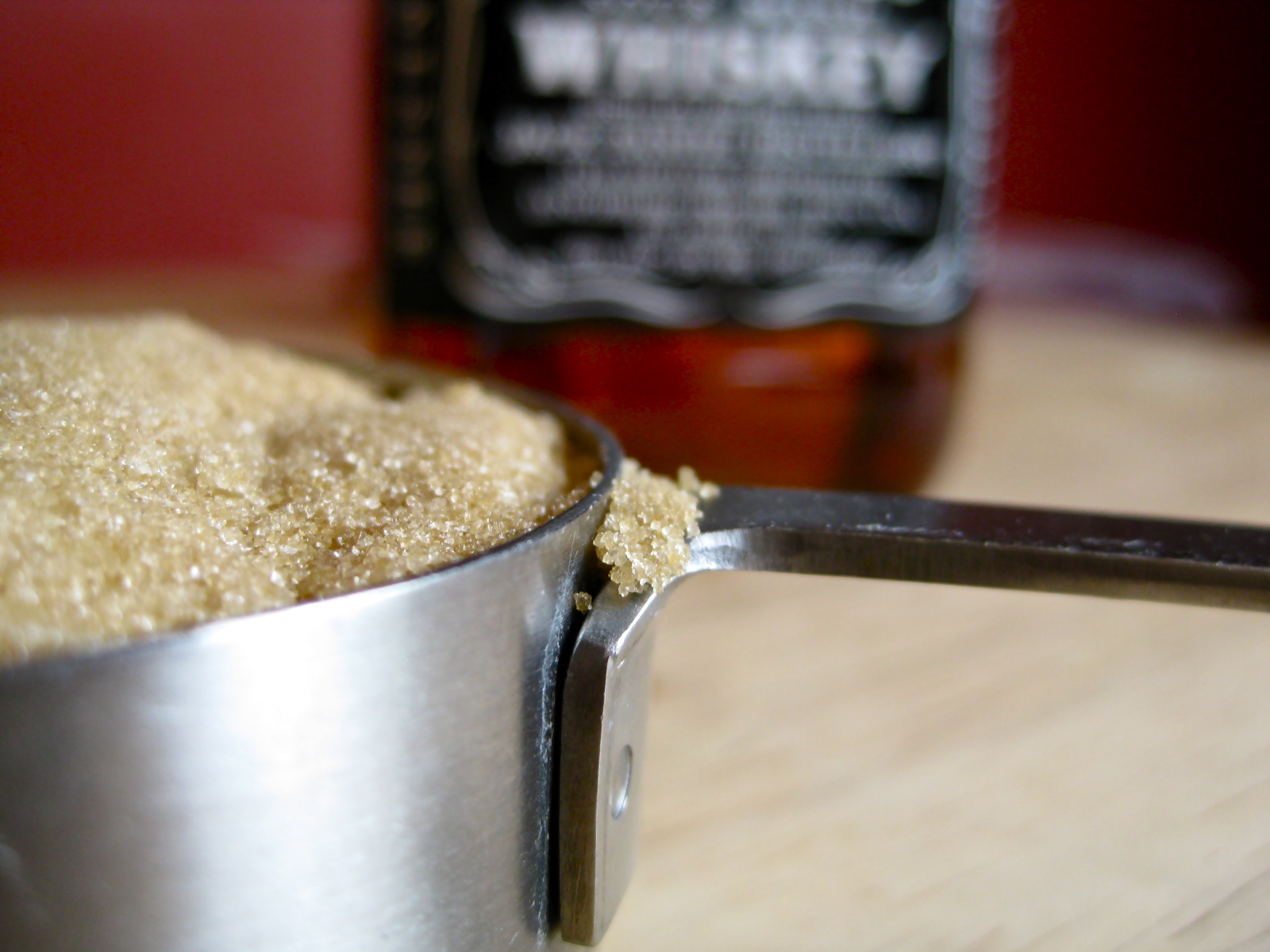
This trend, however, might have just come to an end.  Please, everyone, let me introduce you all to my new best friend: whiskey soaked applewood smoked salmon.

First of all, allow me to admit that, up until last year, I was not aware of the fact that making smoked salmon at home was even a possibility.  I thought that smoking meats involved special canisters or barrels, or perhaps some sort of high-tech equipment that only very dedicated meat-eating people knew how to find.  Not surprisingly, I was dead wrong.  To smoke salmon at home, you need little more than an outdoor grill, some wood chips, salt, and sugar.  That’s it.
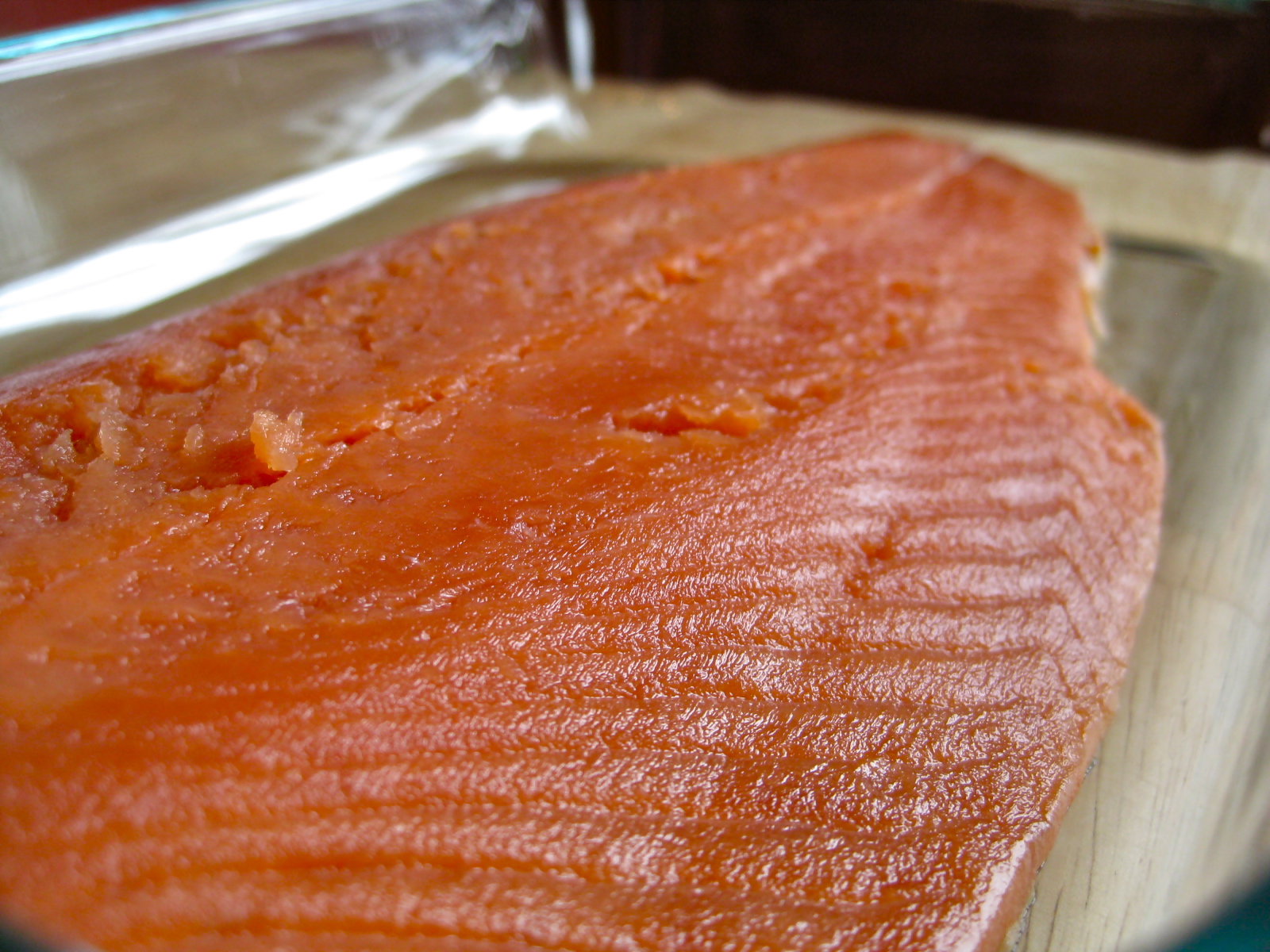
If you want to get a little fancier, you can briefly marinate your salmon in a bit of whiskey or bourbon, like we did here, or perhaps a bit of rum, if you’d prefer your salmon to be a bit sweeter.  No matter which you choose, after 4 hours of curing the salmon to draw out the liquid, it takes only 20 short minutes to smoke this salmon to a delicious and robust finish.
You can eat this smoked salmon on a salad, you can pile it on top of a bagel, or you can flake it into some pasta.  There is no wrong way to eat this, and the only known way to stop enjoying it is to eat it until it is gone.  You might want to immediately make more, but that’s all right.  If nothing else, you can just use my excuse, and tell people that you are making up for meats long ago left unenjoyed.
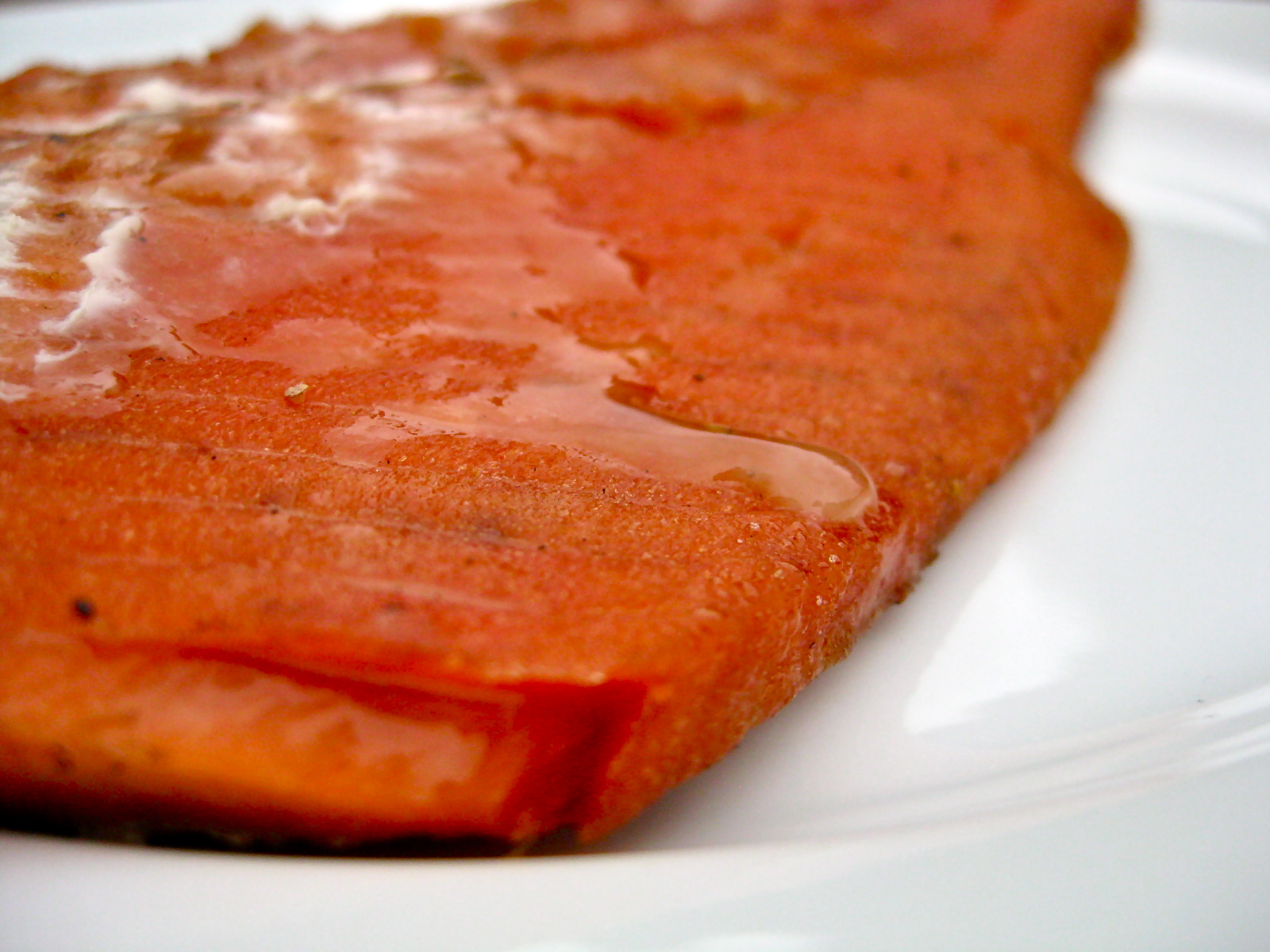
Whiskey Soaked Applewood Smoked Salmon

Adapted only slightly from Steven Raichlen’s How to Grill

1 salmon fillet, about 1 pound

½ cup whiskey, bourbon, or rum

½ cup firmly packed brown sugar

¼ cup coarse salt*

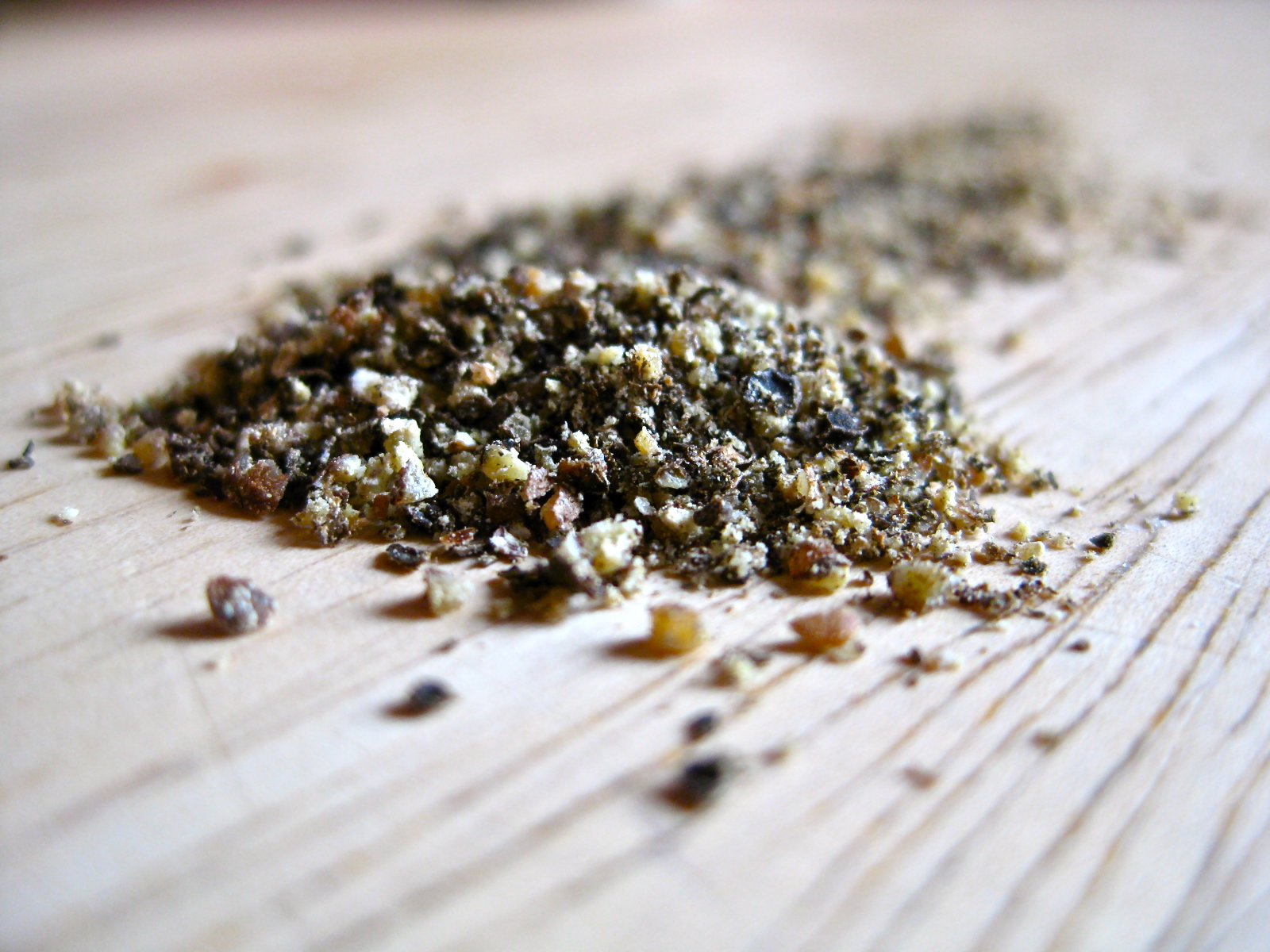
2 teaspoons freshly ground black pepper

2 cups wood chips, soaked in cold water for 1 hour, then drained (Raichlen recommends using alder wood chips, but we used apple wood because we had easy access to it, courtesy of a recently-felled apple tree and, man, don’t we sound all self sufficient and rustic right now?)

Skin the salmon fillet and remove any bones.  Rinse the salmon under cold running water, then blot dry.  Place the salmon in a baking dish just large enough to hold it, and pour the whiskey, bourbon, or rum over it.  Allow to marinate for 15 minutes, then drain the salmon and blot dry once more.  Wipe out the baking dish.

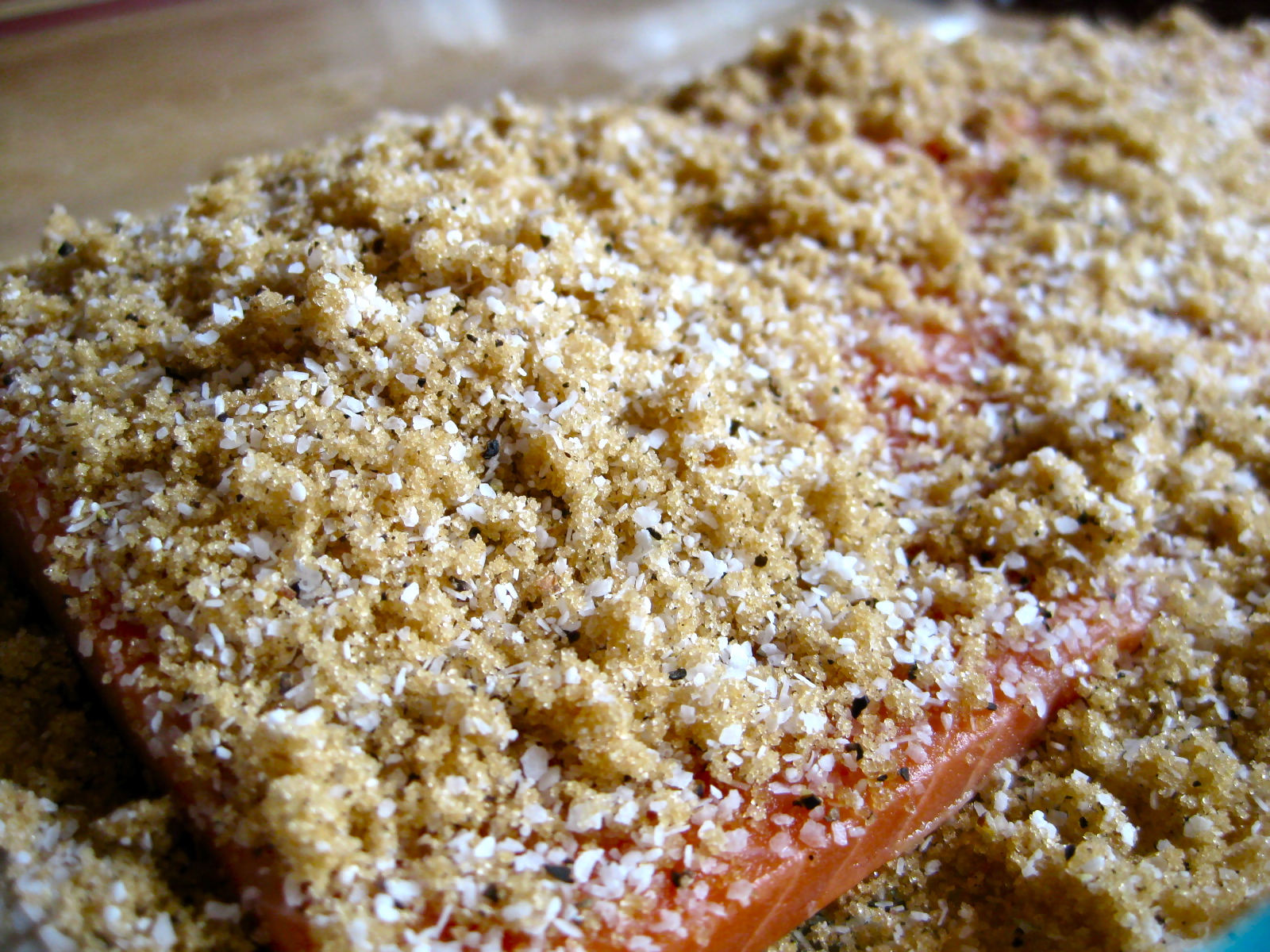
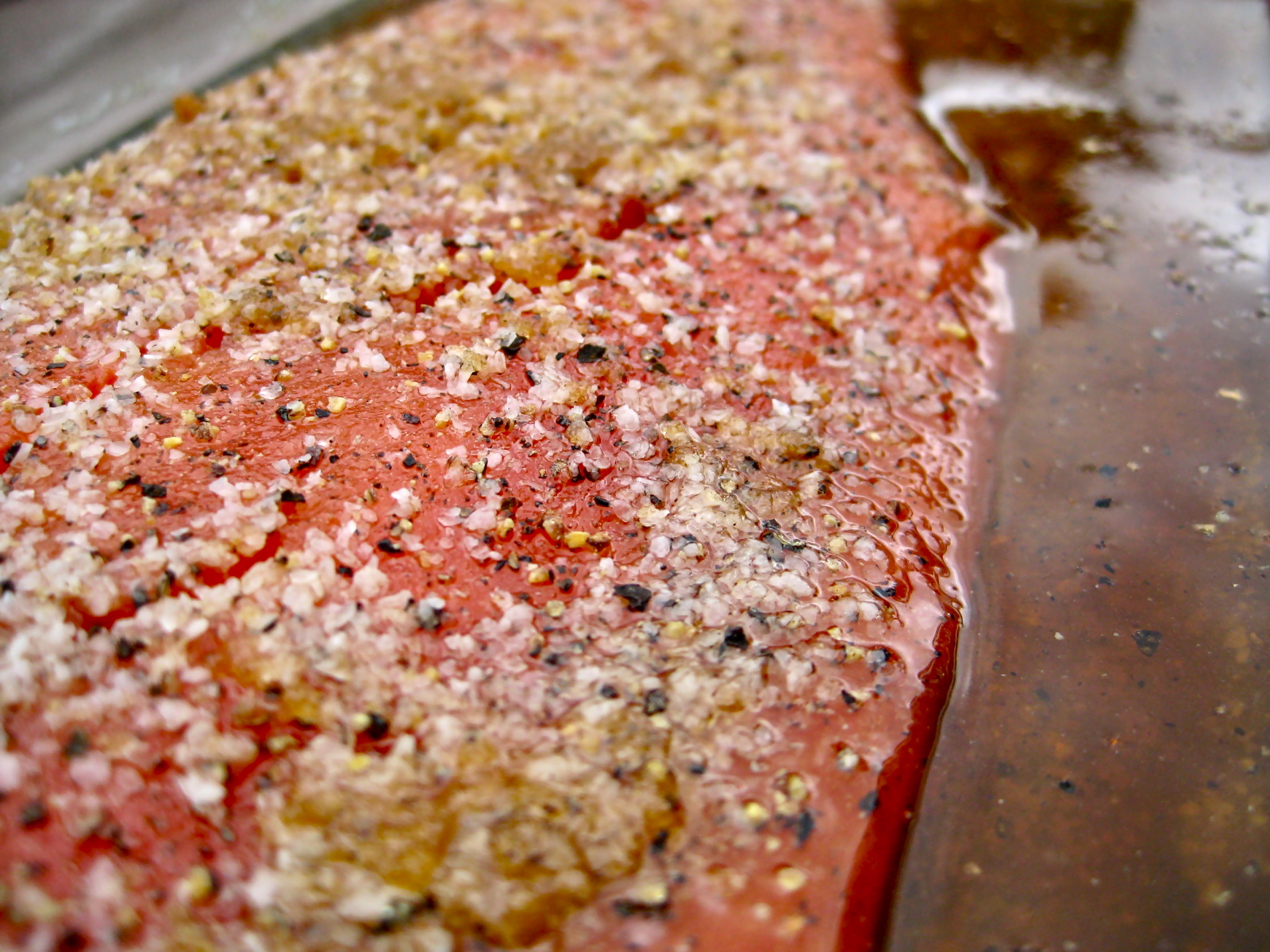
Combine the brown sugar, salt, and pepper in a mixing bowl and mix well with your fingers.  Spread 1/3 of the mixture over the bottom of the baking dish.  Lay the salmon on top of the mixture, skinned-side down.  Cover salmon with remaining 2/3 of brown sugar mixture, patting it onto the fish with your fingertips.  Cover the salmon with plastic wrap and allow to cure in the refrigerator for 4 hours.  The salt in the cure will draw out the moisture in the salmon.

Set up your grill for indirect grilling.  If you have a two burner gas grill, this will mean setting one burner on medium high heat and leaving the other burner off.  If you have a three burner gas grill, it will mean setting the two outermost burners on medium high heat and leaving the middle burner off.  If you have a charcoal grill, you will be raking your hot coals into two piles on opposite sides of the grill, leaving an empty space in between.  After preparing whichever grill you have, place a drip pan in the portion of the grill that is not lit or covered with hot coals.

Thoroughly rinse the brown sugar mixture off of the salmon with cold running water, then blot dry once more.  Discard liquid that has been extracted from the salmon.

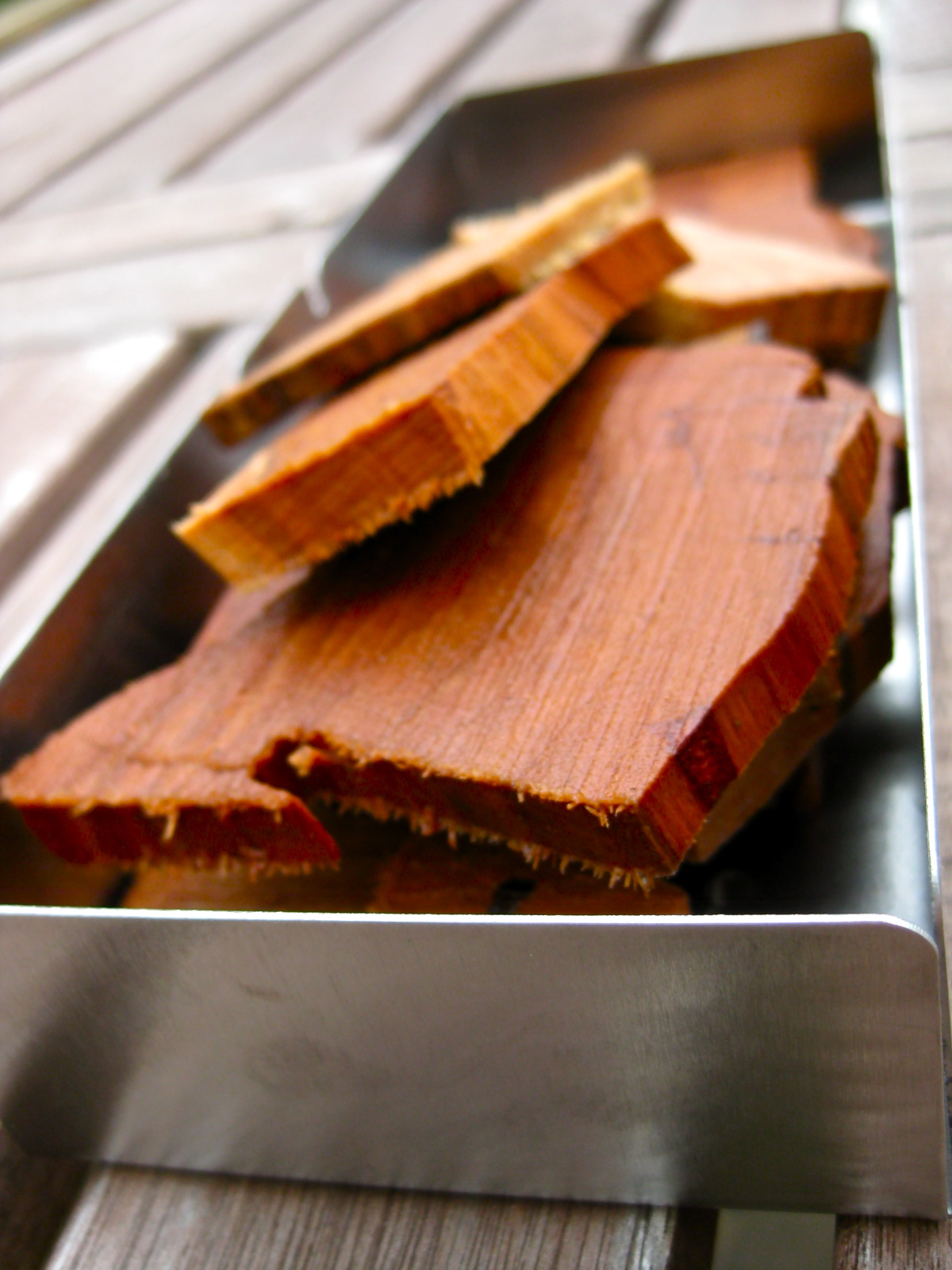
Toss the pre-soaked wood chips onto hot coals (if using a charcoal grill), or, if using a gas grill, place wood chips in a smoker box made specifically for gas grills (such as this one), or wrap your wood chips in a tight pouch of aluminum foil with holes punched in the top (as demonstrated here), then place the box or pouch of wood chips under the grill grate, directly on top of a burner.

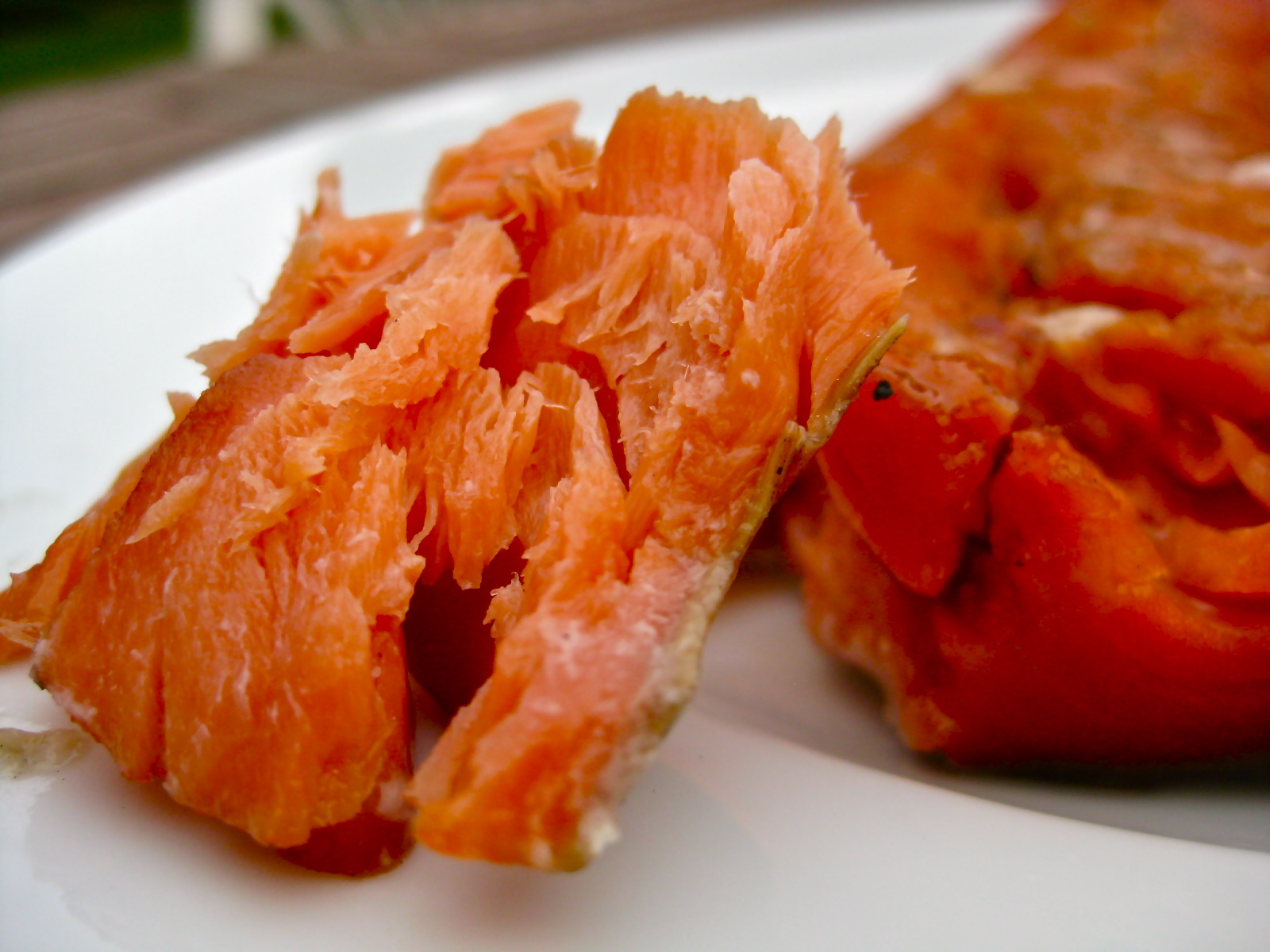
Brush and oil grill grate.  Place the salmon in the center of the hot grate, over the drip pan that has been placed away from the heat.  Completely close the lid of the grill.  Smoke the fish until cooked through, about 20 minutes.  To test for doneness, press the top of the salmon with your finger and test for firmness.  The salmon should feel firm and break into clean flakes.

Cool the salmon, then wrap it in aluminum foil and refrigerate until cold.  Serve warm or at room temperature.  Tightly wrapped, the smoked salmon will keep in the refrigerator for 3-5 days.

*A note about coarse salt:  Coarse salt, which is often found in the form of kosher salt, comes in varying degrees of saltiness.  The two most widely found brands of kosher salt, Morton and Diamond, are no exception.  Morton kosher salt is known for being exceedingly salty, while Diamond kosher salt is decidedly less salty.  If using Diamond kosher salt, I recommend you go ahead and use the full amount of salt called for.  If you are using Morton kosher salt, reduce the amount of salt by one heaping tablespoon, then proceed with the recipe as usual.

Blueberry Biscuits

17 May

I am going to tell you a story about what it’s like to live in Portland, OR.

Last week, an absolutely lovely family moved in down the street from us, taking the place of the absolutely lovely family who lived there before them.  When I stand at my kitchen sink, I have a direct sight line down the street to the house that was being inhabited by the new family.  After I had spent the better part of a day going back and forth to the kitchen sink (you may wonder why I visit my sink so much, and my only answer to you is this: I have a preschool-aged child), watching the new family’s moving fan becoming emptier and emptier, I made the decision to bring the new family a little breakfast treat to greet them the next morning, their first morning in their new house.

Not being a huge fan of eating anything tooth-achingly sweet first thing in the morning, I opted to hunt down a recipe for a nice savory biscuit.  Thinking of the children in the house, it seemed as though something would be needed to make the biscuit a bit more enticing.  I settled on adding blueberries to the biscuits, and began to assemble my ingredients.

I measured, I mixed, and I cut.  As the biscuits were just about to go into the oven, I made the mistake of asking my husband whether or not he thought blueberry biscuits were an acceptable welcome-to-your-new-house gift for a young family.

“Sure,” he said.  “Who doesn’t like blueberries?”

I was about to nod along in agreement when it occurred to me that, you know, someone in that house might not like blueberries.  I hesitated slightly before putting the biscuits in the oven.

“Do you think they might not like blueberries?” I asked him.

Sensing that he may have mistakenly set the terrible wheels of my mind into high gear, my husband backpedaled.  “No.  Everyone likes blueberries.  Everyone.  They’re good.  Always good.”

But then, the path horribly, unrelentingly forged, I began to wonder about other possible problems with the biscuits.  What if someone in the family was gluten intolerant?  Or allergic to dairy?  Or what if the family was vegan?  I could definitely start over and make a vegan biscuit (I’ve lived in Portland for 15 years, so it’s almost a given that I’ve learned how to make delicious vegan biscuits by now), but what if they were non-gluten-eating vegans?  Or what if they only ate organic food?  I had organic blueberries, but I didn’t know if I would be able to find organic non-gluten flour.  This was getting complicated.  I should head to the store and check out the gluten-free flour selection.  I would also need to buy soy milk.  But what if they were allergic to soy?  Okay, I’d buy almond milk.  But what if they were allergic to nuts?  Rice milk?  Hemp milk?

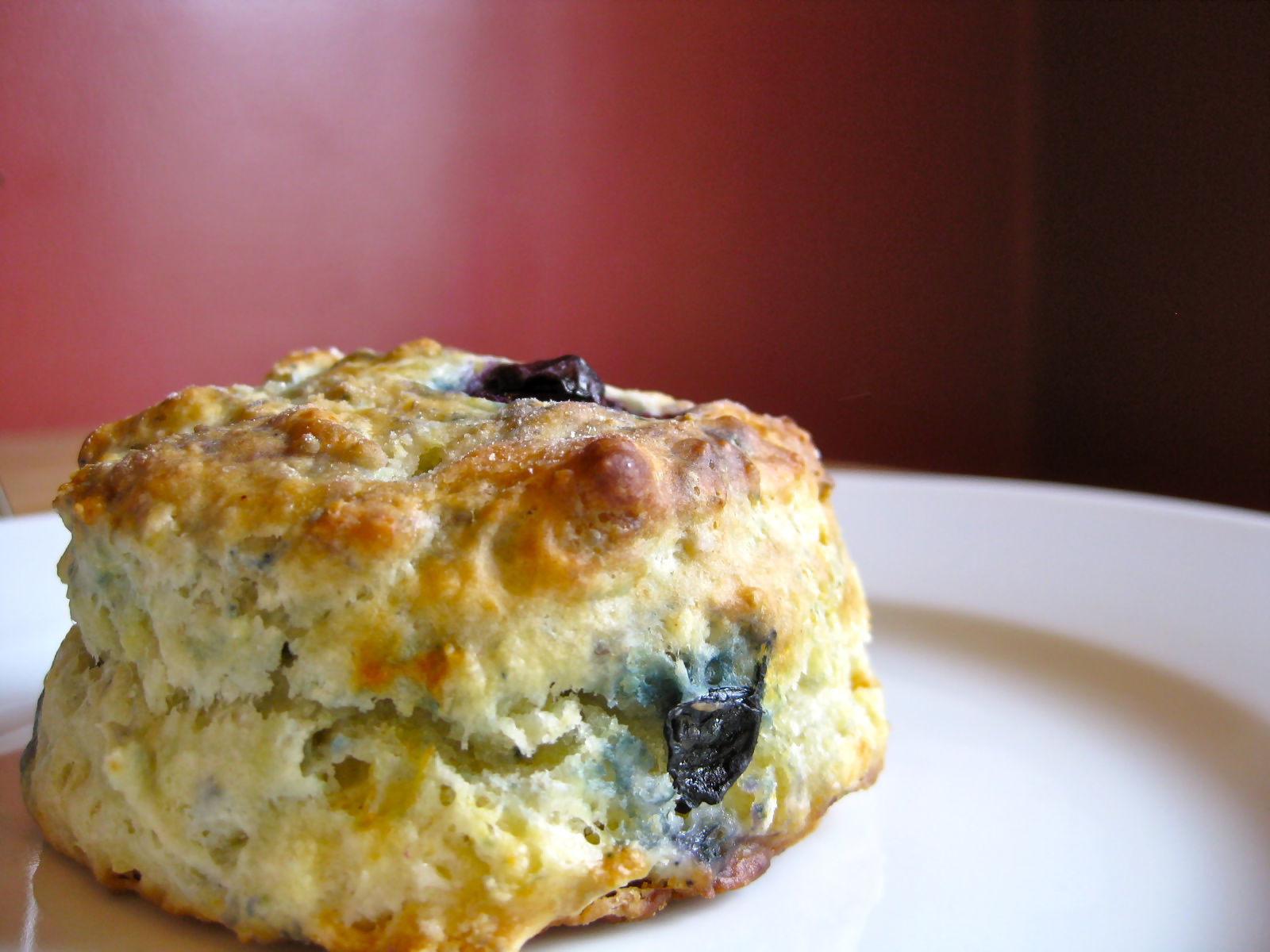
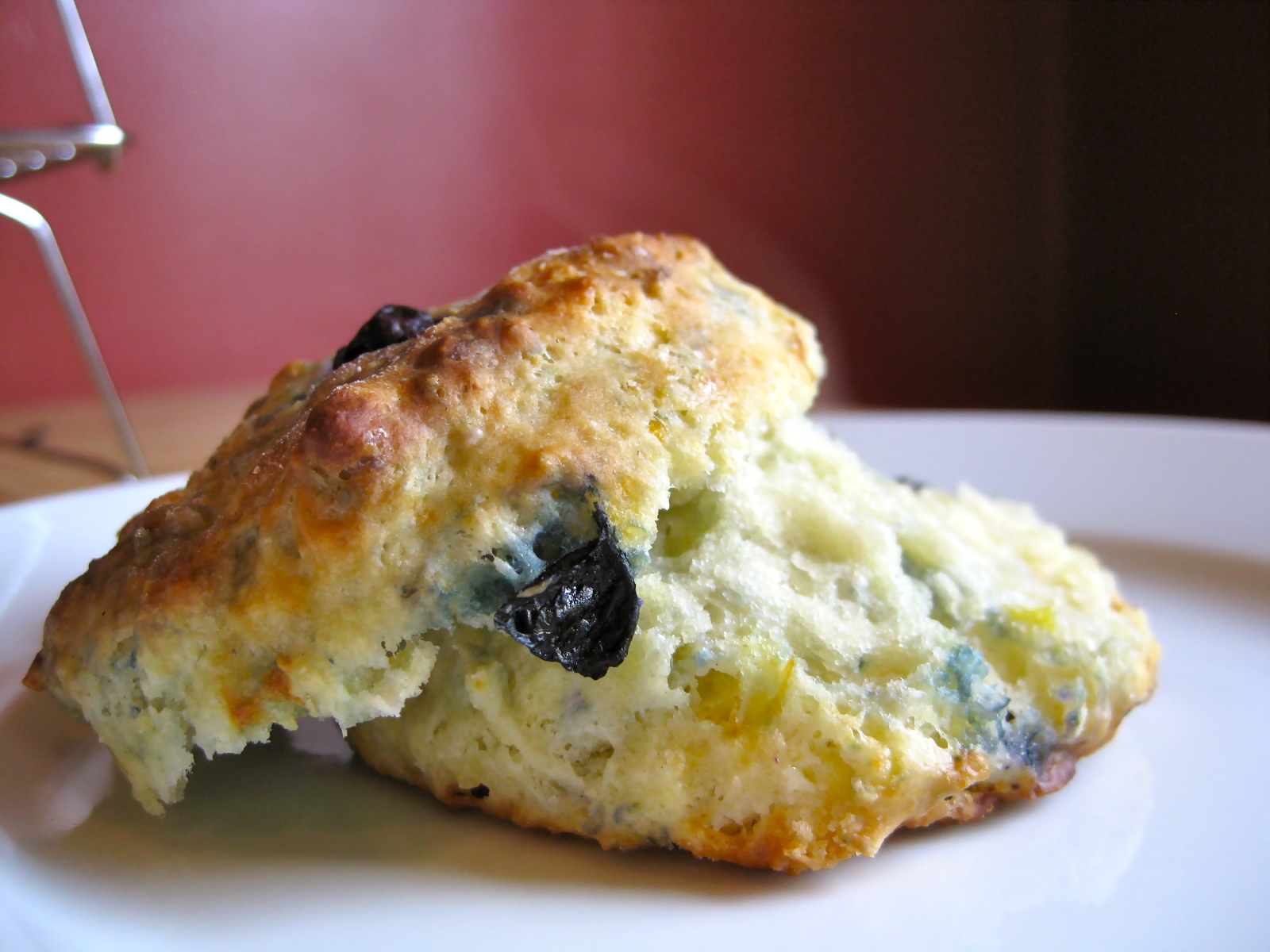
It was right about then that the oven timer went off, effectively causing the hamster wheel that is my brain to come to an abrupt stop.  I took the biscuits out of the oven, admiring the lovely golden-hued tops that were studded with plump indigo berries.

The biscuits were as delicious as they looked, a fact that our new neighbors, unfortunately, never had the chance to learn.  I have a feeling it will take a few more weeks before I am comfortable bringing them any surprise baked goods.  Weeks that I will no doubt spend trying to work subtle food-related questions into everyday conversation without sounding like an absolute loon.

“Yes, the weather is lovely today.  It’s a good day for ice cream.  Ice cream made with milk and cream and probably even eggs.  Real ice cream.  Wouldn’t you agree it’s a good day for real ice cream?”

Blueberry Biscuits

Adapted from Beth Hensperger’s The Bread Bible

2 cups unbleached all-purpose flour

2 teaspoons baking powder

1/4 teaspoon baking soda

1/4 teaspoon salt

2 tablespoons sugar

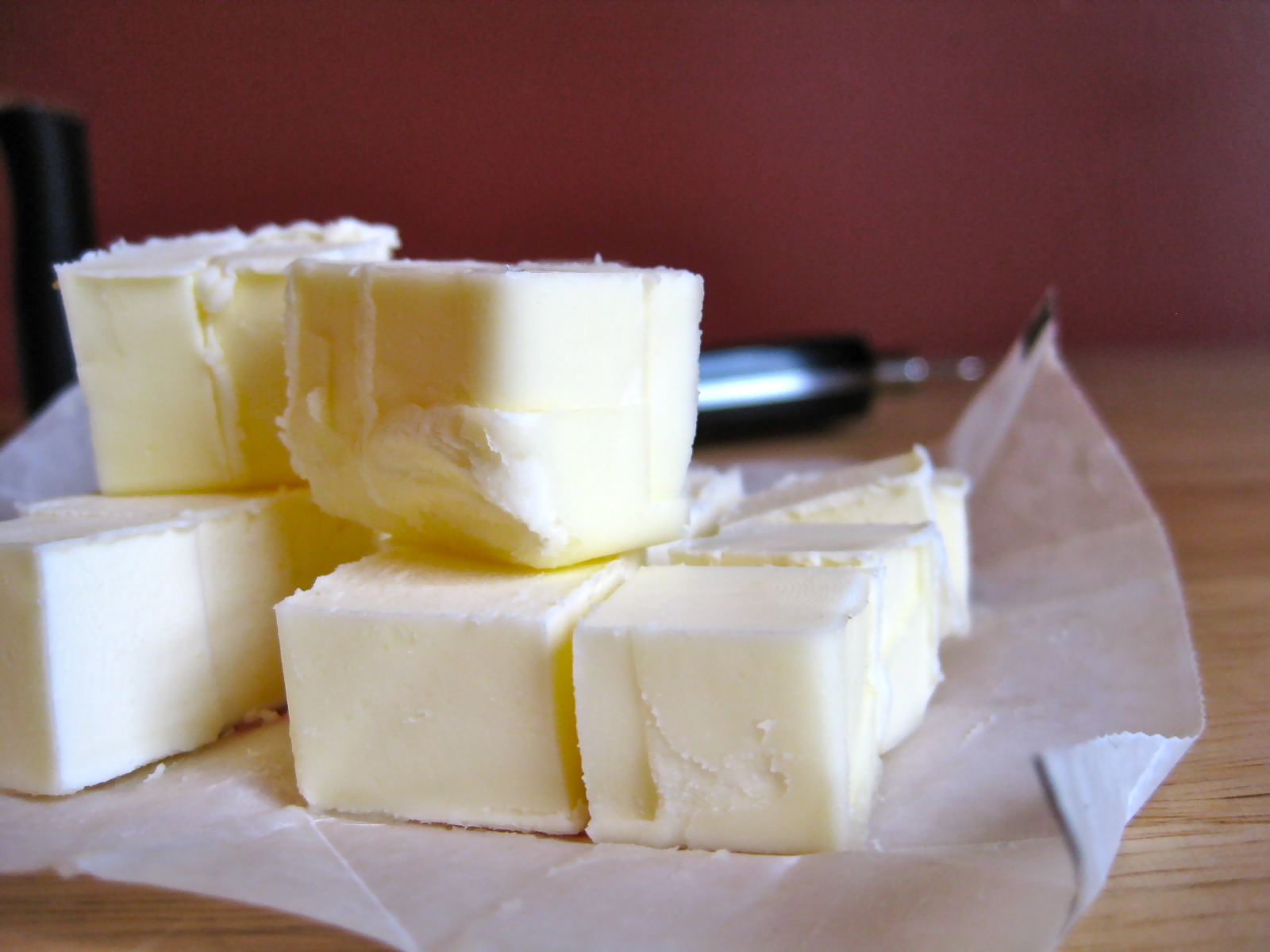
6 tablespoons (3/4 stick) cold unsalted butter, cut into pieces

1 large egg, lightly beaten

3/4 cup cold buttermilk, or cold soured milk

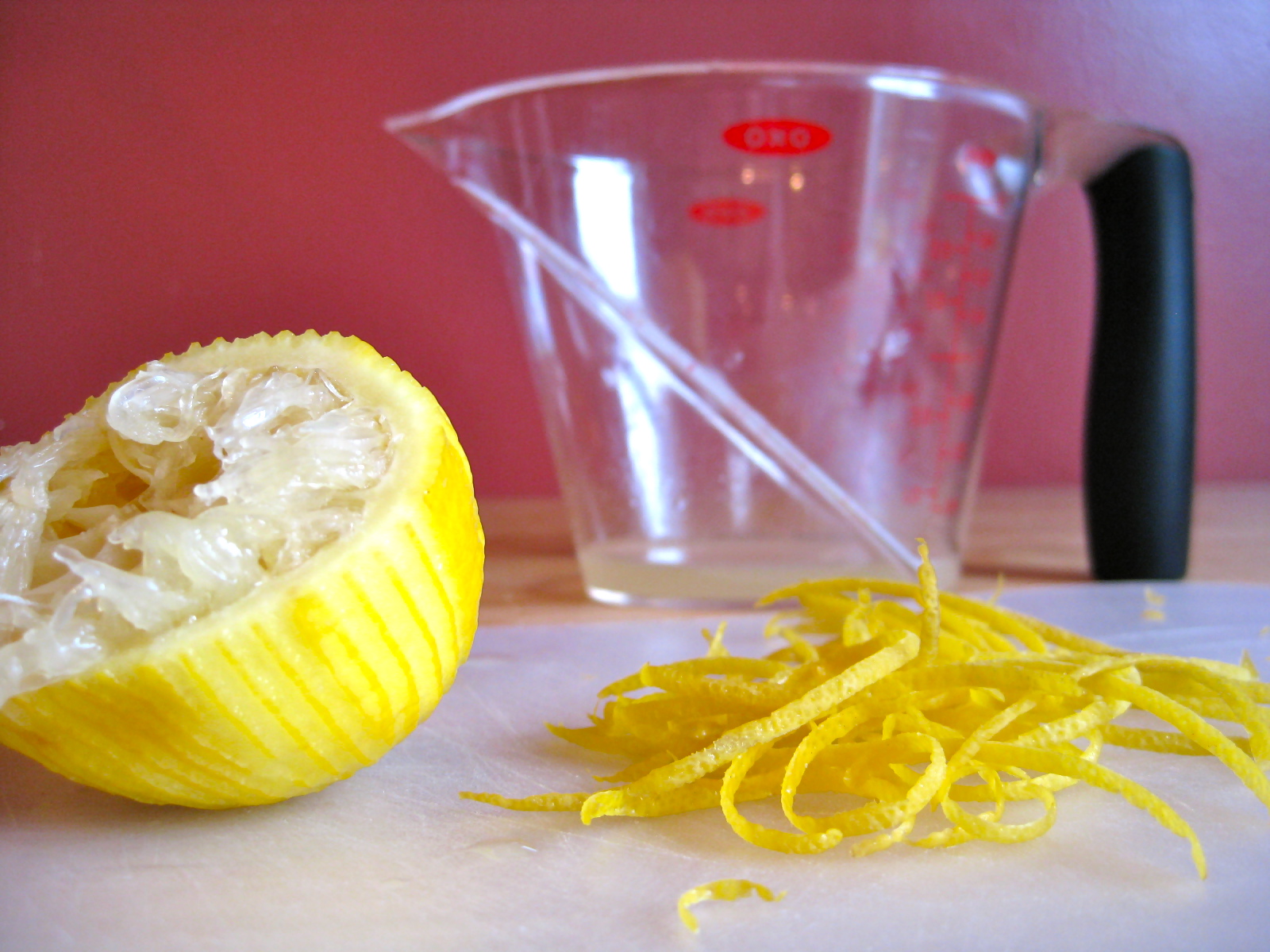
finely grated zest of 1 lemon

3/4 cup blueberries, fresh or frozen (unthawed)

Preheat oven to 425 degrees F.

Line a baking sheet with parchment paper, or grease a baking sheet and sprinkle it lightly with 1 tablespoon of cornmeal (to prevent biscuits from sticking).

In a large bowl, combine flour, baking powder, baking soda, salt, and sugar.  Whisk to combine.  Alternately, you can combine the dry ingredients in the bowl of a food processor and pulse a few times to aerate.

Using a pastry cutter, two knives, or in the bowl of the food processor, cut the butter into the dry ingredients until the mixture resembles coarse crumbs and there are no large butter pieces remaining.  This will take a minute or two if using a pastry cutter, but only a handful of pulses if using the food processor.

Add the buttermilk or soured milk, the egg, and the lemon zest to the flour mixture.  Stir just enough to moisten everything, until the batter just begins to stiffen.  Gently fold in blueberries.  If using the food processor, add the milk, egg, and lemon zest through the feed tube, and pulse just until the dough comes together and it begins to form into one mass.  Knead in the blueberries once the dough has been removed from the food processor.  It should go without saying that you should not pulse the blueberries in the food processor.

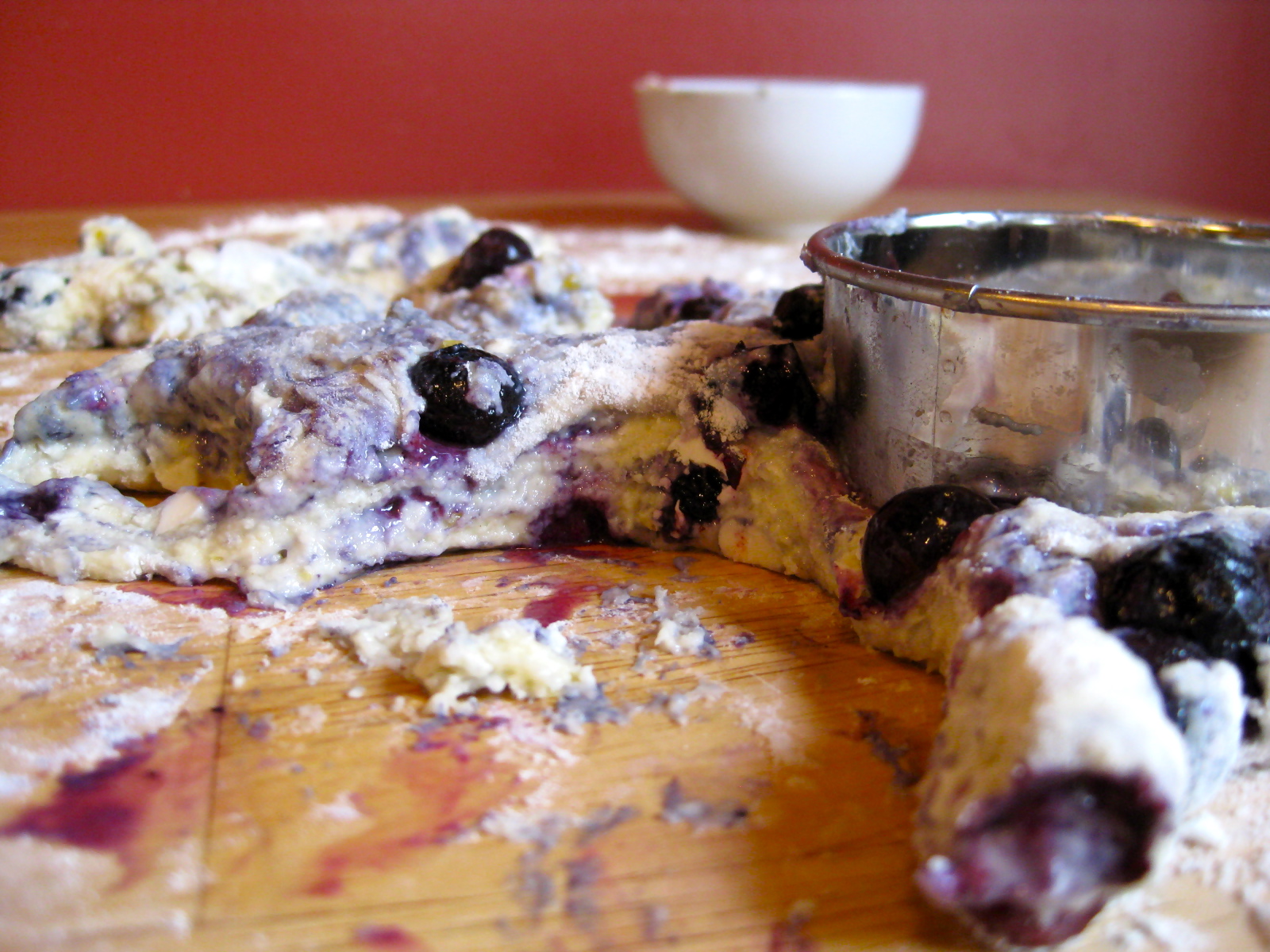
Turn the dough out onto a floured work surface.  Gently knead a few times until the dough just begins to come together.  The dough will still be slightly sticky, but do not handle the dough too much or add too much additional flour, lest you make the dough tough.  Pat the dough into a rectangle roughly 3/4 of an inch thick.

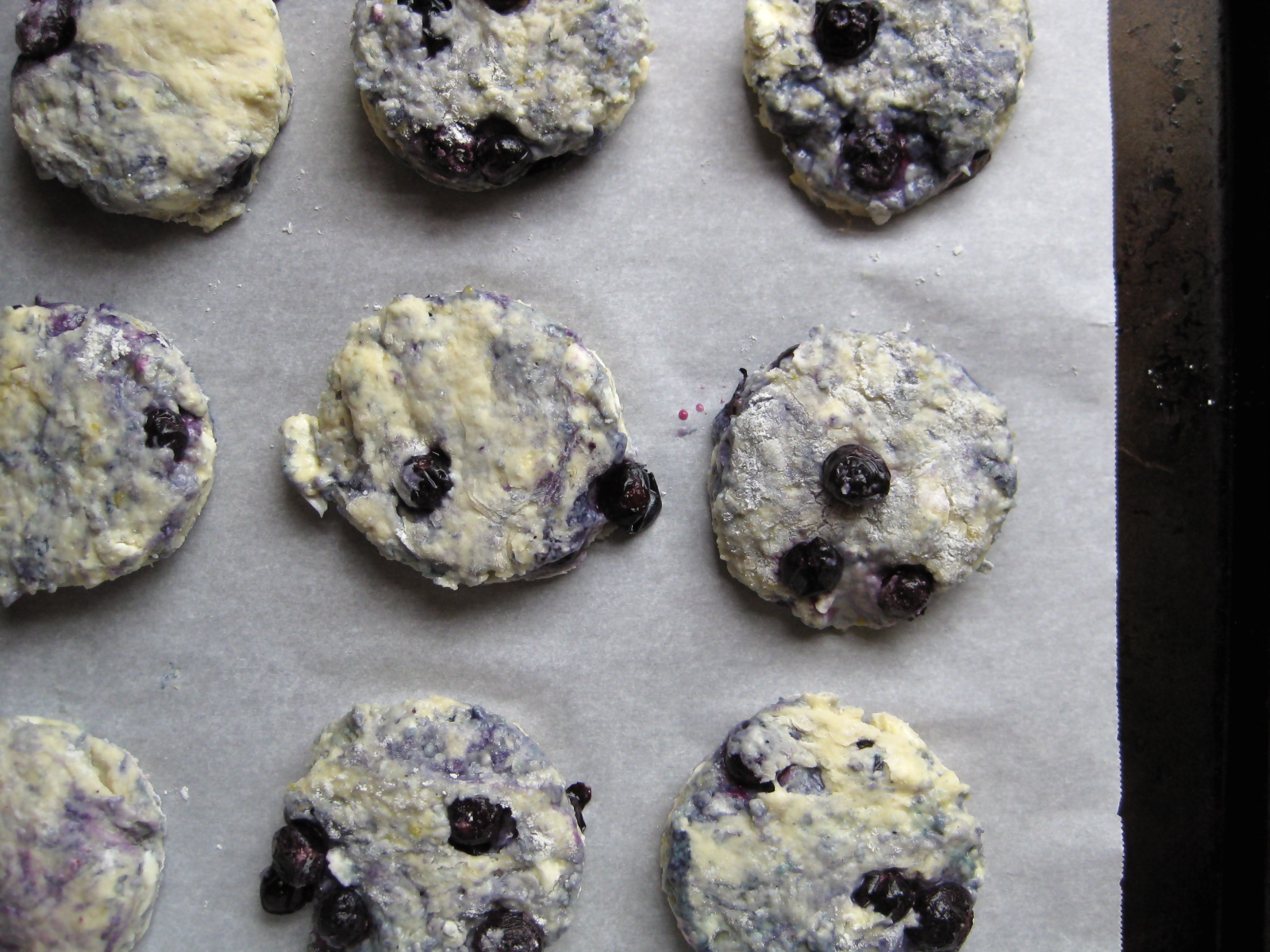
Cut the dough into 2 1/2 inch rounds, using a floured biscuit cutter.  Gently pat scraps of dough together to continue cutting, eventually yielding 12 biscuits.  My cutting sequence produced 7 biscuits from the first rectangle, 3 from the first batch of scraps, then 2 final (slightly misshapen) biscuits from the last of the reformed scraps.

Place biscuits on the prepared baking sheet about 1/2 inch apart.  Bake in the center of a preheated oven for 15 to 18 minutes, until tops have turned golden brown.  Eat hot or slightly cooled.

Makes 12 biscuits.

New Potato and Caramelized Leek Tart in an Olive Oil Crust

11 May

While I’ll admit to the occasional dinner that was not so much “cooked” as it was “spotted at the cheese counter and then paired up with a baguette and consumed with great enthusiasm,” there are, in fact, more instances than I can count during which I decided to make a dinner that was based on a bag of discounted vegetables at the green market.

Sounds suspect, you say?  Not if you saw the types of goods the green market offers on their discount shelf, all of which are sold in bulk for a mere $1.  Bags of red and orange peppers combined with a dozen tomatillos?  Yes.  Ten perfectly ripe avocados that need to be eaten as soon as you get home, but, hey, that’s okay because who doesn’t love avocados?  Definitely.  Half a dozen habanero chilies, two yellow onions, four plump tomatoes, and a handful of green beans?  That right there is homemade salsa, plus a crisp snack to munch while you make the salsa.

Last week, however, the $1 shelf outdid itself.  As if it somehow managed to read my mind, the green market had decided to off load a pile of new potatoes and spring leeks, both of which, though generally associated with heartier winter fare, had been on my mind lately (perhaps because of the preponderance of chilly weather we’ve been subjected to for what seems like an eternity).  The cold in my bones was thinking soup, but a brief peek of sunlight through the clouds brightened my mood enough to encourage me to begin thinking of something a little lighter and more spring-ish.

While not everyone might think of a tart as being spring fare, I have to disagree.  A vegetable tart, made with this exceptionally savory and flavorful olive oil crust, can be a perfect warm weather meal.  Eaten on a bed of fresh spinach or baby greens, it is light, yet filling, and the abundance of greens evidenced in the meal is always a welcome sight.  Well, to me, at least.  But, as previously discussed, I also get excited about a $1 bag of cast-off vegetables, so perhaps I should just say that you shouldn’t take my word that this tart is a welcome and delicious spring meal, you should instead simply make the tart and discover its deliciousness for yourself.

New Potato and Caramelized Leek Tart in an Olive Oil Crust

Olive Oil Crust

1 ½ cups all purpose flour

½ teaspoon salt

1/3 cup olive oil

3 tablespoons milk

Preheat oven to 425 degrees Fahrenheit.

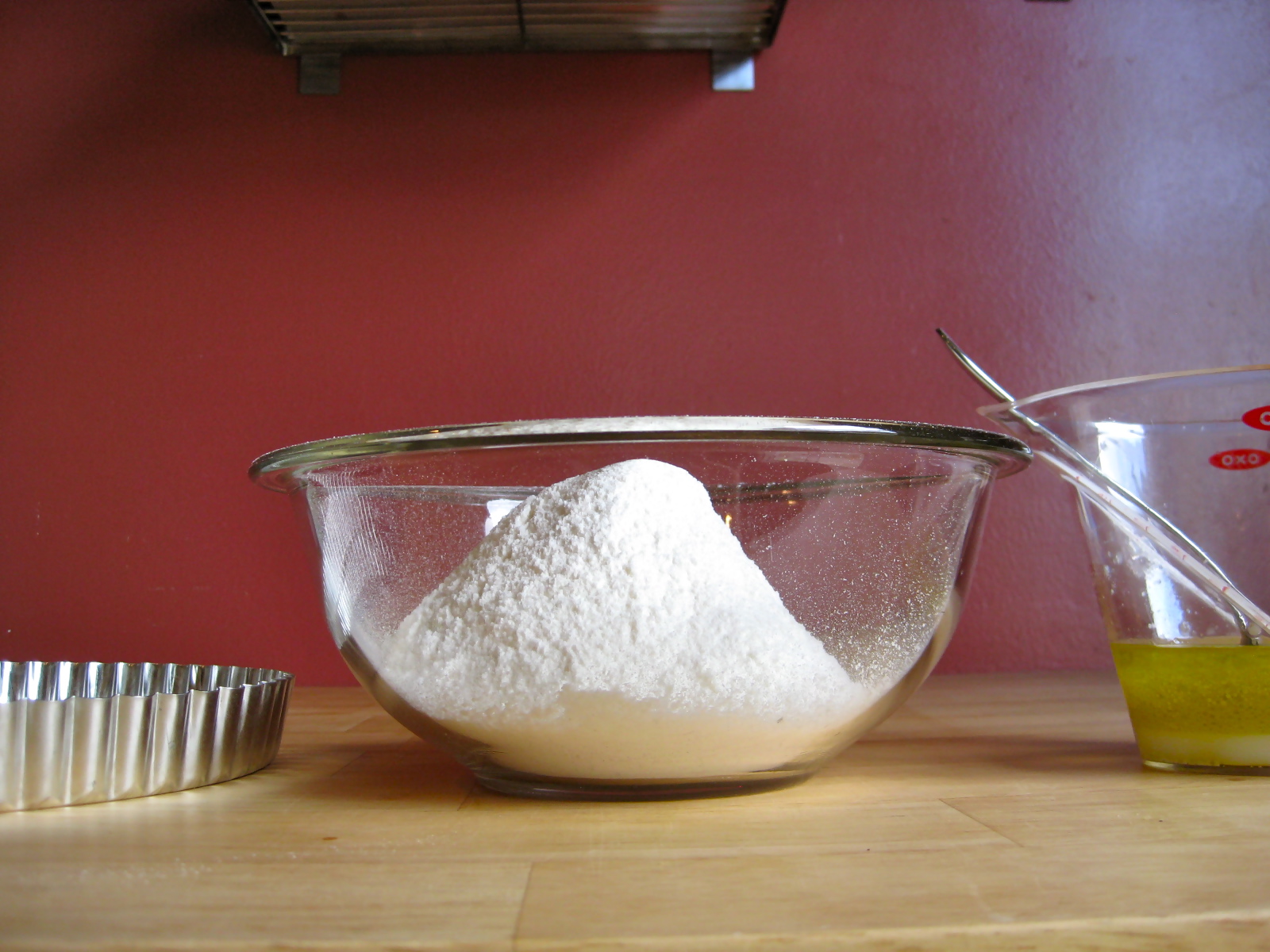
In a medium bowl, sift together flour and salt.  In a small bowl, combine olive oil and milk and whisk together until integrated.  Add milk and oil mixture to flour mixture and, using a fork, combine the mixture until fully incorporated.

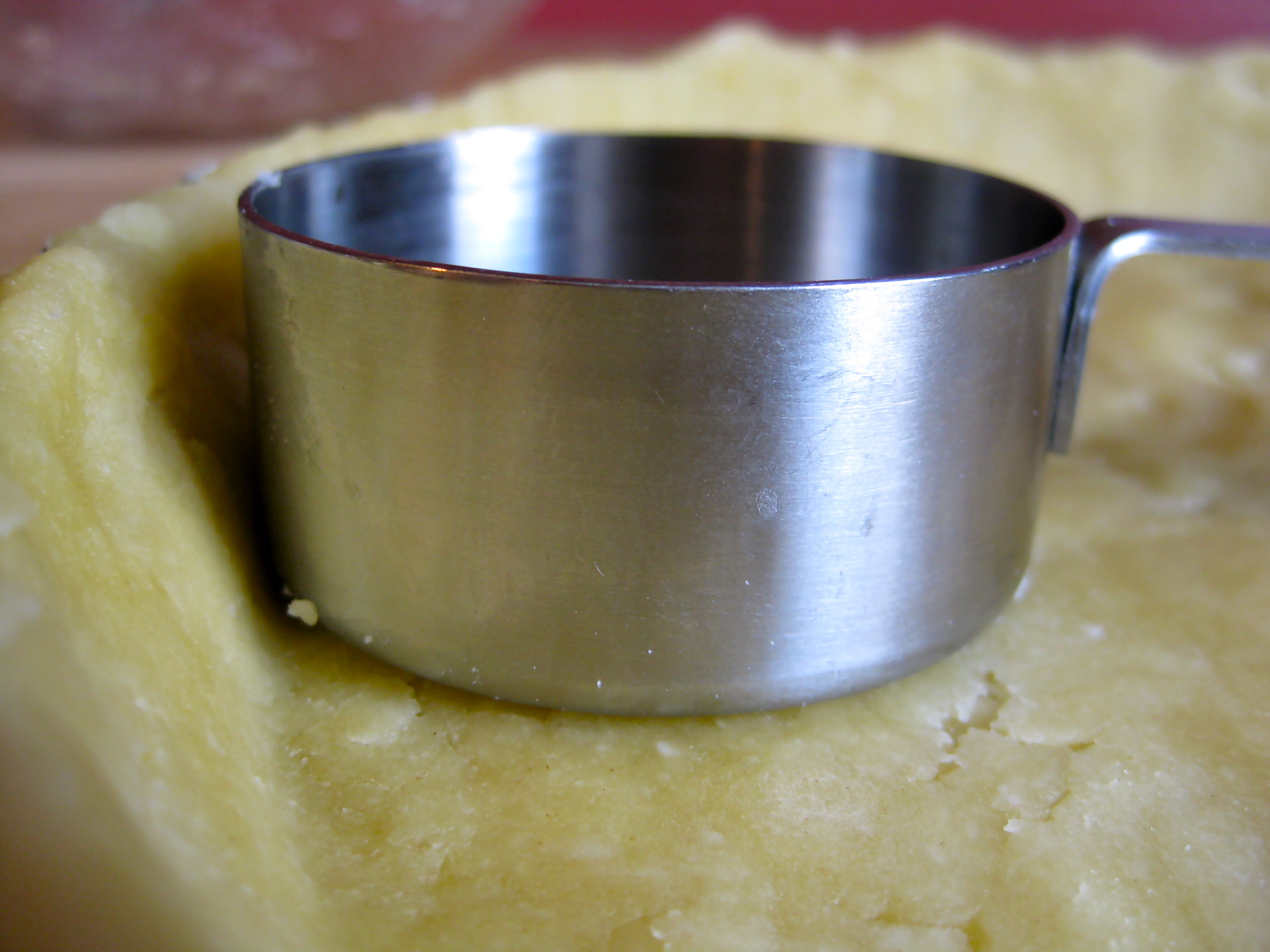
Gather the dough together and knead it into a ball.  Press it evenly into the bottom and sides of a 9-inch tart pan with a removable bottom (I use a small measuring cup to smooth everything into place and it works wonders).  Pierce crust on sides and bottom with a fork, and parbake in the preheated oven until only very slightly browned on the edges, 10-12 minutes.

Remove tart crust from oven and lower oven temperature to 375 degrees F.

New Potato and Caramelized Leek Filling

3 large leeks, fully rinsed and trimmed of their dark tops

1 tablespoon butter

1 tablespoon olive oil

1 large sprig fresh thyme

salt and pepper to taste

12 ounces new potatoes (or red or Yukon gold, or any other small, creamy potato) scrubbed and then sliced about ¼-inch thick

½ cup milk

2 eggs

1/3 cup grated parmesan cheese

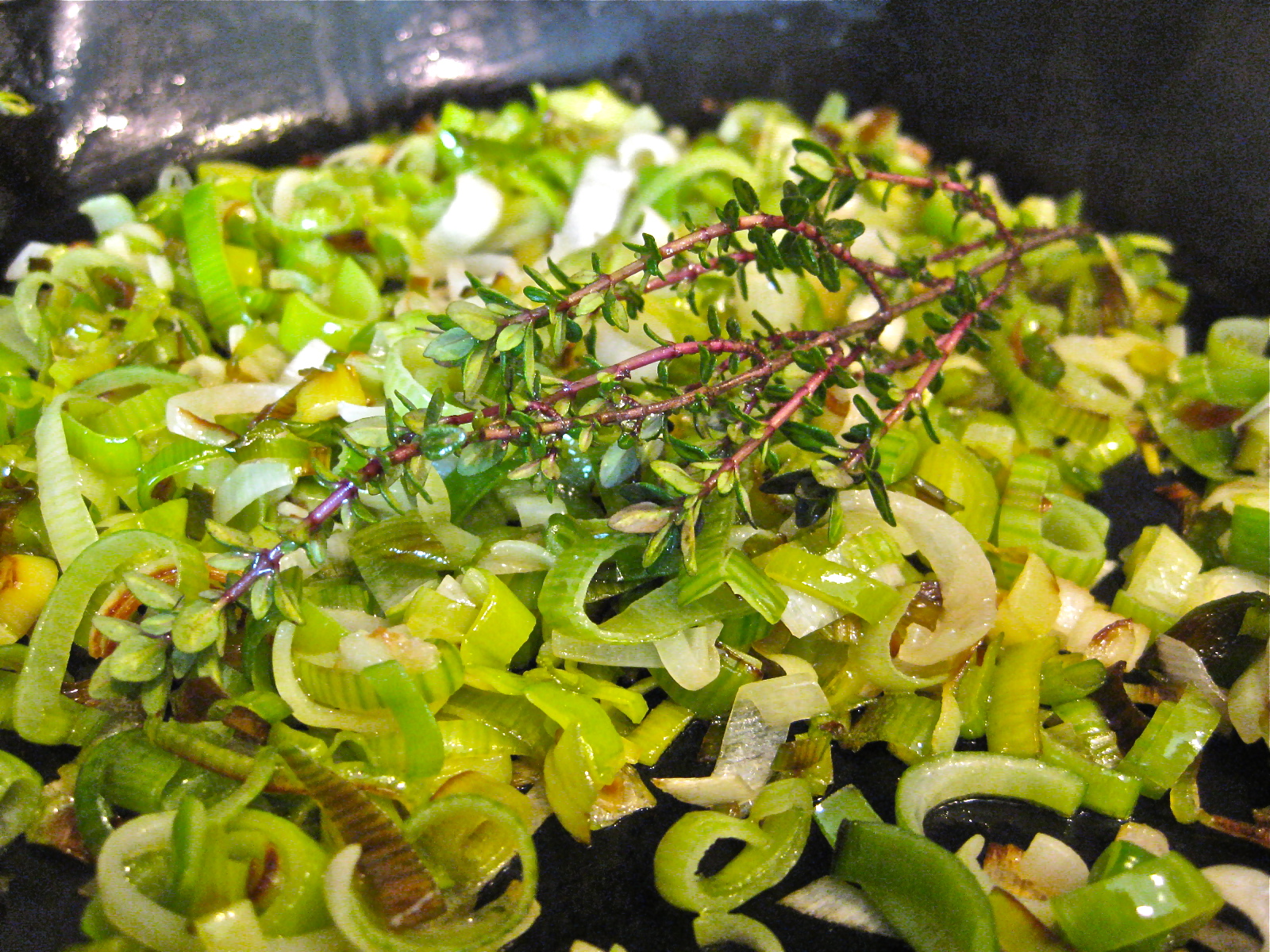
Slice rinsed and trimmed leeks in half lengthwise, then slice the white and light green parts about ¼-inch thick.  On medium low heat, combine butter and olive oil and heat until butter is almost completely melted and just begins to foam.  Add leeks and thyme, stir to coat leeks with butter and olive oil, then reduce heat to low. Cook, stirring frequently, over low heat until leeks are softened and gently caramelized to a light brown color, about 25 minutes.  Remove from heat, add salt and pepper to taste, and set aside.

While leeks are cooking, boil the potato slices in lightly salted water until crisp tender, about 7-10 minutes.  Drain potato slices and set aside.

In a small bowl, combine eggs and milk and beat to combine well.  Add in parmesan cheese and continue to mix until combined.  Add cooled, caramelized leeks to the egg mixture, making sure to remove the sprig of thyme, then mix well to combine.

Arrange the potato slices in the parbaked tart shell, overlapping them in a concentric circle.  Pour egg and leek mixture over the potatoes.

Bake for 35-45 minutes, until the middle of the tart is set and no longer wet.  The leeks exposed on top of the tart will turn dark brown and continue to caramelize even further, which is fantastic.  However, if, partway through baking, you see your leeks starting to turn brown to the point of blackening and burning, loosely cover the tart with a sheet of foil for the remainder of the baking time.

Serve warm or at room temperature.