Archive | Potatoes RSS feed for this section

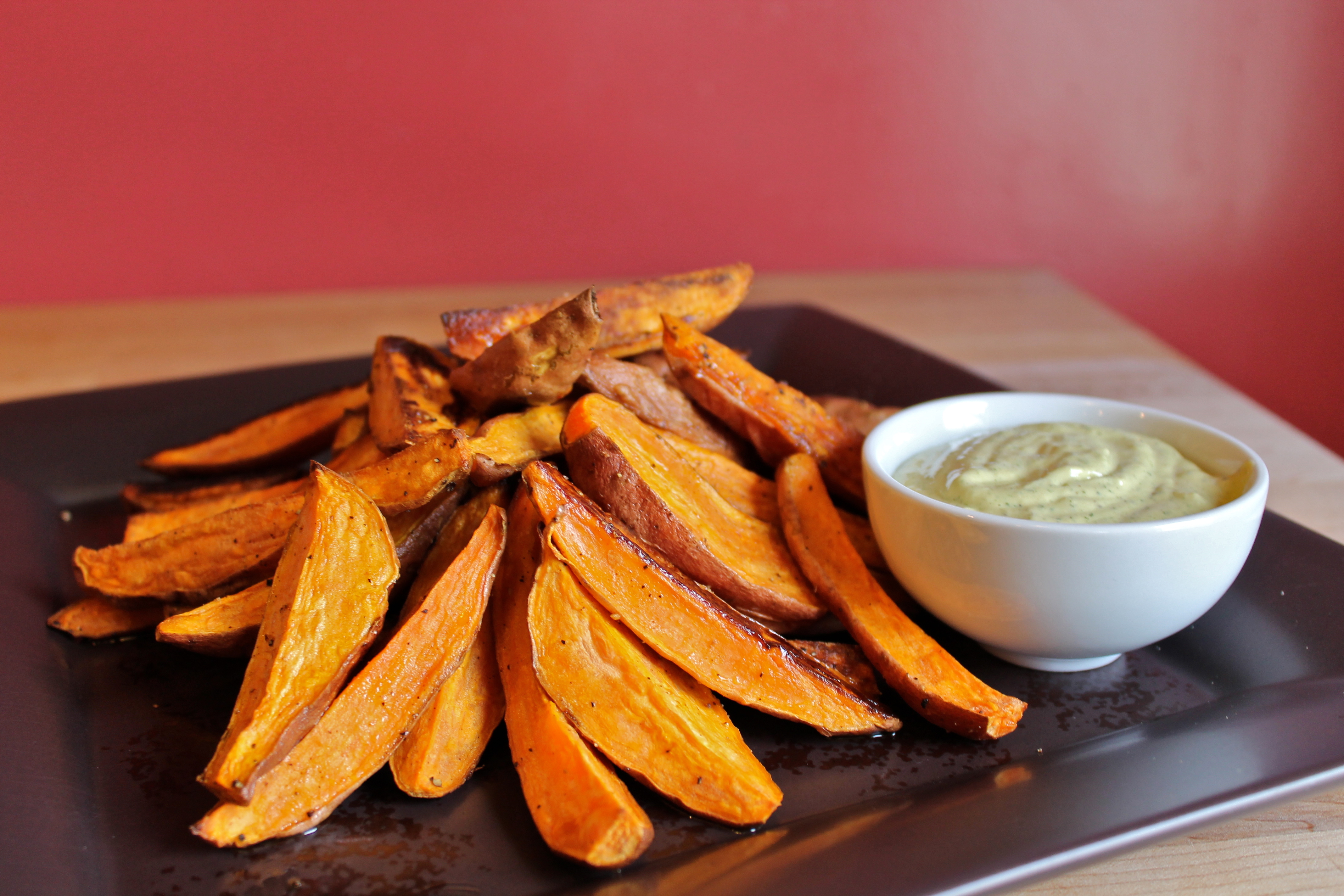
Roasted Fingerling Sweet Potatoes with Lemon Tarragon Aioli

12 Apr

Not too long ago, after admitting that I had a wee bit of a problem keeping up with the New Yorker, I noticed that, next to my bedside, there sat a leaning tower of old New Yorker issues just waiting to topple over in the middle of the night and trigger a bad dream about thunderstorms or exploding bombs (apparently I am very susceptible to sounds invading my dreams, because just last night I was awoken from a dream about being trapped in a horrible hurricane, only to realize that, oh, no! There really was a hurricane happening right at that moment, only to then realize that, nope, there was no hurricane, there was only my husband, wheezing/snoring in his sleep just inches from my face and giving me nightmares, but I digress).  Knowing that my dusty magazine pile was bordering on unreasonable, I began to stack the old New Yorker issues in my arms and take them to the recycling bin.

As I walked down the stairs, I noticed that several of the magazines were marked in the beginning few pages with a dogeared fold.  One issue sporting this feature would not be notable, but half a dozen?  Against my better judgment—I was, remember, supposed to be getting rid of these magazines—I fished a couple of magazines out of the pile and opened them up to their folded pages.  All of the pages, it turned out, were marked at the same place: the Tables for Two column, the short restaurant review that appears in the first few pages of the magazine, and, some of you might remember, the inspiration for this recipe.  As I soon recalled, for months I had been noting tasty-sounding dishes that were mentioned in the column, with the intention that I would someday gather together the elements in each recipe and then create them in my own way.  Hazelnut orange pesto?  That sounds delicious!  And now this, fingerling sweet potatoes with tarragon?  Sign me up.

Though I can’t remember the name of the restaurant that offered the inspiration for this dish, the thought of combining fingerling sweet potatoes with tarragon stuck in my brain and refused to budge.  Not knowing anything more about the presentation, other than the main ingredient and its accompanying herb, I thought of the way I’d like to see these two things come together.  Petite sweet potatoes roasted in olive oil until soft and crisp and paired up with a wonderfully garlicky, herby aioli sounded just right.

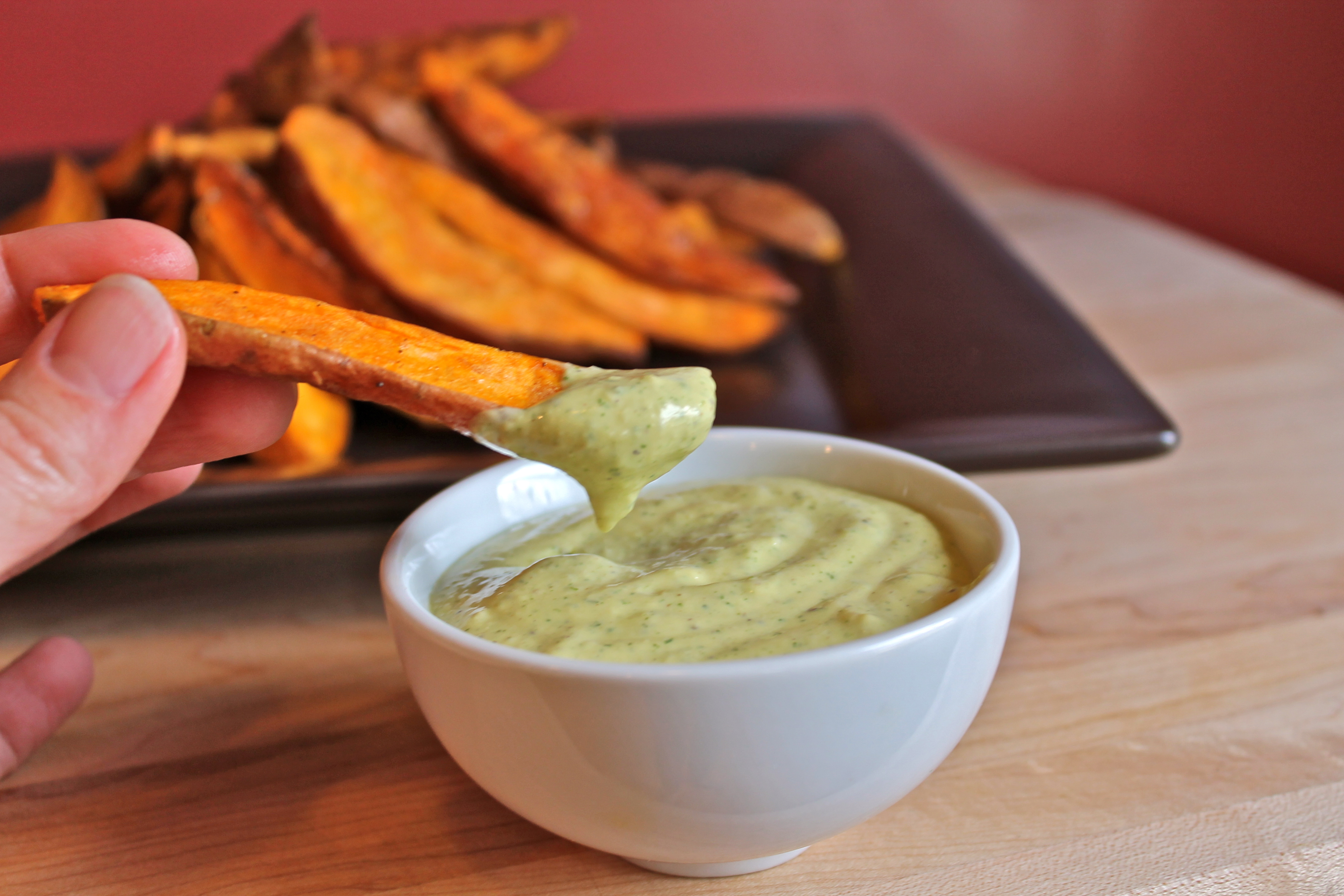
And it was.  The sweet, caramelized potatoes are a natural match with the creamy, forward flavor of the tarragon aioli.  If I am recalling things correctly, the restaurant was favorably reviewed in the New Yorker, and this little sample of a flavor pairing from the restaurant makes it clear why.  So, in what might turn out to be an ingenious excuse for having all those old issues of the New Yorker sitting around, I have decided to create a new category here on Savory Salty Sweet.  The category will be called, fittingly, Tables for Two, and it will feature dishes that I read about in the New Yorker column of the same name and felt inspired to make.  I don’t know how many recipes I will actually be able to create from this endeavor, but I am excited to find out.

Last year: Carrot Muffins

Roasted Fingerling Sweet Potatoes with Lemon Tarragon Aioli Recipe

If you can’t find fingerling sweet potatoes, just use the tiniest sweet potatoes you can find.  I have found that the tinier the potato, the more delicate its flesh, and that’s a real virtue in this recipe.  When you roast the potatoes, you want them to become pillowy soft and creamy with just tiny hits of crispness here and there on each slice.

2 pounds of fingerling sweet potatoes, sliced in half or in quarters in order to make all the potato slices a standard size (having them a uniform size will allow them to all roast at the same rate)

2 tablespoons extra virgin olive oil

salt and pepper to taste

Preheat oven to 400 degrees Fahrenheit.  Place sliced sweet potatoes on a large baking sheet, then drizzle with olive oil and sprinkle with salt and pepper.  Toss everything together, then arrange potatoes in a single layer.  Roast potatoes for 30 minutes, until the potatoes are soft and their edges have started to turn crisp.

Lemon Tarragon Aioli

2 tablespoons freshly squeezed lemon juice

1 tablespoon Dijon mustard

3 cloves of garlic, chopped

1 large egg yolk

2 tablespoons fresh tarragon, roughly chopped

7 tablespoons extra virgin olive oil

salt and pepper to taste

To make aioli, combine lemon juice, mustard, garlic, egg yolk, and tarragon in a food processor or blender.  Process or blend until smooth, then, with the food processor still running, slowly add the olive oil until the mixture becomes smooth and thick.  Remove the lid, stir the mixture with a spatula or spoon to mix in any errant bits trapped on the sides or bottom of the bowl, then add salt and pepper to taste and process for a few more seconds to ensure that everything is smoothly combined.

Serve potatoes warm, with aioli drizzled on top, or in a small bowl on the side.

New Potato and Caramelized Leek Tart in an Olive Oil Crust

11 May

While I’ll admit to the occasional dinner that was not so much “cooked” as it was “spotted at the cheese counter and then paired up with a baguette and consumed with great enthusiasm,” there are, in fact, more instances than I can count during which I decided to make a dinner that was based on a bag of discounted vegetables at the green market.

Sounds suspect, you say?  Not if you saw the types of goods the green market offers on their discount shelf, all of which are sold in bulk for a mere $1.  Bags of red and orange peppers combined with a dozen tomatillos?  Yes.  Ten perfectly ripe avocados that need to be eaten as soon as you get home, but, hey, that’s okay because who doesn’t love avocados?  Definitely.  Half a dozen habanero chilies, two yellow onions, four plump tomatoes, and a handful of green beans?  That right there is homemade salsa, plus a crisp snack to munch while you make the salsa.

Last week, however, the $1 shelf outdid itself.  As if it somehow managed to read my mind, the green market had decided to off load a pile of new potatoes and spring leeks, both of which, though generally associated with heartier winter fare, had been on my mind lately (perhaps because of the preponderance of chilly weather we’ve been subjected to for what seems like an eternity).  The cold in my bones was thinking soup, but a brief peek of sunlight through the clouds brightened my mood enough to encourage me to begin thinking of something a little lighter and more spring-ish.

While not everyone might think of a tart as being spring fare, I have to disagree.  A vegetable tart, made with this exceptionally savory and flavorful olive oil crust, can be a perfect warm weather meal.  Eaten on a bed of fresh spinach or baby greens, it is light, yet filling, and the abundance of greens evidenced in the meal is always a welcome sight.  Well, to me, at least.  But, as previously discussed, I also get excited about a $1 bag of cast-off vegetables, so perhaps I should just say that you shouldn’t take my word that this tart is a welcome and delicious spring meal, you should instead simply make the tart and discover its deliciousness for yourself.

New Potato and Caramelized Leek Tart in an Olive Oil Crust

Olive Oil Crust

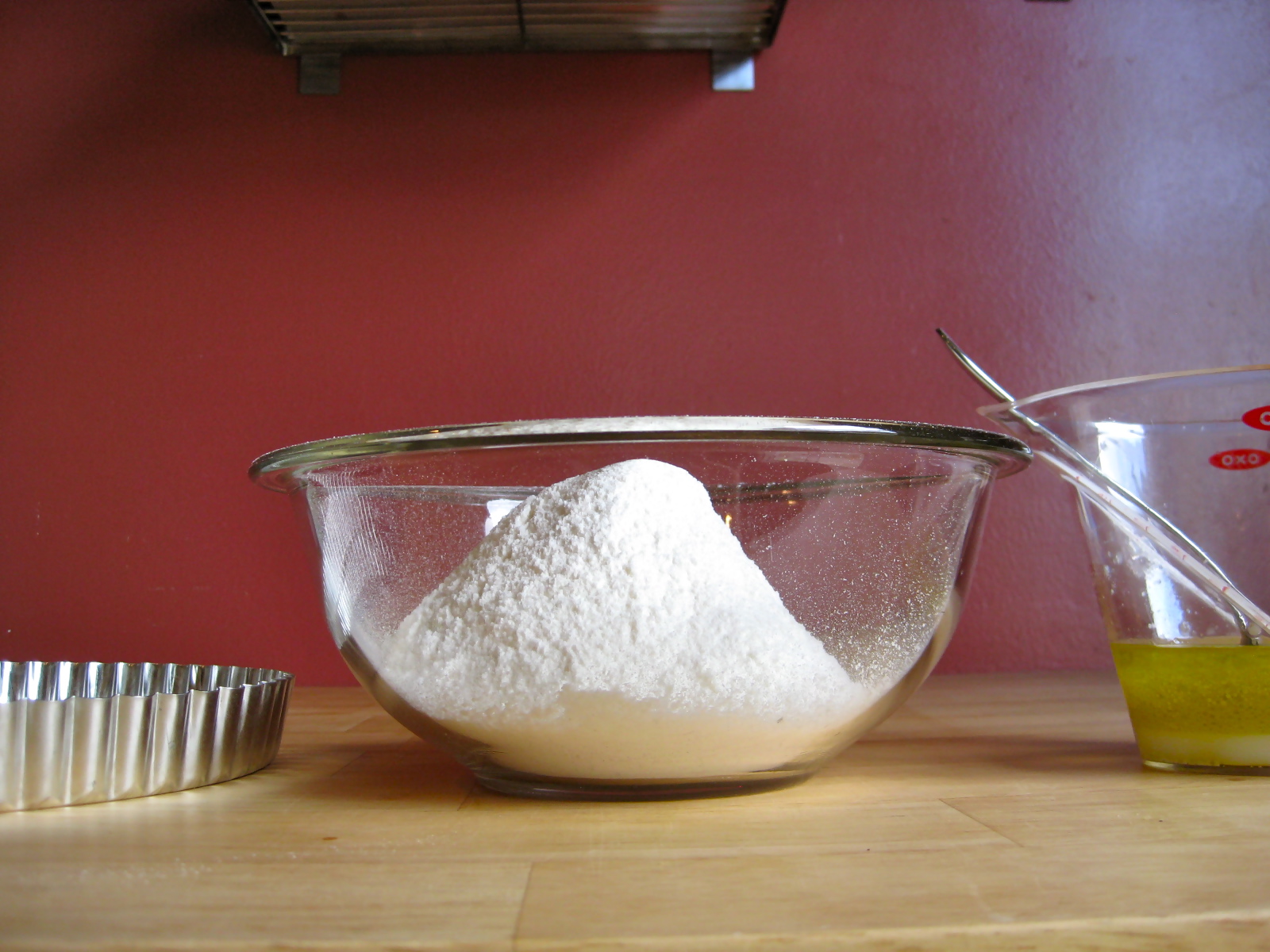
1 ½ cups all purpose flour

½ teaspoon salt

1/3 cup olive oil

3 tablespoons milk

Preheat oven to 425 degrees Fahrenheit.

In a medium bowl, sift together flour and salt.  In a small bowl, combine olive oil and milk and whisk together until integrated.  Add milk and oil mixture to flour mixture and, using a fork, combine the mixture until fully incorporated.

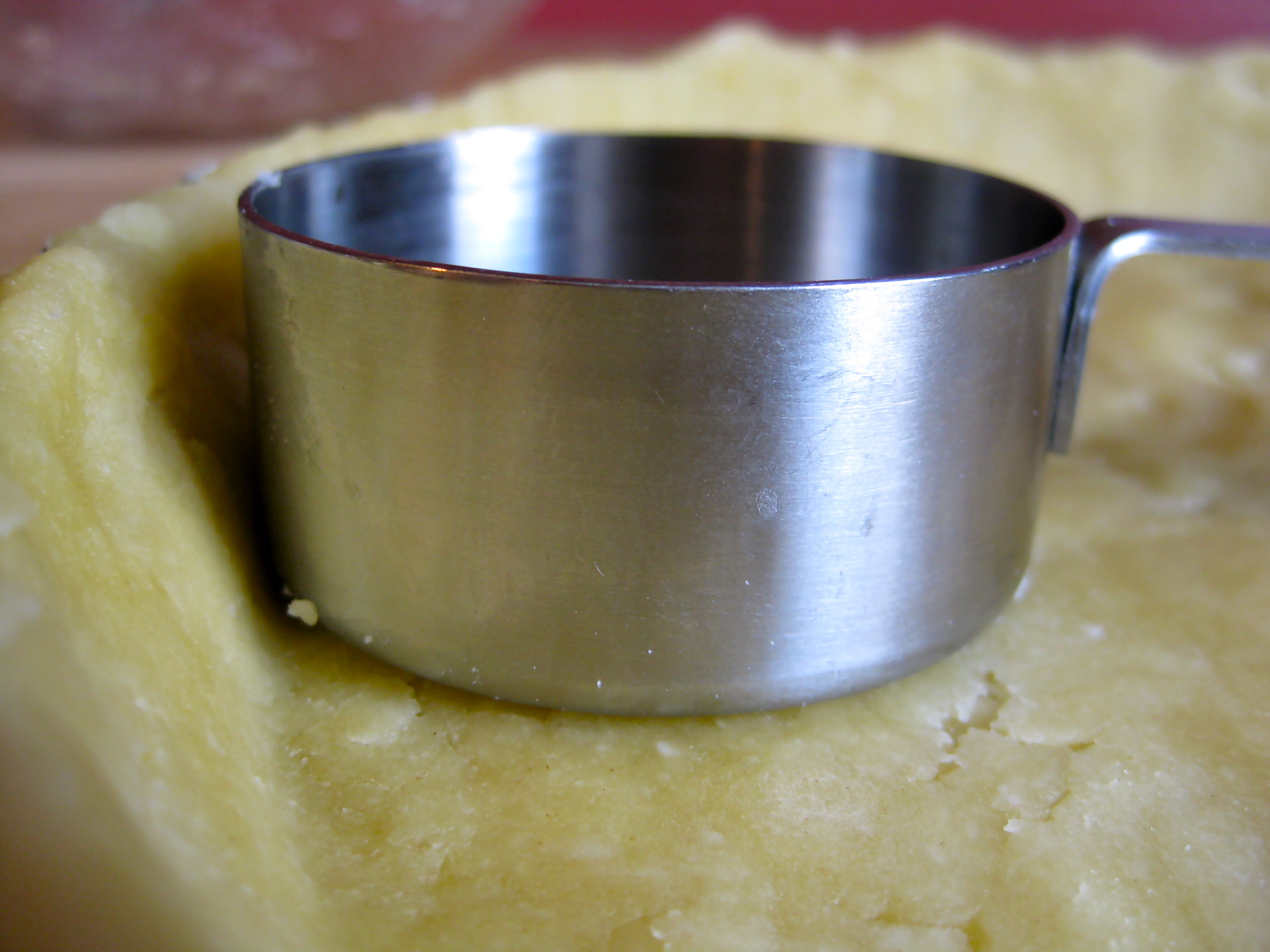
Gather the dough together and knead it into a ball.  Press it evenly into the bottom and sides of a 9-inch tart pan with a removable bottom (I use a small measuring cup to smooth everything into place and it works wonders).  Pierce crust on sides and bottom with a fork, and parbake in the preheated oven until only very slightly browned on the edges, 10-12 minutes.

Remove tart crust from oven and lower oven temperature to 375 degrees F.

New Potato and Caramelized Leek Filling

3 large leeks, fully rinsed and trimmed of their dark tops

1 tablespoon butter

1 tablespoon olive oil

1 large sprig fresh thyme

salt and pepper to taste

12 ounces new potatoes (or red or Yukon gold, or any other small, creamy potato) scrubbed and then sliced about ¼-inch thick

½ cup milk

2 eggs

1/3 cup grated parmesan cheese

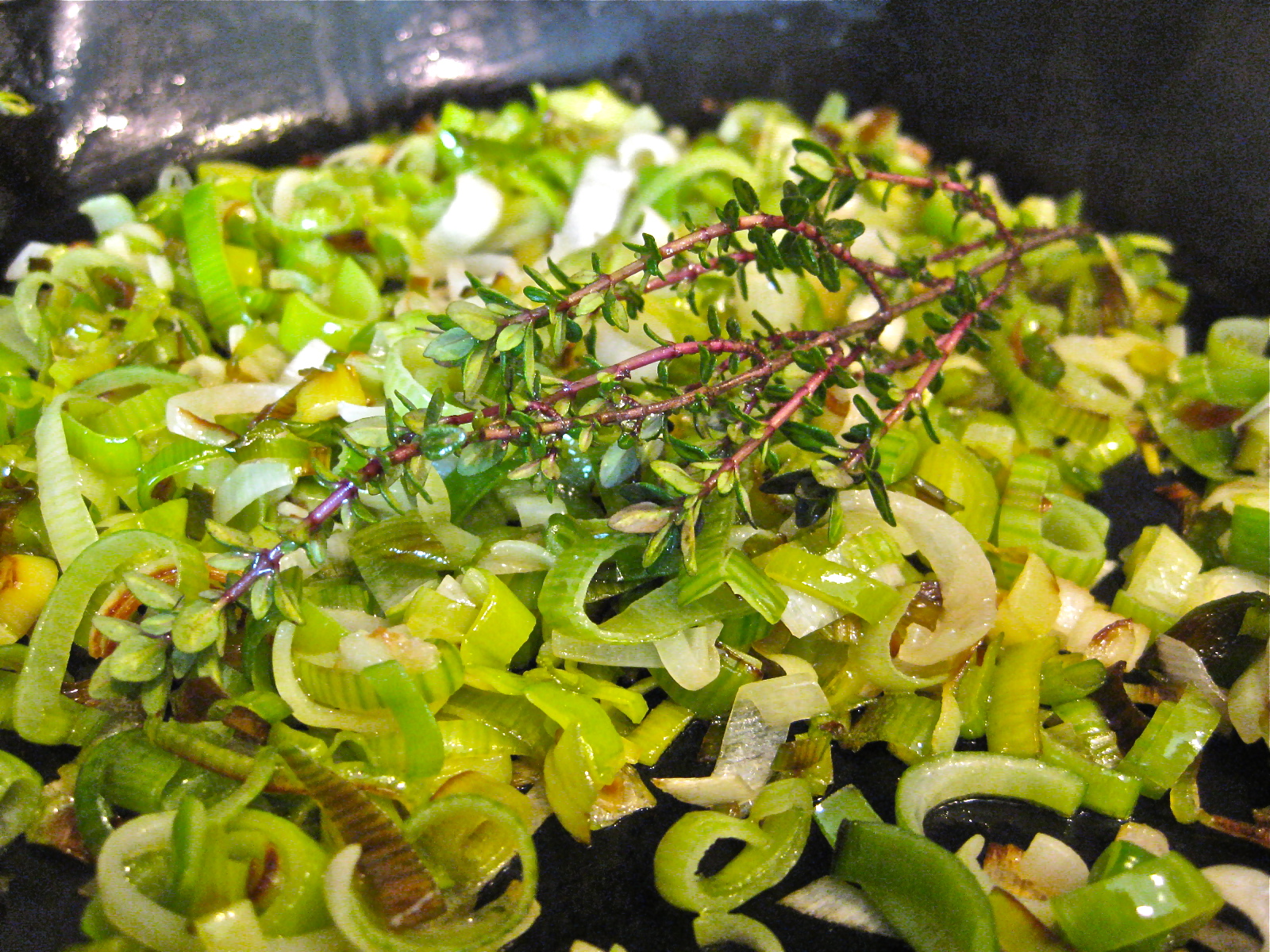
Slice rinsed and trimmed leeks in half lengthwise, then slice the white and light green parts about ¼-inch thick.  On medium low heat, combine butter and olive oil and heat until butter is almost completely melted and just begins to foam.  Add leeks and thyme, stir to coat leeks with butter and olive oil, then reduce heat to low. Cook, stirring frequently, over low heat until leeks are softened and gently caramelized to a light brown color, about 25 minutes.  Remove from heat, add salt and pepper to taste, and set aside.

While leeks are cooking, boil the potato slices in lightly salted water until crisp tender, about 7-10 minutes.  Drain potato slices and set aside.

In a small bowl, combine eggs and milk and beat to combine well.  Add in parmesan cheese and continue to mix until combined.  Add cooled, caramelized leeks to the egg mixture, making sure to remove the sprig of thyme, then mix well to combine.

Arrange the potato slices in the parbaked tart shell, overlapping them in a concentric circle.  Pour egg and leek mixture over the potatoes.

Bake for 35-45 minutes, until the middle of the tart is set and no longer wet.  The leeks exposed on top of the tart will turn dark brown and continue to caramelize even further, which is fantastic.  However, if, partway through baking, you see your leeks starting to turn brown to the point of blackening and burning, loosely cover the tart with a sheet of foil for the remainder of the baking time.

Serve warm or at room temperature.

Samosas in Phyllo

9 Mar

There are few words that exist on a sliding scale as slippery as that of the word “difficult.”  Some things are deemed difficult because they require a certain familiarity of skills before one is able to instinctively tackle them.  Other things can be referred to as difficult because they are time consuming and they ask a person to dedicate a great deal of effort and focus.  To me, something that is difficult is most often not really difficult at all (in terms of skill or effort), but rather simply unpleasant.  I may have no problem at all producing a trifecta of desserts for someone’s birthday, but I will not, under any circumstances I can currently think of, deep fry anything.

It’s not like I haven’t deep fried things before.  I’ve made fried poppadums, homemade sweet onion rings, and wonderfully crispy pakoras, but the problem was, I did not enjoy making any of those foods once I completed the preparation stage and was then forced to move on to the actual cooking stage.  Deep frying things makes your house smell like a soggy old french fry depository.  It is hot, messy, and, obviously, greasy, and I am always at a loss over what to do with all that spent oil.  Fortunately, my deep dislike of submerging things in hot oil never seemed to hold back my progress in the kitchen, so all was well.

Until, that is, I got it into my head that I was going to make samosas for a small event I had agreed to cater.

Though I knew I hated to fry things, I was convinced that I would be able to come up with a simple way to wrap and cook samosas that would not only avoid the step of having to deep fry anything, but also guarantee me a generous amount of wrapped samosas that were amenable to being frozen until the time arrived when I needed to bake them.

Taking inspiration from a wonderful tapas cookbook I often look to for ideas, I decided to wrap each samosa in a dual layer of phyllo dough.  It was my hope that brushing butter in between each layer of dough would make for a crisp finished product, and making sure to securely wrap each little package of spiced potatoes would ensure an end result that would both freeze well and take to baking straight from the freezer.

To make this long story short, I don’t know why I didn’t try this sooner.  The samosas, both baked after being frozen and baked immediately after being wrapped (for purposes of, ahem, quality control), were crisp, light, and lacking in any sort of heaviness or greasiness.  As an added bonus, the delicate nature of phyllo really allows the flavor of the perfectly spiced potato filling to take center stage, completely convincing me that, at least until I break down and decide to tackle a Spanish tortilla de patatas, my deep frying days have come to an end.

Samosas in Phyllo

Adapted from Madhur Jaffrey Indian Cooking

4-5 medium potatoes, boiled in their jackets and allowed to cool

4 tablespoons vegetable oil

1 medium sized onion, peeled and finely chopped

1 cup shelled peas, fresh or frozen (if frozen, defrost them first)

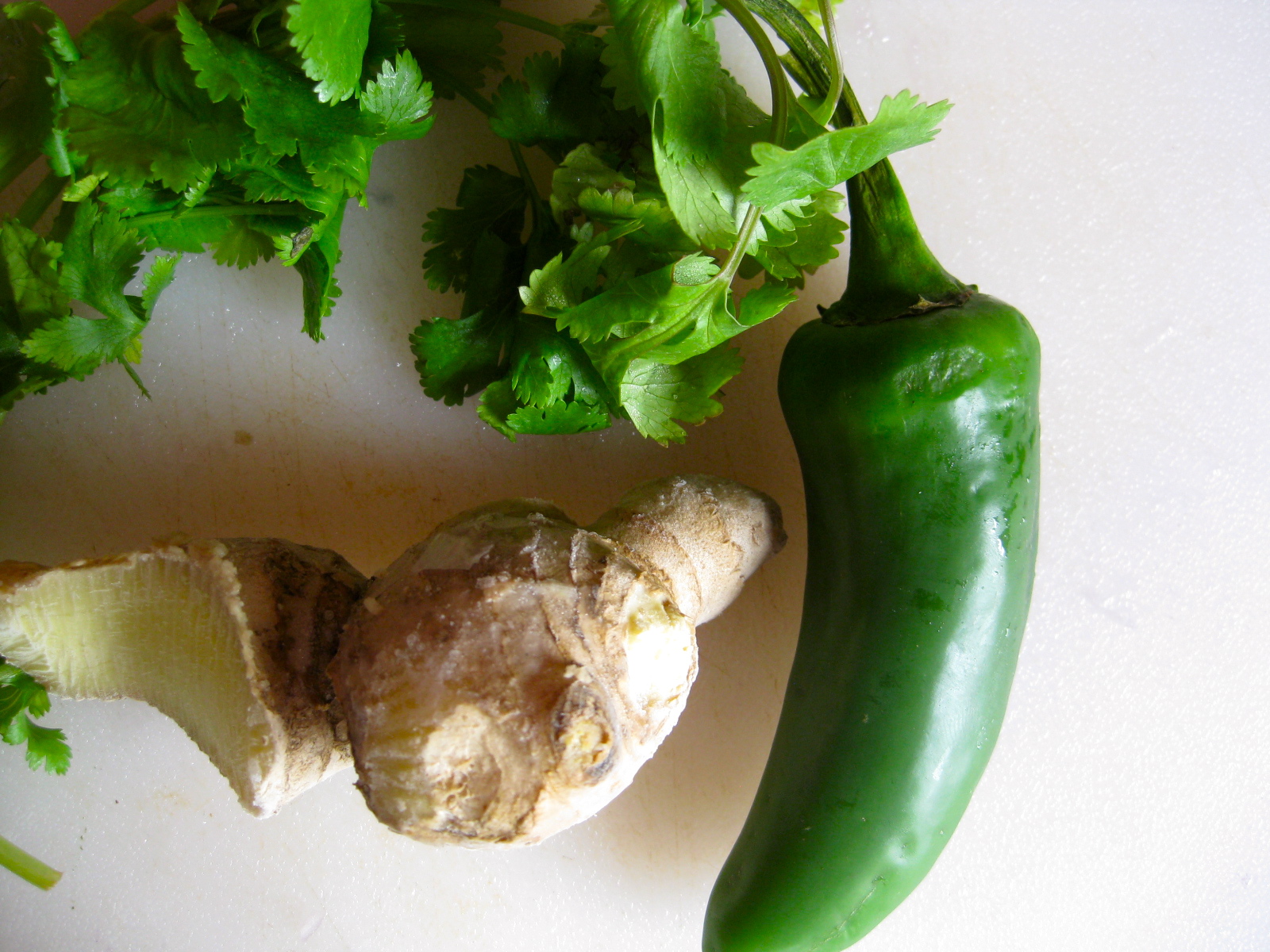
1 tablespoon peeled, finely grated fresh ginger

1/2 to 1 fresh, hot green chili, finely chopped

3 tablespoons very finely chopped cilantro

About 3 tablespoons water

1 1/2 teaspoon salt, or to taste

1 teaspoon ground coriander

1 teaspoon garam masala

1 teaspoon ground, roasted cumin seeds (if you only have regular ground cumin, you can toast the teaspoon of cumin in a dry pan set over high heat.  The cumin will take only seconds to toast, so watch it carefully for browning and then immediately take it off of the heat and place it in a room temperature bowl or dish)

1/4 teaspoon cayenne pepper

2 tablespoons lemon juice

20 phyllo sheets, thawed if frozen (my sheets were 8.5″ x 13.5″ and, layered and cut into fifths, yielded 50 samosas)

4 tablespoons butter, melted then cooled

To make the filling, peel the potatoes and cut them into 1/4 inch dice.  Put 4 tablespoons of oil in a large frying pan and place over medium heat.  When hot, put in the onions.  Stir and fry them until they begin to turn brown at the edges.  Add the peas, ginger, green chili (1/2 or the whole thing, depending on how spicy you prefer things), cilantro, and 3 tablespoons water.  Cover, lower heat, and simmer until the peas are cooked.  Stir every now and then and add a little more water if the frying pan seems to dry out.

Add the diced potatoes, salt, ground coriander, garam masala, cumin, cayenne, and lemon juice.  Stir to mix.  Cook on low heat for 3-4 minutes, stirring gently as you do so.  Check balance of salt and lemon juice.  You may want more of both (I added more lemon juice, but felt the salt content was just fine).  Turn off the heat and allow the mixture to cool.

To fill and wrap the samosas, preheat oven to 375 degrees F (if you are wrapping and freezing the samosas, you can obviously skip this step).  Line two large baking sheets with parchment paper.  Cover phyllo stack with a sheet of plastic wrap and then a dampened kitchen towel (this will keep the phyllo from drying out as you work).  Take one phyllo sheet from stack and lay it down on your work surface with a long side nearest you (keeping remaining sheets covered as you work) and brush lightly with butter. Top with another phyllo sheet and brush with more butter. Cut buttered phyllo stack crosswise into 5 strips (my sheets were 13.5 inches long, yielding 5 strips that were not quite 2.75 inches wide).

Place a tablespoon of filling near one corner of a strip (on the end that is nearest to you), then fold corner of phyllo over to enclose filling and form a triangle. Continue folding the strip (as one would fold a flag), maintaining a triangle shape. Put fully wrapped samosa triangle, seam side down, on a parchment-lined large baking sheet. Repeat process, making more triangles in the same manner, until you’ve used all the phyllo.

The samosas can be baked in a 375 degree oven, one sheet at a time, for 20-25 minutes, or until they are golden brown.  Cool them slightly on a wire rack before serving

If you plan to freeze the samosas, place them in the freezer on their parchment-lined baking sheets, and freeze for one hour.  Remove the samosas from the freezer, and stack them in an airtight container, separating each stack with a layer of parchment or wax paper.  The samosas will keep in the freezer for up to 1 month.  When you are ready to bake the frozen samosas, follow the baking directions for fresh samosas.  There is no need to adjust the baking time.