
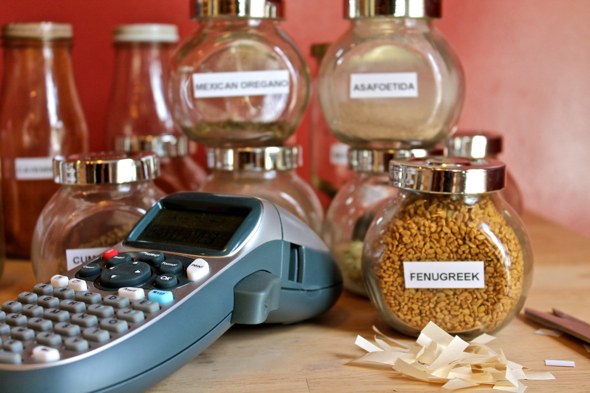
The joy I derived from this project is bordering on the obscene.
The joy I derived from this project is bordering on the obscene.

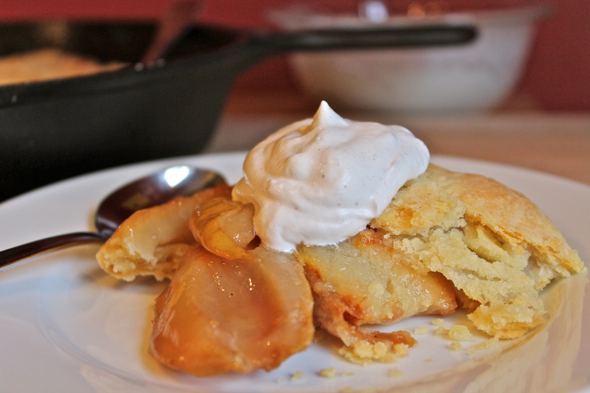
Are you familiar with the concept of a skillet pie? Up until a couple of weeks ago, I was not. In fact, until the moment when I found myself with a huge box of fast-ripening pears and one single layer pie crust, it had never really occurred to me to bake a pie with only one crust. Oh, sure, I like single crust pies and tarts, but a baked fruit pie with only one crust? Why would I do that? One of the most enjoyable things about a fruit pie is the fact that it bakes into one big juicy mass of fruit that melts into its cozy pocket of crust. What’s the point of taking away one of those crusts?
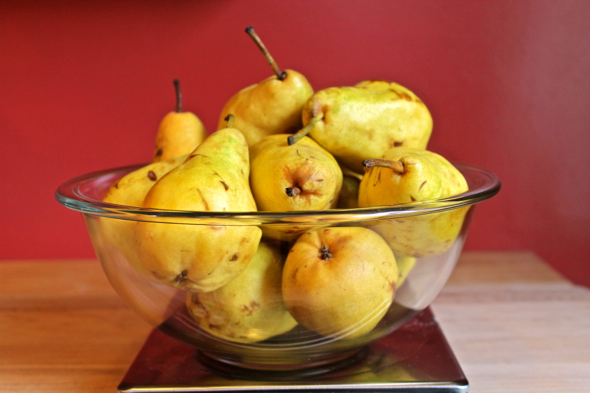
To be honest, I don’t really think you need to take away one of those crusts, but, if you want to know how to make a dead simple pie out of nothing more than some fresh fruit, a tiny amount of sugar, and only a single layer of pie crust, well, you’ve come to the right place.
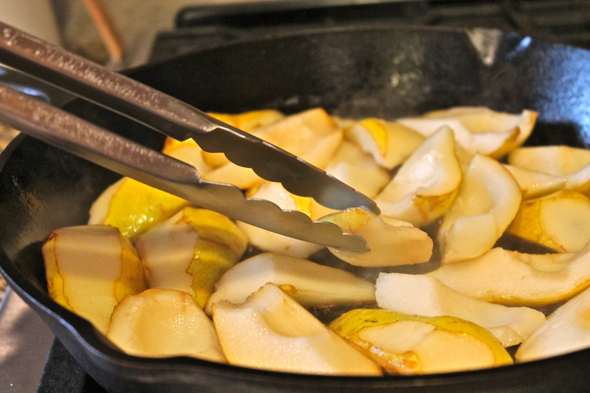
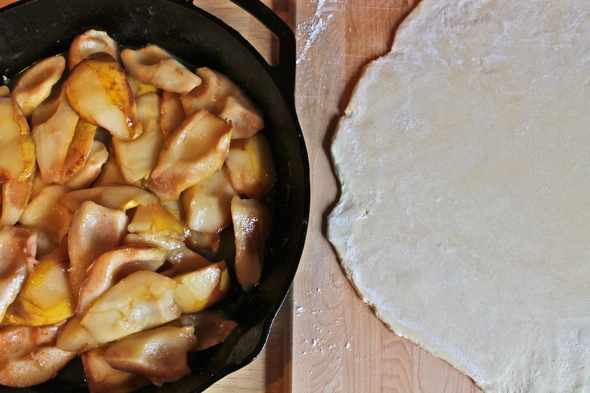
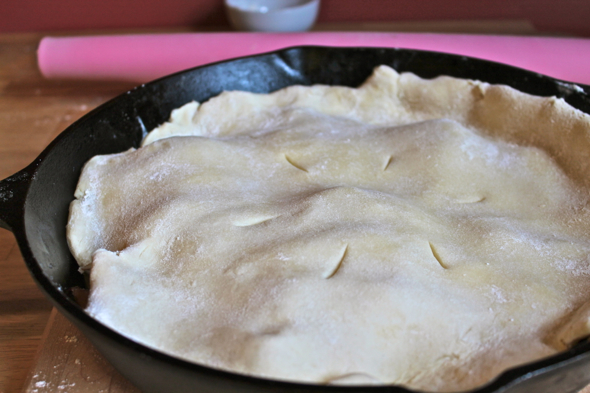
Think of this as a last minute pie, the type of thing you throw together when you find yourself with unexpected company or a zero-hour request that you provide a dinner party dessert. The entire thing comes together in no time at all, and you use the same pan to both sauté the fruit and bake the pie. All of the great caramelized juices from the pears stay in the pan, allowing everything to mingle and get cozy while the top crust bakes. It’s a great pie for new bakers, for people short on time, one just for people who love pie. Really, it’s just a great pie, period.
Last Year: Butternut Squash Cake with Ginger Cream Cheese Frosting
Easiest Skillet Fruit Pie Recipe
I use a 12-inch skillet to make this pie, as it provides a good amount of surface area in which to cook the fruit. If you only have a smaller skillet, say, a 10-inch one, you may have to divide your fruit into more batches when you cook it initially.
4 pounds ripe pears or apples
2 tablespoons unsalted butter
2 tablespoons dark brown sugar
1 single layer pie crust (my favorite pie crust recipe is below)
Flaky Tart and Pie Dough Recipe
From Tartine
1 teaspoon salt
2/3 cup (5 ½ ounces) very cold ice water
3 cups plus 2 tablespoons (1 pound) unbleached all-purpose flour
1 cup plus 5 tablespoons (10 ½ ounces) very cold unsalted butter
pinch of sea salt
In a small bowl, add the salt to the water and stir to dissolve. Place in the freezer to keep super cold until ready to use.
Place the flour in the bowl of a food processor, or in a large bowl. Cut the butter into 1-inch pieces, then scatter over the flour. If using a food processor, pulse the mixture briefly until it forms into large crumbs and some of the pieces of butter remain pea-sized. If making the dough by hand, cut the butter into the dough using a pastry cutter. You will want the dough to have the same crumb-like look with some large pea-sized chunks of butter throughout.
Drizzle the salt and water mixture over the dough and, if using a food processor, pulse until the dough comes together into a ball but is not completely smooth. You should still see visible butter chunks. If mixing the dough by hand, drizzle the salt and water mixture over the dough while tossing with a fork. The dough should come together in a shaggy mass. Gently mix the dough together until it comes together in a ball but is not completely smooth. As with the food processor dough, you should still see visible butter chunks.
Divide the dough into 2 equal balls on a lightly floured surface. Shape each ball into a disk about 1 inch thick. Wrap each disk in plastic wrap and refrigerate at least 2 hours, preferably overnight.
Makes 2 9-inch or 10-inch tart or pie shells, enough for 2 single-crust pies or tarts, or 1 double-crust pie.
To make the pie:
Preheat oven to 400 degrees Fahrenheit.
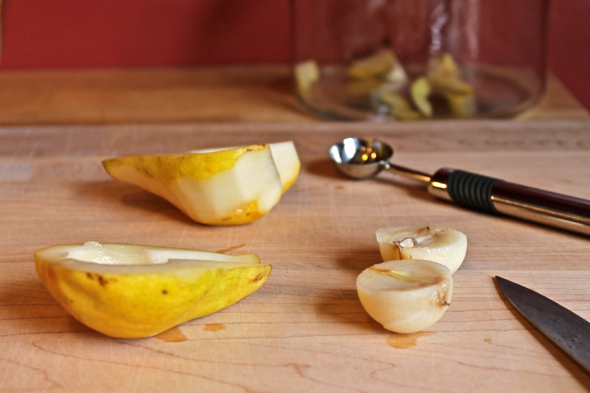
Peel and core the pears or apples. If your fruit is super fresh (meaning, if it is in season and has spent only a handful of weeks in between being on a tree and being in your kitchen) you don’t even need to peel the fruit, as the skin should be very thin and flavorful. Cut the pears or apples in half, then in quarters.
In a large cast iron skillet set over medium-low heat, melt 1 tablespoon of the butter. Sprinkle over 1 tablespoon of the dark brown sugar, and allow it to melt into the butter just slightly (about 30 seconds to 1 minute). Add a small pinch of sea salt. Add half of the quartered fruit, making sure that the fruit is laying in a single layer. Sauté fruit until it is just starting to caramelize on one side. For the pears I used, which were super ripe, this only took about 3 minutes since the juices were just flowing out of them once they hit the hot pan. For less ripe pears, or for firm apples, it could take up to 7 or 8 minutes. Carefully turn the fruit over and caramelize on the other side (again, this could take anywhere from 3 to 8 minutes). Pour cooked fruit into a large bowl, scraping out the caramelized sugar along with it. Add the second tablespoon of butter, the second tablespoon of sugar, a small pinch of sea salt, then the rest of the fruit, and cook in the same manner as you did the first batch. If the sugar and butter start to brown too quickly, turn the heat down to low. When the fruit has cooked, remove the pan from the heat, add in the first batch of fruit, stir gently to combine, and set aside.
On a floured surface, roll out the single-layer pie crust into a circle roughly 1 inch larger than the size of your pan. Gently place the round of dough over the fruit in the skillet, then tuck under any overhanging edges. Slice air vents in the crust. If you want, you can sprinkle a little turbinado sugar over the top of the crust, or brush the crust with a beaten egg, but you certainly don’t have to do either.
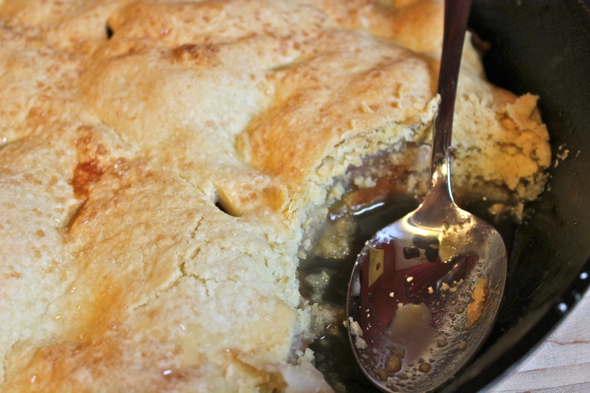
Bake the pie in the center of the oven for 35-40 minutes, until the top crust is dark golden brown and the fruit is bubbling. Remove from oven and allow to cool for at least 15 minutes before eating. The filling will be molten hot.
Serve with freshly whipped cream, whipped with just a pinch of cinnamon.

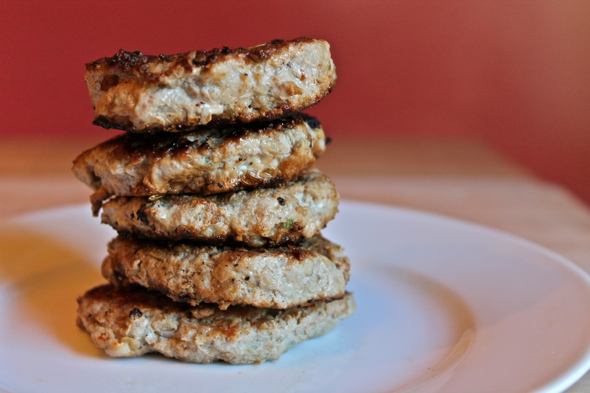
There comes a time in every person’s life—that is, if the person in question likes to cook, and by “likes to cook,” I mean “is slightly unreasonable when it comes to wanting to spend time in the kitchen”—when you’ve just resigned yourself to the fact that, sooner or later, you are just going to have to learn how to make sausage. It’s not because you eat a lot of sausage (you don’t), and it’s not because you think that making sausage will be so much more economically sound than buying sausage (I have no idea if it is or not). It’s because, when you really, really like to cook, sooner or later the list of things you have made in the kitchen starts to seem a little barren when you add up the list of things you’ve never attempted to make.
But I do like cooking, and I do like learning new things, so it seems only natural that, eventually, I was going to learn about how to make sausage. Because why not?
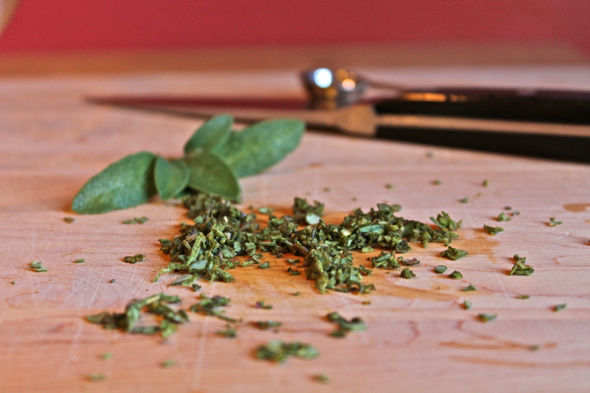
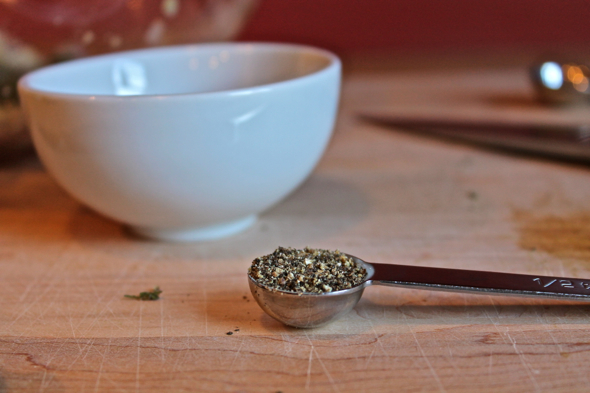
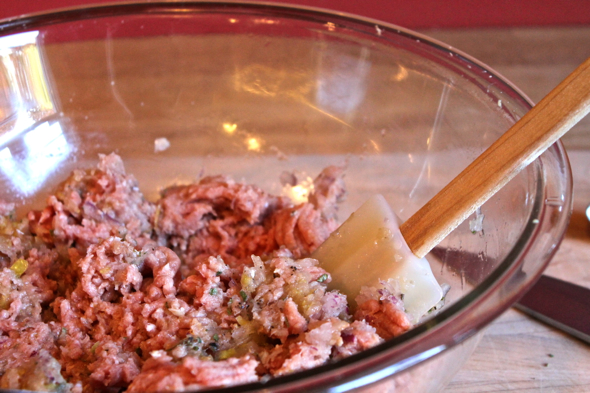
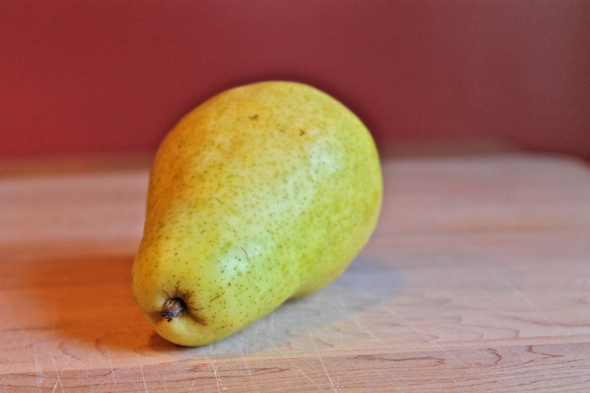
The first thing I learned about sausage is that sausage can be any number of things, but it is, generally speaking, a mixture of tiny bits of ground up meat and fat mixed with seasonings. Because the relative simplicity of the very description of sausage, it’s the perfect medium for combining flavors and elements of one’s choice. Not being a fan of pork, I decided to make my sausage out of ground turkey (the higher the fat content the better), and, because I realize that ground turkey can have a tendency to get sort of dry, I added a shredded pear to the mix to stave off dryness. Because pears love ginger so much, it seemed only natural that I should add some ginger to the mix. Sage seemed like a natural progression after that, and by the time I was done, all I could do was wonder why it had taken me so long to make something so delicious. The bite is tender and juicy, the spices are delightful, and the mix of earthy sage and bright ginger are a perfect match.

Turkey Pear Sausage with Ginger and Sage Recipe
As you can see, this is a recipe for bulk sausage. I have never tried to convert this recipe to make sausage links, so, if you are in possession of some casing and a sausage stuffer and you think you might want to try this out as link sausage, please know that I have absolutely no idea if it will work or not. However, if you do try to make linked sausage from this recipe, please do let me know how it turns out!
1 pound of ground turkey, not lean
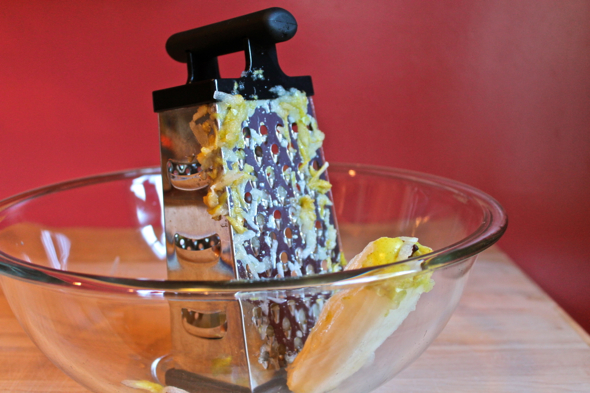
1 large pear, shredded using the larger shredding holes on a box grater (you should end up with roughly ¾ of a cup of shredded pear), drained of any excess juice
3 tablespoons finely shredded onion (again, use a box grater for this)
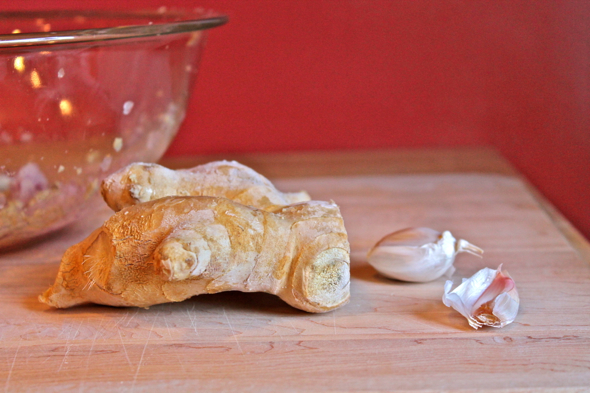
1 medium clove finely mashed and minced garlic
1 tablespoon grated fresh ginger
½ teaspoon finely minced fresh sage (or scant ¼ teaspoon dried sage)
¼ teaspoon dried marjoram
¼ teaspoon ground black pepper
½ teaspoon sea salt
pinch of ground nutmeg
pinch of dried coriander
In a large bowl, combine all of the ingredients (again, make sure the shredded pear is well drained of any excess juice, or else your sausage mix will end up too loose). Gently mix together using a flexible spatula or your hands. Mix until everything is well combined. Cover the bowl with plastic wrap and allow to rest in the refrigerator for at least 1 hour.
To cook sausage, form patties in the size of your choosing. Heat a bit of olive oil in a nonstick pan or cast iron skillet set over medium or medium high heat, then add the sausage patties when the oil is hot. Cook patties, being careful not to crowd the pan, until they are sufficiently browned on each side and cooked all the way through, about 3 to 4 minutes for smallish-sized patties.
Makes a little over 1 pound of bulk sausage.

 Savory Salty Sweet