Classic Bialys

1 Oct

The bialy is an elusive creature. Most bialys I have encountered have been less than stellar, with a large number of them falling into the category of actually being just flat out terrible. It’s a lot like the search for a good bagel (at least, the search for a good bagel here in the Pacific Northwest). Mass produced grocery store bagels are just awful, let’s admit it. And grocery store bialys…well, so there are really no such things as grocery store bialys, since a bialy is not nearly as well known a commodity as a bagel, which actually has the benefit of saving the bialy from a fate as sad as that known by most bagels.
What I am saying is, a good bialy is hard to find. When I worked at a coffeehouse many years ago (as the vast majority of people who moved to Portland in the ‘90s were contractually obligated to do), I was always tasked with explaining to customers what those flat things covered with cheese that sat next to the bagels were. It’s a bialy, I would say, and then I would launch into an explanation of what a bialy was, only to end up having to close the speech by then warning whomever I was talking to that the bialys sold by that particular coffeehouse were not, sad to say, very good. They were, in fact, terrible. (Tangent: With the exception of some truly incredible cinnamon rolls and the twice-weekly batch of fresh shortbread cookies that I always made on my shift, the majority of the baked goods offered at this coffeehouse were just horrible. In particular, I will never forget the shamefully bad scones we sold there: chewy, tough little numbers flavored with almond extract and seemingly made by someone who had never, ever encountered an actual scone before in his or her entire life—seriously, these things were like tiny little loaves of flat, stale bread, and I never understood how the bakery we got them from was even allowed to call them scones.)
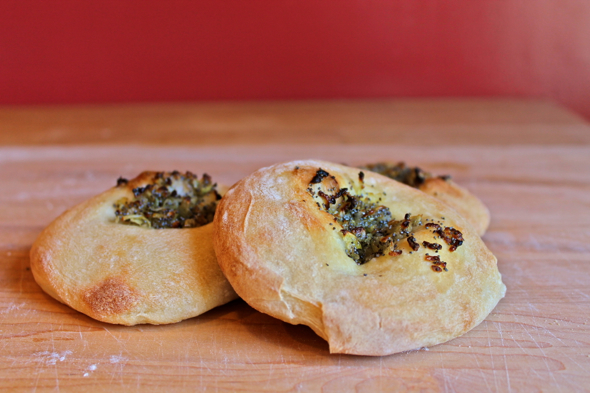
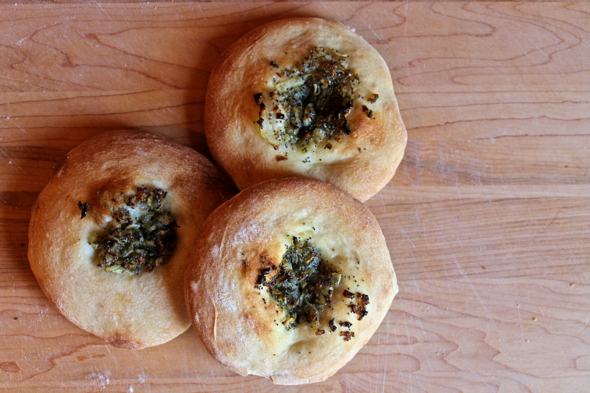
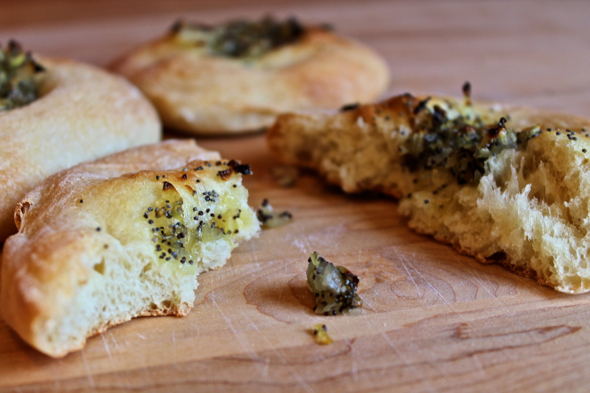
A good bialy is crisp on the outside, slightly chewy in the middle, and light throughout. The dough should have a deep flavor, like good artisan bread. The filling should be a nice dollop of sweetly sautéed onions and a touch of poppy seeds. That’s it. Those simple elements combined make one of the most pleasing savory baked goods known to all of humankind, which is why, I believe, the bialy tends to be grossly mishandled most of the time. Each element of a bialy needs to be top notch, giving every bite a component of flavor that stands strong with its companions to complete the overall taste experience.
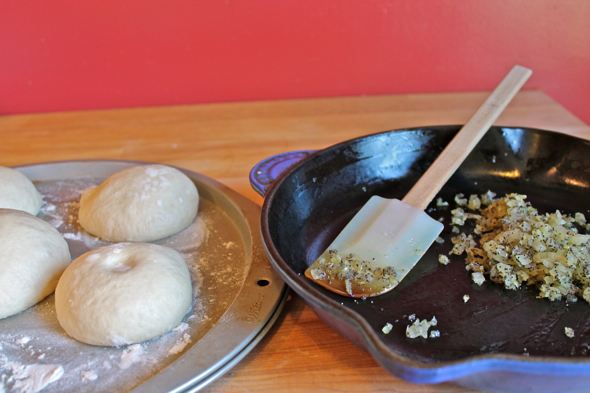
These bialys, from Rose Levy Beranbaum, do just that. They are perfect in every way, from their chewiness to their strong flavor profiles. If I could go back in time and swap these into the pastry case at my old job, I totally would, just so people could have a proper bialy experience instead of the weird, bland, cheesy one that was sadly offered. Having not mastered the art of time travel, however, I shall simply keep making these lovely little bialys at home, sharing with you and everyone else I know the delights of a classic, delicious bialy.
Last Year: Roasted Eggplant and Tomato Tart

Classic Bialys Recipe

Adapted slightly from Rose Levy Beranbaum’s Bread Bible

For the bialy dough:

2 cups bread flour

½ teaspoon instant, rapid-rise yeast

1 teaspoon salt

¾ cup plus 2 tablespoons (7 fluid ounces) warm water

For the bialy filling:

1 tablespoon olive oil

½ cup finely chopped onion

pinch of sea salt

1 teaspoon poppy seeds

generous pinch of black pepper

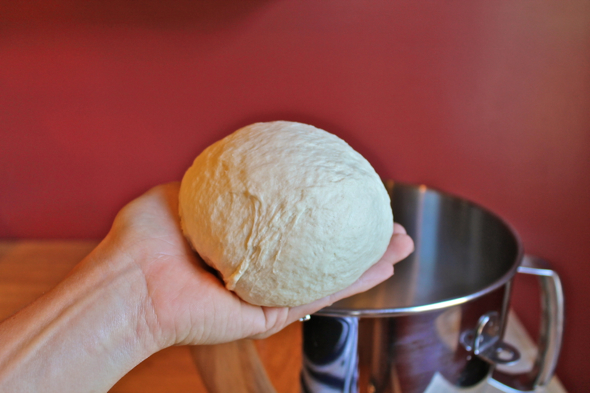
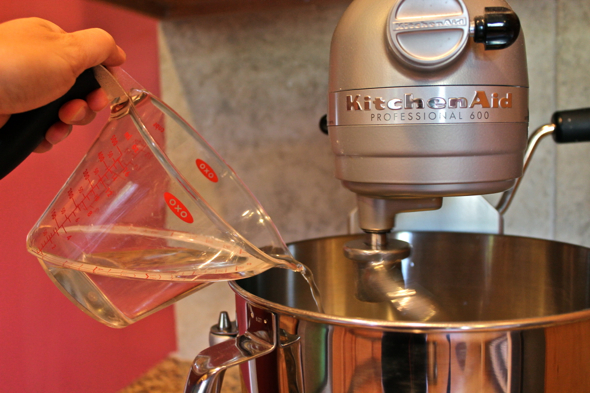
To make the bialy dough, in a large bowl, whisk together the flour and yeast, then whisk in the salt (keeping the salt from coming into direct contact with the yeast as much as possible). If using a stand mixer, fit the machine with the dough hook and turn the speed to low. Kneading on low speed, gradually pour in the water, mixing for about 1 minute until the flour mixture is moistened. Increase the mixer speed to medium, and knead for 7 minutes. If kneading by hand, once the flour mixture is moistened, turn dough out onto a floured surface and knead for 8 to 10 minutes. The fully kneaded dough should be soft and elastic, and should not stick to the bowl or surface when being kneaded.

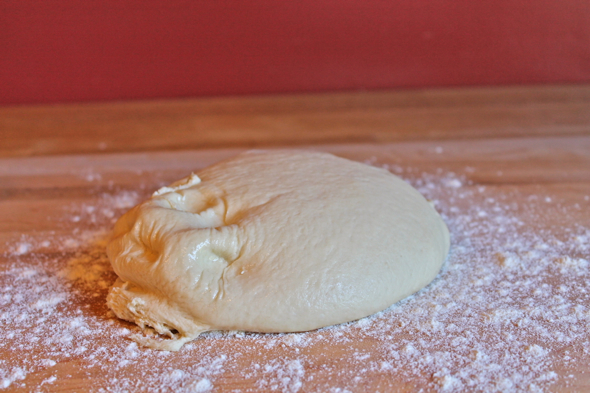
Place dough in a lightly oiled bowl, turn to coat with oil, then cover with a lid or plastic wrap and allow to rise for about 2 hours, or until the dough has doubled in size.

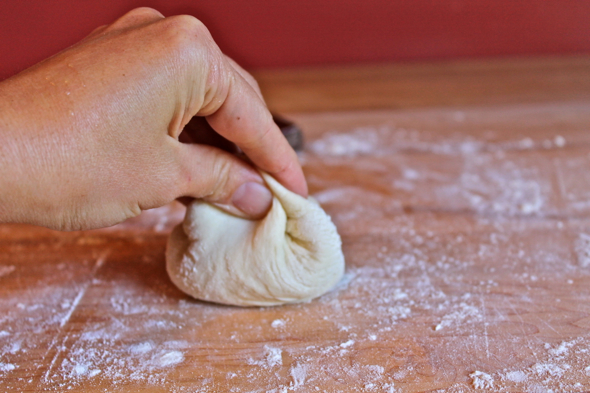
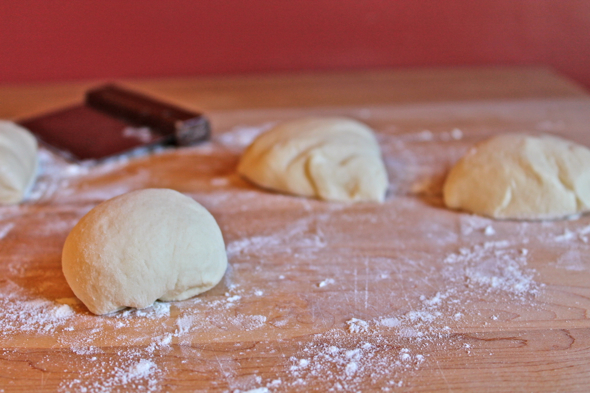
Firmly press on the dough to deflate it, then transfer it to a floured counter. Cut the dough into 6 equal pieces. Working with one piece of dough at a time, keeping the remaining dough covered, round each piece of dough by pulling the dough together to form a pouch, stretching it make a smooth skin, then pinching it together where the edges meet. Set each round on a floured baking sheet or tray, pinched side down. Lightly flour the tops and cover with plastic wrap.

Allow bialys to rise for around 2 hours, or until almost doubled in size. When pressed lightly in the center, the bialy should keep the impression.

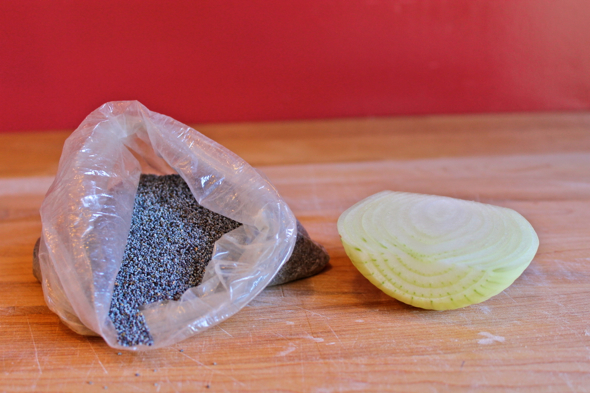
While the bialys are rising for the second time, make the filling. In a small sauté pan, heat the olive oil. Add the onion, add the pinch of salt, then sauté over medium heat, stirring often, for about 5 minutes, or until translucent. Remove from heat, add the poppy seeds and pepper, then stir to combine. Set aside to cool.

Preheat oven to 475 degrees Fahrenheit. Before preheating, place a heavy sheet pan on the floor of the oven. Adjust an oven rack to the lowest level, and place a heavy baking sheet or baking stone on the rack to preheat along with the oven. Line a rimless or overturned baking sheet with a piece of parchment paper, and set aside.

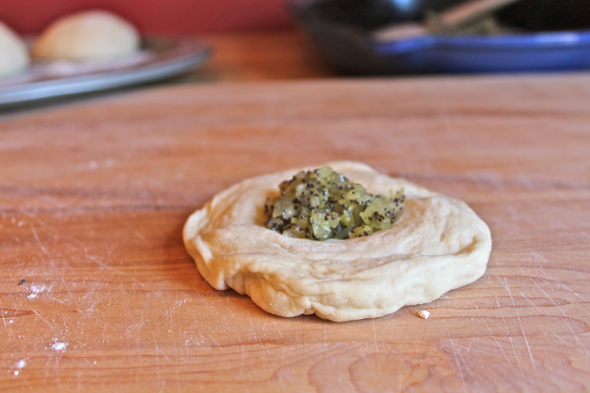
Working with one piece of dough at a time, hold a piece of dough with both hands. With your thumbs in the middle and almost touching, pinch the center of the dough tightly between your thumbs and first two fingers and stretch the dough to around 5 inches in diameter, forming a crater in the center. Place the shaped dough on the parchment-lined baking sheet. In the center crater of the bialy, spoon a heaping teaspoon of the onion-poppy seed filling. I made three bialys at a time, since I only wanted to bake three bialys at a time.

To bake the bialys, slide the parchment with the bialys directly onto the hot baking stone or heavy baking sheet. Toss a handful of ice cubes onto the hot baking sheet placed on the oven floor (or, if you are way of misplacing the ice cubes, carefully tip the ice cubes from a small plate onto the hot baking sheet placed on the oven floor), then immediately shut the oven door. Bake the bialys for 8 to 10 minutes, or until golden and mottled with brown spots.

Remove the bialys from the oven on their parchment, then discard parchment paper and place bialys on a wire rack to cool until just warm.

Bialys will keep for a day at room temperature, but they are best (read: super phenomenally good) eaten the day they are made.

Makes 6 bialys.

Apple and Toasted Oat Cookies with Penuche Frosting

26 Sep

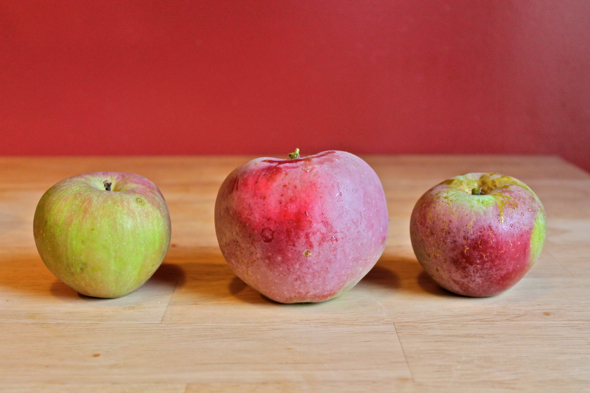
A few years ago, we were lucky enough to be gifted a beautiful Akane apple tree. Akanes are a fantastic type of apple—sharp, only lightly sweet, and boasting a fantastic crunch. Last year we ended up giving a great deal of our tree’s apple harvest to our son’s school, but this year we will be in charge of eating these crisp little fellows on our own. I have no complaints about this. Akane apples are great when plucked from the tree and eaten straight away, but they are also superb for baking. Their less-sweet flavor lends itself well to being folded into baked goods, and their firm flesh is a champ at holding its shape and resisting the urge to melt into mush when exposed to hot temperatures.

Which makes me wonder: When did the pumpkin become the official food of autumn? It seems as though the mere mention of autumn will unleash the squash recipes with full force. Summer is barely over, and yet it is impossible to walk down the street from my house without seeing coffeehouse after coffeehouse after bakery practically screaming the virtues of pumpkin. Pumpkin bread is mighty fine, I admit, but what about the other fruits of the season? Have we forgotten about the apples and pears?

Truthfully, I think I do actually understand the tendency to learn towards pumpkins when autumn makes its first appearance. Due to the fact that one is able to make year-round purchases of apples and pears at the grocery store, the pumpkin harvest is a more notable signifier of the arrival of a new season. Pumpkins signal something, whereas apples, well, apples just mean apples.

Not that they have to. Those apples you’re getting at the market in June are nothing compared to the apples that first start showing up in September and October. June apples have been sitting in storage for months, ever since the previous year’s harvest ended, but September apples have only just barely been freed from their trees. Like warm June strawberries plucked fresh from a backyard patch, fresh September apples are a revelation in apple-eating.

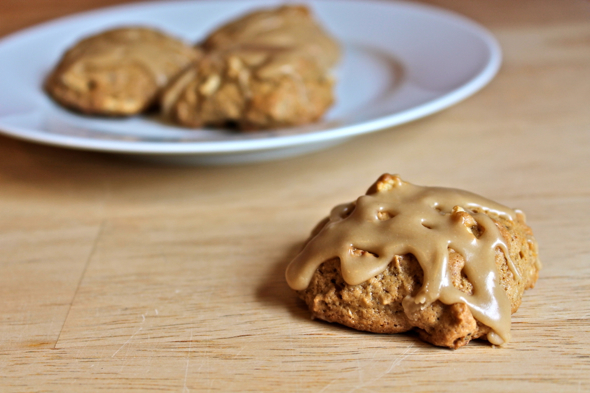
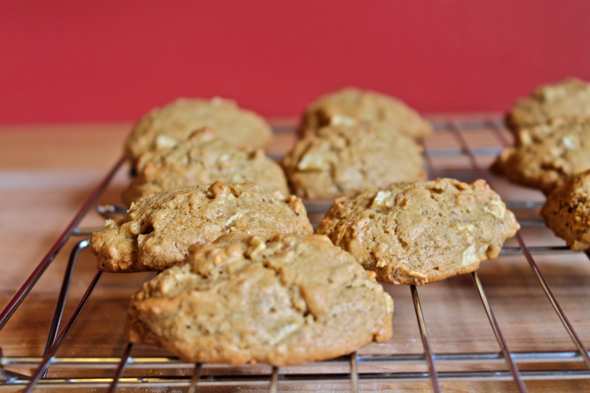
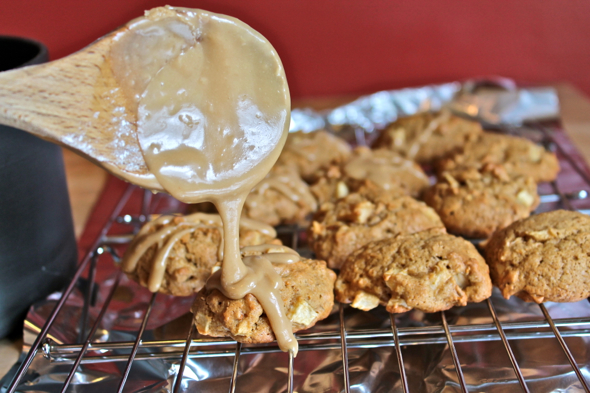
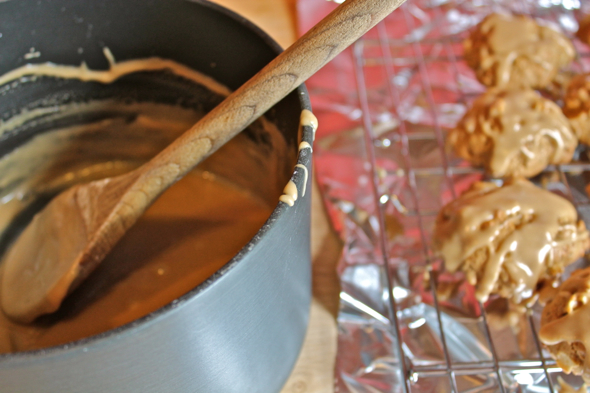
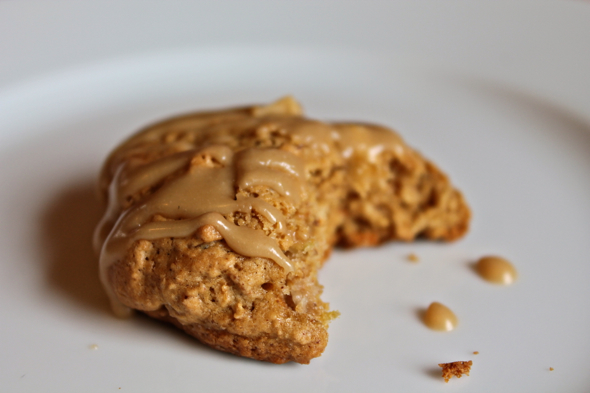
However, if you’re like me and you did not manage to treat your apple tree in time to ward off spring’s deluge of codling moths (note: I treat my apple tree with an organic insecticide called Spinosad, which is unfailingly effective if you treat the tree before the moths arrive to lay their eggs, which I, unfortunately, was not able to do), sometimes you have to do a bit of slicing and dicing in order to enjoy your homegrown apples. A cookie like this, with bursts of apple and the heartiness of oats and whole wheat flour, is the perfect welcome mat for autumn’s new fruit. Drizzled with a slip of caramel-tinged penuche frosting, it tastes like the arrival of autumn, all wrapped up in a tidy cookie package.

Last Year: Balsamic-Glazed Chicken and Zucchini with Grilled Limes

Apple and Toasted Oat Cookies with Penuche Frosting Recipe

1 cup rolled oats (not quick cooking)

1 cup lightly packed dark brown sugar

1 stick (8 tablespoons) unsalted butter, at room temperature

¼ cup milk

juice and finely grated zest of 1 lemon

1 large egg

1 teaspoon pure vanilla extract

1 ½ cups unbleached all-purpose flour

1 cup whole wheat pastry flour

1 teaspoon baking soda

1 teaspoon ground cinnamon

¼ teaspoon ground ginger

pinch of nutmeg

¼ teaspoon sea salt

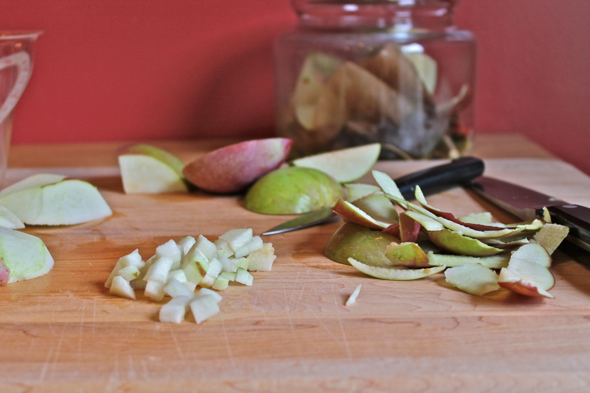
1 ½ cups finely chopped, peeled apple

Penuche Frosting

3 tablespoons unsalted butter

1/3 cup lightly packed dark brown sugar

¼ cup milk

pinch of sea salt

1 ½ cups powdered (confectioners’) sugar

Preheat oven to 375 degrees Fahrenheit.

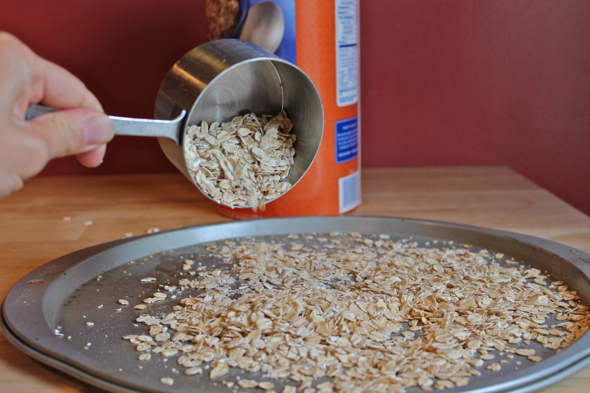
Spread oats in a single layer on a large baking sheet, then toast in the oven until the oats are golden brown, about 8 to 10 minutes. Remove oats from baking sheet and set aside to cool.

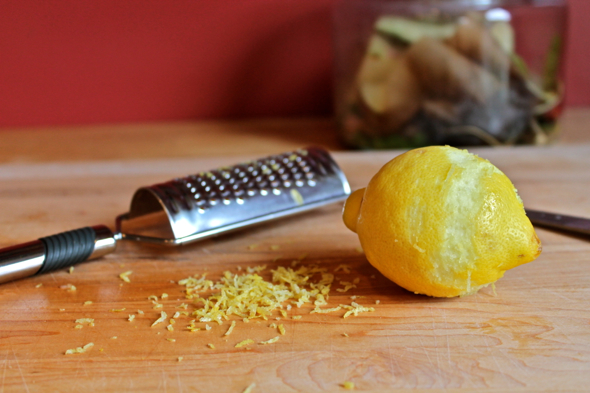
In a large bowl, combine brown sugar and butter and beat until light and fluffy, about 3 to 4 minutes on high speed. Add milk, lemon juice, lemon zest, egg, and vanilla, and beat until combined. Add toasted oats, all-purpose flour, whole wheat pastry flour, baking soda, spices, and salt, then mix well on low speed. Stir in chopped apple.

Drop dough by rounded tablespoon-fuls, spaced about 2 inches apart, onto a parchment-lined baking sheet. Bake cookies in center of oven until lightly golden, about 10 to 13 minutes. To ensure even baking, only bake 1 sheet of cookies at a time. Remove to a wire rack to cool.

While cookies are cooling, make penuche frosting by combining butter and dark brown sugar in a medium saucepan. Over medium heat, stir to combine the two, allowing mixture to come to a light boil. Boil for 1 minute, stirring constantly, until mixture has thickened slightly. Remove from heat and set aside to cool slightly.

After mixture has cooled for about 10 minutes, add milk and beat until smooth, then add powdered sugar and beat until mixture is smooth and combined.

Using a large spoon, drizzle cooled cookies with penuche frosting.

Makes about 3 dozen cookies, depending on how generously the tablespoon-fuls of dough were portioned out.

Cheddar Apple Cornmeal Bread

24 Sep

Sometimes I just want to bake something. It doesn’t matter what, really. There are days when, faced with an open stretch of an hour or so, I just want to root around in the pantry, see what jumps out at me, then bust out the flour and create something that I can put in the oven. Maybe it’s the comfort that baking suggests, what with the emanating warmth of a heated oven and the lingering scent of something slowly baking and waiting to greet you. Or maybe it’s just that I have so little free time these days, when I have an open moment, my brain automatically commands: MAKE SOMETHING.

Unromantic as that last notion may be, I am glad to have whatever urge it may be that compels me to create new foods. It keeps my creativity sharp, sure, but it also brings me so much joy to be measuring, mixing, and anticipating what new thing I have just thrown together. Because sometimes that is exactly what happens: I find things, I put them together, and I wait to see what emerges. My efforts are not always successful (remind me to not tell you about the time I put dried pears in a batch of cookies and ended up with cookies that tasted as though they were studded with chunks of fibrous cardboard), but, as with this bread, when they are successful, it certainly makes my day feel that much more complete.

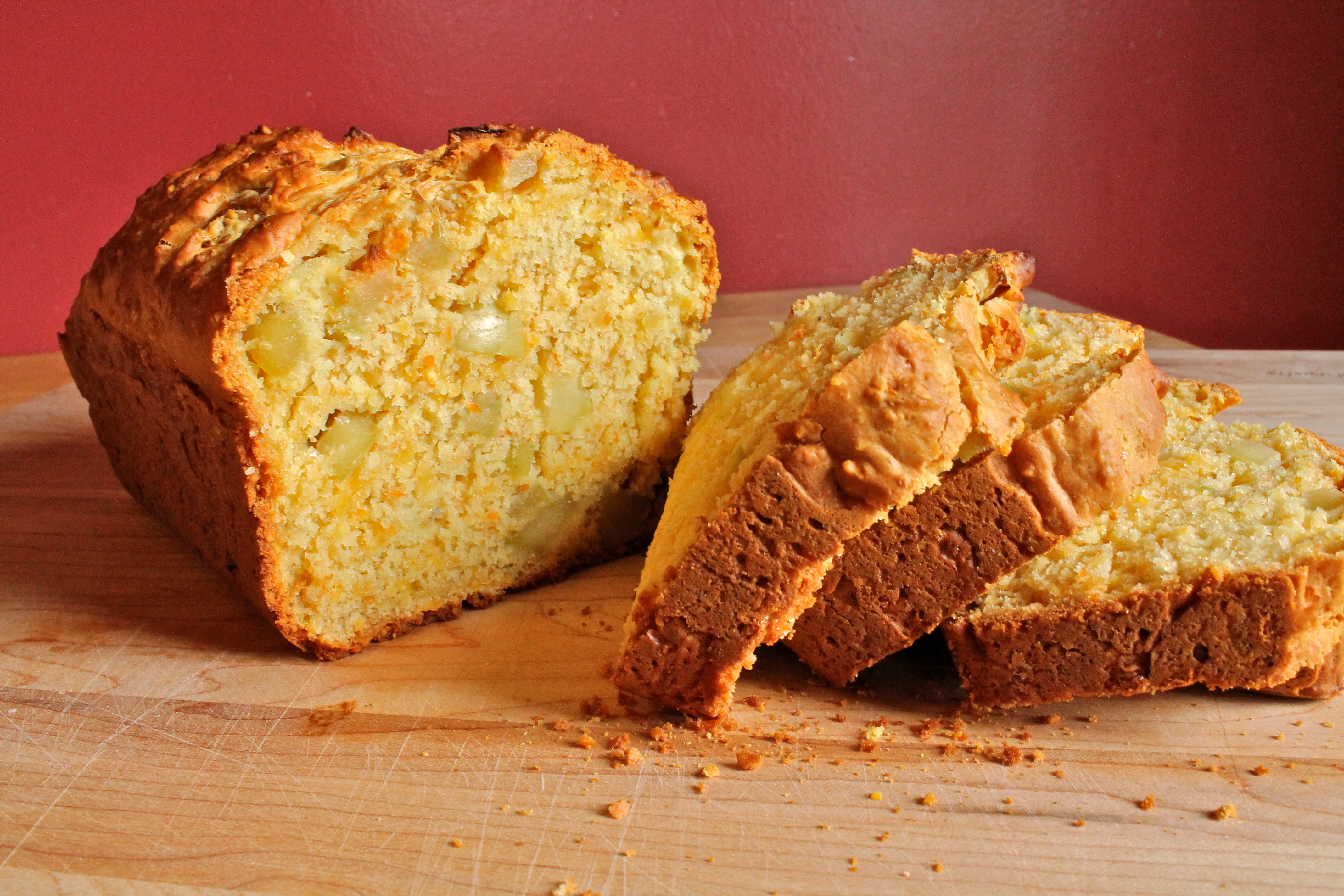
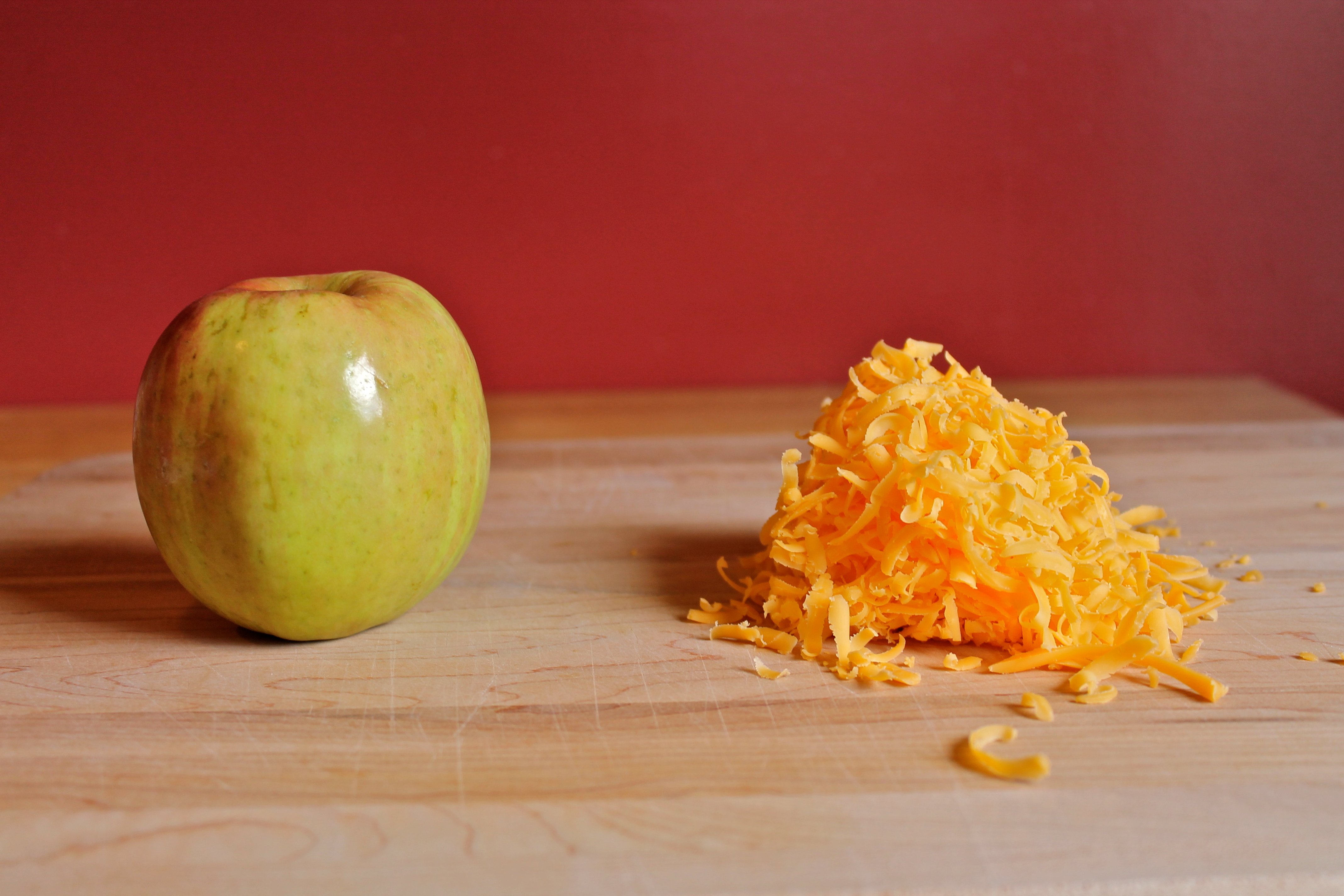
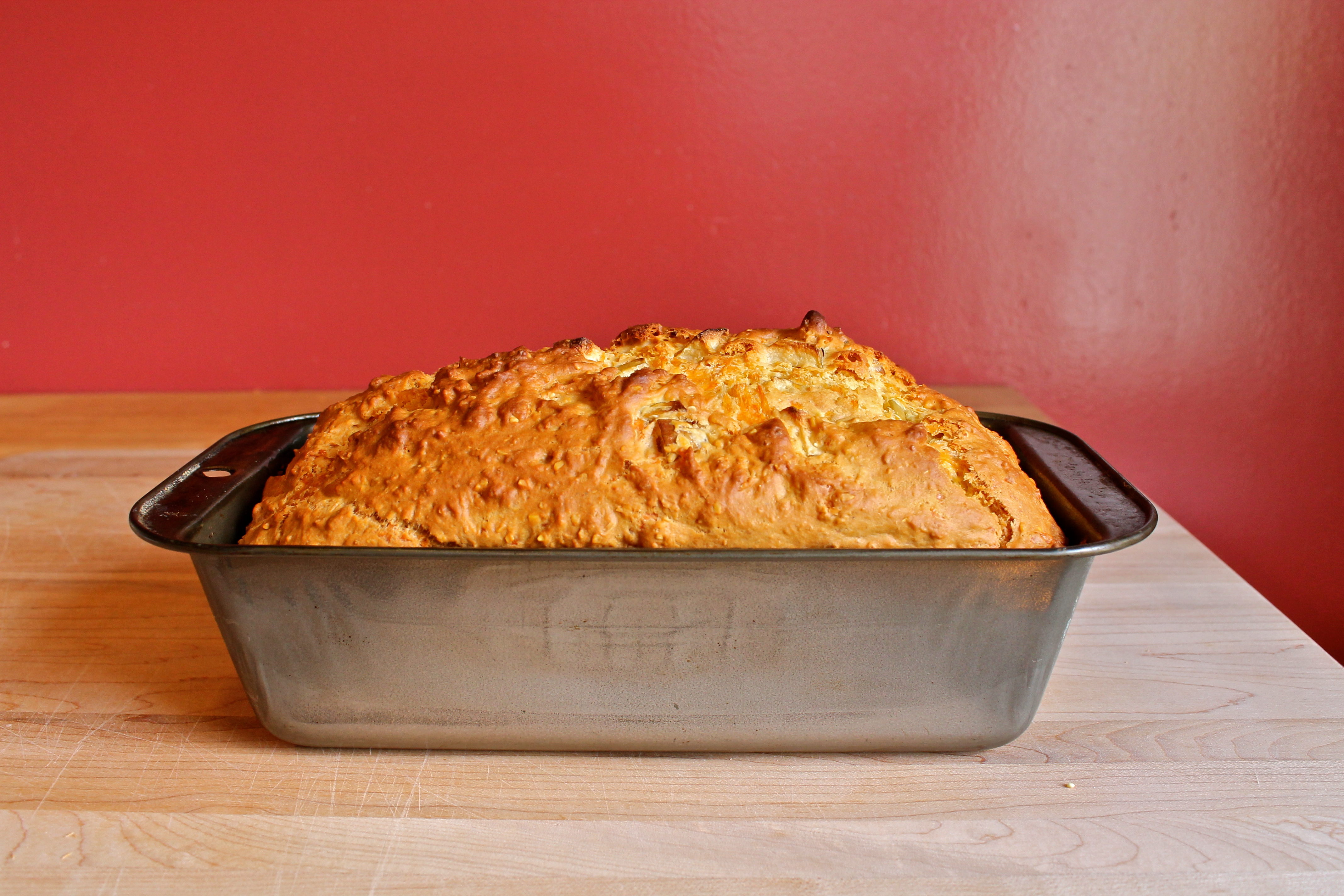
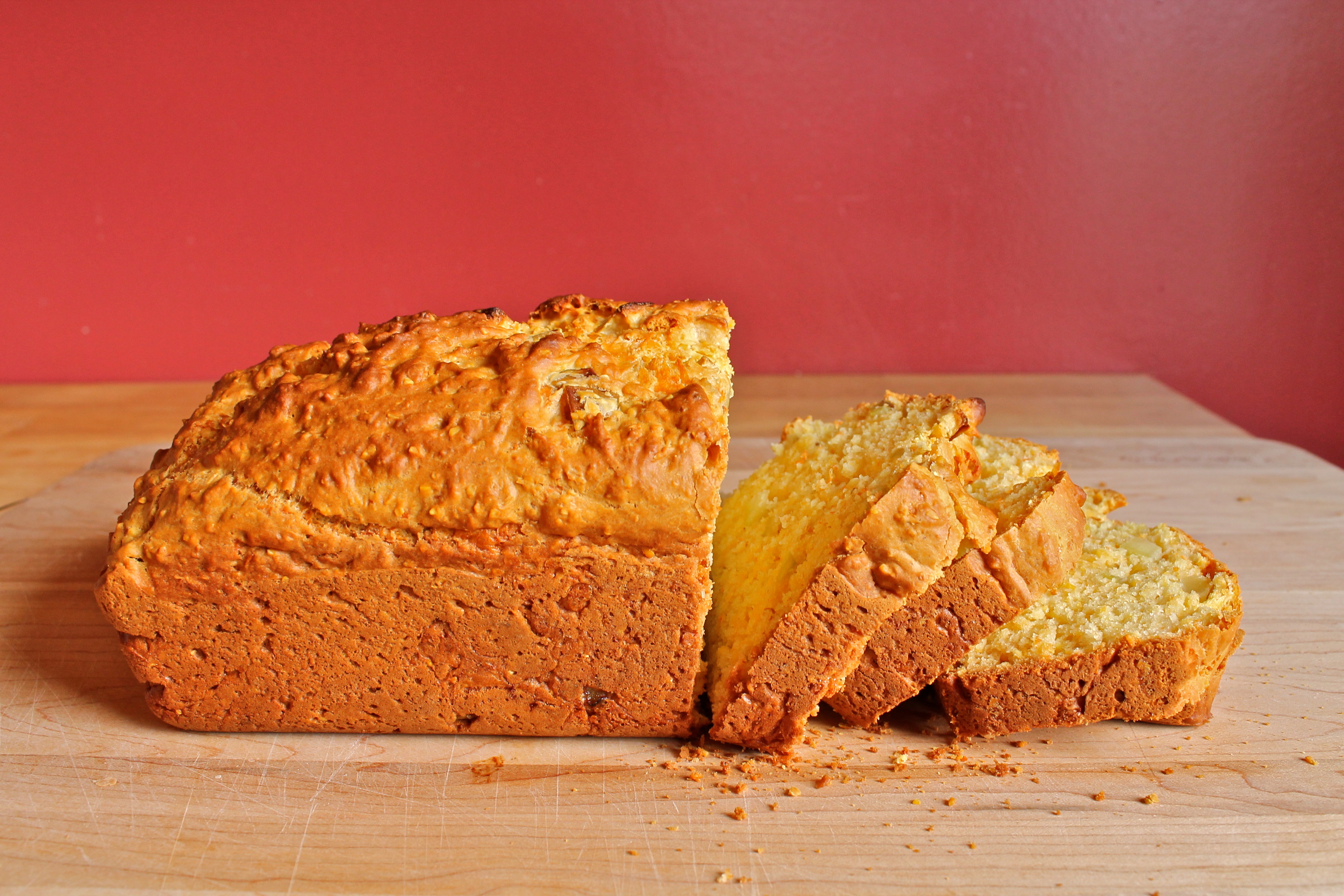
So: the bread. I had an apple, I had some cheese, and I wanted to bake something. A tour of the pantry lead me to some cornmeal, and, with the knowledge that I had only a single egg left in the refrigerator, I decided that some sort of batter bread was in order. Heavy on textural variation, this bread is not a cornbread, per se, but neither is it a standard batter bread. Chunks of apple and streaks of sharp cheddar cheese lend the bread a comforting flavor, and, along with the cornmeal, they add a sunny brightness to the appearance that I did not anticipate. Added along with the fine crumb, wonderful toothsome bite, and delicately savory/sweet flavor, it was the final element of a pleasingly successful afternoon experiment, and one I certainly plan on revisiting in the months to come.

Last Year: Lime Coconut Tart and Everything Flatbread

Cheddar Apple Cornmeal Bread Recipe

1 cup shredded sharp cheddar cheese

1 medium apple, peeled, cored, and diced into ¼-inch chunks (about 1 cup apple chunks total)

2 cups unbleached all-purpose flour

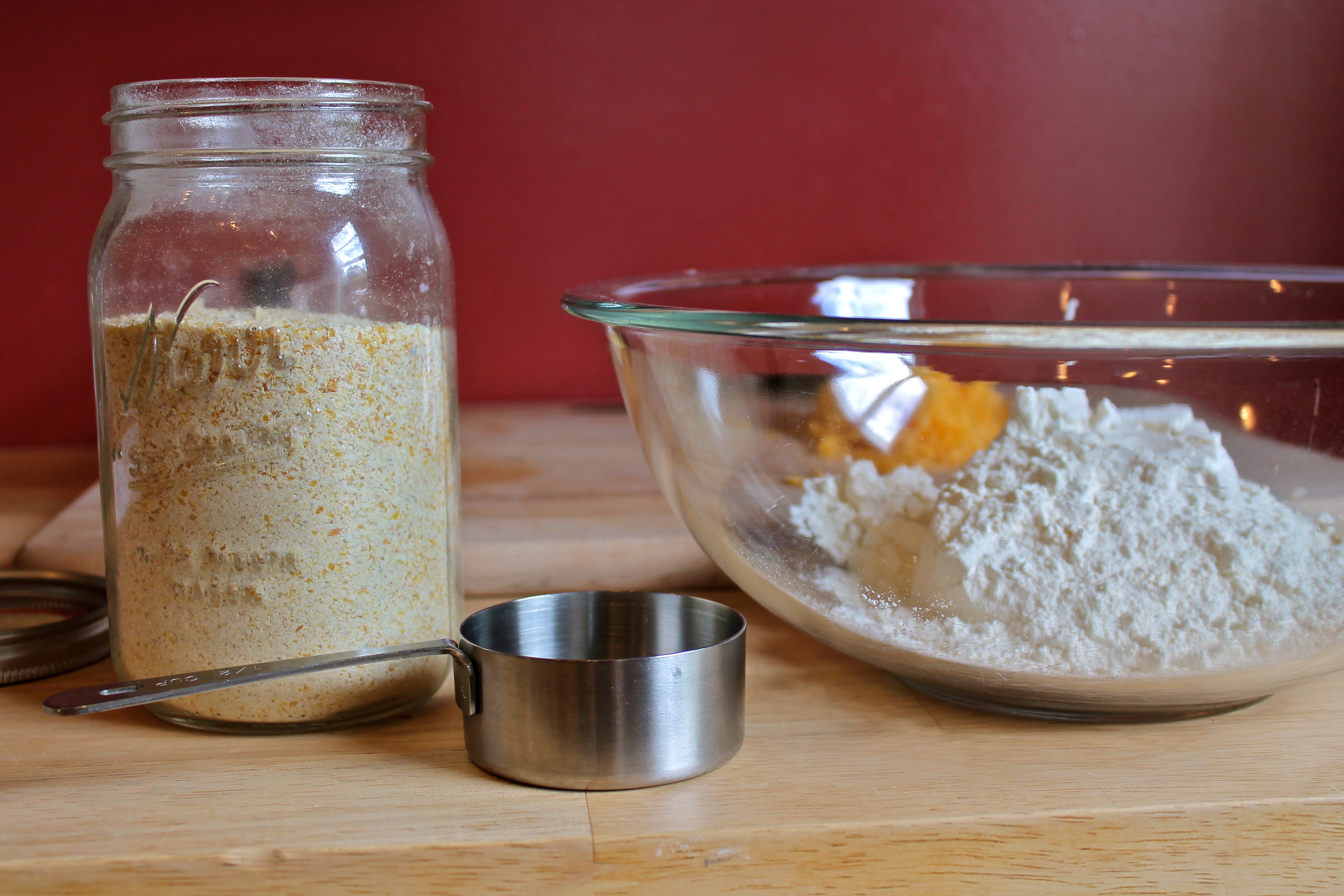
½ cup cornmeal (finely-ground, not polenta)

1 ½ teaspoons baking powder

1 teaspoon baking soda

½ teaspoon salt

1 ¼ cups buttermilk or sour milk

1 large egg

4 tablespoons melted butter, cooled slightly

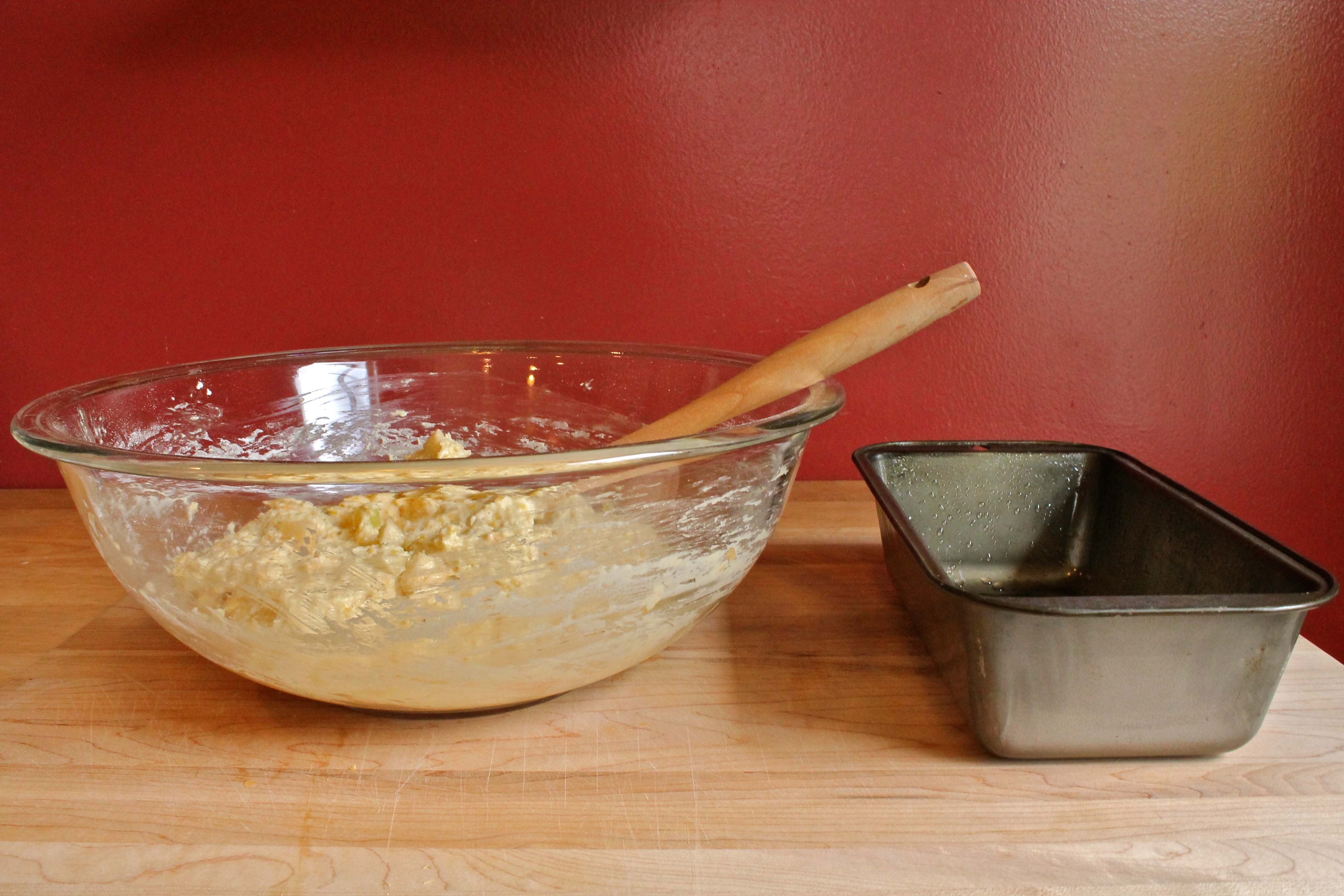
Preheat oven to 400 degrees Fahrenheit. Generously grease an 8 ½” by 4 ½” loaf pan.

In a large bowl, combine the flour, cornmeal, baking powder, baking soda, and salt, then whisk to combine. In a medium bowl, whisk together the buttermilk or sour milk, egg, and melted butter. Pour the wet ingredients into the dry ingredients, and, with a spatula or wooden spoon, stir just to combine.

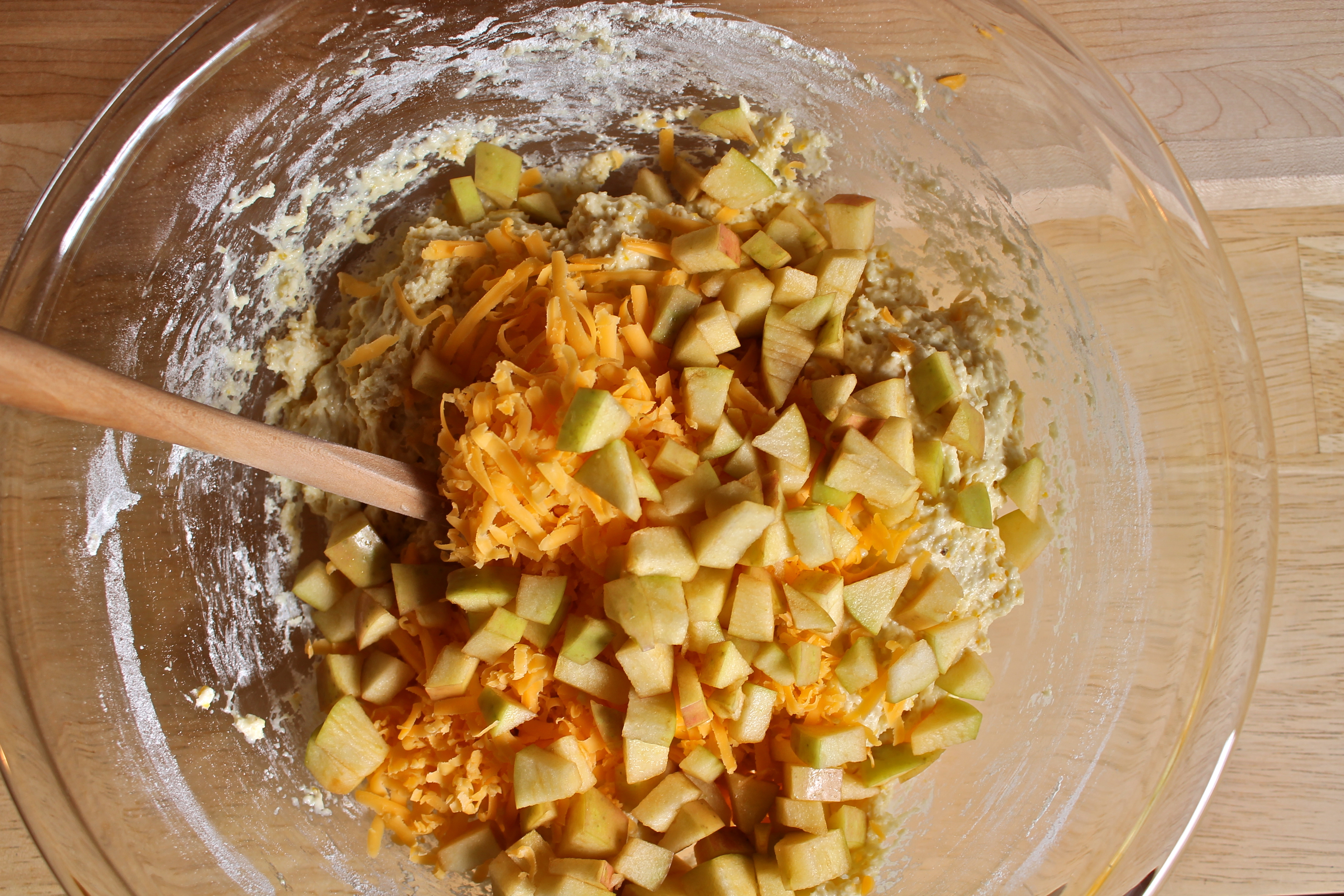
Fold the shredded cheese and diced apples into the batter until they are fully incorporated, being careful not to overmix the batter as you fold.

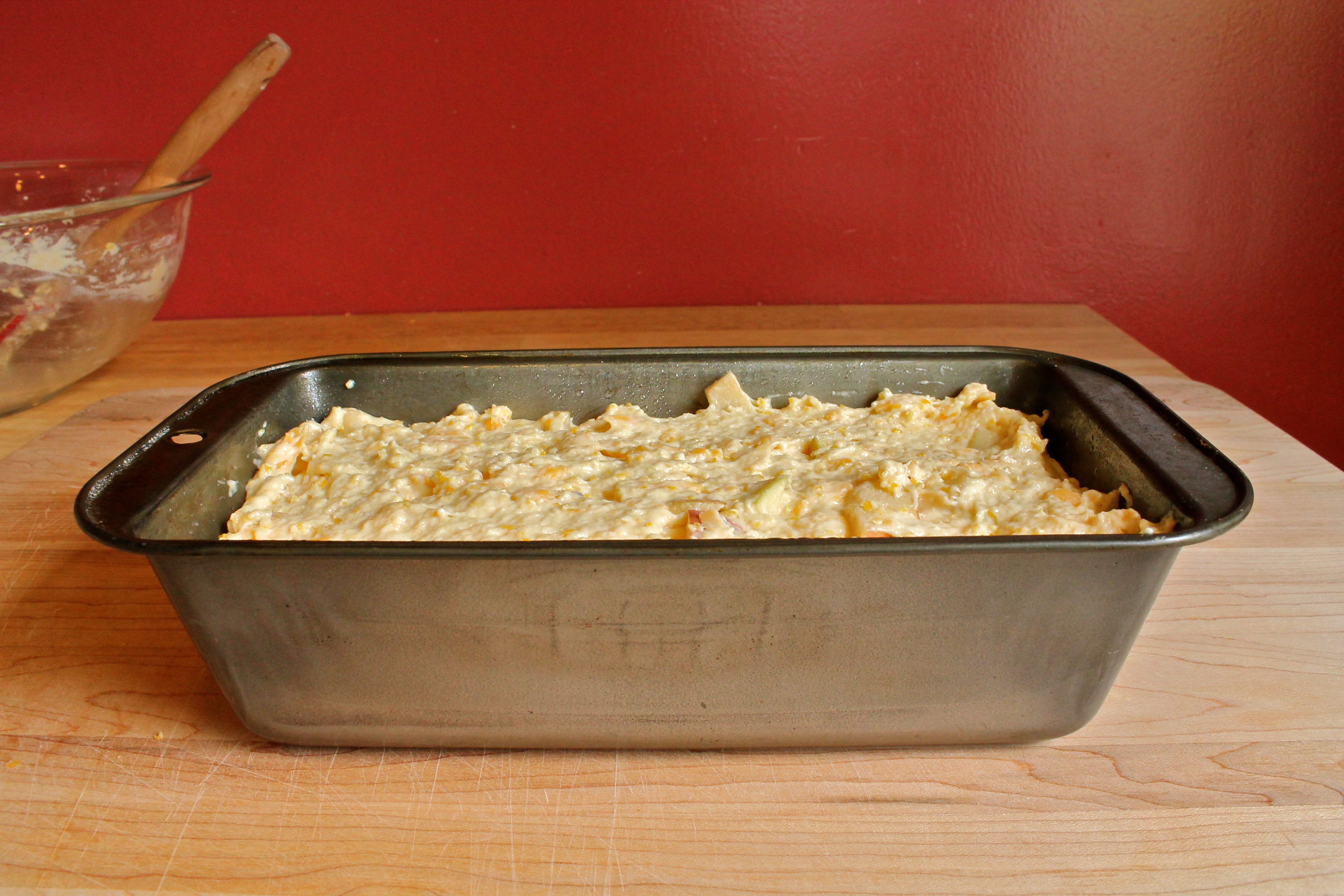
Pour the batter into the prepared loaf pan, then smooth the top as much as possible.  Bake in the center of the oven for 40 to 50 minutes, rotating halfway through. The bread will be done when the top is tall and golden brown and a toothpick or cake tester inserted into the bread emerges with just a small amount of moist crumbs attached.

Cool the bread in its pan for 5 minutes, then turn out onto a wire rack to finish cooling. Bread is best when served ever-so-slightly warm, or at room temperature.