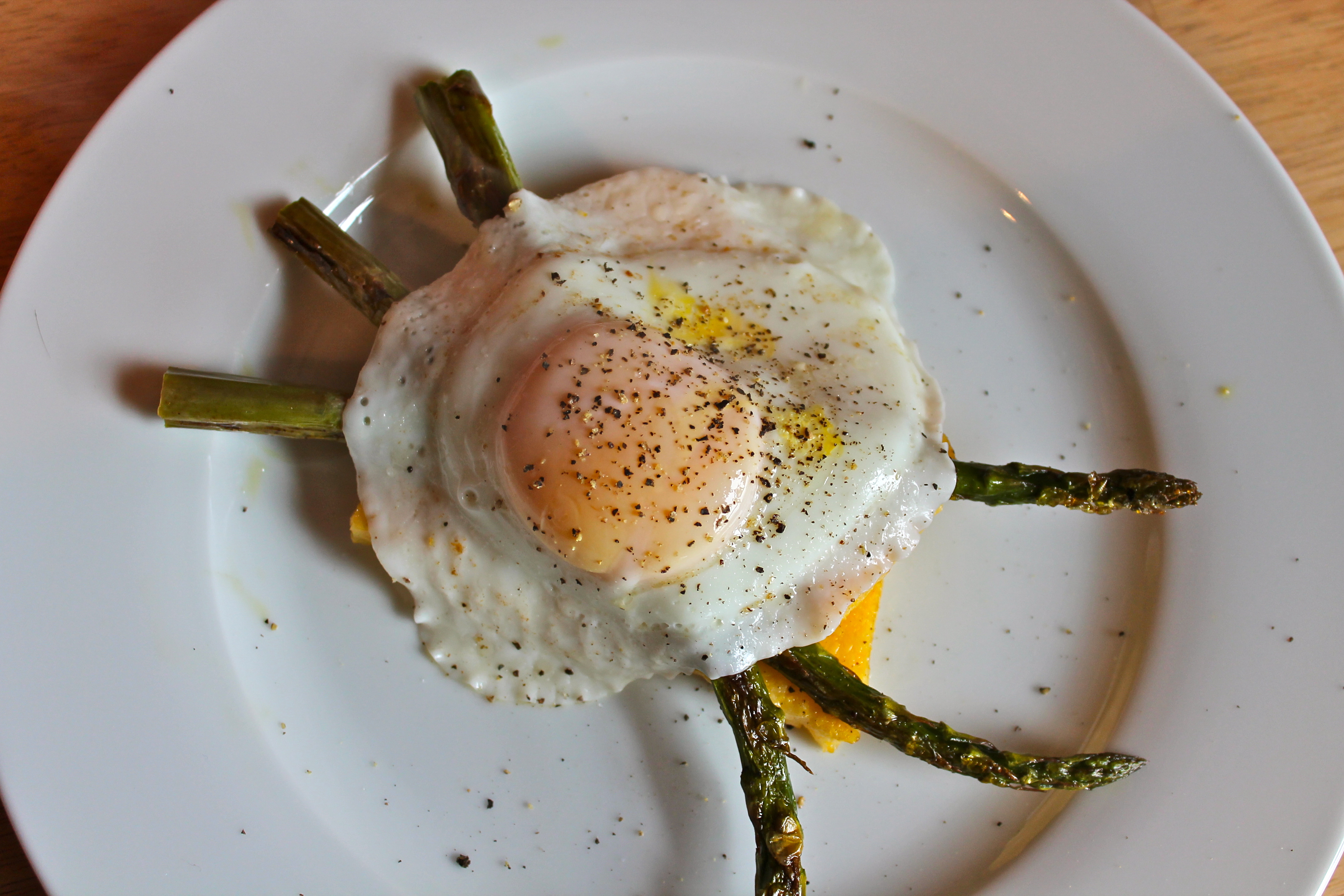
Polenta Toast with Roasted Asparagus and Fried Eggs

22 Mar

Most people, I assume, remember the joy of being a child and getting to indulge in the rare treat of breakfast-dinner.  This, of course, was a dinner made up entirely of breakfast foods, from pancakes to scrambled eggs and toast, or, for the luckiest among us, waffles and fruit.  As an adult, I still love eating breakfast-dinner, only now, much to the disappointment of my younger self, my idea of breakfast-dinner seems to have reversed itself.  My preferred breakfasts are now decidedly more dinner-like, making my breakfast-dinners only slightly so.

The turning point for my love of a dinner-breakfast (it only seems right to reverse it while discussing how it came to be) was an absolutely delightful breakfast I had at a French place a few blocks away from my house.  The breakfast consisted of risotto cakes, topped with poached eggs, accompanied by a side of roasted butternut squash.  Aside from the eggs, it was not what I would have previously considered a particularly breakfasty breakfast, but I count it among one of the best breakfasts I have ever eaten (many times, for now I find myself unable to order anything else whenever I set foot in that restaurant during breakfast hours).  Something about that meal set my breakfast notions in a different direction, and now the place where my idea of breakfast meets my idea of dinner is all shadowy and muddled.  Basically, they’ve become one in the same.

It was in this shadowy place that I became a huge fan of making both breakfast-dinner and dinner-breakfast into a showcase for crisp squares of polenta that were topped with whatever I could find in the fridge, then finished with a fried or poached egg.  If I have spare greens in the fridge, I sauté them with a bit of garlic and throw them over the polenta.  Roasted summer squash is a fine addition here, and a lot can be said for simply sautéing some onions and bell peppers with a generous pinch of red pepper flakes, slathering the end product with a stream of hot sauce, and starting your day (or ending it) with a bit of a kick.  If you desire a simple accompaniment to a light meal, I am very fond of toasting individual slices of polenta, topped with a bit of Parmesan cheese, under the broiler.

Right now, I am loving the tender asparagus that has just started showing up at the market, and I am convinced that there are no better friends to that asparagus than crisp polenta squares and soft-cooked eggs.  Together, they make what currently stands as my favorite breakfast, my favorite lunch, and, yes, my favorite dinner.
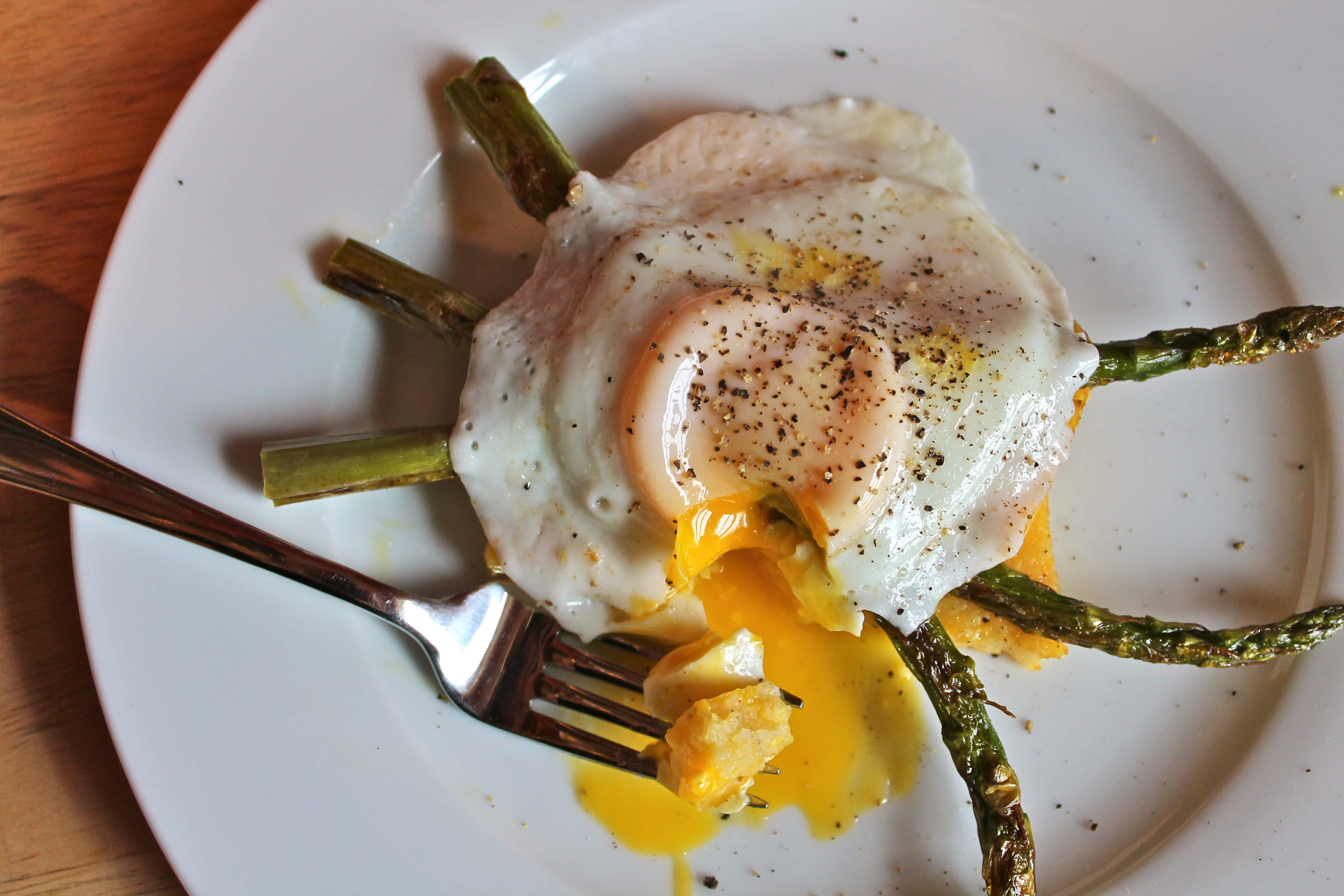
Polenta Toast with Roasted Asparagus and Fried Eggs Recipe

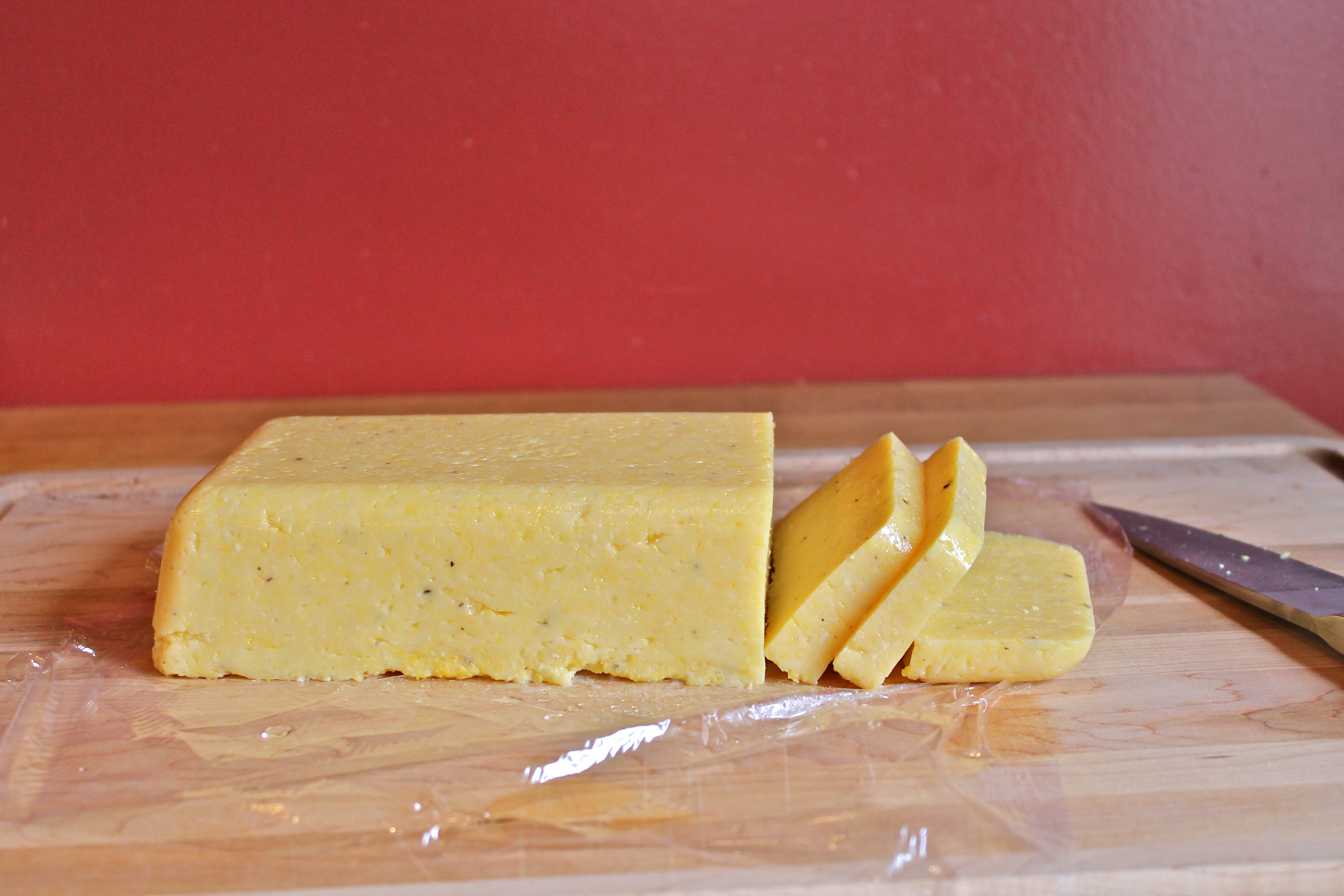
Polenta Toast

Adapted from James McNair’s Breakfast

4 cups water

1 1/3 cups polenta

¼ teaspoon salt

¼ teaspoon freshly ground black pepper

2 tablespoons unsalted butter

Generously butter the sides and bottom of an 8.5” by 4.5” loaf pan, and set aside.

In a medium saucepan, bring the water to a rapid boil over high heat.  Pour the polenta into the boiling water in one continuous stream, stirring with a long-handled wooden spoon as you pour.  Turn the heat down to low, and stir, stir, stir the polenta until it is smooth, thick, and yields a lot of resistance against the spoon.  This should take between 15 and 20 minutes of continuous stirring, being always careful to keep the polenta at a low simmer so as not to allow roiling polenta bubbles to pop up and burn your stirring hand. When the polenta is soft and thick, remove from heat and stir in the salt, pepper, and butter.

Pour the cooked polenta into the prepared loaf pan, then tap the loaf pan gently on the counter to help settle the polenta.  Place a piece of plastic wrap over the top of the polenta, then place it in the refrigerator to firm up.  You could conceivably retrieve your polenta after 5 or 6 hours, but I think it is best to allow the polenta to cool in the refrigerator overnight.

When the polenta is completely cool, gently run a thin spatula or knife around the edges of the loaf to separate it from the pan, then invert the polenta loaf onto a cutting board.  If the polenta remains firmly stuck in the pan, submerge the bottom ¾ of the pan in a pool of warm water, and allow the pan to heat up a bit and help loosen the polenta.

Cut the polenta loaf into slices of your desired thickness.  In a medium skillet, heat a pat of butter over medium heat until it just starts to sizzle.  Add 3 or 4 polenta slices to pan at a time, making certain not to crowd them, and gently sauté on each side until lightly browned (about 3-5 minutes per side).

Top with whatever you desire.

Roasted Asparagus and Fried Eggs

1 pound of asparagus, large ends snapped off

2 tablespoons olive oil

salt and pepper to taste

1 tablespoon unsalted butter

4 large eggs

2 tablespoons water

Preheat oven to 400 degrees Fahrenheit.

On a large baking sheet, combine asparagus, olive oil, salt, and pepper.  Using your hands, toss everything together until uniformly coated with olive oil, then arrange asparagus in a single layer.  Roast the asparagus in the oven for 15 to 20 minutes, until the tips are crisp and browned.

Just before the asparagus has finished roasting, heat the butter in a medium to large skillet over medium-low heat.  When the butter just begins to sizzle, crack the eggs into the pan.  Cook the eggs until the whites begin to firm up but the yolks are still soft, then carefully pour the two tablespoons of water around the eggs and then very quickly place a lid firmly over the pan.  The eggs will sizzle and splatter for another 1 to 2 minutes, until the whites are completely cooked, but the yolks are still runny.  If you prefer a firmer egg, cook it a tad longer.

Place asparagus spears over slices of sauteed polenta toast, then top asparagus with a fried egg.  Add more salt and pepper to taste.

Serves 4, with extra polenta toast left over.

Chocolate Swirled Bread

19 Mar

Not to sound too dramatic about this, but I have a slight confession to make.  You know those deliciously sweet cakes and treats I’ve been sharing with you over the past few weeks?  Like this cake and these waffles and these cookies?  Purely out of curiosity, I made all of those treats with at least 1/3 less sugar (in some cases, even less) than each recipe called for.  And then I served those treats to people without telling them what I had done.  And not one person noticed.  Not one.  Not even I noticed, and, believe me, I tried.  Eyes squinted in concentration, methodically chewing my food and analyzing each bite as though I were a culinary Columbo, I failed to detect even a hint of missing sweetness.  In some cases, even though I had removed a good chunk of a recipe’s sugar, I still thought that a case could be made to take out even more of the sugar.  I know, right?  It just can’t be possible.

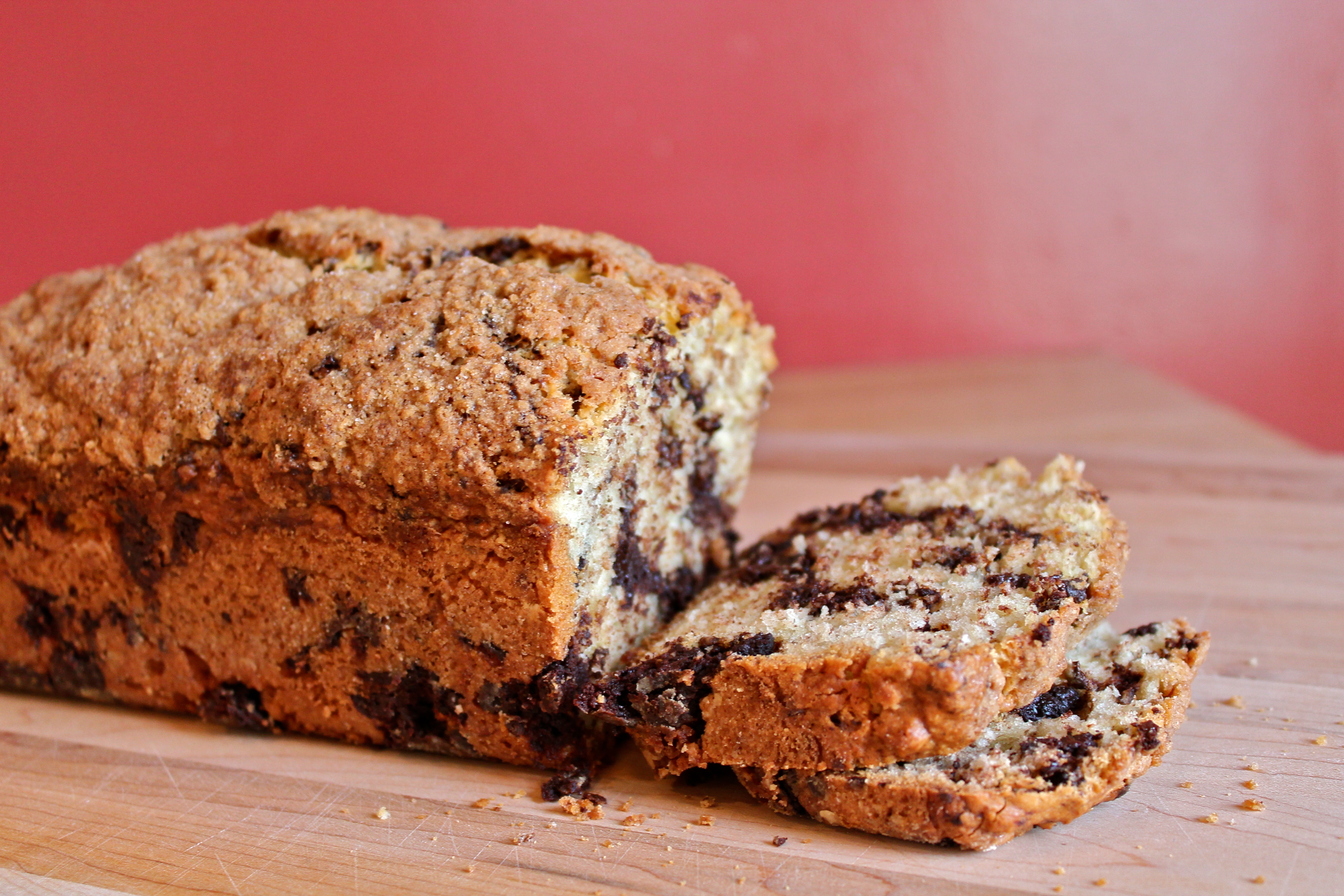
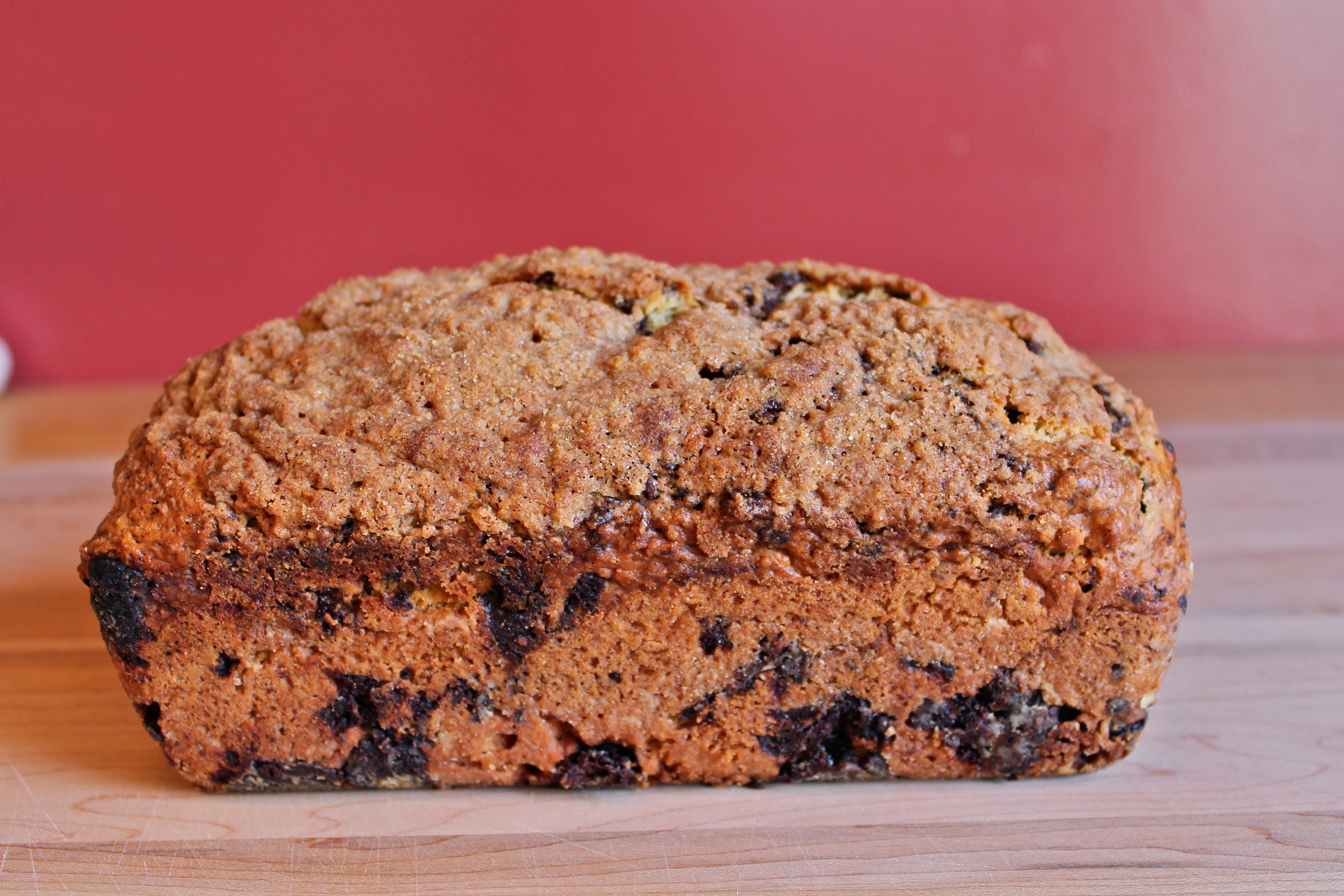
But it is, and there is no better example of this experiment, I believe, than this bread.  Yet another bread in only name (due to the fact that it delightfully toes the line between living as a bread and living as a cake), this is an absolutely wonderful treat with its chunks of bittersweet chocolate, hints of cinnamon, and delicate crumb.  Everything in this bread, from top to bottom, is perfectly sweetened.  A lid of light streusel topping is the perfect antidote to the moist bread beneath, and, with 1/3 of the sugar removed from both the bread and the topping, the crunchy streusel never propels the taste experience from “Oh, this is so delicious,” to “Ouch, call the dentist.”

I am telling you, I’ve totally been converted.  1/3 less sugar.  Do it.  Last week I made reduced sugar chocolate chip cookies and then gave them out to people and, I am telling you, not a single soul knew my secret.  The week before that I made a vegan dark chocolate zucchini cake with 1/3 less sugar and, again, no one was the wiser about the cake’s triple punch of secrets.  I almost feel as though I am getting away with something sinister, only, in reality, I think the opposite is actually true.  If no one misses the sugar, why not keep up with my experiment?  What’s the harm?  And, more importantly, if I am eating 1/3 less sugar with each slice of cake, does that logically mean that I am then able to nibble off a 1/3 more cake and suffer no ill effects?  These are important questions, and I intend to do my best to get to the bottom of them, 1/3 more dessert at a time.

Chocolate Swirled Bread

Adapted from Moosewood Restaurant Book of Desserts

2 large eggs

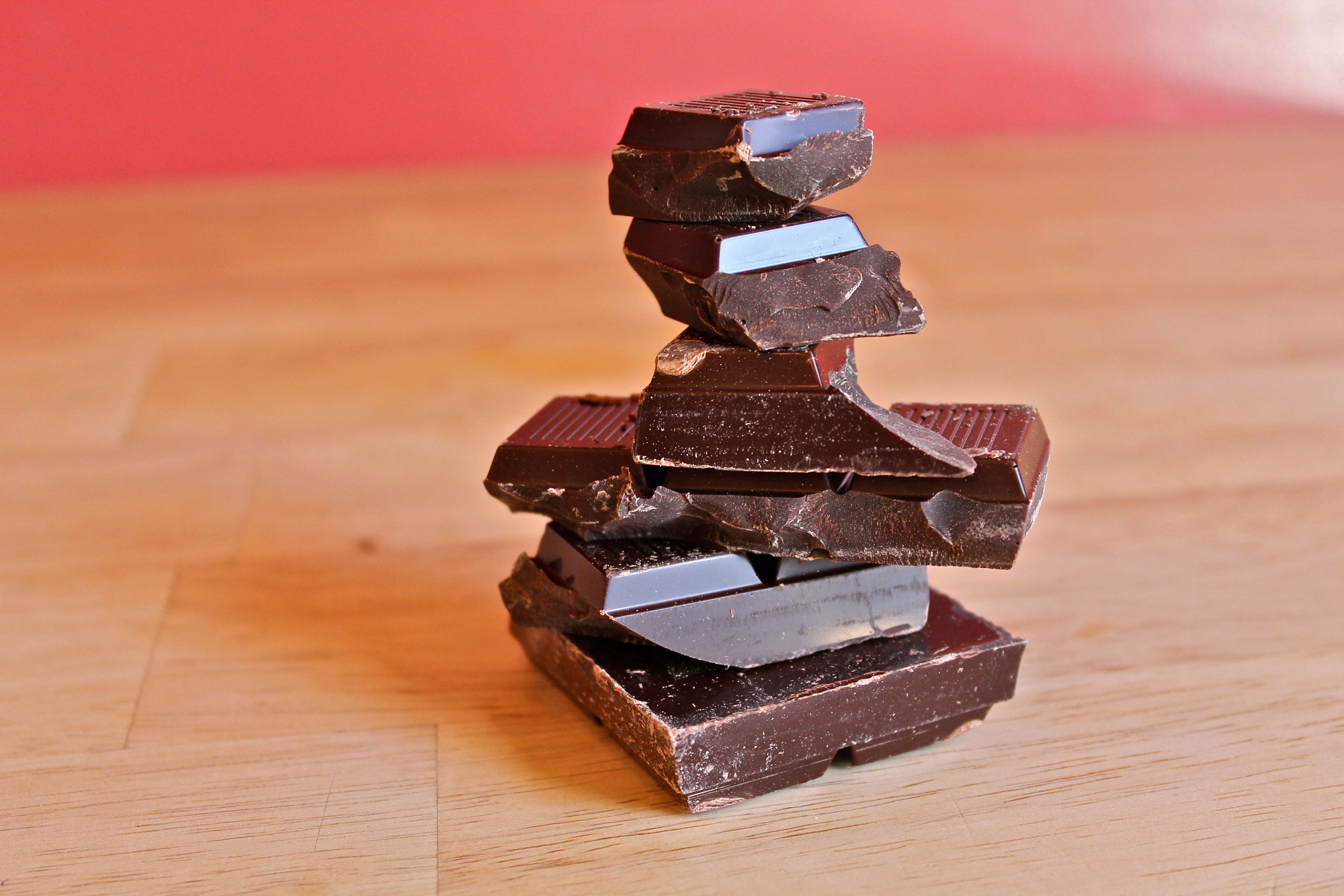
5 ounces bittersweet chocolate, coarsely chopped into pea-sized and smaller pieces

2/3 cup buttermilk or sour milk

¼ cup vegetable oil

1 teaspoon pure vanilla extract

2 cups unbleached all-purpose flour

1 teaspoon baking powder

½ teaspoon baking soda

¼ teaspoon salt

1/3 cup sugar

¼ teaspoon ground cinnamon

Streusel

2 tablespoons unbleached all-purpose flour

2 tablespoons butter

1 tablespoon granulated sugar

1 tablespoon light brown sugar

¼ teaspoon ground cinnamon

Preheat oven to 350  degrees Fahrenheit.  Grease and flour an 8 ½” by 4 ½” loaf pan (Moosewood notes that a 9” by 5” loaf pan would also be all right, so I can only assume that it’s true).

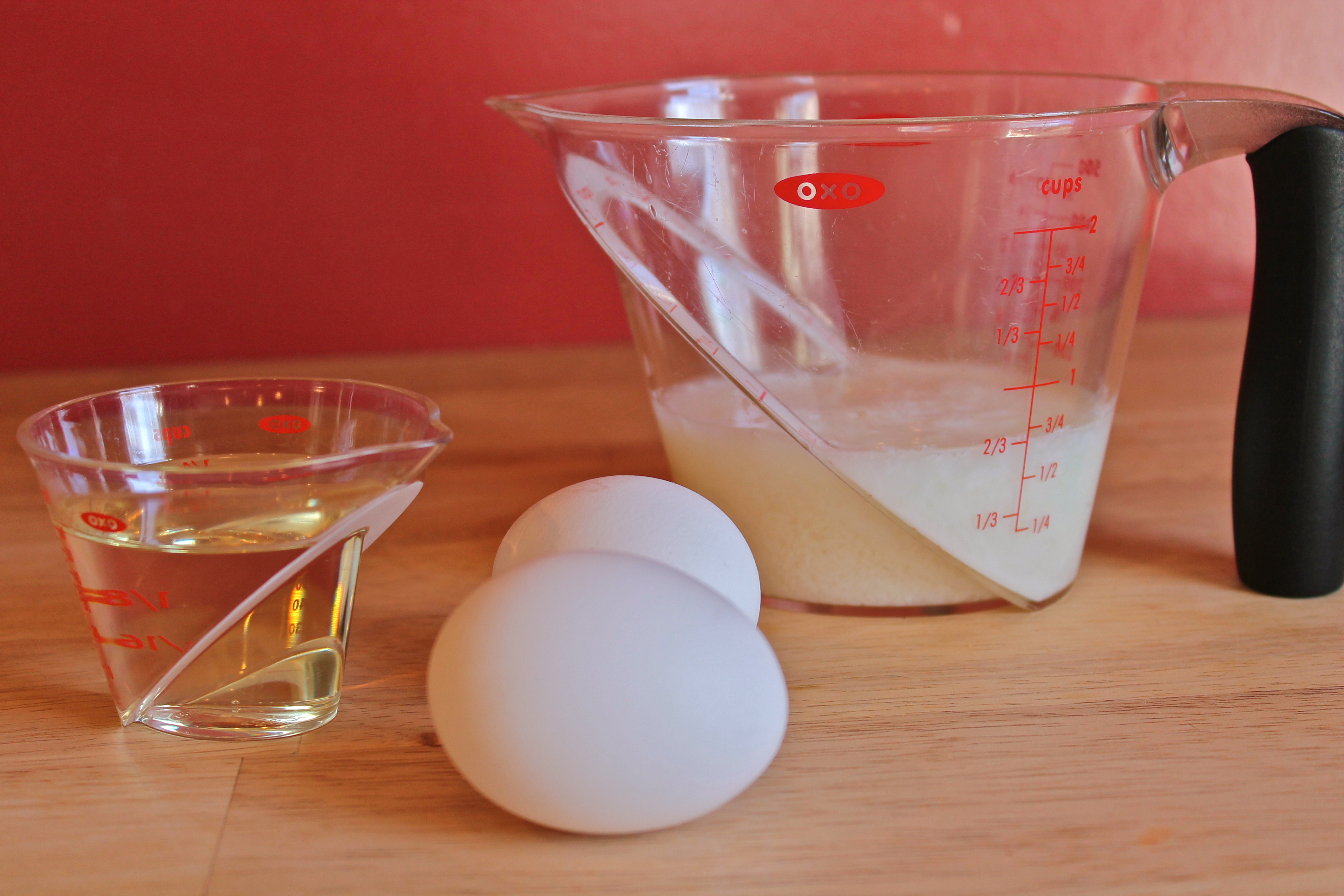
Separate one of the eggs, placing the yolk in a large bowl and the white in a smaller bowl.  Add the chopped chocolate to the bowl with the egg white, mix to combine, then set aside.  To the bowl with the egg yolk, add the second egg, buttermilk, oil and vanilla.  Beat with a fork for at least 1 minute, until well blended.  In a separate bowl, sift together the dry ingredients and set aside.

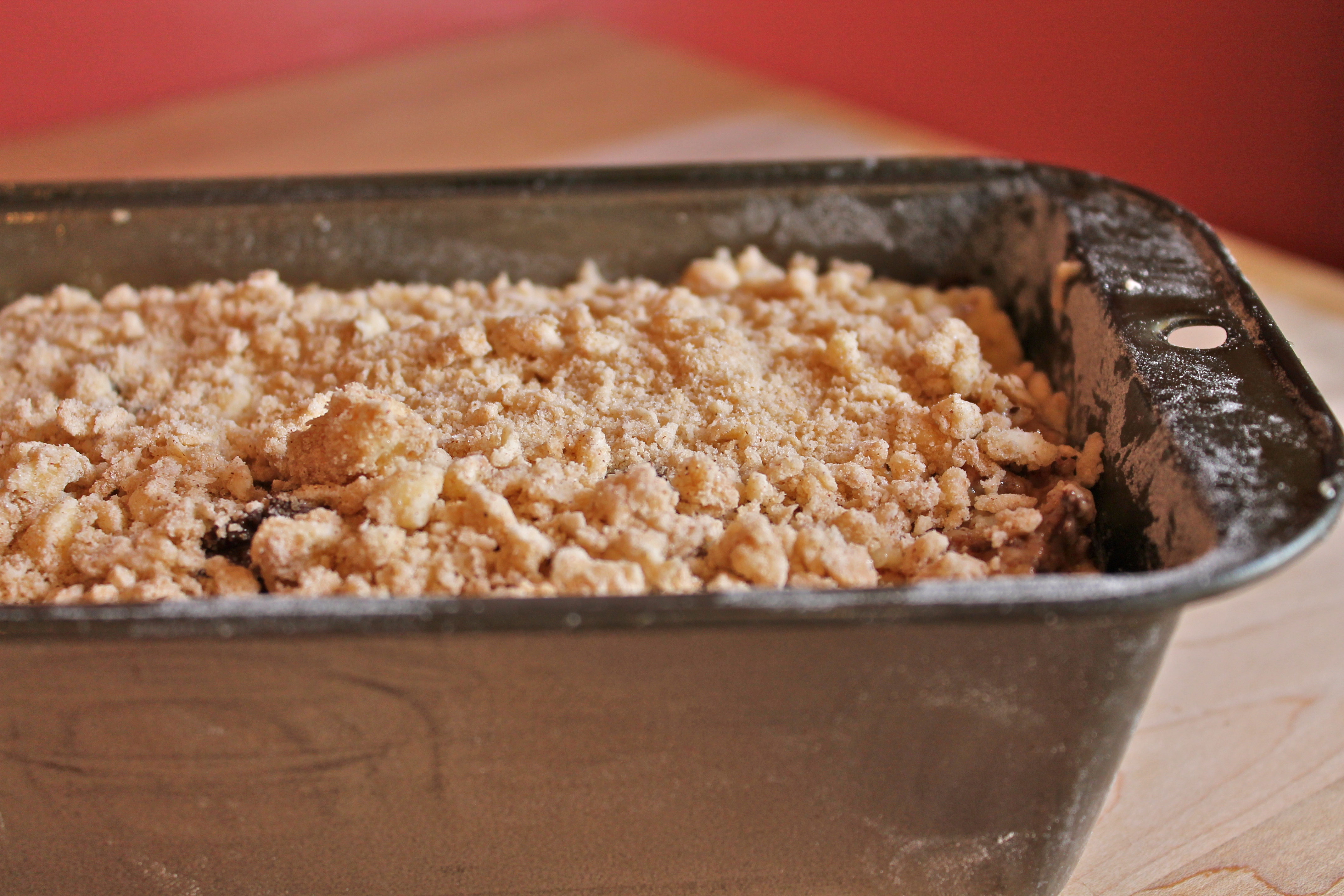
In a medium bowl, combine all streusel ingredients.  Using a pastry blender or two knives, cut the butter into the other ingredients until the mixture turns crumbly, but not too finely textured.  Spread 1/3 of the streusel mixture over the bottom of the prepared loaf pan.  Combine the buttermilk mixture with the sifted dry ingredients and mix until just blended.  Fold the chocolate and egg white into the batter, being careful not to overmix everything and ruin the marbling effect of the chocolate.

Pour the batter into the loaf pan and top with the remaining streusel.  Bake for 50 to 60 minutes, until the bread is firm and pulls away slightly from the sides of the pan.  Allow the bread to cool before removing from the pan.

Recipe Roundup

15 Mar

I could not be happier that March has replaced February, the frosty mornings seem to have drawn to a close, and Spring Training is in full swing (no pun intended).  Portland Farmers Market will be starting up their regular season in just a few short days, and that means I’ll once more be creating seasonal, affordable recipes for them every month of the market’s run.  Until that revs up, you can read my newest piece on the Portland Farmers Market website, wherein I admit that if I had one last meal to eat in my life, it would not be a fancy one.

I am also getting back into the swing of things over at Indie Fixx.  Here are my most recent articles and recipes for Indie Fixx, where you can find my regular food column, Melting Pot.

Indian-Spiced Rolls

Carrots Two Ways

An ode to carrots, plus a great recipe for roasted carrot and garlic spread, and quick pickled Indian carrots (which, by the way, were so good, I had to hide them in the back of the refrigerator so I’d stop eating them for breakfast).

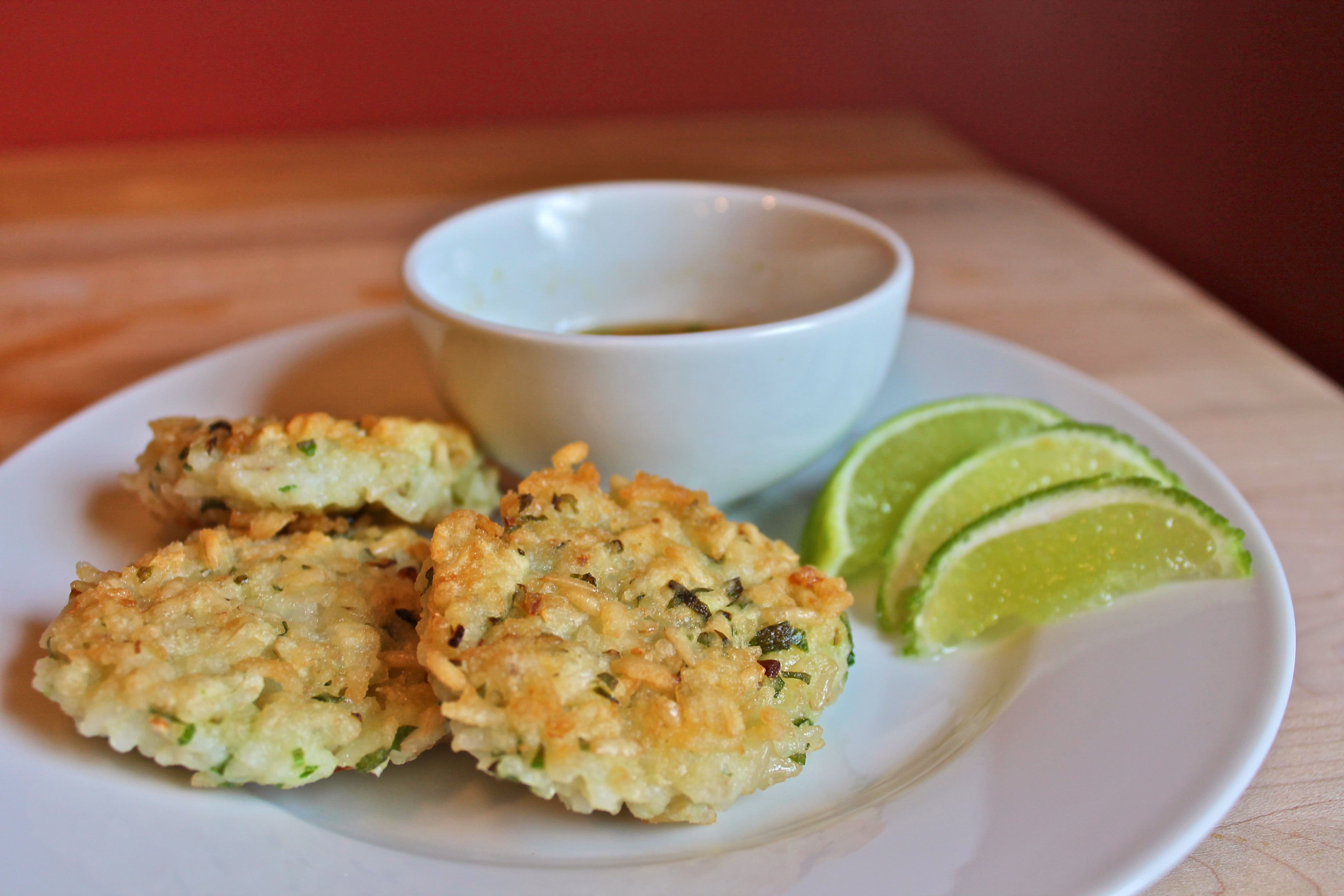
Lemongrass Rice Patties with Honey-Lime Dipping Sauce

Also, a couple of weeks ago I tested out my 1/3 less sugar routine on the legendary America’s Test Kitchen chocolate chip cookie recipe.  This is not by any means a new recipe, so I’ll leave it up to you to partake in some simple Google searching to find the recipe (in case you end up finding more than once ATK chocolate chip cookie recipe, it’s the one with the browned butter and the brilliant stir-and-wait-and-stir mixing method).

In addition to cutting the total sugar content by 1/3, I also used 3/4 whole wheat pastry flour and 1/4 unbleached all-purpose flour.  While the missing sugar was never detected, the texture of the cookies was slightly altered due to the flour swap.  My father, a chocolate chip cookie aficionado if ever there was one, spent a fair amount of time analyzing the cookies, and his determination was that the reducing of the sugar got a definite thumbs-up, but the whole wheat flour was a no-go, due to the fact that the heartier flour altered the texture of the cookie in a way that took it from chewy to densely cake-like.  My taste experience with the cookies was pretty much the same, so, if you’re going to alter the recipe in any way, I would suggest cutting the sugar by 1/3 but leaving the flour as is.  Also, add walnuts, because walnuts are delicious.