Tag Archives: food

Chocolate Cake with Coffee Frosting (and a Secret)

25 May

There seem to be as many chocolate cake recipes in existence as there are people who enjoy chocolate cake.  There also seem to be as many names for chocolate cake (devil’s food cake, dark chocolate cake, chocolate layer cake) as there are people who are willing to taste all those chocolate cakes in order to officially prove whether or not those differently named cakes actually taste any different from one another.  You’ve never heard of these official cake-tasters, you say?  You think I just made all that up, you say?  Or did I just create a new job for myself—Official Chocolate Cake Taster—all in the name of finally getting to the bottom of this great chocolate cake mystery, thusly making my new job a selfless and totally essential function aimed at bettering the chocolate cake eating habits of all of humanity?  Think about that for a minute.

Though it seems unlikely, it’s not difficult to make a bad chocolate cake.  Cakes lacking moisture will never be able to taste good enough to allow anyone to forget their sawdust-like texture, but, conversely, cakes suffering from a shortage of true chocolate flavor will never be able to shine to their utmost greatness, no matter how moist and toothsome a morsel may be.  The other side of that coin, however, is the realization that it’s not all that hard to make a really, really good chocolate cake either.  In fact, the most difficult step in making a great chocolate cake starts not with one’s prowess in the kitchen, but rather in finding a standout recipe.  Which is where my new job comes in.
Some recipes stress a particular mixing technique, while others insist on using only oil, not butter, in their chocolate cake, arguing that the neutral flavor of vegetable oil allows the true taste of the chocolate in a chocolate cake to really take center stage.  Some recipes favor buttermilk for achieving an optimal texture, but others prefer that you amend the batter with a simple chocolate pudding made from milk and chocolate heated together on the stove.  Though there are endless tricks and techniques by which people will swear, in my new capacity as Official Chocolate Cake Tester, I feel as though I would be remiss in my newfound duties if I did not reveal to you a bit of a secret: Sometimes the secret to making a flawless chocolate cake comes from the most unlikely source, and that source just so happens to grow underground.

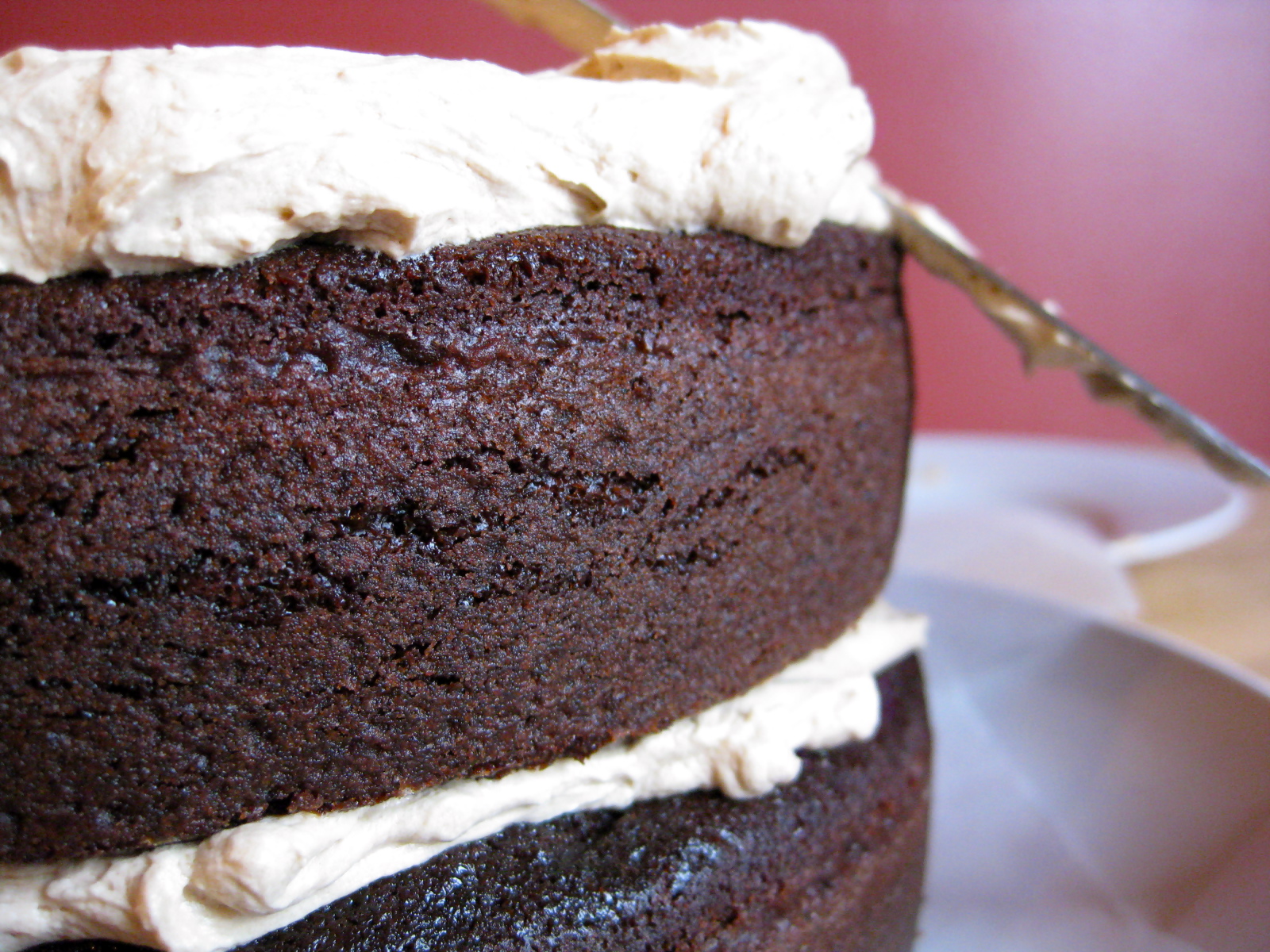
While also welcoming in a not insubstantial amount of both butter and buttermilk, this particular cake recipe utilizes a little-known helper in the world of baked goods.  In an effort to turn out a cake with maximum moistness, the recipe calls for the inclusion of a simple handful of shredded raw beets, an ingredient that is undetectable in taste, but very much evident when it comes to texture.  The shredded beets melt into the cake during baking, resulting in a cake with incomparable moistness and richness.  While I won’t pretend that adding beets to a cake magically transforms it into a healthy and wholesome snack (see: butter, chocolate, and sugar), I will wholeheartedly admit that this cake can be deemed magical in an entirely different, indulgent, deliciously chocolaty way.

I’ve mentioned before my propensity to punch up chocolate baked goods with a bit of coffee.  Rather than adding a dose of coffee directly into the cake batter, I took my love of the chocolate/coffee combination a bit further by covering this cake with a completely immodest amount of coffee frosting.  Even if you happen to be a lukewarm fan of coffee on its own, I cannot recommend enough that you go ahead and put these two elements together.

The two flavors go together like a dream, and they were a perfect pairing for celebrating the birthday of a 33 year-old brother who loves both coffee and chocolate with equal affection.  Just add in some friendly dinosaurs and your consummate chocolate cake is complete.  (Note: Dinosaurs are for decoration only and are not meant to enhance the flavor of the cake in any way.)

Chocolate Cake with Coffee Frosting (and a Secret)

Chocolate Cake

From Cooking School Secrets for Real-World Cooks, by Linda Carucci 

2 cups all-purpose flour

2 cups granulated sugar

1 cup natural unsweetened cocoa powder

2 teaspoons baking soda

3/4 teaspoon baking powder

1/2 teaspoon salt

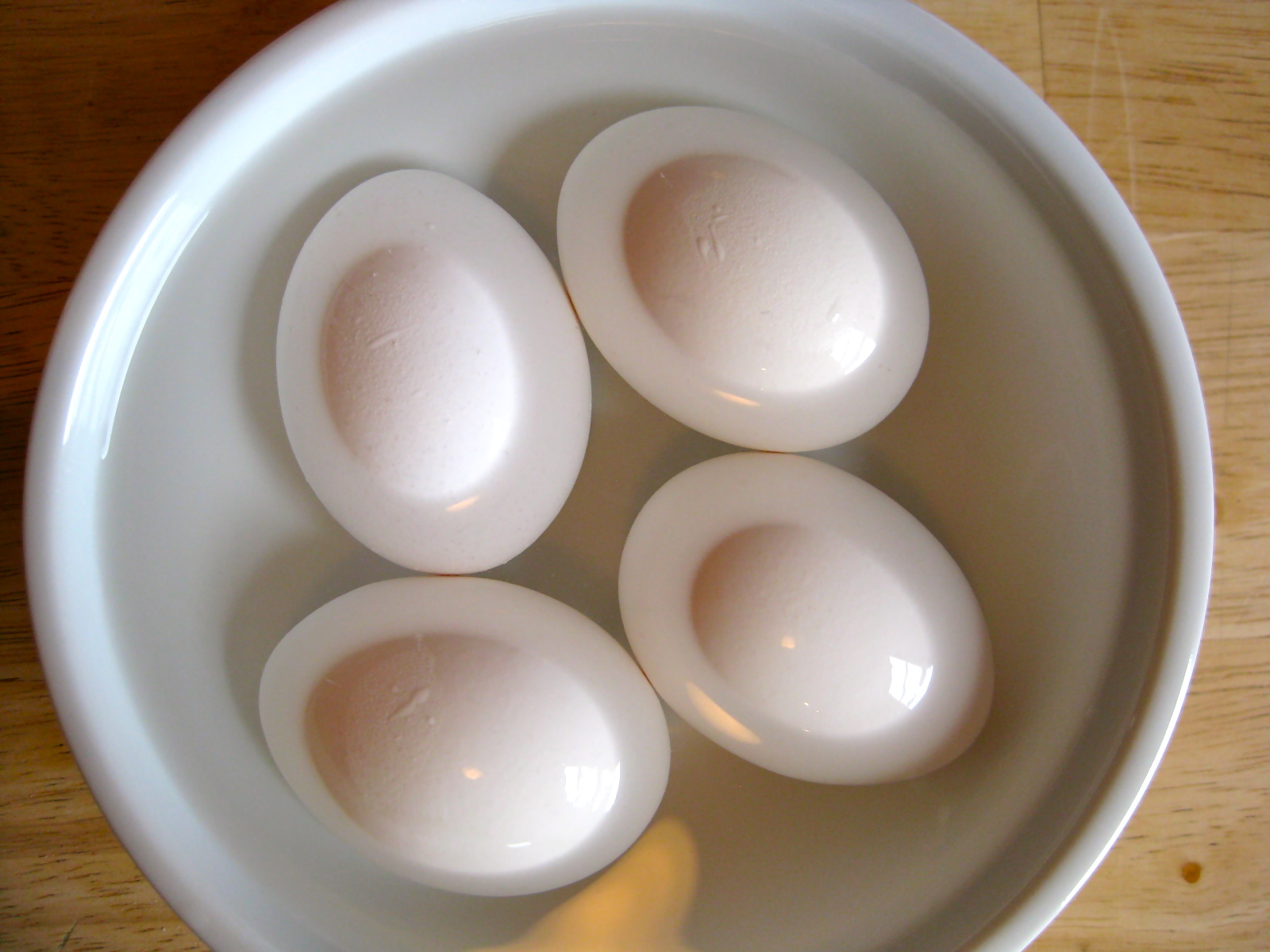
4 large eggs, room temperature

2 cups buttermilk

1 cup (2 sticks) unsalted butter, melted and cooled to room temperature

1 teaspoon pure vanilla extract

2/3 cup packed finely shredded raw beets

Preheat oven to 350 degrees F.  Position a rack in the lower middle position.

Butter and flour the sides and bottom of 2 8-inch round cake pans with 2-inch sides.  Line the bottoms with parchment paper.

Sift together the flour, sugar, cocoa powder, baking soda, baking powder, and salt into a large bowl.  Stir to combine, then make a well in the center and set aside.

In a medium bowl, whisk the eggs to combine.  Whisk in the buttermilk.  Add to the dry ingredients all at once, and stir to combine completely.  Slowly whisk in the butter.  Add the vanilla and stir to combine.  Stir in the beets.  Transfer to the prepared cake pans and spread evenly, using a rubber spatula to pull the batter away from the center of the pans and out along the sides.  (The recipe claimed that this act would ensure flat, rather than domed, tops, and, I’ll admit, I was dubious, but still did it.  To my complete surprise, it totally worked.  I didn’t have to slice off the tops of either of the cakes whilst in the pursuit of non-crooked layers!  Who knew?)

Bake until the center of each cake springs back when lightly touched and the sides of each cake just begin to pull away from the pan, 30 to 35 minutes.

Allow cakes to cool on a wire rack, still in their pans, for 10 minutes.  Invert each cake onto another rack and remove pans.  Carefully peel off the parchment paper and cool the cake completely, upside down.  Make sure your cake layers are completely and totally cooled before frosting, lest your frosted cake end up a dripping, melted mess.

Coffee Frosting

From The America’s Test Kitchen Family Baking Book 

3 sticks unsalted butter, cut into chunks and softened

2 tablespoons instant espresso

3 tablespoons milk or heavy cream

2 1/2 teaspoons vanilla extract

1/4 teaspoon salt

3 cups confectioners’ sugar

Beat the butter, espresso powder, milk or cream, vanilla, and salt together in a large bowl with an electric mixer on medium high speed until smooth, 1 to 2 minutes.

Reduce the mixer speed to medium-low, slowly add the confectioners’ sugar, and beat until incorporated and smooth, 4 to 6 minutes.  Increase the mixer speed to medium high and beat until the frosting is light and fluffy, 5 to 10 minutes.

Blueberry Biscuits

17 May

I am going to tell you a story about what it’s like to live in Portland, OR.

Last week, an absolutely lovely family moved in down the street from us, taking the place of the absolutely lovely family who lived there before them.  When I stand at my kitchen sink, I have a direct sight line down the street to the house that was being inhabited by the new family.  After I had spent the better part of a day going back and forth to the kitchen sink (you may wonder why I visit my sink so much, and my only answer to you is this: I have a preschool-aged child), watching the new family’s moving fan becoming emptier and emptier, I made the decision to bring the new family a little breakfast treat to greet them the next morning, their first morning in their new house.

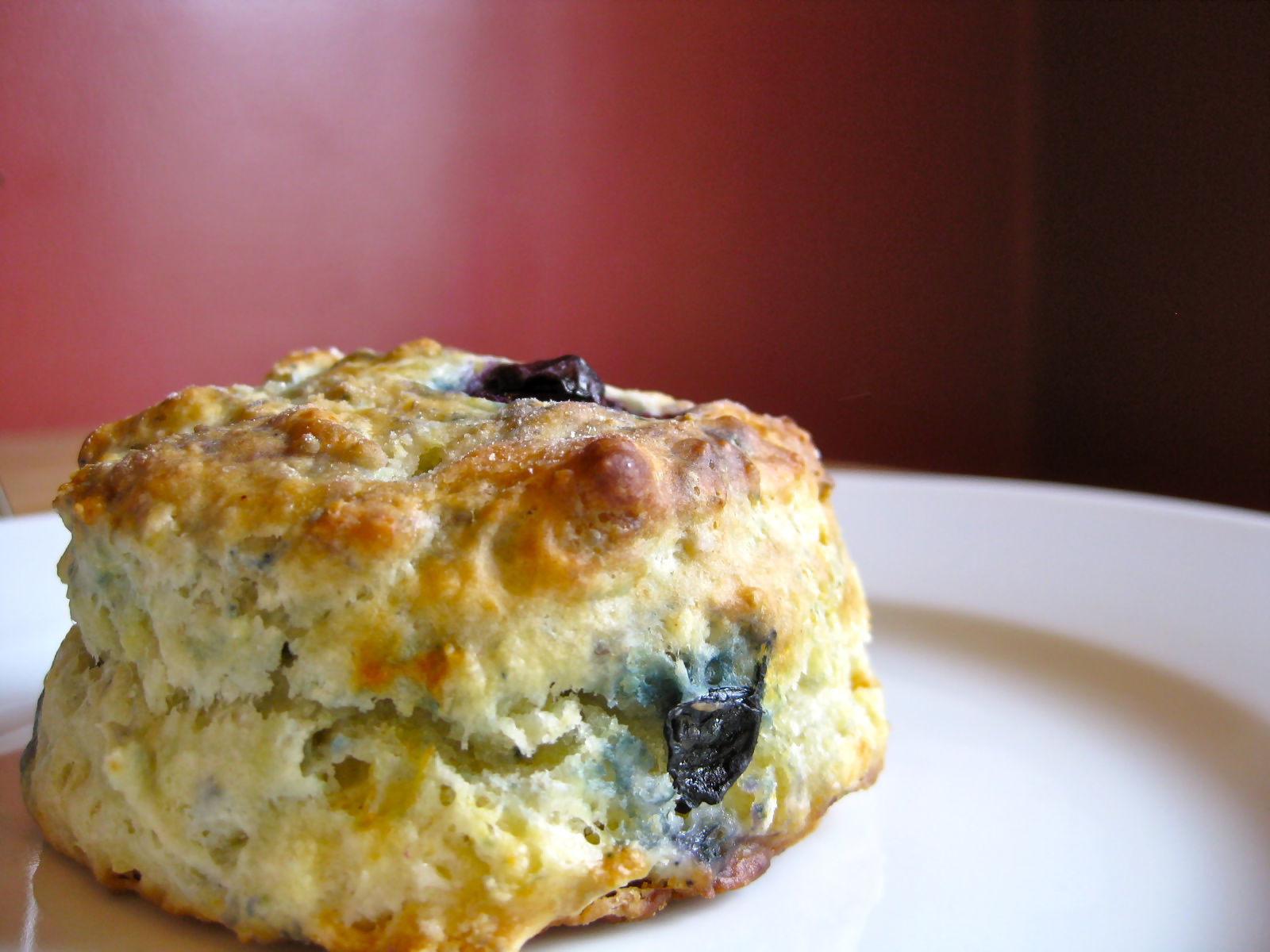
Not being a huge fan of eating anything tooth-achingly sweet first thing in the morning, I opted to hunt down a recipe for a nice savory biscuit.  Thinking of the children in the house, it seemed as though something would be needed to make the biscuit a bit more enticing.  I settled on adding blueberries to the biscuits, and began to assemble my ingredients.

I measured, I mixed, and I cut.  As the biscuits were just about to go into the oven, I made the mistake of asking my husband whether or not he thought blueberry biscuits were an acceptable welcome-to-your-new-house gift for a young family.

“Sure,” he said.  “Who doesn’t like blueberries?”

I was about to nod along in agreement when it occurred to me that, you know, someone in that house might not like blueberries.  I hesitated slightly before putting the biscuits in the oven.

“Do you think they might not like blueberries?” I asked him.

Sensing that he may have mistakenly set the terrible wheels of my mind into high gear, my husband backpedaled.  “No.  Everyone likes blueberries.  Everyone.  They’re good.  Always good.”

But then, the path horribly, unrelentingly forged, I began to wonder about other possible problems with the biscuits.  What if someone in the family was gluten intolerant?  Or allergic to dairy?  Or what if the family was vegan?  I could definitely start over and make a vegan biscuit (I’ve lived in Portland for 15 years, so it’s almost a given that I’ve learned how to make delicious vegan biscuits by now), but what if they were non-gluten-eating vegans?  Or what if they only ate organic food?  I had organic blueberries, but I didn’t know if I would be able to find organic non-gluten flour.  This was getting complicated.  I should head to the store and check out the gluten-free flour selection.  I would also need to buy soy milk.  But what if they were allergic to soy?  Okay, I’d buy almond milk.  But what if they were allergic to nuts?  Rice milk?  Hemp milk?

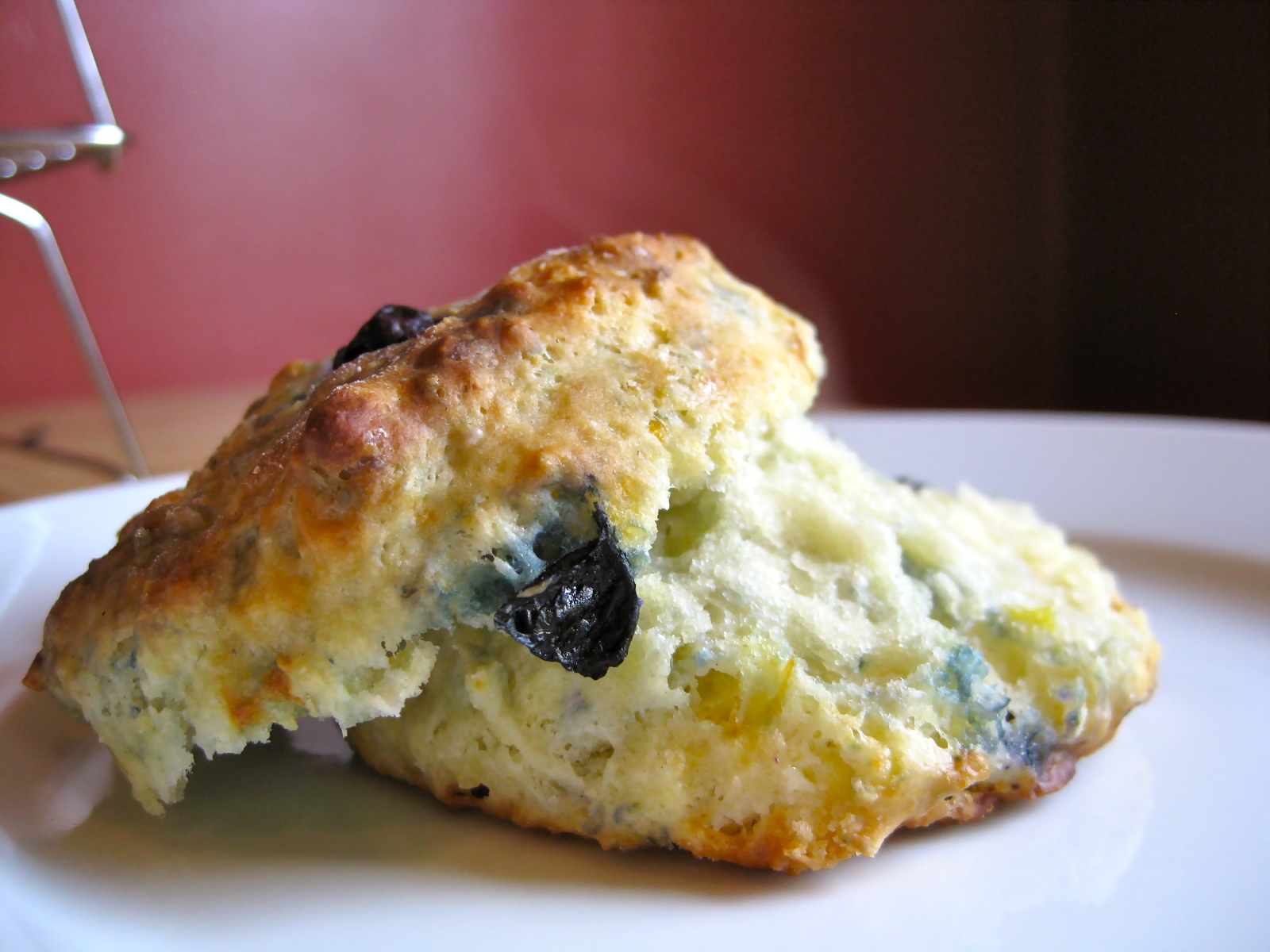
It was right about then that the oven timer went off, effectively causing the hamster wheel that is my brain to come to an abrupt stop.  I took the biscuits out of the oven, admiring the lovely golden-hued tops that were studded with plump indigo berries.

The biscuits were as delicious as they looked, a fact that our new neighbors, unfortunately, never had the chance to learn.  I have a feeling it will take a few more weeks before I am comfortable bringing them any surprise baked goods.  Weeks that I will no doubt spend trying to work subtle food-related questions into everyday conversation without sounding like an absolute loon.

“Yes, the weather is lovely today.  It’s a good day for ice cream.  Ice cream made with milk and cream and probably even eggs.  Real ice cream.  Wouldn’t you agree it’s a good day for real ice cream?”

Blueberry Biscuits

Adapted from Beth Hensperger’s The Bread Bible

2 cups unbleached all-purpose flour

2 teaspoons baking powder

1/4 teaspoon baking soda

1/4 teaspoon salt

2 tablespoons sugar

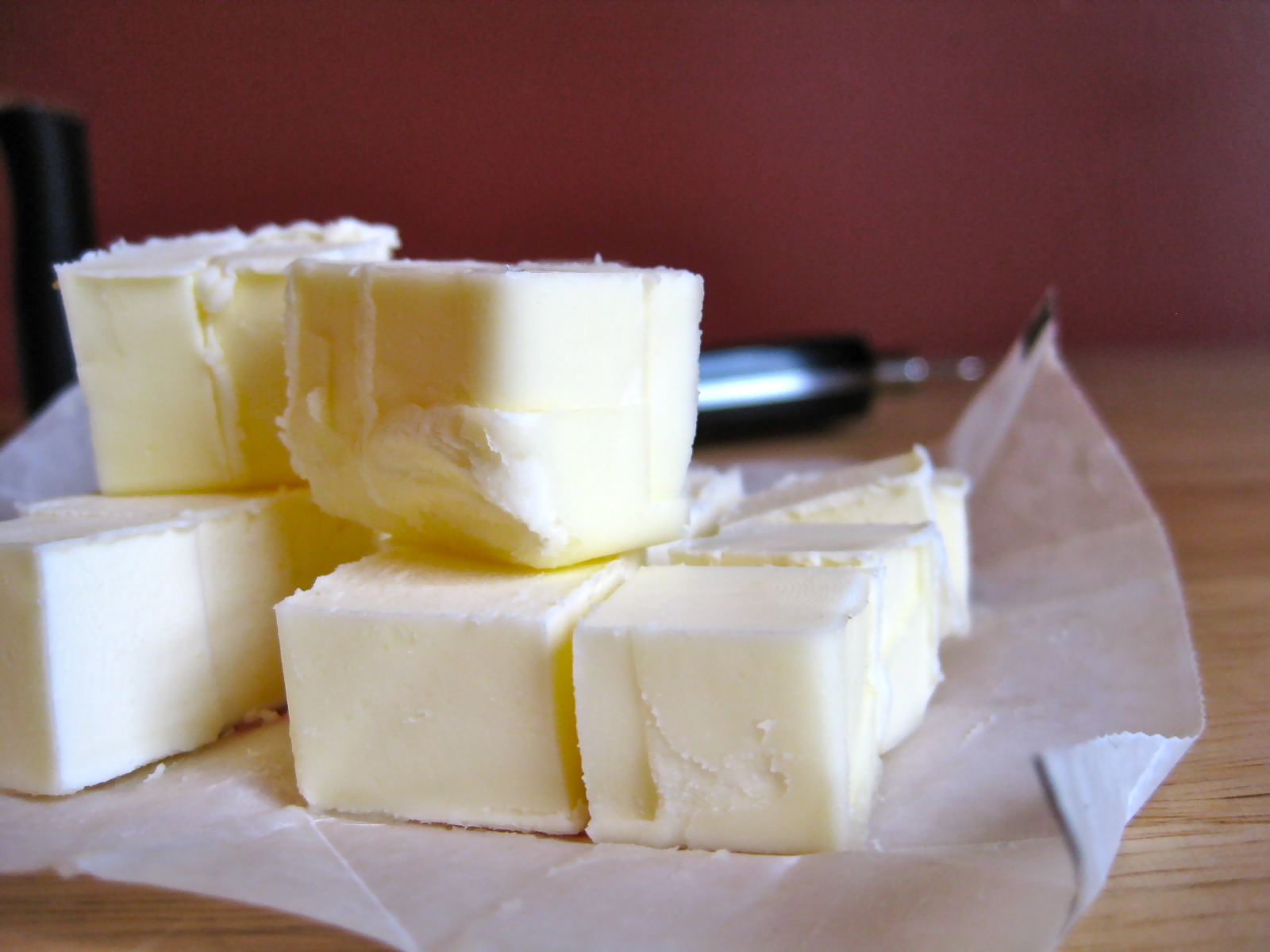
6 tablespoons (3/4 stick) cold unsalted butter, cut into pieces

1 large egg, lightly beaten

3/4 cup cold buttermilk, or cold soured milk

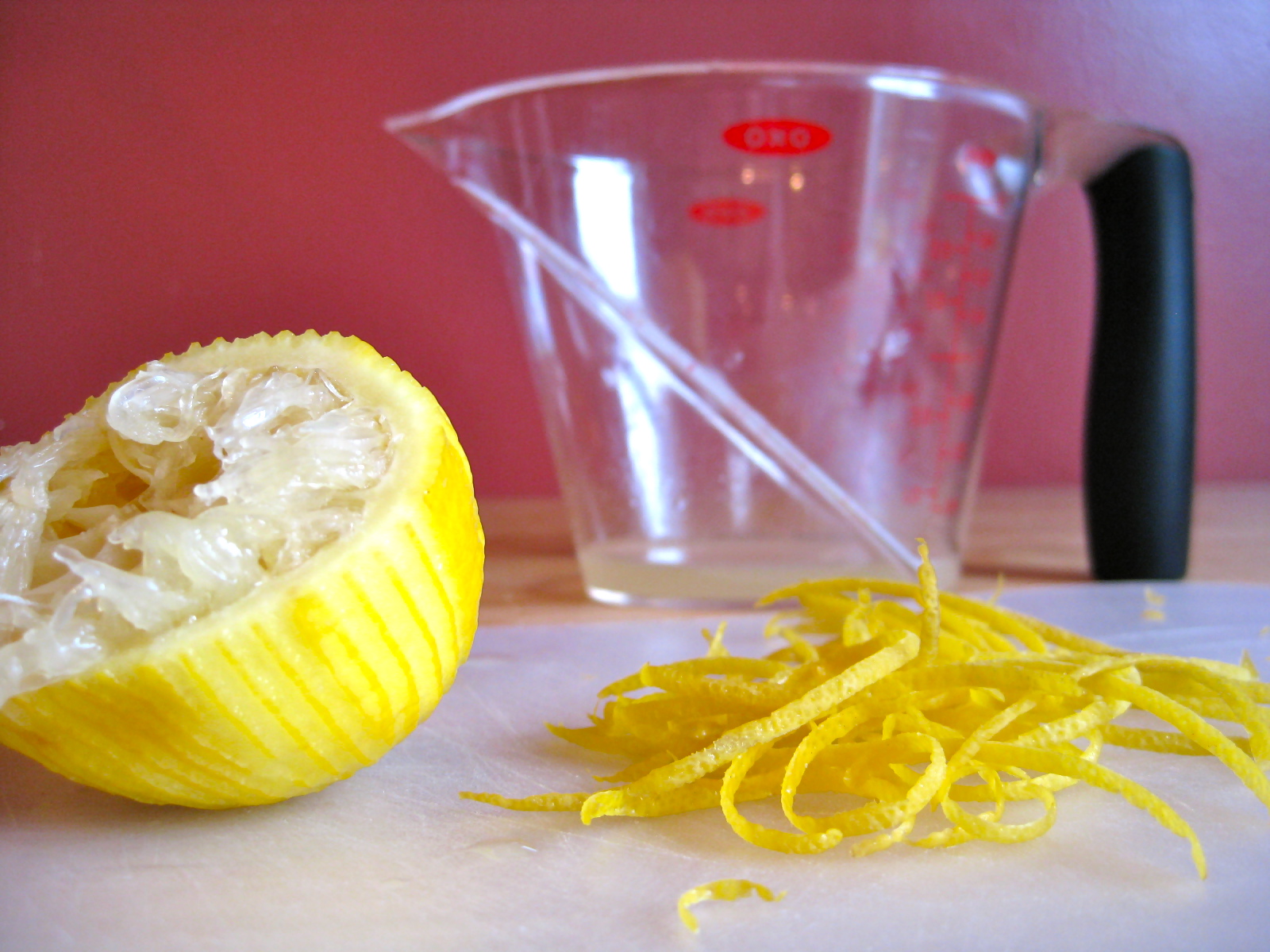
finely grated zest of 1 lemon

3/4 cup blueberries, fresh or frozen (unthawed)

Preheat oven to 425 degrees F.

Line a baking sheet with parchment paper, or grease a baking sheet and sprinkle it lightly with 1 tablespoon of cornmeal (to prevent biscuits from sticking).

In a large bowl, combine flour, baking powder, baking soda, salt, and sugar.  Whisk to combine.  Alternately, you can combine the dry ingredients in the bowl of a food processor and pulse a few times to aerate.

Using a pastry cutter, two knives, or in the bowl of the food processor, cut the butter into the dry ingredients until the mixture resembles coarse crumbs and there are no large butter pieces remaining.  This will take a minute or two if using a pastry cutter, but only a handful of pulses if using the food processor.

Add the buttermilk or soured milk, the egg, and the lemon zest to the flour mixture.  Stir just enough to moisten everything, until the batter just begins to stiffen.  Gently fold in blueberries.  If using the food processor, add the milk, egg, and lemon zest through the feed tube, and pulse just until the dough comes together and it begins to form into one mass.  Knead in the blueberries once the dough has been removed from the food processor.  It should go without saying that you should not pulse the blueberries in the food processor.

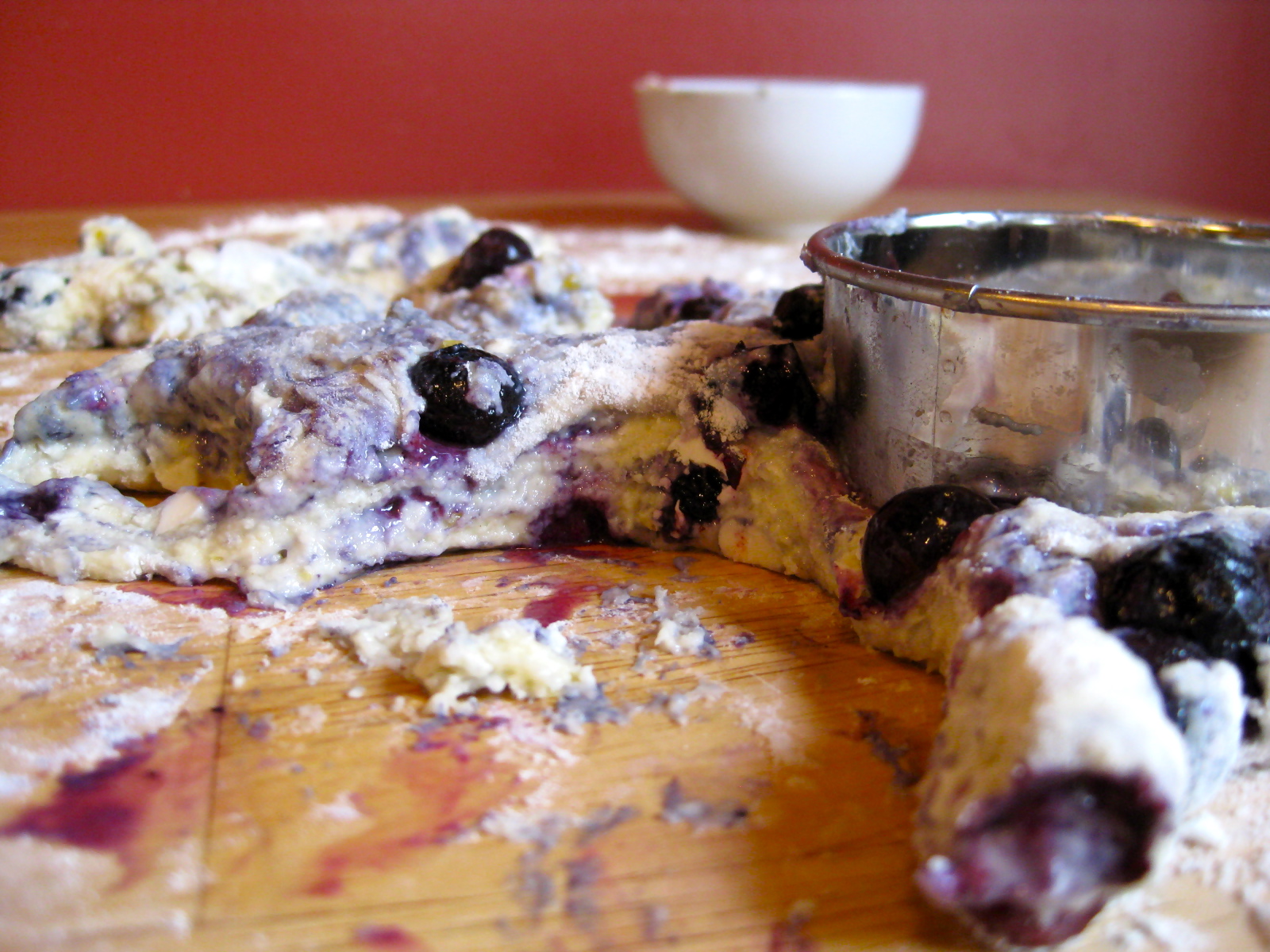
Turn the dough out onto a floured work surface.  Gently knead a few times until the dough just begins to come together.  The dough will still be slightly sticky, but do not handle the dough too much or add too much additional flour, lest you make the dough tough.  Pat the dough into a rectangle roughly 3/4 of an inch thick.

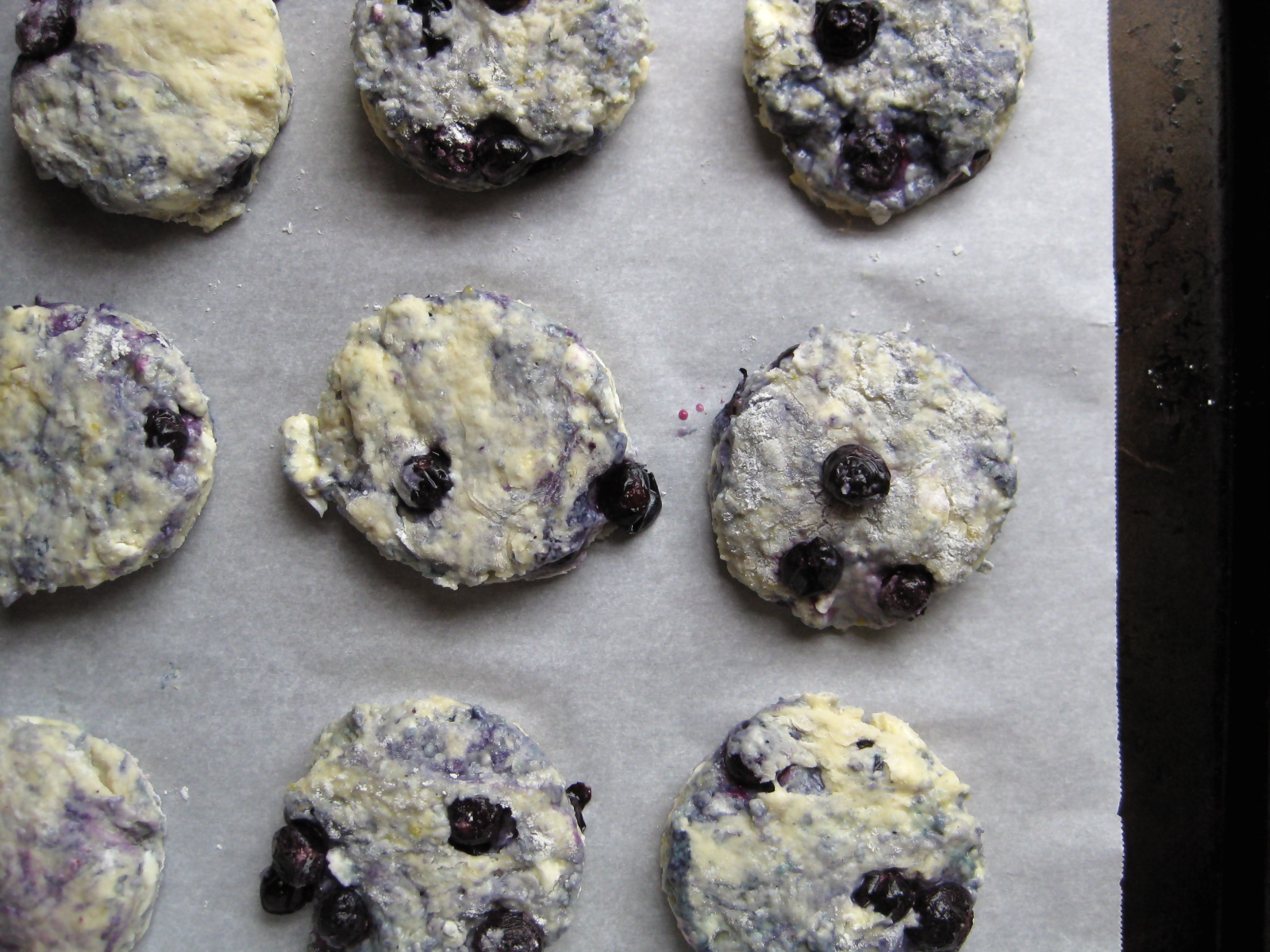
Cut the dough into 2 1/2 inch rounds, using a floured biscuit cutter.  Gently pat scraps of dough together to continue cutting, eventually yielding 12 biscuits.  My cutting sequence produced 7 biscuits from the first rectangle, 3 from the first batch of scraps, then 2 final (slightly misshapen) biscuits from the last of the reformed scraps.

Place biscuits on the prepared baking sheet about 1/2 inch apart.  Bake in the center of a preheated oven for 15 to 18 minutes, until tops have turned golden brown.  Eat hot or slightly cooled.

Makes 12 biscuits.

New Potato and Caramelized Leek Tart in an Olive Oil Crust

11 May

While I’ll admit to the occasional dinner that was not so much “cooked” as it was “spotted at the cheese counter and then paired up with a baguette and consumed with great enthusiasm,” there are, in fact, more instances than I can count during which I decided to make a dinner that was based on a bag of discounted vegetables at the green market.

Sounds suspect, you say?  Not if you saw the types of goods the green market offers on their discount shelf, all of which are sold in bulk for a mere $1.  Bags of red and orange peppers combined with a dozen tomatillos?  Yes.  Ten perfectly ripe avocados that need to be eaten as soon as you get home, but, hey, that’s okay because who doesn’t love avocados?  Definitely.  Half a dozen habanero chilies, two yellow onions, four plump tomatoes, and a handful of green beans?  That right there is homemade salsa, plus a crisp snack to munch while you make the salsa.

Last week, however, the $1 shelf outdid itself.  As if it somehow managed to read my mind, the green market had decided to off load a pile of new potatoes and spring leeks, both of which, though generally associated with heartier winter fare, had been on my mind lately (perhaps because of the preponderance of chilly weather we’ve been subjected to for what seems like an eternity).  The cold in my bones was thinking soup, but a brief peek of sunlight through the clouds brightened my mood enough to encourage me to begin thinking of something a little lighter and more spring-ish.

While not everyone might think of a tart as being spring fare, I have to disagree.  A vegetable tart, made with this exceptionally savory and flavorful olive oil crust, can be a perfect warm weather meal.  Eaten on a bed of fresh spinach or baby greens, it is light, yet filling, and the abundance of greens evidenced in the meal is always a welcome sight.  Well, to me, at least.  But, as previously discussed, I also get excited about a $1 bag of cast-off vegetables, so perhaps I should just say that you shouldn’t take my word that this tart is a welcome and delicious spring meal, you should instead simply make the tart and discover its deliciousness for yourself.

New Potato and Caramelized Leek Tart in an Olive Oil Crust

Olive Oil Crust

1 ½ cups all purpose flour

½ teaspoon salt

1/3 cup olive oil

3 tablespoons milk

Preheat oven to 425 degrees Fahrenheit.

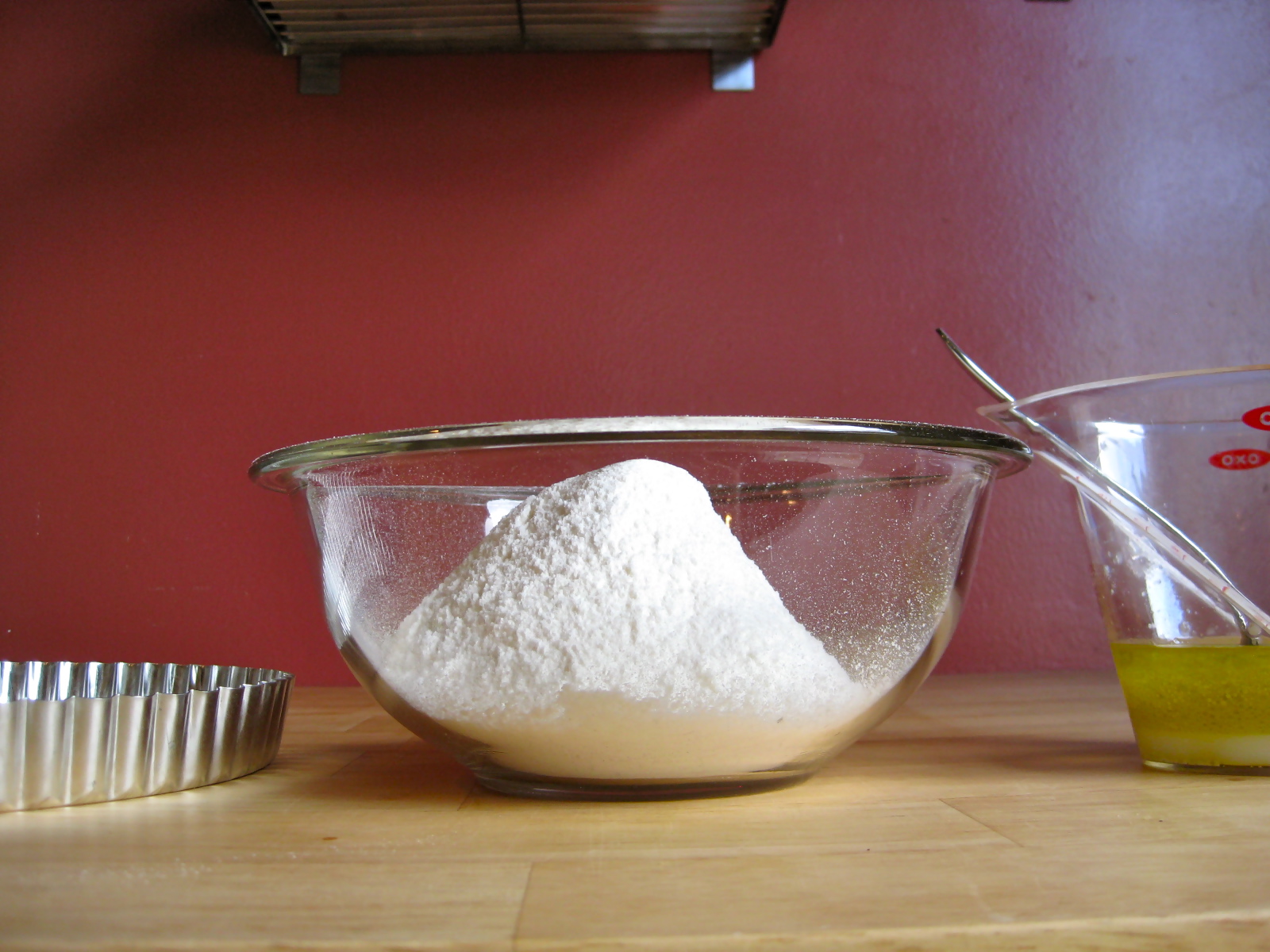
In a medium bowl, sift together flour and salt.  In a small bowl, combine olive oil and milk and whisk together until integrated.  Add milk and oil mixture to flour mixture and, using a fork, combine the mixture until fully incorporated.

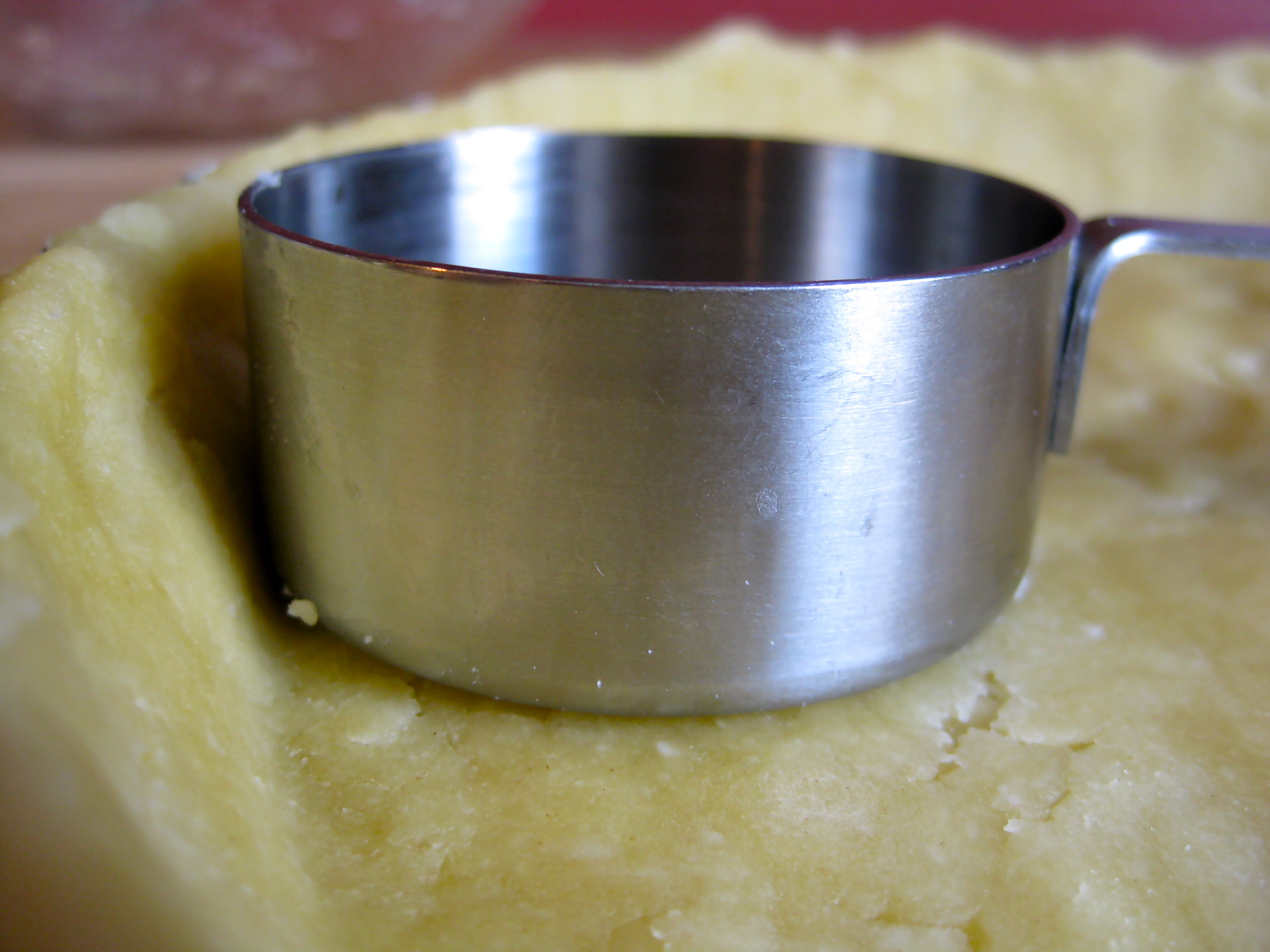
Gather the dough together and knead it into a ball.  Press it evenly into the bottom and sides of a 9-inch tart pan with a removable bottom (I use a small measuring cup to smooth everything into place and it works wonders).  Pierce crust on sides and bottom with a fork, and parbake in the preheated oven until only very slightly browned on the edges, 10-12 minutes.

Remove tart crust from oven and lower oven temperature to 375 degrees F.

New Potato and Caramelized Leek Filling

3 large leeks, fully rinsed and trimmed of their dark tops

1 tablespoon butter

1 tablespoon olive oil

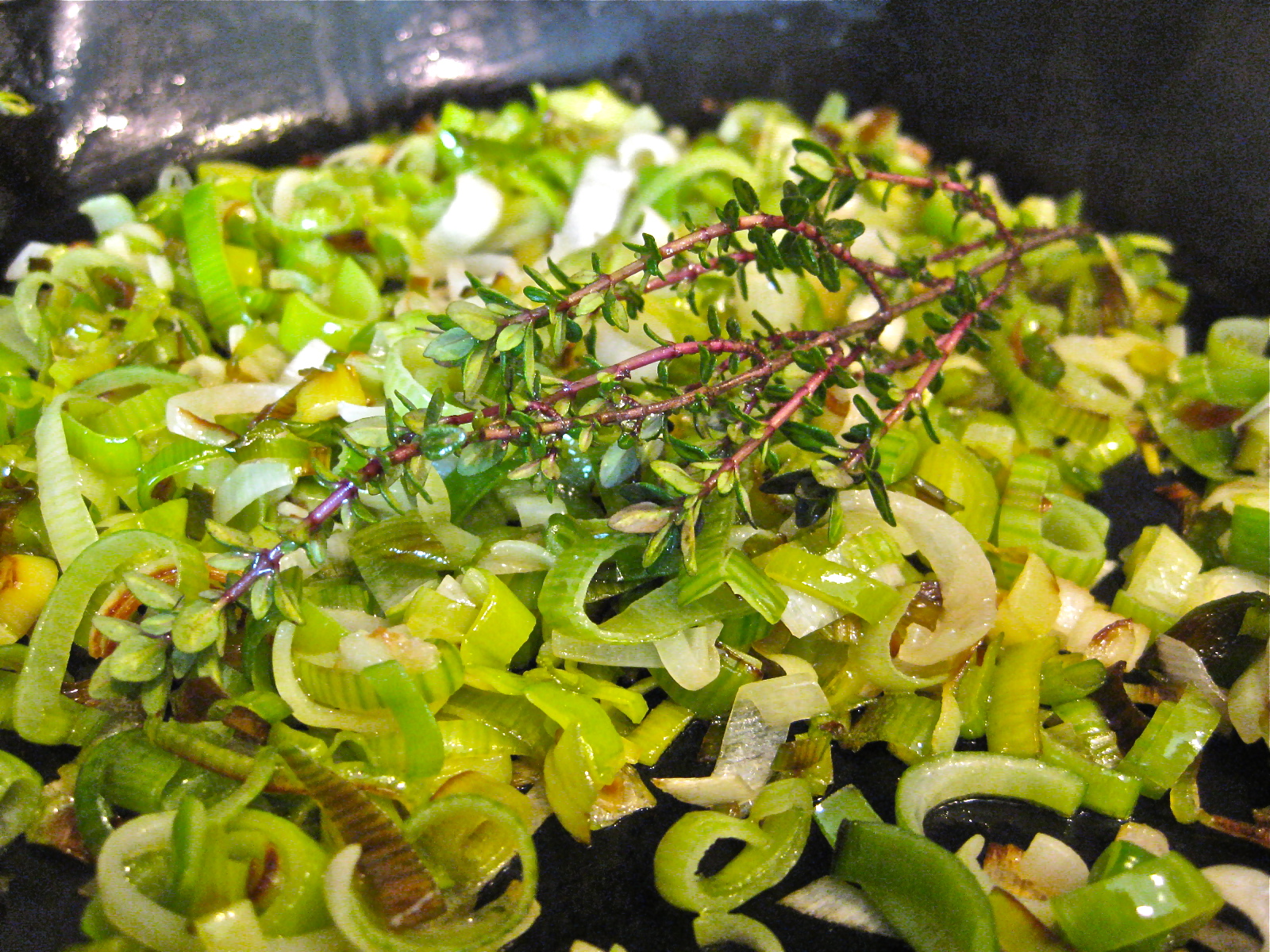
1 large sprig fresh thyme

salt and pepper to taste

12 ounces new potatoes (or red or Yukon gold, or any other small, creamy potato) scrubbed and then sliced about ¼-inch thick

½ cup milk

2 eggs

1/3 cup grated parmesan cheese

Slice rinsed and trimmed leeks in half lengthwise, then slice the white and light green parts about ¼-inch thick.  On medium low heat, combine butter and olive oil and heat until butter is almost completely melted and just begins to foam.  Add leeks and thyme, stir to coat leeks with butter and olive oil, then reduce heat to low. Cook, stirring frequently, over low heat until leeks are softened and gently caramelized to a light brown color, about 25 minutes.  Remove from heat, add salt and pepper to taste, and set aside.

While leeks are cooking, boil the potato slices in lightly salted water until crisp tender, about 7-10 minutes.  Drain potato slices and set aside.

In a small bowl, combine eggs and milk and beat to combine well.  Add in parmesan cheese and continue to mix until combined.  Add cooled, caramelized leeks to the egg mixture, making sure to remove the sprig of thyme, then mix well to combine.

Arrange the potato slices in the parbaked tart shell, overlapping them in a concentric circle.  Pour egg and leek mixture over the potatoes.

Bake for 35-45 minutes, until the middle of the tart is set and no longer wet.  The leeks exposed on top of the tart will turn dark brown and continue to caramelize even further, which is fantastic.  However, if, partway through baking, you see your leeks starting to turn brown to the point of blackening and burning, loosely cover the tart with a sheet of foil for the remainder of the baking time.

Serve warm or at room temperature.