Tag Archives: food

Samosas in Phyllo

9 Mar

There are few words that exist on a sliding scale as slippery as that of the word “difficult.”  Some things are deemed difficult because they require a certain familiarity of skills before one is able to instinctively tackle them.  Other things can be referred to as difficult because they are time consuming and they ask a person to dedicate a great deal of effort and focus.  To me, something that is difficult is most often not really difficult at all (in terms of skill or effort), but rather simply unpleasant.  I may have no problem at all producing a trifecta of desserts for someone’s birthday, but I will not, under any circumstances I can currently think of, deep fry anything.

It’s not like I haven’t deep fried things before.  I’ve made fried poppadums, homemade sweet onion rings, and wonderfully crispy pakoras, but the problem was, I did not enjoy making any of those foods once I completed the preparation stage and was then forced to move on to the actual cooking stage.  Deep frying things makes your house smell like a soggy old french fry depository.  It is hot, messy, and, obviously, greasy, and I am always at a loss over what to do with all that spent oil.  Fortunately, my deep dislike of submerging things in hot oil never seemed to hold back my progress in the kitchen, so all was well.

Until, that is, I got it into my head that I was going to make samosas for a small event I had agreed to cater.

Though I knew I hated to fry things, I was convinced that I would be able to come up with a simple way to wrap and cook samosas that would not only avoid the step of having to deep fry anything, but also guarantee me a generous amount of wrapped samosas that were amenable to being frozen until the time arrived when I needed to bake them.

Taking inspiration from a wonderful tapas cookbook I often look to for ideas, I decided to wrap each samosa in a dual layer of phyllo dough.  It was my hope that brushing butter in between each layer of dough would make for a crisp finished product, and making sure to securely wrap each little package of spiced potatoes would ensure an end result that would both freeze well and take to baking straight from the freezer.

To make this long story short, I don’t know why I didn’t try this sooner.  The samosas, both baked after being frozen and baked immediately after being wrapped (for purposes of, ahem, quality control), were crisp, light, and lacking in any sort of heaviness or greasiness.  As an added bonus, the delicate nature of phyllo really allows the flavor of the perfectly spiced potato filling to take center stage, completely convincing me that, at least until I break down and decide to tackle a Spanish tortilla de patatas, my deep frying days have come to an end.

Samosas in Phyllo

Adapted from Madhur Jaffrey Indian Cooking

4-5 medium potatoes, boiled in their jackets and allowed to cool

4 tablespoons vegetable oil

1 medium sized onion, peeled and finely chopped

1 cup shelled peas, fresh or frozen (if frozen, defrost them first)

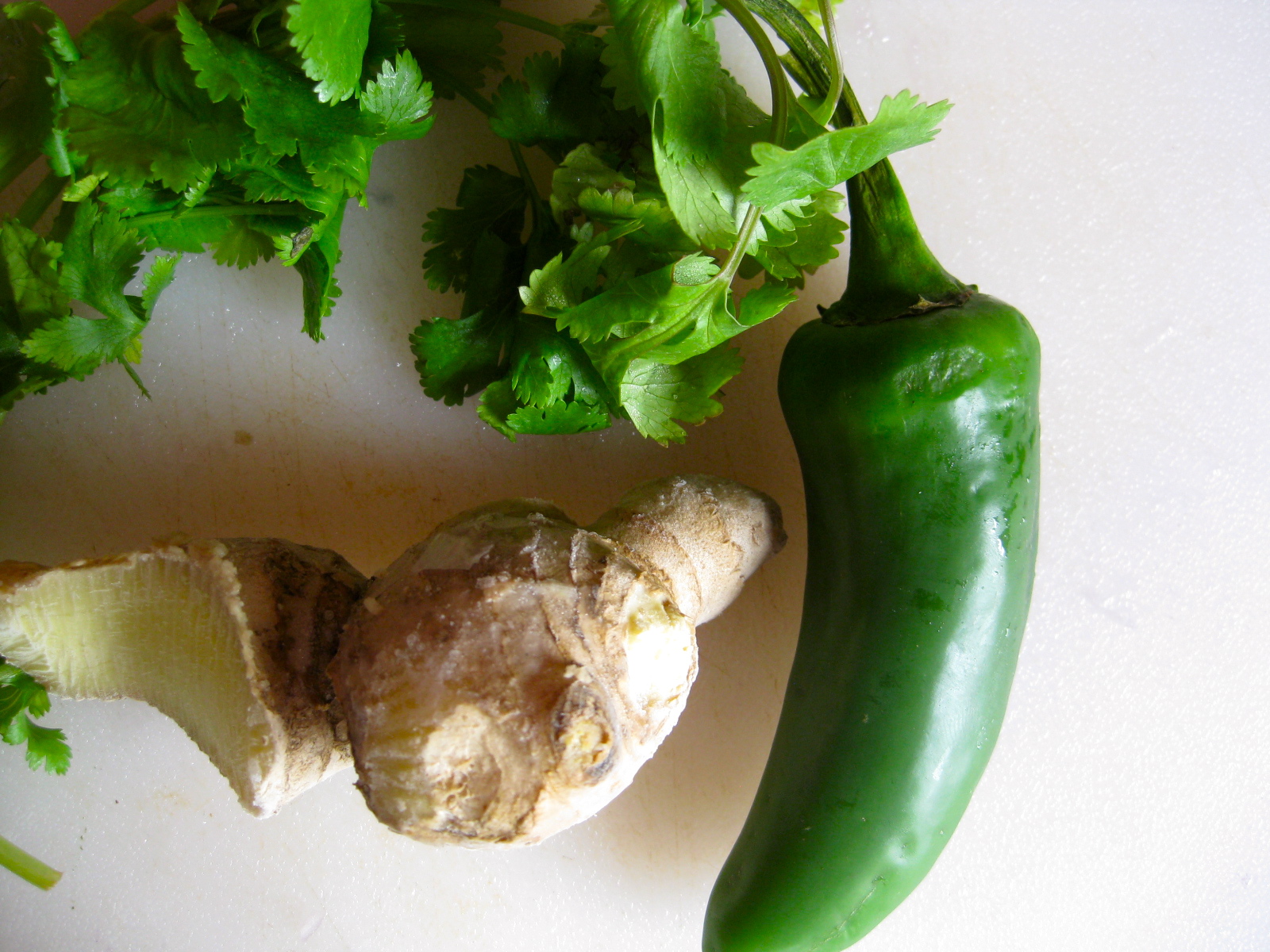
1 tablespoon peeled, finely grated fresh ginger

1/2 to 1 fresh, hot green chili, finely chopped

3 tablespoons very finely chopped cilantro

About 3 tablespoons water

1 1/2 teaspoon salt, or to taste

1 teaspoon ground coriander

1 teaspoon garam masala

1 teaspoon ground, roasted cumin seeds (if you only have regular ground cumin, you can toast the teaspoon of cumin in a dry pan set over high heat.  The cumin will take only seconds to toast, so watch it carefully for browning and then immediately take it off of the heat and place it in a room temperature bowl or dish)

1/4 teaspoon cayenne pepper

2 tablespoons lemon juice

20 phyllo sheets, thawed if frozen (my sheets were 8.5″ x 13.5″ and, layered and cut into fifths, yielded 50 samosas)

4 tablespoons butter, melted then cooled

To make the filling, peel the potatoes and cut them into 1/4 inch dice.  Put 4 tablespoons of oil in a large frying pan and place over medium heat.  When hot, put in the onions.  Stir and fry them until they begin to turn brown at the edges.  Add the peas, ginger, green chili (1/2 or the whole thing, depending on how spicy you prefer things), cilantro, and 3 tablespoons water.  Cover, lower heat, and simmer until the peas are cooked.  Stir every now and then and add a little more water if the frying pan seems to dry out.

Add the diced potatoes, salt, ground coriander, garam masala, cumin, cayenne, and lemon juice.  Stir to mix.  Cook on low heat for 3-4 minutes, stirring gently as you do so.  Check balance of salt and lemon juice.  You may want more of both (I added more lemon juice, but felt the salt content was just fine).  Turn off the heat and allow the mixture to cool.

To fill and wrap the samosas, preheat oven to 375 degrees F (if you are wrapping and freezing the samosas, you can obviously skip this step).  Line two large baking sheets with parchment paper.  Cover phyllo stack with a sheet of plastic wrap and then a dampened kitchen towel (this will keep the phyllo from drying out as you work).  Take one phyllo sheet from stack and lay it down on your work surface with a long side nearest you (keeping remaining sheets covered as you work) and brush lightly with butter. Top with another phyllo sheet and brush with more butter. Cut buttered phyllo stack crosswise into 5 strips (my sheets were 13.5 inches long, yielding 5 strips that were not quite 2.75 inches wide).

Place a tablespoon of filling near one corner of a strip (on the end that is nearest to you), then fold corner of phyllo over to enclose filling and form a triangle. Continue folding the strip (as one would fold a flag), maintaining a triangle shape. Put fully wrapped samosa triangle, seam side down, on a parchment-lined large baking sheet. Repeat process, making more triangles in the same manner, until you’ve used all the phyllo.

The samosas can be baked in a 375 degree oven, one sheet at a time, for 20-25 minutes, or until they are golden brown.  Cool them slightly on a wire rack before serving

If you plan to freeze the samosas, place them in the freezer on their parchment-lined baking sheets, and freeze for one hour.  Remove the samosas from the freezer, and stack them in an airtight container, separating each stack with a layer of parchment or wax paper.  The samosas will keep in the freezer for up to 1 month.  When you are ready to bake the frozen samosas, follow the baking directions for fresh samosas.  There is no need to adjust the baking time.

Lemon Bergamot Bars

7 Mar

I will never claim to be a fan of big surprises or intense fanfare.  Preferring to live a life that is relatively free of drama or explosive displays of showiness (all I have to do is hear of people getting engaged via a line of skywriting or announcing their pregnancy by hiding a positive pregnancy test in someone’s birthday present and I start to feel all sweaty and embarrassed) might explain why I am so fond of foods that contain a bit of the unexpected.  A rich brownie with a subtle undercurrent of cardamom and chipotle.  A complicated Thai curry with a kick of lime that comes in at the end and smoothes out its blend of coconut and spice.  And now, what currently stands as my favorite example of a sneaky flavor, a hint of bergamot concealed within a batch of brightly tart lemon bars.

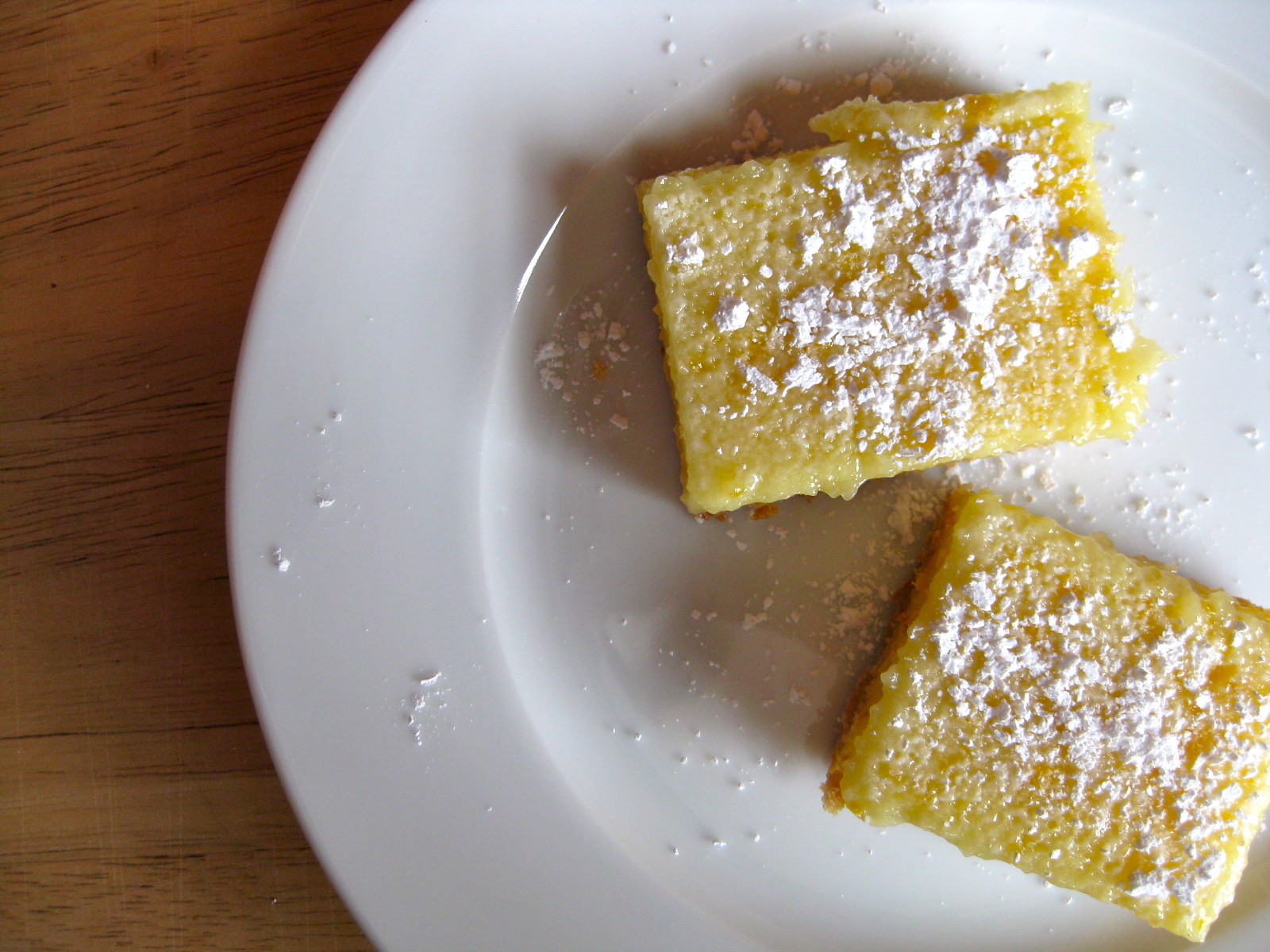
Hailing from Tartine, the inaugural cookbook from the incredible San Francisco bakery of the same name, this is a lemon bar that pulls no punches when it comes to flavors.  The meltingly delicious shortbread base is baked to a deep golden brown, giving it the taste of mellow, nutty brown butter.

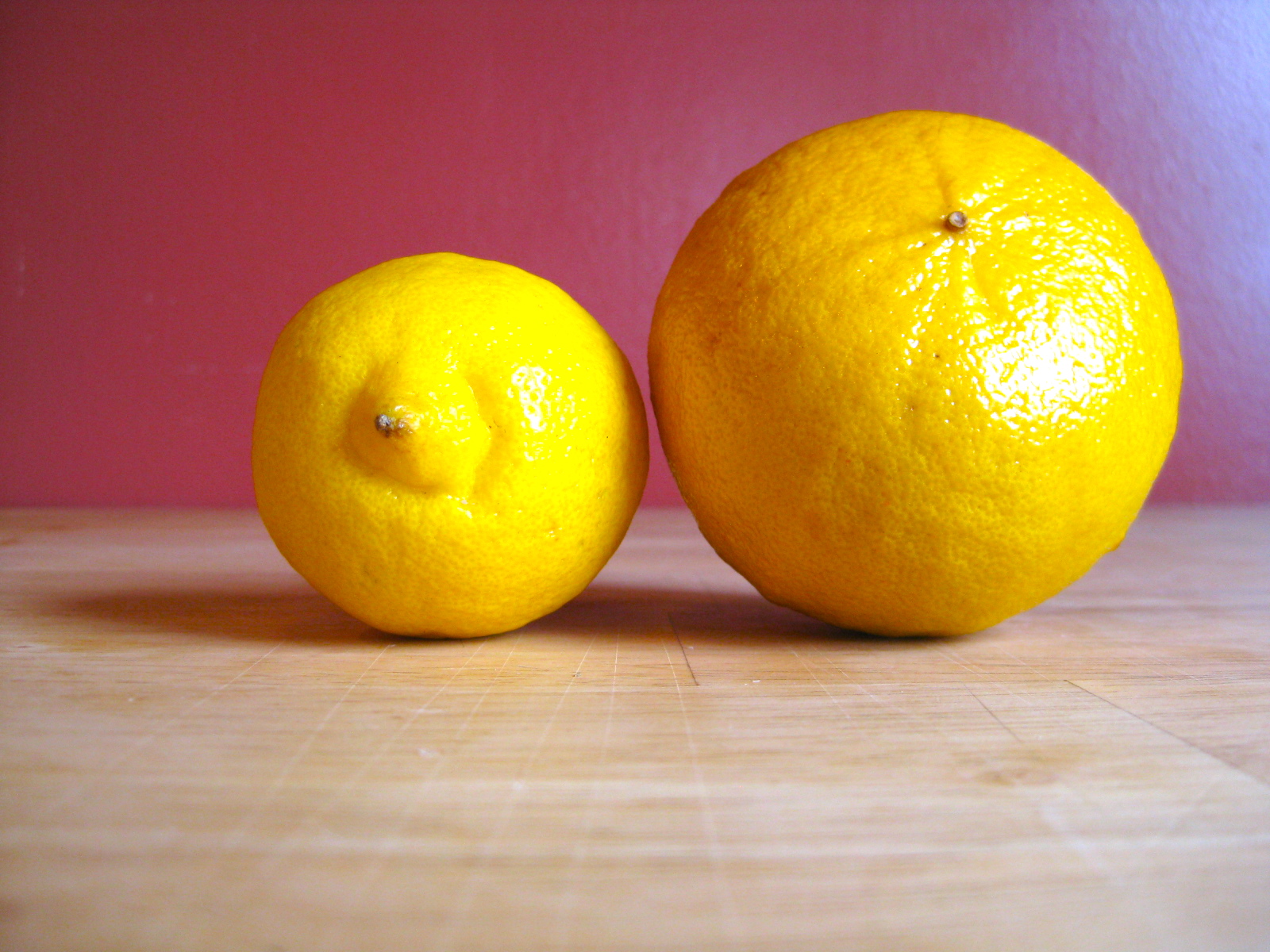
The thick lemon custard that rests on top is fresh and tart, and does not make the mistake of masking its lemony sourness under a cloying sweetness.  The bergamot (an addition made optional in the cookbook, but now considered by me to be an utter necessity) cuts through the clean taste of the lemon, dotting each bite with the pleasant sensation of subtly bitter orange.  (Bergamot oranges, a hybrid citrus fruit that contain elements of both Mediterranean lemons and Seville oranges, provide the distinctive citrus undertone found in Earl Grey tea, and it creates a similarly aromatic and companionable effect here.)

I may not be one for surprises, but I can’t say I have ever shied away from the pleasures of variety.  Eating one square of this lovely pastry is like taking a taste tour of a pastry case (brown butter shortbread cookies!  Lemon custard!  Candied orange!), providing your taste buds with thrills aplenty, minus even the slightest possibility of social discomfort.

Lemon Bergamot Bars

From Tartine

Crust

1/2 cup confectioners’ sugar

1 1/2 cups all-purpose flour

3/4 cup unsalted butter, at room temperature

Filling

1/2 cup all-purpose flour

2 1/4 cups sugar

1 cup plus 2 tablespoons lemon juice

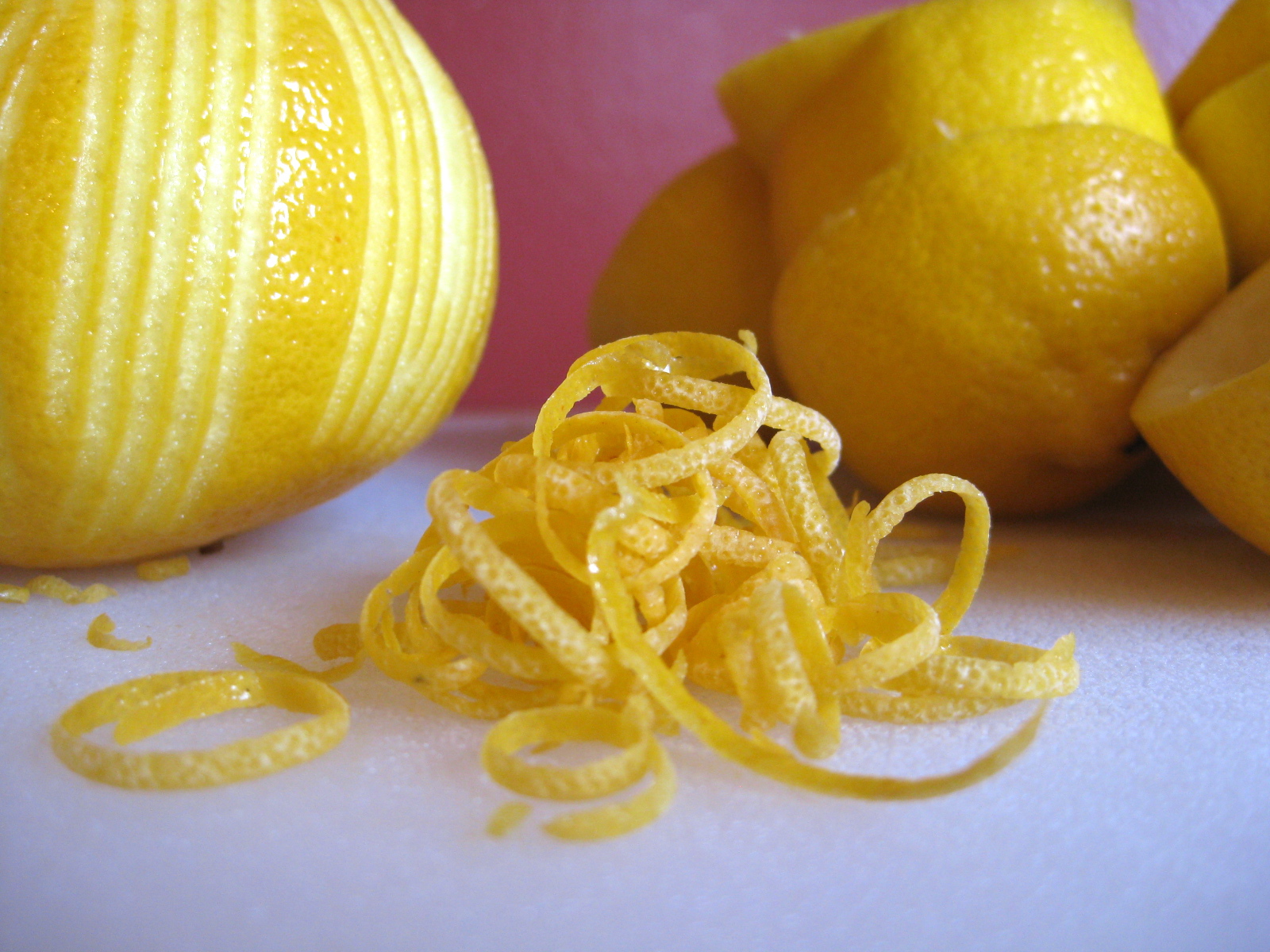
zest from 1 small bergamot orange, grated or finely chopped

6 large whole eggs

1 large egg yolk

pinch of salt

confectioners’ sugar (optional)

Preheat oven to 350 degrees F.  Butter a 9×13 inch baking pan.

To make the crust, sift the confectioners’ sugar into the bowl of a standing mixer fitted with the paddle attachment.  Add the flour and stir to mix.  Add the butter and beat on low speed just until a smooth dough forms.  Transfer dough to the prepared pan and press evenly into the bottom and 1/2 inch up the sides of the pan.  It should be about 1/4 inch thick.  To help even out the crust, use the flat bottom of any type of cup, pressing down firmly.  Line the crust with parchment paper and fill with pie weights (dry beans or about a cup’s worth of pennies will provide the same effect as pie weights).  Bake the crust until it colors evenly to a deep golden brown, 25-35 minutes.  Rotate the pan 180 degrees is the crust appears to be baking unevenly.

While the crust is baking, make the filling: Sift the flour into a mixing bowl.  Add the sugar and whisk until blended.  Add the lemon juice and bergamot orange zest and stir to dissolve the sugar.  In a separate mixing bowl, whisk the whole eggs and egg yolk with the salt.  Add the eggs to the lemon juice mixture and whisk until well mixed.

When the crust is ready, pull out the oven rack holding the crust, remove the parchment paper and pie weights, and pour the filling directly into the hot pan.  (It is easiest to pour the custard into the pan if the pan is in the oven.)  If the crust has come out of the oven and cooled before you have finished making the filling, put it back in for a few minutes so that it is hot when the custard is poured into it.  Reduce the oven temperature to 300 degrees F and bake just until the center of the custard is no longer wobbly, 30-40 minutes.

Let cool completely on a wire rack, then cover and chill well before cutting.  If you like, dust the tops of the squares with confectioners’ sugar.  They will keep well in an airtight container or well covered in the baking dish in the refrigerator for up to 4 days.


Simple Rosemary Focaccia

4 Mar

Like many people, I used to approach bread baking with a slight sense of fear and confusion.  On the rare occasion that I attempted a simple yeasted dough for something relatively non-threatening (we’re talking pizza dough here, and not, say brioche or pane pugliese), I was never satisfied with the results of the dough’s rise (everything always seemed to turn out rather squat and tough), and was therefore convinced that I was just not equipped with the proper set of skills or instincts with which most bread bakers seemed to have been born.  Was my kneading technique not the right mix of gentle-yet-firm?  Was my kitchen too cold to coax out the dough’s full rise?  Did I need to go out and buy a baking stone?  Did I add too much salt?  Not enough?

As it turned out, the problem with my efforts was attributable not to a lack of technique or savvy, but rather to a lack of something even less instinctual: urgency.  On every single one of my yeasted dough escapades, I was working with envelopes of yeast that had been purchased several months, sometimes even a year, previous, always while in the midst of a brief burst of bread baking confidence.  Predictably, it always took me much longer than I had originally anticipated work up the gumption to attempt another yeasted recipe, so by the time I broke open the package of yeast, it was barely clinging on to life.  Even under the best of circumstances, old and lifeless yeast is never going to bring an effervescent lift to dough, so, unbeknownst to me at the time, I was basically starting my task like Sisyphus in a boulangerie.

So if you have a fear or dark anticipation of bread baking, might I offer you two bits of advice?  The first bit of advice will be fairly obvious: throw away your old envelopes of yeast right now and make a fresh start by buying brand new yeast that is still full of bubbling life.  The second bit of advice?  Make this dead simple focaccia.

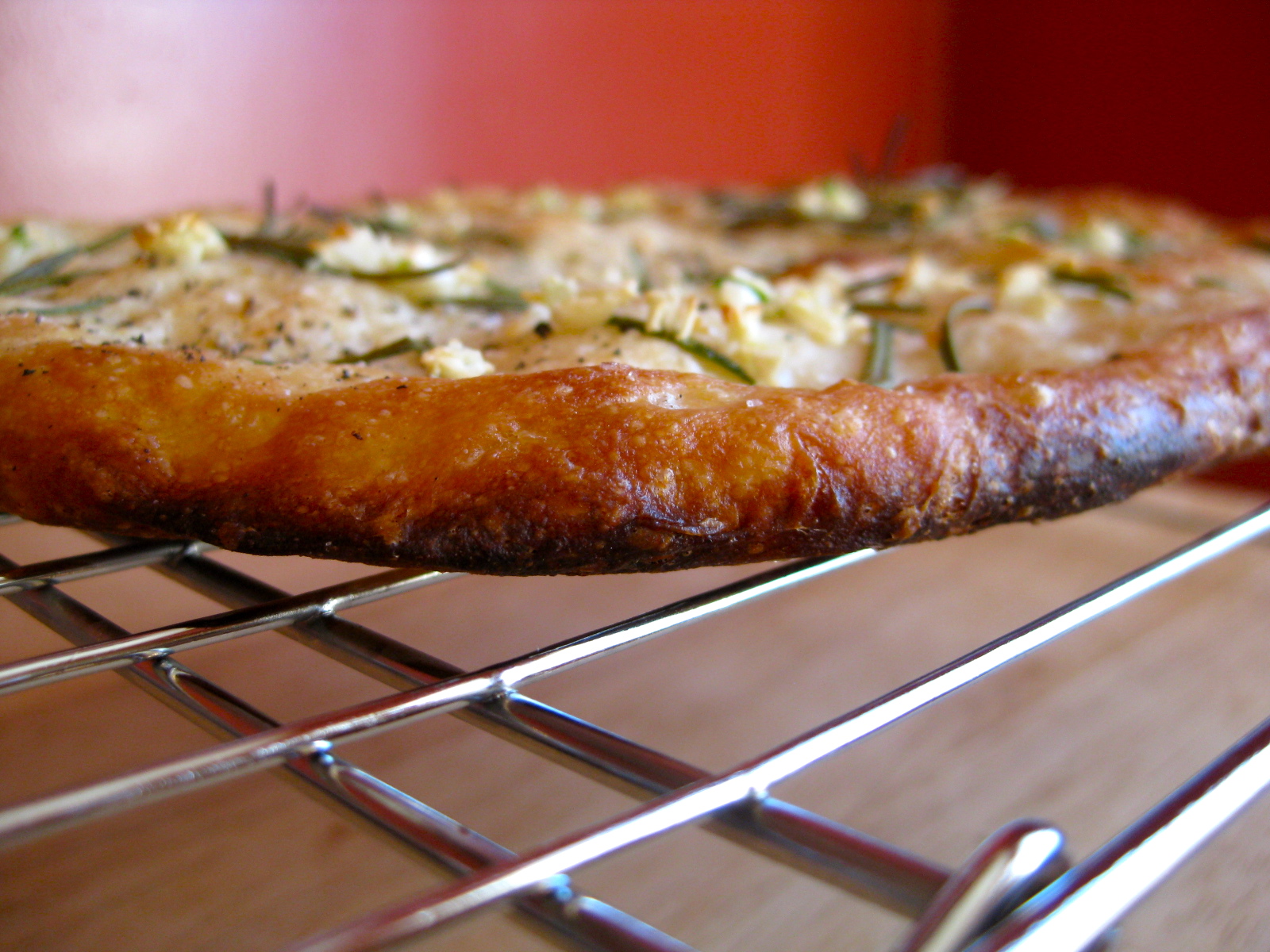
A perfect gateway recipe for first-time bread bakers, this focaccia requires no kneading, no special tools, and calls for just a handful of simple ingredients.  Crisp, but with a light and toothsome chew, it’s simple to prepare, boasts an effortless rise, and bakes perfectly in mere minutes.


Chances are, you’ve already got most of the ingredients in your house right now, and if you don’t, no worries.  If you have to go to the store to buy some yeast, at least you’ll know it’s still fresh.

Rosemary Focaccia

From Rose Levy Beranbaum’s The Bread Bible

3/4 cup, plus 1 tablespoon unbleached all-purpose flour

1/2 teaspoon instant yeast

1/2 teaspoon sugar

1/2 teaspoon salt

1/3 cup room temperature or warm water

4 teaspoons olive oil

1 scant tablespoon fresh rosemary needles

1 large garlic clove, coarsely chopped

flaky sea salt

black pepper

Mix the dough: In a small bowl, whisk together the flour, yeast, and sugar.  Then whisk in the salt (this keeps the yeast from coming into direct contact with the salt, which would kill it).  Make a well in the center and pour in the water.  Using a rubber spatula or a wooden spoon, gradually stir the flour into the water until all the flour is moistened and a dough just begins to form, about 20 seconds.  It should come away from the bowl but still stick to it a little, and be a little rough looking, not silky smooth.  Do not overmix, as this will cause the dough to become stickier.

Let the dough rise: Pour the oil into a small bowl or 2-cup measuring cup.  With oiled fingers or an oiled spatula, place the dough in the bowl or cup and turn it over to coat on all sides with the oil.  Cover it tightly and allow it to sit at room temperature for 1 to 1 1/2 hours, or until doubled.

Preheat the oven to 475 degrees F 30 minutes before baking: Have an oven shelf at the lowest level and place baking stone or heavy baking sheet on it before preheating.

Shape the focaccia and let it rise: With oiled fingers, lift the dough out of the bowl or cup.  Holding the dough in one hand, pour a little of the oil left in the bowl or cup onto a baking sheet and spread it all over the sheet with your fingers.  Set the dough on top and press it down with your fingers to deflate it gently.  Shape it into a smooth round by tucking under the edges.  If there are any holes, knead very lightly until smooth.  Let the dough rest for 15 minutes, covered, to relax it.

Using your fingertips, press the dough from the center to the outer edge to stretch it into a rectangle about 9 inches by 6 inches and 1/4 inch high.  If the dough resists, cover it with plastic wrap and continue pressing on it with your fingers.  Brush the top of the dough with any oil remaining in the bowl or measuring cup and cover it with plastic wrap.  Let the dough rise for 20-30 minutes more, or until light and spongy looking.

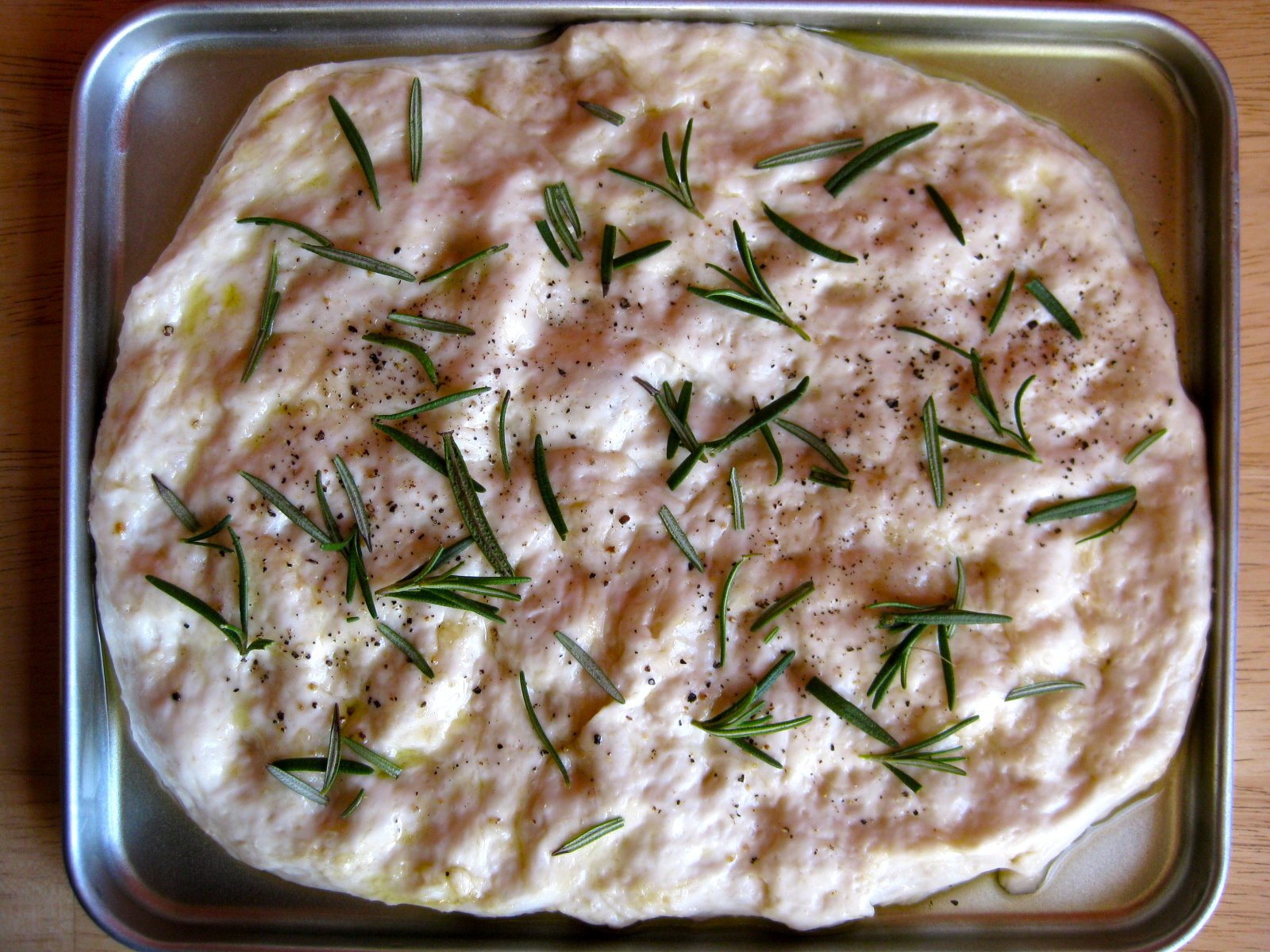
Bake the focaccia: Using your fingertips, press deep dimples at 1-inch intervals all over the dough.  Sprinkle it with the rosemary, salt, and pepper.  Place baking sheet with the focaccia on the preheated hot stone or hot baking sheet and bake for 5 minutes.  Add the garlic, slide a pancake turner underneath the dough to loosen it, and slip it directly onto the stone or heavy baking sheet (this means you will be removing the oiled baking sheet upon which the focaccia spent the first 5 minutes baking).  Continue baking for another 5 minutes or until the top begins to brown around the edges.