

For a very long time, I thought I had come up with the greatest pie dough recipe I’d ever had the pleasure of working with, and subsequently eating. It was flaky, it behaved well, and the end product was always a delight. My pie dough recipe had a squeeze of lemon juice in it, which aided the goal of keeping the gluten in the flour undeveloped and, as an end result, the dough never turned out tough. My only complaint, small as it was, was that the dough never really developed the dozens of flaky layers that I always wanted to see in my pie dough. Sure, there were layers of crisp flakiness, but not innumerable layers (like I said, small complaint).
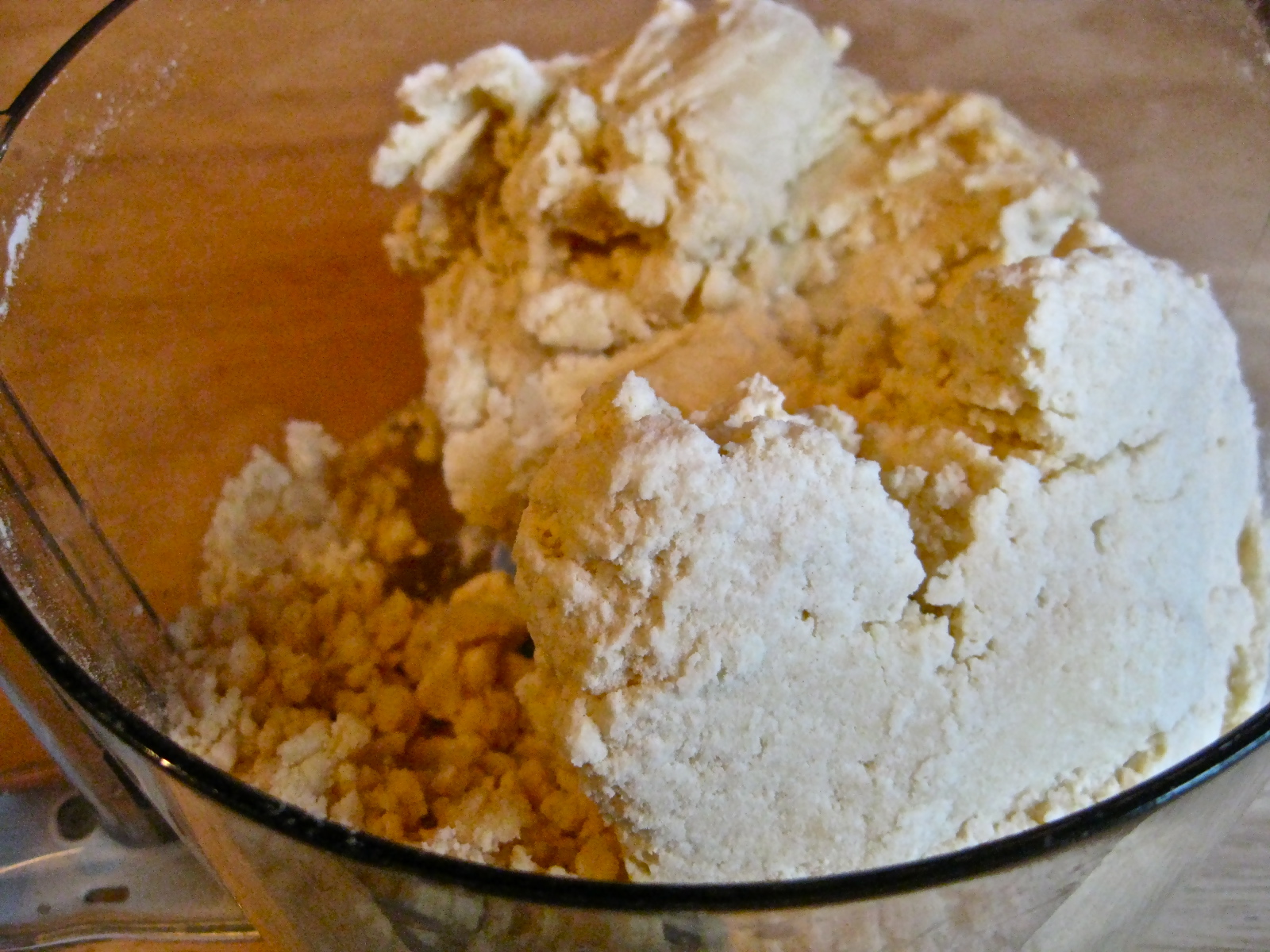
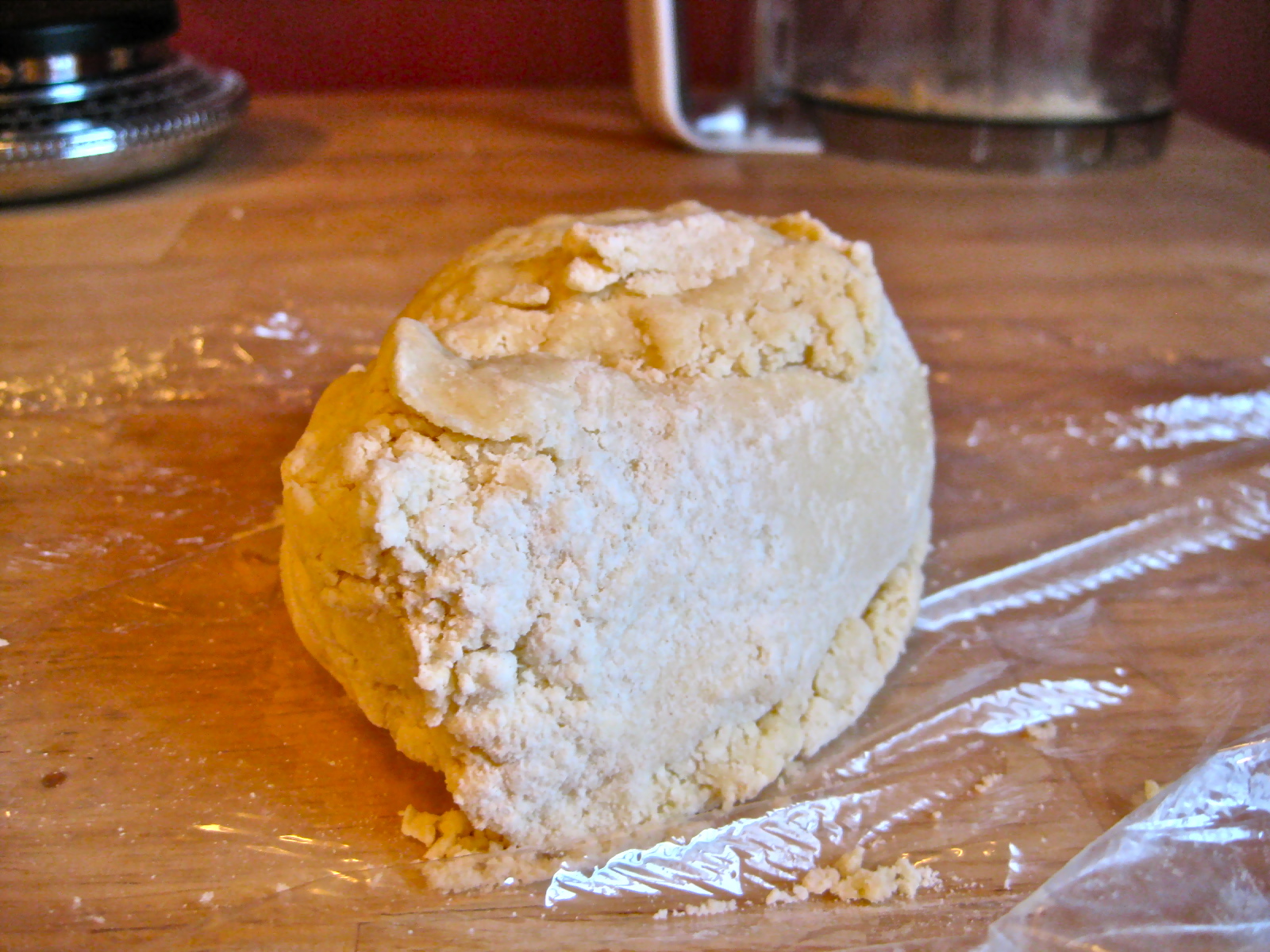
Last Thanksgiving, I decided to try out a different pie dough. Turning to my bible of all things pastry, I settled on using Tartine’s flaky tart dough, an unsweetened, highly buttery dough that I already knew I absolutely loved in savory applications. Now, here comes the part where I instruct you all to recite with me the discovery I made about this dough when used in a pie, because, by now, you all know what I am going to say when it comes to Tartine and the food it produces: This, my friends, is the greatest pie dough in all the land.
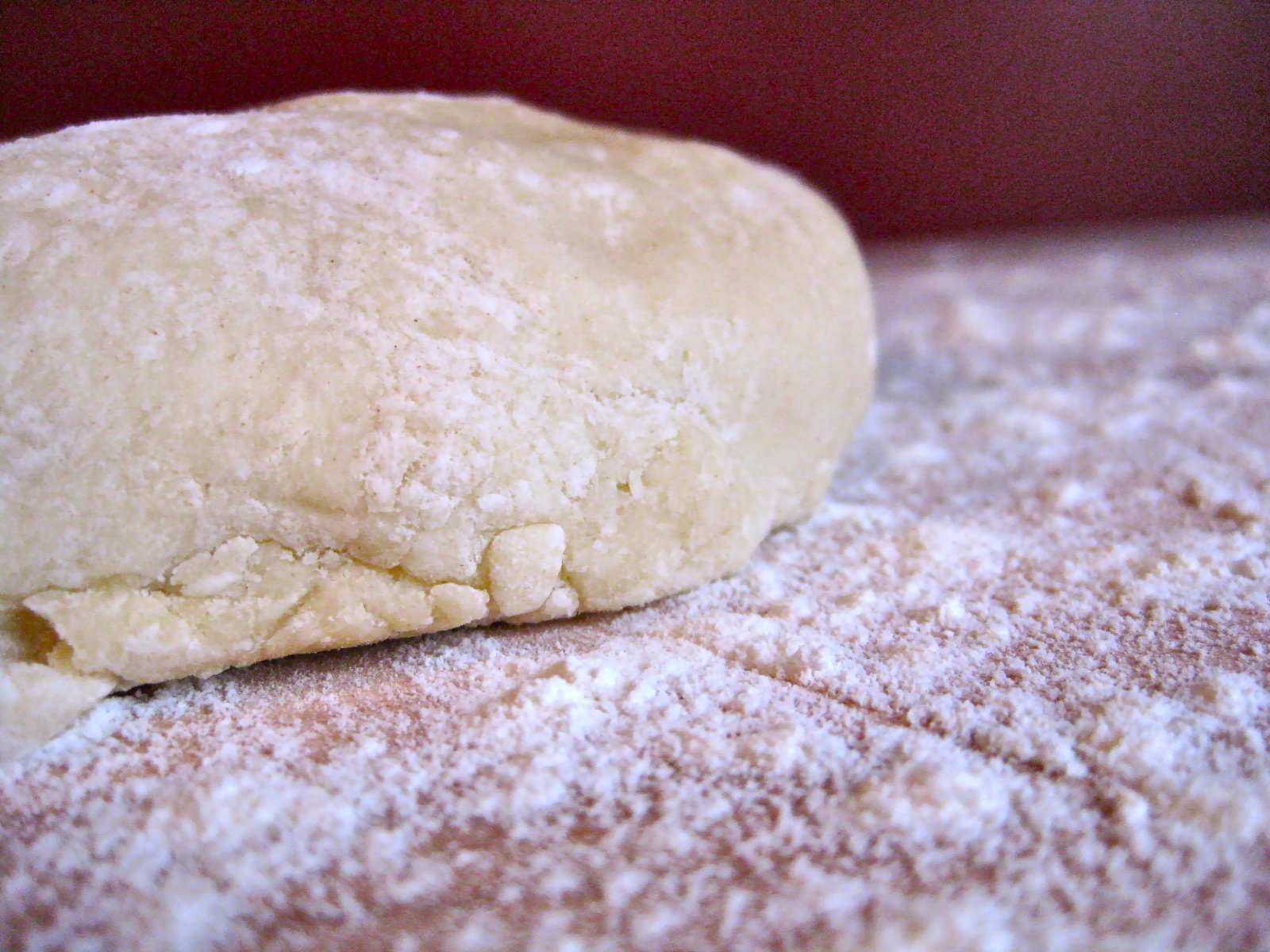
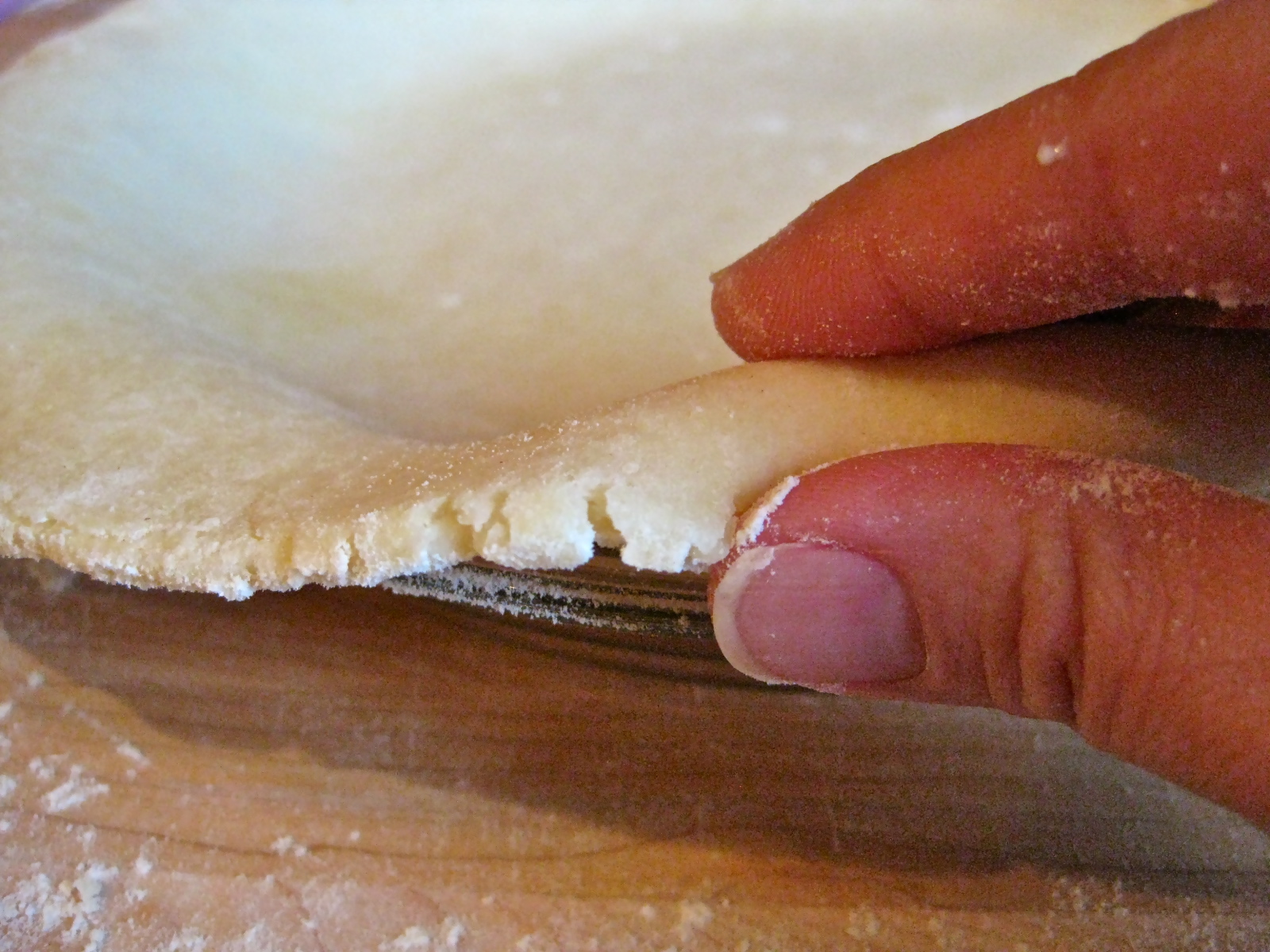
So buttery, so simple to work with, and so unbelievably flaky, this is the very pie dough I have been looking for my entire life. The best part is, there is no secret to the dough. There are four ingredients, there is a standard mixing method, and then there is a nice long resting period in both the refrigerator and the freezer. If I were to really take a stab at what I think makes this dough so fantastic, I’d have to go with three possible suspects.

First of all, the proportion of butter to flour is marginally larger than my former favorite recipe, and it is absolutely perfect. Second, giving the dough a long resting period in the refrigerator before rolling it out and forming it seems to add a particularly fine texture to the dough, as you are allowing the butter, water, and flour to adhere to one another better without coaxing them along with your hands or a food processor and working the flour’s gluten too long, thus making the dough tough. A well-chilled dough also allows the small, pea-sized chunks of butter to firm up slightly, which makes the flour and water form tiny little pockets around the butter pieces, which results in a super tender and flaky crust when baked. I rested this pie dough in the refrigerator overnight and it was simply dreamy.
Third: no sugar. No sugar. So simple, right? For some reason I always thought that I had to add a tiny shot of sugar to my sweet pie and tart dough, but, now that I think of it, that makes absolutely no sense. If you pie’s filling is going to be sweetened, why gild the lily and sweeten up your dough as well? The lack of sugar in this dough allows the flavor of the butter to really shine in a glorious and uncomplicated way, which bodes well for the dough’s richly sweet filling.


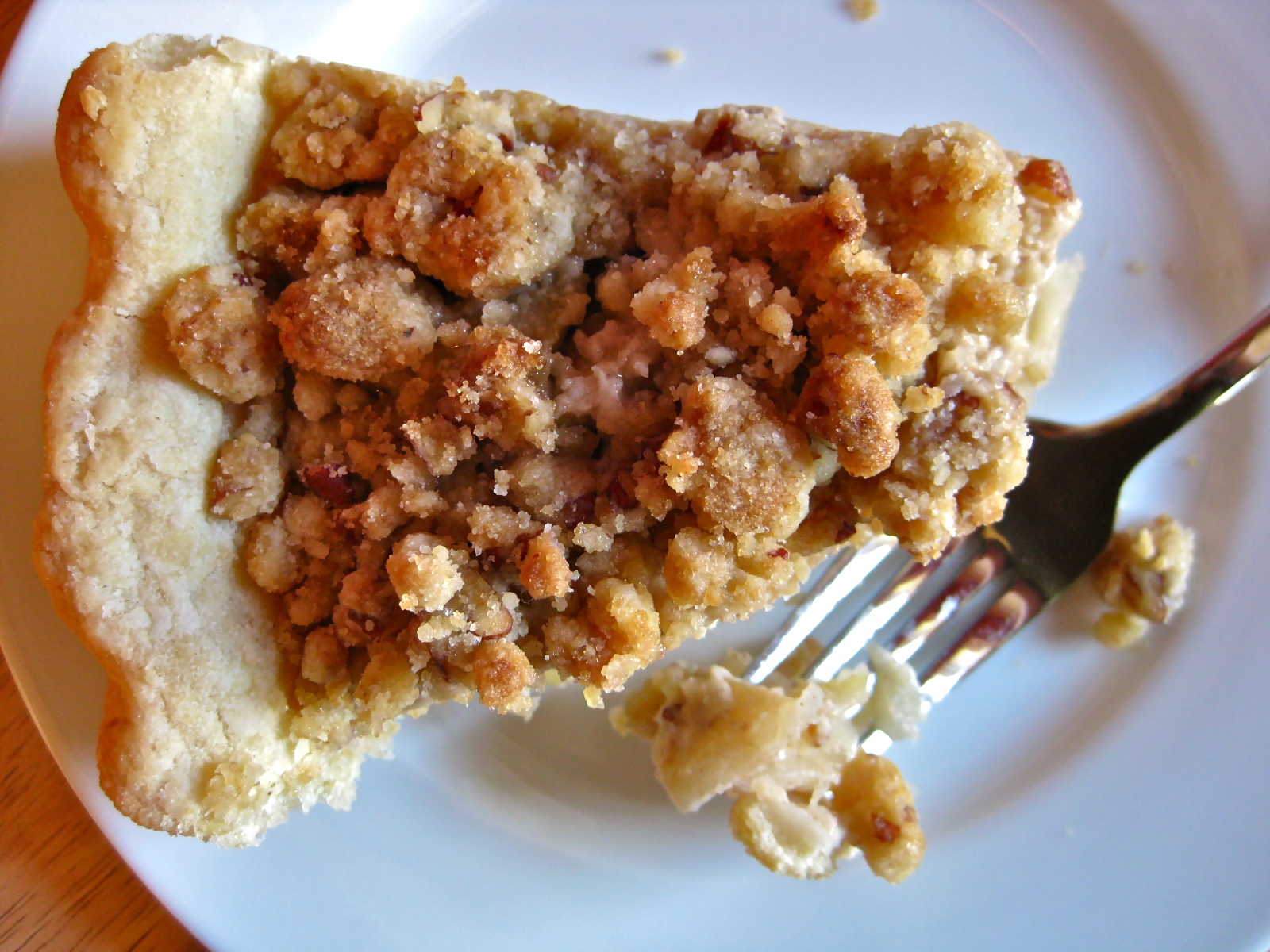
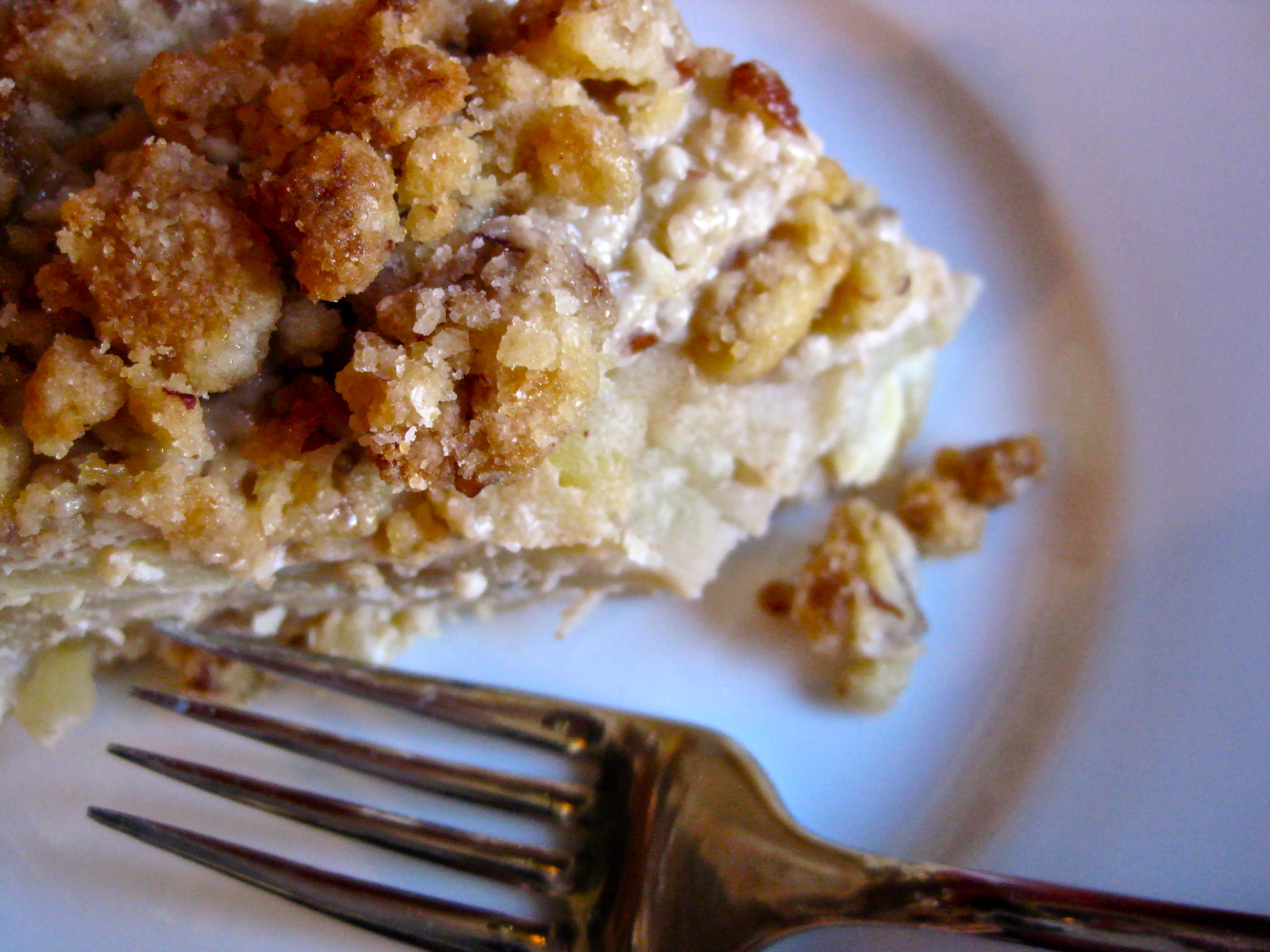
Which brings me, finally, to the rest of the recipe. A hybrid of a Cook’s Illustrated recipe and what I remember about the Dutch apple pie at the restaurant where I worked as a teenager (which called the pie a French apple pie, as there seems to be quite a bit of overlap concerning what people consider a French apple pie and a Dutch apple pie), the pie I ended up making is stuffed with sautéed tart apples and topped with a hearty, crumbly, pecan-crunchy lid. When baked, the crisp topping settles into the nooks and crannies left open by the baking apples, leaving no space unoccupied by tasty, cinnamon-laden glory. At the risk of making two loud proclamations in one post, dare I say that this apple pie is the best apple pie I’ve ever had? For now, yes. But only time will tell if its throne will one day be conquered. Tartine, it’s your move.
Flaky Tart and Pie Dough
From Tartine
1 teaspoon salt
2/3 cup (5 ½ ounces) very cold ice water
3 cups plus 2 tablespoons (1 pound) unbleached all-purpose flour
1 cup plus 5 tablespoons (10 ½ ounces) very cold unsalted butter
In a small bowl, add the salt to the water and stir to dissolve. Place in the freezer to keep super cold until ready to use.
Place the flour in the bowl of a food processor, or in a large bowl. Cut the butter into 1-inch pieces, then scatter over the flour. If using a food processor, pulse the mixture briefly until it forms into large crumbs and some of the pieces of butter remain pea-sized. If making the dough by hand, cut the butter into the dough using a pastry cutter. You will want the dough to have the same crumb-like look with some large pea-sized chunks of butter throughout.
Drizzle the salt and water mixture over the dough and, if using a food processor, pulse until the dough comes together into a ball but is not completely smooth. You should still see visible butter chunks. If mixing the dough by hand, drizzle the salt and water mixture over the dough while tossing with a fork. The dough should come together in a shaggy mass. Gently mix the dough together until it comes together in a ball but is not completely smooth. As with the food processor dough, you should still see visible butter chunks.
Divide the dough into 2 equal balls on a lightly floured surface. Shape each ball into a disk about 1 inch thick. Wrap each disk in plastic wrap and refrigerate at least 2 hours, preferably overnight.
Makes 2 9-inch or 10-inch tart or pie shells, enough for 2 single-crust pies or tarts, or 1 double-crust pie.
Dutch Apple Pie
I have seen many apple pie recipes that call for a mix of tart and sweet apples, and I never understand why. Tart apples, in addition to holding their shape so much better than sweet apples, provide the best flavor balance for the sweetness of a pie’s sugar and spice. I know I tend to err on the side of less sweetened desserts these days, but, trust me, tart apples are the way to go with this recipe, or any other apple pie recipe, for that matter.
You will need:
Dough for 1 single-crust pie shell
Streusel
1 cup (5 ounces) unbleached all-purpose flour
1/3 cup (2 1/3 ounces) granulated sugar
1/3 cup packed (2 1/3 ounces) light brown sugar
¼ cup pecans, chopped medium-fine
pinch of salt
6 tablespoons (¾ stick) unsalted butter, melted and cooled
Filling
2 tablespoons unsalted butter
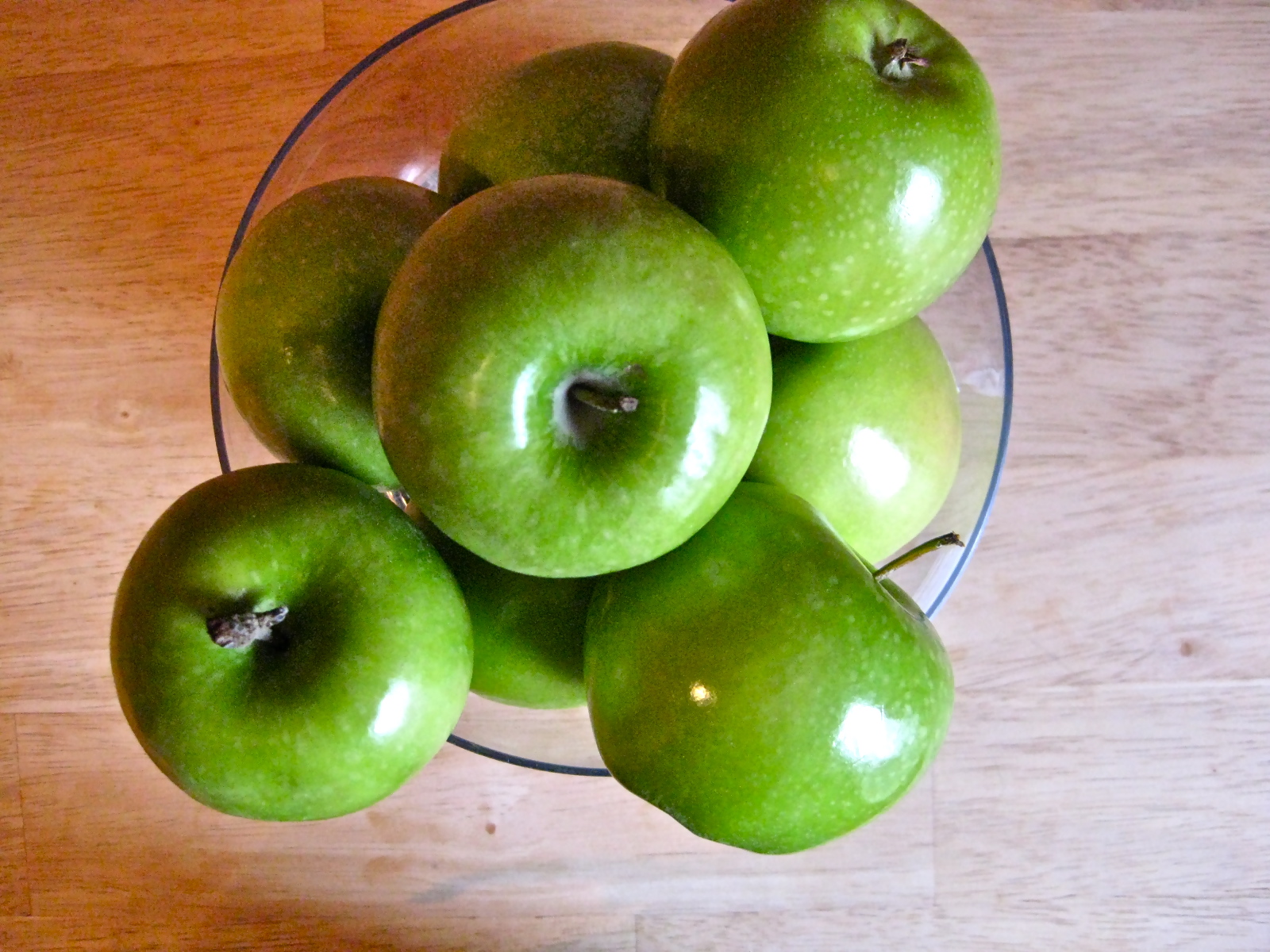
4 pounds firm tart apples (I used Granny Smith, the tartest, firmest apples I know), peeled, cored, and slice ¼ inch thick
¼ cup (1 ¾ ounces) granulated sugar
½ teaspoon ground cinnamon
1/8 teaspoon salt
½ cup heavy cream
Parbake the crust:
On a lightly floured surface, roll out your disk of chilled pie dough into a circle about 1 ½ inches larger than your 9-inch pie dish. Gently transfer the dough to the pie dish, easing it into the bottom and sides, and pressing gently into place. Using a sharp knife, trim the dough so it hangs over the pie dish by ½ inch, or, using your fingers, tuck the scraggly edges of the dough under itself and lightly press to adhere. Using your fingers, crimp the edges of the dough to make a fluted edges, or using the tines of a fork, press the edges of the dough to flatted it against the rim of the dish. Place the formed dough in the freezer for 30 minutes to 1 hour (this ensures the flakiest dough possible).
While the dough is chilling, preheat the oven to 375 degrees Fahrenheit and adjust an oven rack to the middle position.
When the dough is chilled and the oven preheated, line the chilled crust with a double layer of foil and fill with pie weights. Bake until the pie dough looks dry and is light in color, 25 to 30 minutes. Transfer the pie plate to a wire rack and remove the weights and foil. With the oven still heated to 375 degrees, adjust an oven rack to the lowest position, and place a foil-lined baking sheet on the rack.
Make the Streusel:
In a medium bowl, mix together the flour, sugars, pecans and salt. Drizzle with the melted butter, and stir the streusel with a fork until roughly combined. Set aside.
Make the Filling:
Melt the butter in a large Dutch oven over medium-high heat. Stir in the apples, cinnamon, sugar, and salt. Cover and cook, stirring occasionally, for about 10 to 12 minutes, until the apples have just started to soften, and some of the apples have just begun to break down.
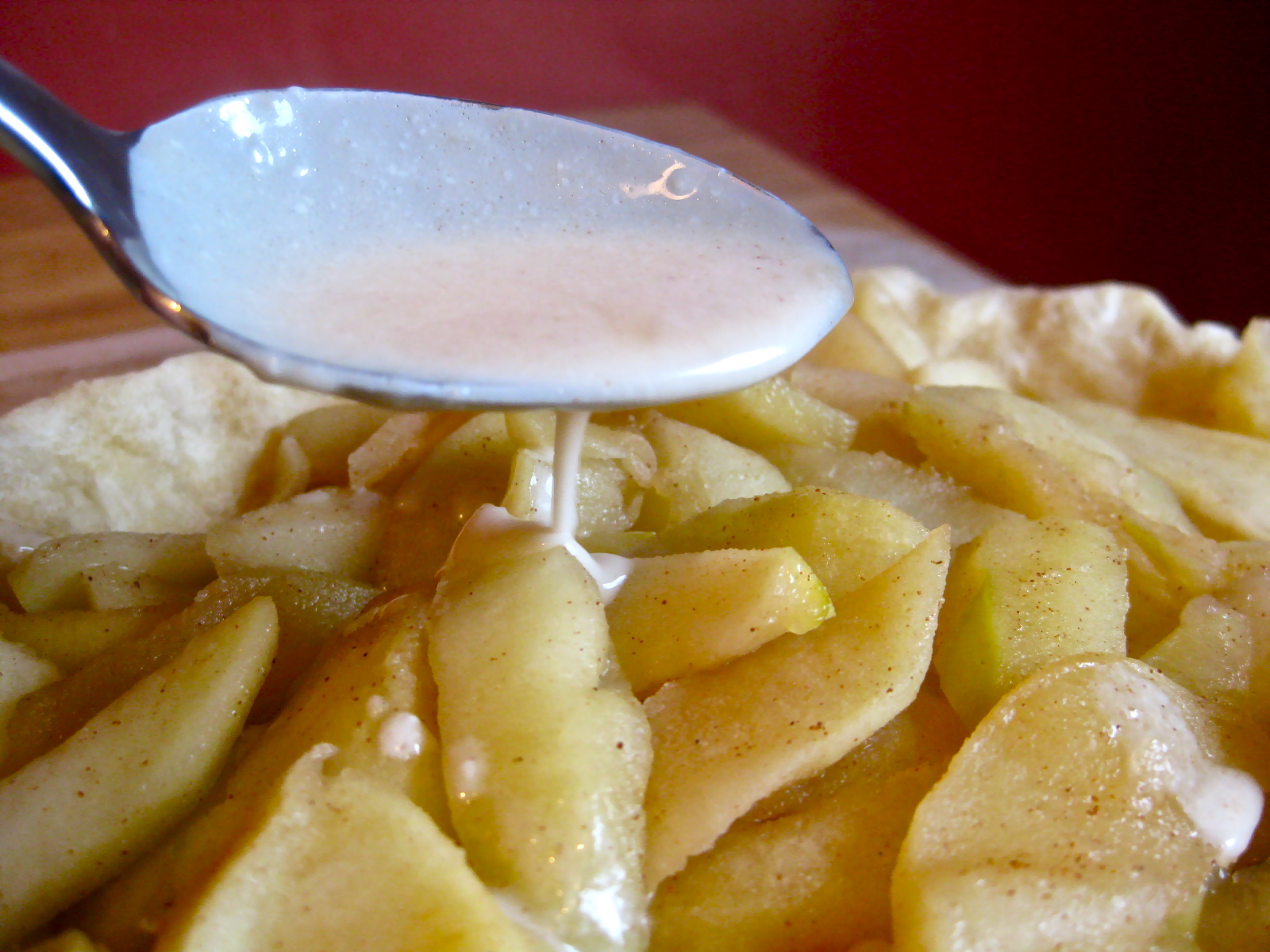
Set a large bowl under a colander. Pour the cooked apples into the colander, allowing the juice to thoroughly drain into the large bowl set underneath. In a small saucepan, combine the drained juice from the bowl with the heavy cream. Cook over medium-high heat until thick and reduced by roughly half, about 3 minutes.
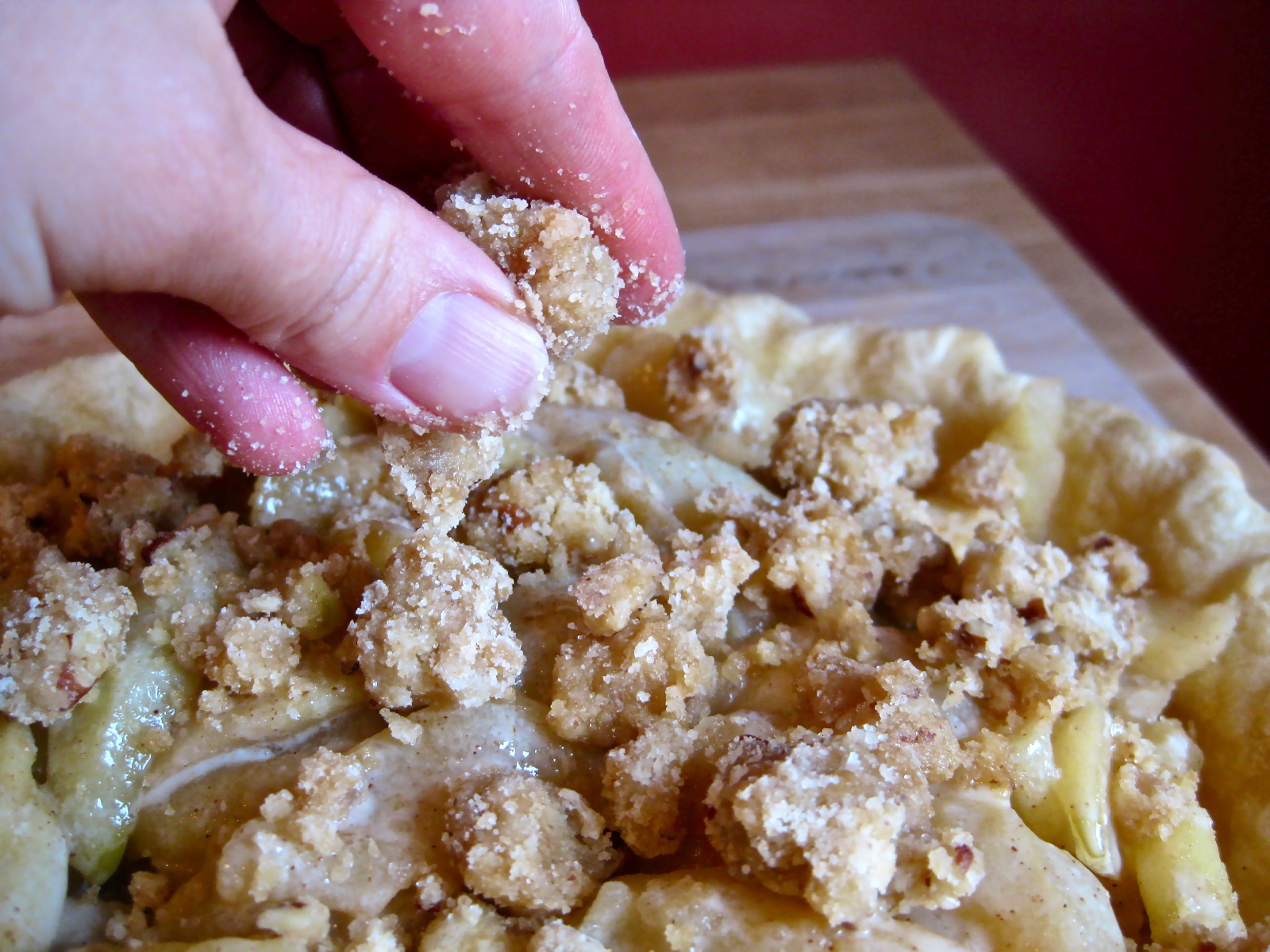
Spread the apples into the parbaked pie crust. Drizzle with the reduced cream mixture. Sprinkle the streusel evenly over the top (there will be some large pieces of streusel and some small pieces—this is exactly what you want, as the variation in texture makes for a great bite). Place the pie on the heated baking sheet and bake until the crust and streusel have browned, about 25 minutes. Allow the pie to cool on a wire rack until the filling has set, about 2 hours.
Serve slightly warm or at room temperature.













 Savory Salty Sweet