I would generally consider it quite inelegant to toot one’s horn so very mightily about one’s own recipe, but, and you must trust me on this one, this exception I am about to make is completely, totally worth it because, as I toot my horn, you will be introduced to what I now consider my greatest achievement in on-the-fly recipe creation, thus making you privy to all the details that would render it possible for you to make and eat this dish yourself, which, though you may not yet know it, I can assure you that you really, really want to.
Last week, as part of my twice-monthly writing assignment for Portland Farmers Market, I took my personally allotted $10 of spending money and I bought this:

Then I did this:
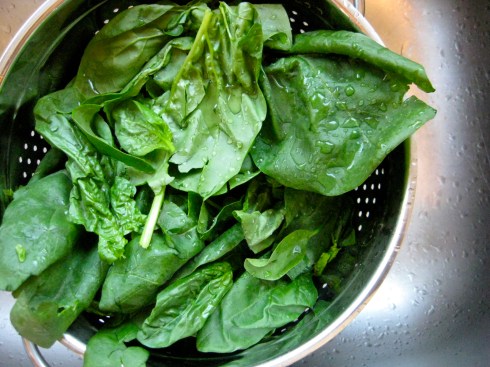 And this:
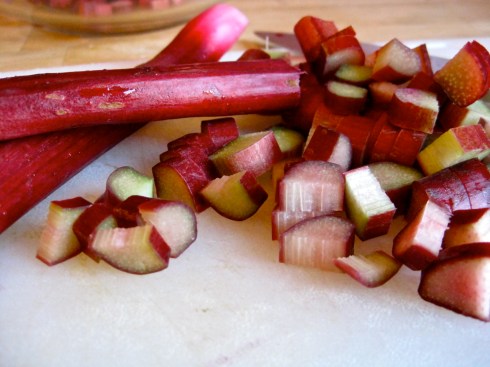
Followed by this:
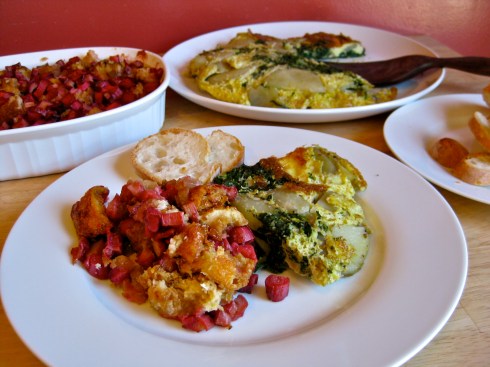
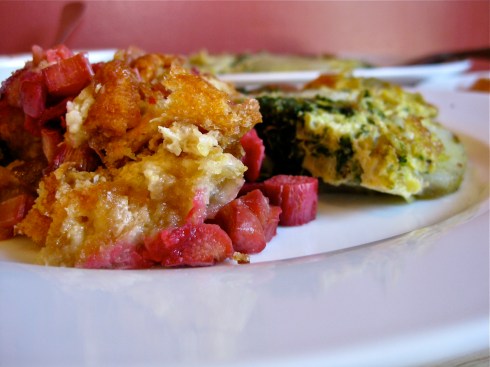
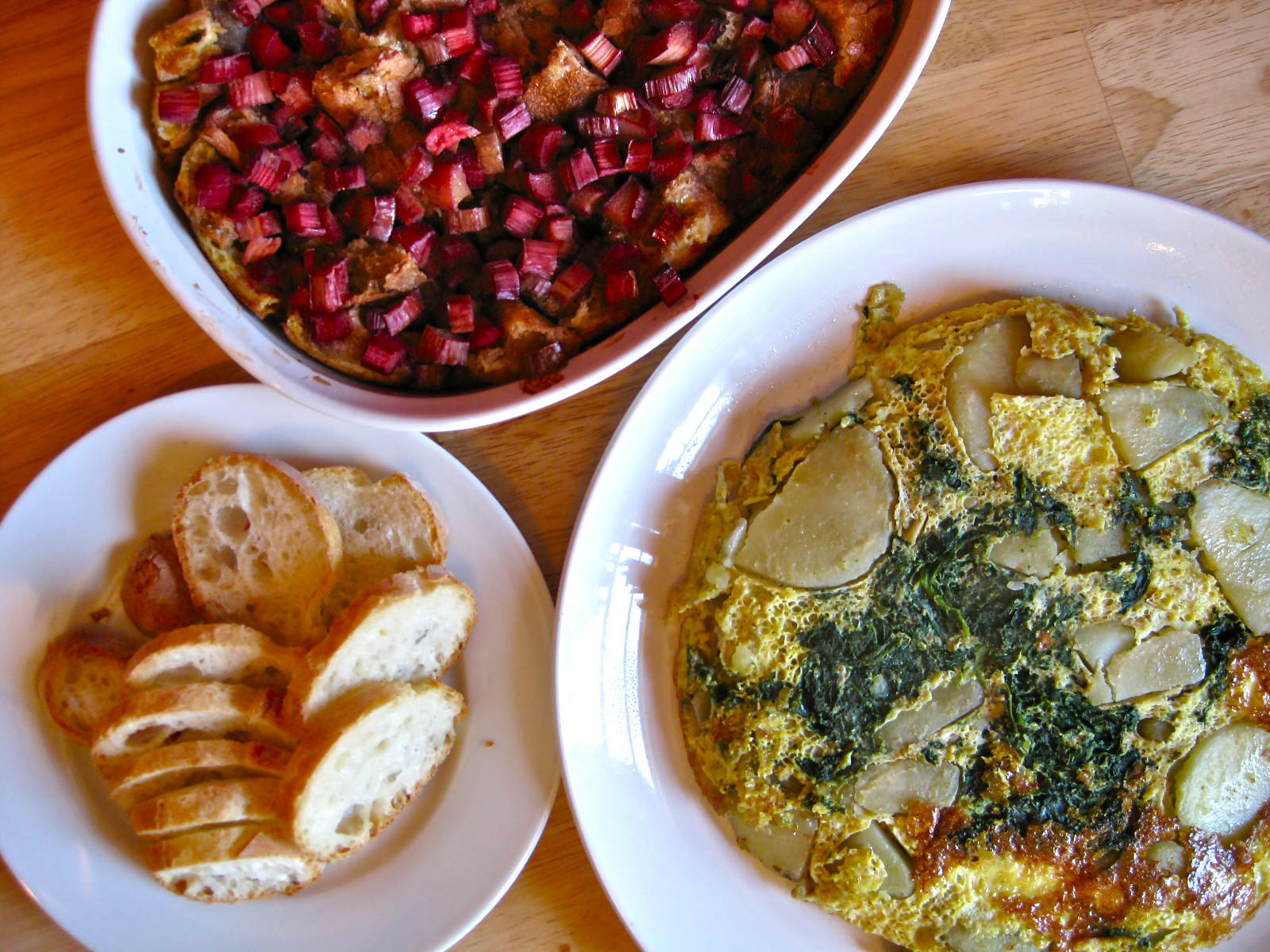
And then, after more chopping and mixing, I proceeded to cook everything and ended up with this:

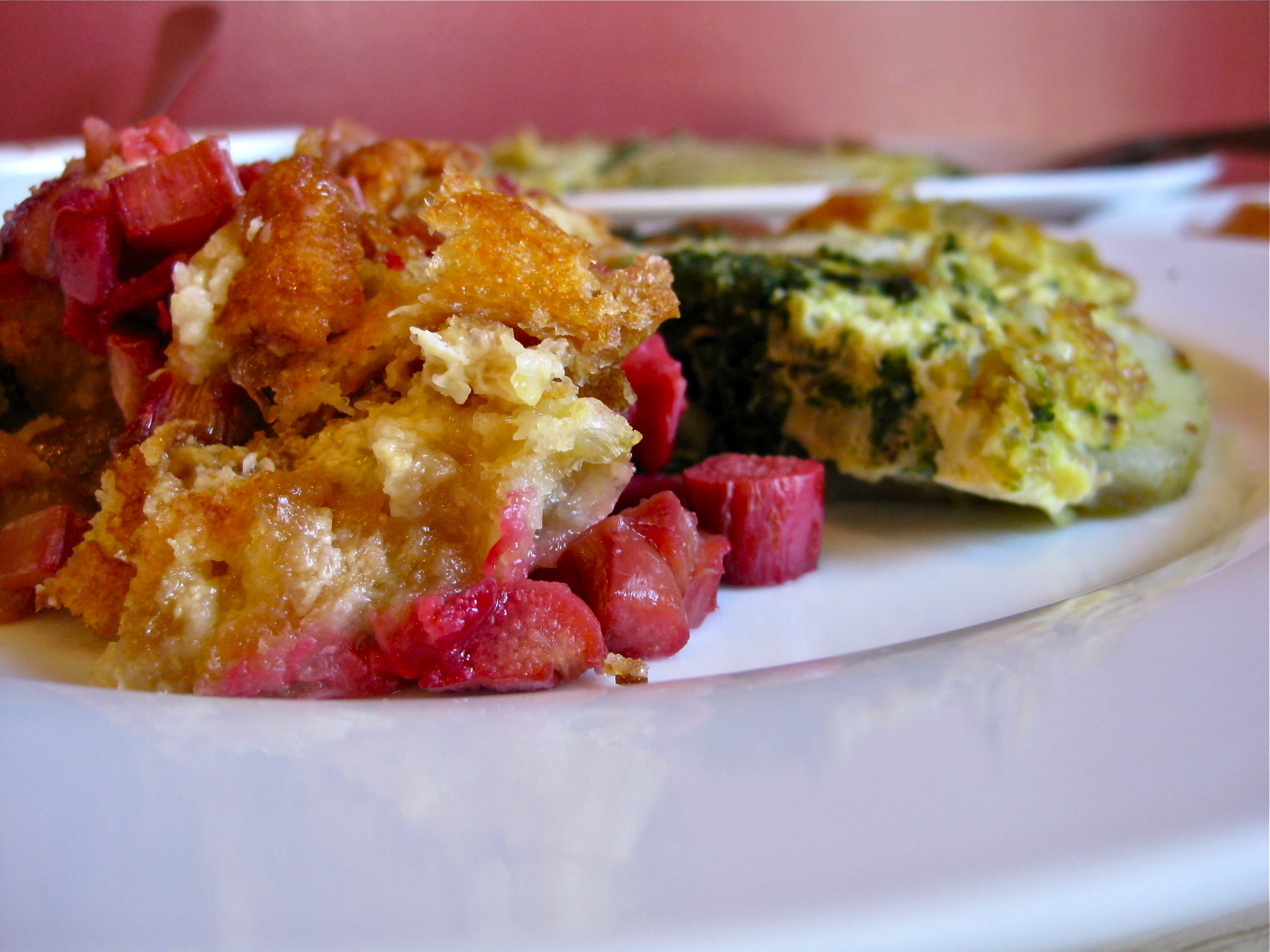
Now, here is where the loud tooting of the horn comes in, but do you see that vegetable frittata? It was quite good. Okay, now do you see that thing next to the frittata? The bread pudding made with fresh rhubarb? It was unbelievable. No, really. Not one to ever turn down rhubarb, I knew I would enjoy a concoction that came about by topping a simple bread pudding with chopped up, sweetened rhubarb, but I did not realize just how fantastically the rhubarb would flavor the body of the pudding.
I am aware of the fact that, as the person who made up the recipe, I really should have a better idea of what makes it tick, but, I have to admit, I can only venture a guess as to what made this bread pudding so incredibly, intensely flavorful. The secret may lie in what I did to the rhubarb before I spread it on top of the bread. By allowing the rhubarb to macerate in a mixture of dark brown sugar and regular sugar for just a few minutes, the liquid that is released from the rhubarb intermingles with the sugars and starts to form a thick and luscious syrup. Then, when the rhubarb and sugar mixture gets baked on top of the bread mixture, everything begins to caramelize together and melt into an absolutely ambrosial mixture of rich, custardy bread nestled against fragrant and velvety rhubarb.
With each bite, you get a hit of tartly sweet rhubarb, comforting bread custard, and an almost dainty and aromatic swipe of bourbon-flavored caramel. The recipe contains no bourbon, but I suspect that when the mixture of vanilla, dark brown sugar, and the rhubarb liquid came together, they somehow magically transformed themselves into bourbon-flavored caramel. Or, at least, I am guessing that is what happened. Perhaps when I make this bread pudding again (and, oh, how I cannot wait to make it again), I will further test the results of the mixture and then get back to you about it. Or, better yet, you should just make this bread pudding yourself and discover first hand its charms and delights. No, really. Both my horn and I are insisting upon it.
This recipe, as I mentioned previously, was something I developed for Portland Farmers Market. If you wish, you can read a bit more about it and its accompaniments (and get recipes for both) over here, on the Portland Farmers Market website. However, as a service to deliciousness, I am also going to publish the rhubarb bread pudding recipe below, because heaven forbid I keep anyone from it any longer than I have to.
Rhubarb Bread Pudding
1 baguette
1 pound rhubarb, washed and trimmed of any hard, fibrous ends
¾ cup white sugar
¼ cup dark brown sugar
1 ½ cups milk
2 large eggs
1 teaspoon pure vanilla extract
pinch salt
Preheat oven to 350 degrees F. Lightly butter a medium-sized baking dish and set aside.
Slice rhubarb into ½ inch chunks. In a medium bowl, combine rhubarb, white sugar, and brown sugar. Stir to combine, then set aside for 15 minutes to allow the rhubarb to macerate and release some of its juices.
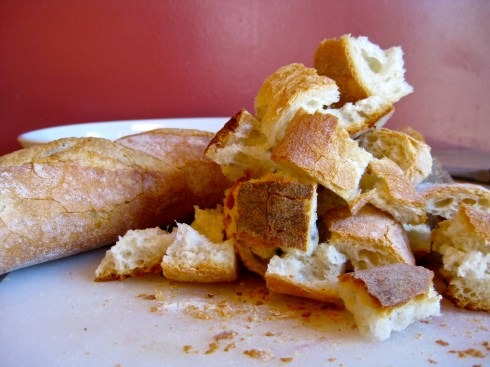
Meantime, slice baguette into thick slices, then tear each slice into large bite-sized chunks. You will need 5 cups total of bread chunks. If you have any baguette remaining (as I did), set aside for another purpose. Place bread chunks in pre-buttered baking dish.
In a medium-sized bowl, combine milk, eggs, vanilla, and pinch of salt. Whisk vigorously until the eggs are entirely incorporated. Pour milk mixture over bread chunks and allow to soak for 10 minutes, tipping the dish every few minutes and spooning excess liquid over the bread to make sure bread is completely soaked.
Evenly pour the rhubarb mixture over the top of the soaked bread. Be sure to include all the liquid released from the rhubarb. Do not mix. Cover tightly with foil and bake for 35 minutes, until bread is puffed, the custard has been mostly absorbed, and the rhubarb has softened. Remove foil and bake for an additional 15 minutes, until a few edges of the exposed bread begin to turn golden and crisp.
Cool slightly before eating. Serves 6-8 people.
Tags: bread pudding, farmers market, food, rhubarb







 Savory Salty Sweet